
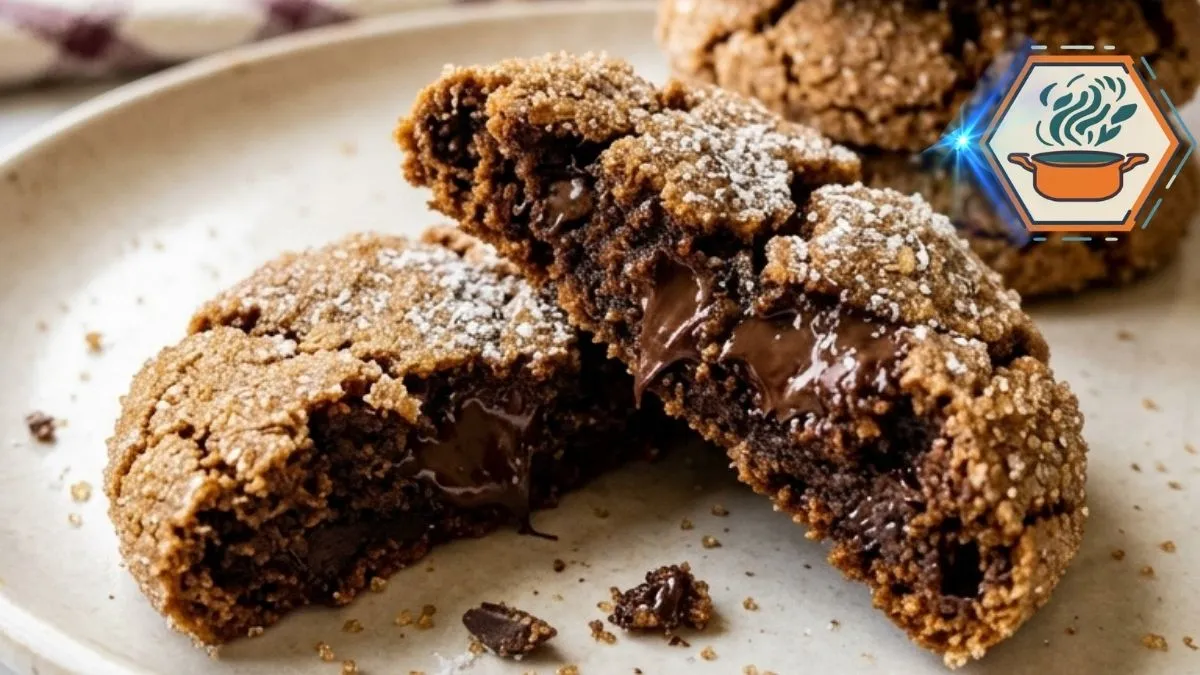
Some cookies win you over before you even take the first bite. Brown Sugar Espresso Crinkle Cookies are that kind of cookie. Their rough, golden surface is covered with sparkling sugar. Deep cracks run across the top. Dark chocolate peeks through the warm dough. Break one open, and the center stays tender while the edges have a delicate crunch. Then comes the aroma: brown sugar, vanilla, chocolate, and a clear note of espresso.
That rustic appearance is part of their charm, but getting it right is not simply a matter of mixing dough and putting it in the oven. Small details make a big difference. The dough needs enough structure to crack rather than flatten. The butter needs to be soft without becoming greasy. Chilling controls spreading, while the coarse sugar creates the distinctive crust. One food-safety detail matters too: never taste unbaked cookie dough containing ordinary flour and raw egg. The FDA’s guidance on raw flour and dough explains why flour should be treated as a raw ingredient until properly cooked.
There is also good baking science behind the short chilling period in this recipe. Cold cookie dough spreads more slowly because its butter takes longer to melt. That gives the outside time to set while the interior remains thicker. King Arthur Baking also notes that chilling can affect a cookie’s flavor, texture, appearance, and spread. King Arthur Baking’s cookie guide is a useful resource for understanding those fundamentals.
The result is a cookie made for anyone who likes the contrast between crisp edges and soft centers. It feels familiar like a chocolate chip cookie, but the espresso and brown sugar give it a darker, warmer personality.
Affiliate disclosure: As an Amazon Associate I earn from qualifying purchases. This article may contain affiliate links to kitchen tools I find useful for preparing this recipe.
JUMP TO
Why These Espresso Crinkle Cookies Work
The goal is not a perfectly smooth bakery cookie. In fact, perfection here looks imperfect.
A good batch should have irregular cracks, coarse sugar crystals, visible pieces of dark chocolate, browned edges, and thick centers. The outside should offer a slight crunch before giving way to a soft interior.
Brown sugar plays an important role. It brings a deeper caramel-like flavor than granulated sugar alone. Using both sugars gives us a better balance between tenderness, sweetness, spread, and edge texture.
Instant espresso powder adds concentrated coffee flavor without introducing the extra liquid that brewed coffee would bring. Espresso powder is commonly used in chocolate baking, and even small amounts can deepen chocolate flavor.
Then there is the sugar crust.
This detail should not be treated as decoration. Coarse sugar is important to the final texture and appearance. Its larger crystals remain visible after baking and form the sparkling, crunchy exterior seen on these cookies.
Brown Sugar Espresso Crinkle Cookies Ingredients
For about 16 to 18 medium-large cookies, you will need:
- 1¾ cups (about 210 g) all-purpose flour
- 2 teaspoons instant espresso powder
- ½ teaspoon baking soda
- ½ teaspoon baking powder
- ½ teaspoon ground cinnamon
- ¼ teaspoon fine salt
- ½ cup (113 g) unsalted butter, softened
- ¾ cup (about 160 g) packed light brown sugar
- ¼ cup (50 g) granulated sugar
- 1 large egg, at room temperature
- 1½ teaspoons pure vanilla extract
- ½ cup (about 85 g) dark chocolate chips or chopped dark chocolate
- ⅓ cup coarse sparkling sugar or turbinado-style sugar, for rolling
Important: use instant espresso powder, not wet espresso and preferably not ordinary coarse coffee grounds. Adding brewed coffee changes the moisture balance of the dough.
For chocolate, chopped dark chocolate creates irregular melted pockets that suit the rustic appearance particularly well.
If you enjoy learning how texture changes a cookie, RecipesMind’s guide to the secret to crunchy cookies offers more useful baking context.
Equipment That Makes the Recipe Easier
You do not need professional pastry equipment. A few simple tools do make consistent batches much easier:
- Digital kitchen scale
- Large mixing bowl
- Medium mixing bowl
- Hand mixer or stand mixer
- Flexible spatula
- Cookie scoop
- Light-colored baking sheet
- Parchment paper
- Wire cooling rack
For readers building a baking kit, a digital kitchen scale on Amazon is useful because weighing flour removes much of the variation caused by packing flour into a measuring cup.
A cookie scoop on Amazon also helps keep every dough ball close to the same size.
How to Make Brown Sugar Espresso Crinkle Cookies
Start by heating the oven to 350°F (175°C). Position a rack near the center.
Line a light-colored baking sheet with parchment paper. Parchment makes removal easier and also affects how cookie dough behaves against the hot pan. King Arthur recommends parchment or silicone liners for good cookie results.
In a medium bowl, whisk together the flour, espresso powder, baking soda, baking powder, cinnamon, and salt.
Whisk for about 20 seconds. You want the espresso powder and leaveners evenly dispersed through the flour.
In another bowl, beat the softened butter, brown sugar, and granulated sugar for about 2 minutes, until creamy and slightly lighter in color.
Do not keep beating for five or six minutes in search of an extremely fluffy mixture. Over-creaming butter and sugar can contribute to excess spreading.
Add the egg and vanilla. Beat just until the mixture becomes smooth.
Scrape the sides and bottom of the bowl.
Add the dry mixture to the butter mixture in two additions. Mix on low speed or fold with a spatula until you can barely see any dry flour.
Do not continue mixing once the flour disappears.
Fold in the dark chocolate.
The finished dough should be soft, thick, and scoopable rather than runny.
Cover the bowl and refrigerate it for 30 minutes.
That extra 10 minutes compared with the shortest version of the original instructions is useful, especially if your kitchen is warm. Chilling helps reduce unwanted spreading.
For easy cleanup and more predictable baking, you can use precut parchment paper sheets on Amazon.
The Detail That Creates a Better Crust
This is where the appearance of these cookies is made.
Pour ⅓ cup coarse sugar into a shallow bowl.
Scoop roughly 2 tablespoons of dough per cookie, or about 35 to 40 grams if using a kitchen scale.
Roll each portion gently between your palms. You want a tall, rounded ball rather than a flattened disk.
Now roll it generously in coarse sugar.
Do not give the dough a light sprinkle. The entire exposed surface should be coated.
That heavier coating creates the sparkling crust and makes the cracks much easier to see after baking.
Look for a coarse crystal rather than powdered sugar. Readers who do not already have it can compare coarse sparkling sugar for baking on Amazon.
Place the coated dough balls about 2½ inches apart.
For the rustic appearance shown in the inspiration photo, do not press the dough flat.
How Long Should You Bake Them?
Bake at 350°F for 10 to 12 minutes.
Start checking around minute 10.
The cookies are ready when:
- The tops have visible cracks.
- The edges look set.
- The sugar crust appears dry and lightly golden.
- The centers still look soft.
- The cookies have spread but remain fairly thick.
The biggest mistake is waiting until the centers look completely baked.
They shouldn’t.
Remove the baking sheet while the centers still appear slightly underdone. Leave the cookies untouched on the hot pan for 5 minutes. Residual heat continues cooking them.
Then transfer them carefully to a cooling rack.
This is what helps create the combination we want: crisp sugar-coated edges with a soft, tender center.
How to Get the Same Rustic Look Every Time
The visual character comes from several small choices working together.
First, don’t make tiny cookies. A generous ball gives the center enough mass to stay soft.
Second, chill the dough. If it becomes very soft while you’re shaping it, return the remaining dough to the refrigerator for 10 minutes.
Third, cover every dough ball generously with coarse sugar.
Fourth, use chopped dark chocolate if you want more irregular chocolate pockets. Leave some pieces fairly large.
Finally, avoid overbaking.
The cookies should look cracked and rugged rather than flat and uniformly brown.
This same attention to moisture is useful in other bakes too. Our guide to keeping madeleines moist explains why timing and storage can dramatically change a small bake.
Common Mistakes to Avoid
The cookies spread too much. Your butter may have been too warm, the dough may not have chilled long enough, or the flour measurement may have been low. Weighing flour is the easiest way to improve consistency.
There are no dramatic cracks. The dough may be too warm or the sugar coating too thin. Form rounded balls and coat them well before baking.
The cookies are dry. They probably stayed in the oven too long. Their centers should still look soft when the pan comes out.
The coffee flavor is weak. Check that you’re using fresh instant espresso powder. Ordinary instant coffee may taste less concentrated.
The espresso tastes too strong. Reduce the powder to 1½ teaspoons on your next batch.
The cookies are greasy. Butter that is nearly melted can cause trouble. Soft butter should yield when pressed, but it should still hold its shape.
For another RecipesMind article focused specifically on cookie texture, see this guide to baking versus air-frying cookies.
Storage and Freezing
Let the cookies cool completely before storing them.
Keep them in an airtight container at room temperature for about 3 to 4 days for best texture.
If stacking them, place parchment between layers.
You can also freeze portioned dough balls. For best results, freeze them before adding the coarse sugar coating. Once solid, place them in a freezer-safe container.
When you’re ready to bake, thaw the portions in the refrigerator until they can be handled, roll them in coarse sugar, and bake as directed. You may need a little extra baking time depending on how cold the dough remains.
For a softer eating experience on day two, warming one cookie briefly can bring some softness back to the chocolate.
What to Serve With Espresso Crinkle Cookies
Coffee is the natural match.
Try them with:
- Espresso
- Cappuccino
- Café latte
- Cold brew
- Black coffee
- Hot chocolate
- Cold milk
Their bittersweet character also makes them a good after-dinner cookie.
For a dessert plate, pair one warm cookie with vanilla ice cream. The cold vanilla softens the intensity of the espresso and dark chocolate.
Frequently Asked Questions
Can I use regular coffee instead of espresso powder?
Instant coffee can work in a pinch, but the flavor may be weaker. Avoid replacing espresso powder with brewed coffee cup-for-cup because the added liquid changes the dough.
Why do I need to chill the cookie dough?
Chilling firms the butter and helps control spreading. It also gives you a thicker cookie with better-defined cracks. Cookie-baking guidance from King Arthur similarly identifies chilling as an important factor in spread, texture, and appearance.
Why are my crinkle cookies flat?
Common causes include overly warm butter, insufficient chilling, too little flour, too much sugar, or an oven running cooler than its setting.
Can I make the dough ahead of time?
Yes. Cover it tightly and refrigerate it. If it becomes too firm to scoop, let it sit briefly at room temperature until workable.
Can I leave out the chocolate?
Yes. The cookies will have a cleaner brown sugar and espresso profile. However, dark chocolate adds richness and creates the melted pockets that make this version particularly appealing.
How do I know when the cookies are done?
Watch the edges, not just the center. The edges should look set and lightly golden. The surface should be cracked, while the center remains soft. Let the cookies finish setting on the baking sheet for 5 minutes.
What gives these cookies their crunchy crust?
The coarse sugar coating is the key detail. Larger sugar crystals create more surface texture than a very fine coating. Rolling the entire dough ball generously gives the cookies their sparkling, craggy finish.
Print
Brown Sugar Espresso Crinkle Cookies
Thick Brown Sugar Espresso Crinkle Cookies with crisp sugar-crusted edges, soft centers, rich espresso flavor, and pockets of melted dark chocolate.
- Total Time: 60–62 minutes
- Yield: 18 cookies
Ingredients
1¾ cups (210 g) all-purpose flour
2 teaspoons instant espresso powder
½ teaspoon baking soda
½ teaspoon baking powder
½ teaspoon ground cinnamon
¼ teaspoon fine salt
½ cup (113 g) unsalted butter, softened but not melted
¾ cup (160 g) packed light brown sugar
¼ cup (50 g) granulated sugar
1 large egg, at room temperature
1½ teaspoons pure vanilla extract
½ cup (85 g) dark chocolate chips or roughly chopped dark chocolate
⅓ cup coarse sparkling sugar or coarse turbinado sugar, for rolling
Instructions
1. Preheat the oven to 350°F (175°C). Position a rack in the center of the oven. Line a light-colored baking sheet with parchment paper.
2. In a medium bowl, whisk together the flour, instant espresso powder, baking soda, baking powder, cinnamon, and salt until evenly combined.
3. In a large bowl, beat the softened butter, light brown sugar, and granulated sugar for about 2 minutes, until creamy and slightly lighter in color. The butter should be soft but never melted or greasy.
4. Add the egg and vanilla extract. Beat just until smooth. Scrape down the sides and bottom of the bowl.
5. Add the dry ingredients to the butter mixture. Mix on low speed or fold with a spatula just until no visible streaks of flour remain. Do not overmix.
6. Fold in the dark chocolate chips or chopped dark chocolate until evenly distributed.
7. Cover the dough and refrigerate for 30 minutes. The chilled dough should feel firmer but remain easy to scoop.
8. Pour the coarse sugar into a shallow bowl. Scoop approximately 2 tablespoons, or 35–40 g, of dough for each cookie.
9. Gently roll each portion into a tall, round ball. Roll every ball generously in coarse sugar so the entire exterior is coated. Do not flatten the dough.
10. Arrange the dough balls about 2½ inches apart on the prepared baking sheet.
11. Bake for 10–12 minutes. The cookies are ready when the edges look set and lightly golden and the tops are visibly cracked. The centers should still look slightly soft and underdone.
12. Remove the baking sheet from the oven and leave the cookies on the hot pan for 5 minutes. This carryover cooking helps set the centers without drying them out.
13. Transfer the cookies carefully to a wire rack. Let them cool until the crust becomes lightly crisp while the centers remain tender.
Notes
For the most visible crackled crust, do not skip the coarse sugar coating. Coat the entire surface of each dough ball rather than lightly sprinkling sugar on top.
Use instant espresso powder rather than liquid brewed espresso. Added liquid can change the consistency and spread of the cookie dough.
For consistent results, weigh the flour when possible. Too much flour can produce dry cookies, while too little may cause excessive spreading.
Butter should be softened but still cool enough to hold its shape. Melted or greasy butter can cause the cookies to spread too quickly.
If the dough becomes very soft while shaping, refrigerate it for another 10 minutes.
Do not flatten the dough balls. Their rounded shape helps produce a thick center and rustic cracked surface.
For larger melted chocolate pockets, use roughly chopped dark chocolate instead of uniform chocolate chips.
Do not wait for the centers to look completely baked. Remove the cookies when the centers still look slightly underdone, then let them rest on the baking sheet for 5 minutes.
Ovens vary. An oven thermometer can help confirm that the oven is actually at 350°F (175°C).
- Prep Time: 20 minutes
- Additional/Chill Time: 30 minutes
- Cook Time: 10–12 minutes
- Category: Dessert
- Method: Baking
- Cuisine: American
Final Baking Notes
Brown Sugar Espresso Crinkle Cookies sit somewhere between a coffeehouse cookie and an old-fashioned sugar-crusted bake. Brown sugar provides warmth. Espresso gives them their distinctive aroma. Dark chocolate adds bittersweet pockets, while the coarse sugar shell brings the crunch.
The final details matter more than complicated techniques. Measure the flour carefully. Keep the butter soft but not greasy. Chill the dough for around 30 minutes. Make generous dough balls. Coat them thoroughly in coarse sugar. Most importantly, remove them while the middle still looks slightly soft.
Give them five minutes on the hot baking sheet, then break one open while it is still a little warm.
You should see exactly what makes this recipe special: a rugged crackled exterior, sparkling golden sugar, melted dark chocolate, and a thick, tender espresso-scented center.