
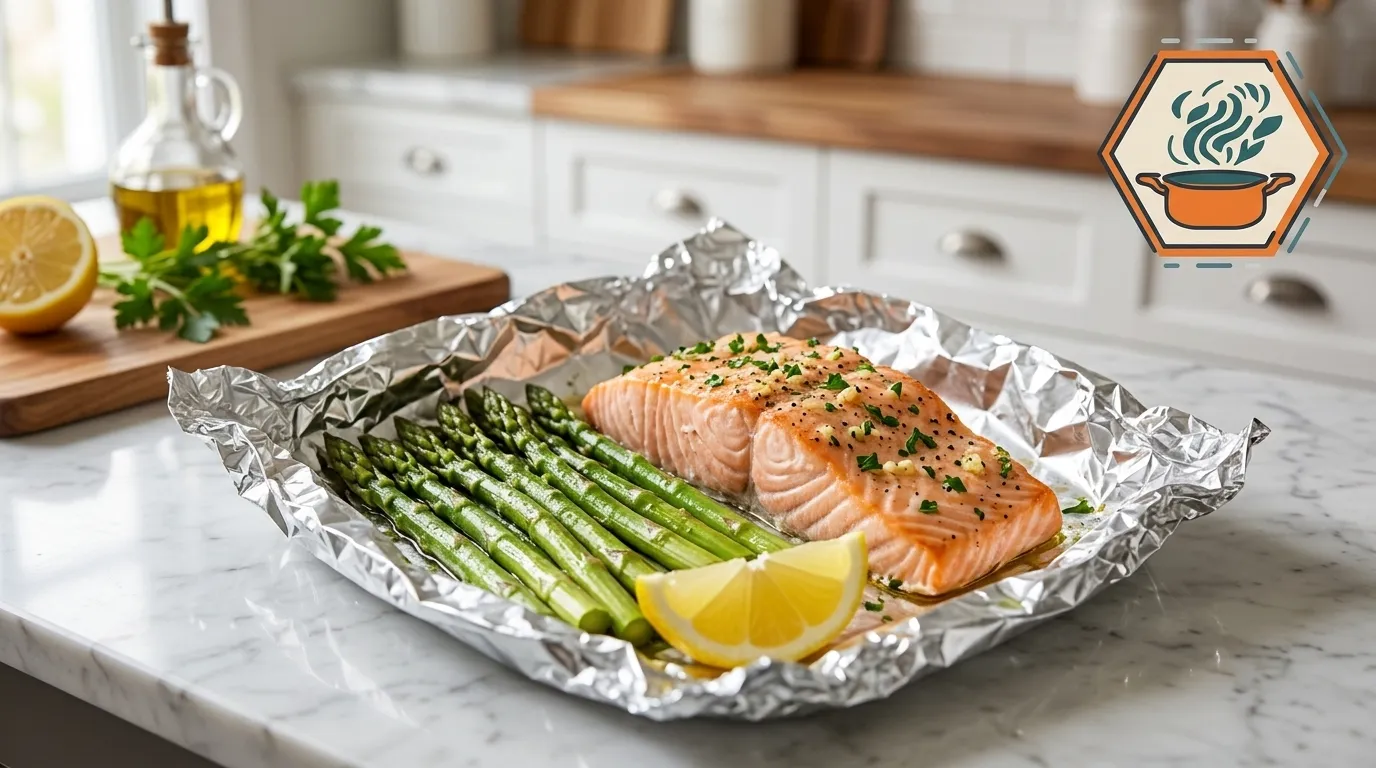
Some evenings call for a homemade dinner that feels special without leaving the kitchen covered in dirty dishes. That’s where Garlic Lemon Salmon and Asparagus Foil Packets come in. Tender salmon, fresh green asparagus, minced garlic, and bright lemon come together in individual foil packets. The result is a juicy, flavorful meal with very little cleanup.
Imagine opening a warm foil packet at the dinner table. A gentle cloud of steam rises, carrying the aroma of garlic, olive oil, and fresh lemon. Inside, the salmon is soft enough to separate with a fork. The asparagus is tender but still has a pleasant bite.
The best part? This meal takes about 30 minutes from start to finish. It’s ideal for busy families, simple weeknight dinners, or anyone who wants a satisfying seafood recipe without complicated cooking methods. For food safety, the USDA recommends cooking fish to an internal temperature of 145°F.
If you enjoy simple seafood dinners, you might also like our guide to choosing the best sauce for salmon. It offers more ideas for adding flavor to your next fish dinner.
Affiliate disclosure: As an Amazon Associate I earn from qualifying purchases. This article may contain affiliate links to kitchen tools I find useful for preparing this recipe.
JUMP TO
Why You’ll Love This Garlic Lemon Salmon Recipe
There is something comforting about a dinner that practically cooks itself.
Once the ingredients are prepared, the oven handles most of the work. Each foil packet traps moisture and creates a gentle steaming environment.
That helps keep the salmon tender while the asparagus cooks beside it.
Here are a few reasons this recipe deserves a place in your weekly meal plan:
- Quick preparation: Only 10 minutes of hands-on work.
- Simple ingredients: Fresh salmon, asparagus, lemon, garlic, and pantry seasonings.
- Minimal cleanup: Individual foil packets keep the baking sheet relatively clean.
- Easy portions: Each packet contains one serving of salmon and vegetables.
- Naturally gluten-free ingredients: No flour or breadcrumbs are required.
- Flexible serving options: Pair it with rice, quinoa, or roasted potatoes.
Salmon also provides protein and omega-3 fatty acids, making it a useful choice for a balanced eating pattern.
Ingredients for Garlic Lemon Salmon and Asparagus Foil Packets

Fresh Salmon Fillets
Use four fillets weighing approximately 5–6 ounces each. Choose pieces of similar thickness so they cook at roughly the same rate.

Fresh Asparagus
One pound provides a generous vegetable portion. Medium-thickness spears work especially well because they can finish cooking alongside the fish.

Garlic, Lemon, and Olive Oil
These ingredients create the signature flavor. Fresh garlic adds aroma, lemon brings brightness, and olive oil coats the fish and vegetables.
Complete Ingredient List
Recipe ingredients
4 servings4 salmon fillets (5–6 oz each)1 lb fresh asparagus, trimmed3 tbsp olive oil4 garlic cloves, finely minced2 tbsp fresh lemon juice1 tsp finely grated lemon zest½ tsp dried Italian seasoning½ tsp salt, or to taste¼ tsp freshly ground black pepper2 tbsp chopped fresh parsley4 fresh lemon wedges
Optional Ingredients for Extra Flavor
For a slightly richer finish, you can add:
- 1 tablespoon unsalted butter, divided among the four packets.
- ¼ teaspoon smoked paprika for subtle color.
- A small pinch of red pepper flakes for gentle heat.
- 1 teaspoon Dijon mustard mixed into the lemon sauce.
These additions are optional. The original recipe already has plenty of flavor.
How to Make Garlic Lemon Salmon and Asparagus Foil Packets
Prep: 10 min
Cook: 15–20 min
Total: 25–30 min
Serves: 4
This cooking method is straightforward. Still, a few small details can make a big difference in the final texture.
Step 1: Preheat the Oven
Preheat your oven to 400°F (200°C).
Place a large rimmed baking sheet on the counter. Cut four sheets of heavy-duty aluminum foil, approximately 12 × 18 inches each.
Each sheet should be large enough to hold one salmon fillet and a portion of asparagus while leaving room to fold and seal the edges.
If you only have regular foil, use two layers per packet.
For convenient preparation, you can find Overall Pick heavy-duty aluminum foil on Amazon.
Step 2: Prepare the Asparagus
Rinse the asparagus under cool running water and dry it with a clean kitchen towel.
Trim approximately 1–2 inches from the woody ends, or cut away the tough, pale portions.
Divide the asparagus into four equal portions.
If some spears are much thicker than others, slice the thickest ones lengthwise. This helps them cook evenly.
Step 3: Prepare the Salmon
Pat each salmon fillet dry using paper towels.
Check carefully for any remaining pin bones. Remove them with clean fish tweezers if necessary.
You can leave the skin attached. Place skin-on fillets skin-side down in the packets.
Arrange one salmon fillet beside each portion of asparagus, rather than stacking the fish directly on top of the vegetables.
This side-by-side arrangement also creates the attractive presentation shown in the reference photo.
Step 4: Make the Garlic Lemon Sauce
In a small bowl, combine:
- Olive oil
- Freshly minced garlic
- Lemon juice
- Lemon zest
- Italian seasoning
- Salt
- Black pepper
Stir until evenly mixed.
For the best flavor, use freshly squeezed lemon juice instead of bottled juice.
A fine citrus zester makes it easier to remove the yellow outer layer without scraping the bitter white pith.
You can browse Overall Pick microplane-style lemon zesters on Amazon.
Step 5: Season the Salmon and Asparagus
Spoon the garlic lemon mixture evenly over the four portions.
Make sure each salmon fillet receives some minced garlic, olive oil, and seasoning.
Coat the asparagus lightly as well.
For a richer appearance, add a small piece of butter over each salmon fillet. This is optional but adds a glossy finish.
Step 6: Seal the Foil Packets
Bring the long sides of the foil together above the food.
Fold them down several times to create a secure seal. Then fold the shorter ends inward.
Leave a little airspace above the salmon so steam can circulate.
The packets should be securely closed but not tightly pressed against the fish.
Arrange them on the rimmed baking sheet with the seams facing upward.
Step 7: Bake Until Tender
Place the baking sheet on the middle oven rack.
Bake for approximately 15–20 minutes.
Cooking time depends on the thickness of the salmon and your oven.
Begin checking thinner fillets around 12–15 minutes. Thicker pieces may require more time.
The USDA’s recommended minimum internal temperature for fish is 145°F (63°C), measured in the thickest part. A thermometer is more reliable than judging by color alone.
An instant-read thermometer is especially helpful for this recipe. See Overall Pick digital food thermometers on Amazon.
Step 8: Open and Garnish
Remove the baking sheet from the oven.
Let the packets stand briefly, then carefully open the foil away from your face. Hot steam can escape quickly.
Sprinkle each salmon fillet with fresh chopped parsley.
Add a lemon wedge beside the salmon and serve immediately.
For the closest presentation to the reference image, keep the salmon and asparagus inside the opened foil. Spoon a little cooking liquid over the fish just before serving.
The Secret to Tender Salmon With a Beautiful Finish
One of the most common questions about foil-baked salmon is whether it can develop a golden, slightly crisp surface.
The answer depends on the cooking method.
A sealed foil packet creates steam. This is excellent for keeping salmon moist, but it does not produce the same crust as pan-searing or grilling.
If you want a little more color, there are two options.
Option 1: Keep the Salmon Soft and Juicy
Follow the original recipe without changing the cooking method.
The salmon will have a moist, delicate surface with visible garlic and parsley.
This is the closest match to the supplied photograph.
Option 2: Add Light Browning
For a lightly browned surface, use an oven-safe broiler pan or baking dish for the finishing step.
Once the salmon has nearly reached its target temperature, transfer it carefully out of the foil and onto the pan. Keep the asparagus separate.
Brush the top lightly with melted butter or olive oil.
Broil briefly while watching continuously. Check the internal temperature and cook to 145°F.
This method can add some color, but it may also dry the surface. It will not create a thick, crunchy crust.
For a true seared crust, a skillet is a better choice than a sealed foil packet.
Common Mistakes to Avoid
Even simple recipes can go wrong when small details are overlooked.
Using Salmon Fillets of Different Thicknesses
A thin piece may finish cooking before a thick one.
Choose similar-sized fillets whenever possible. If they vary, check each packet separately.
Adding Too Much Lemon Juice
Lemon should brighten the salmon, not overpower it.
Two tablespoons are enough for four servings. Serve extra lemon wedges on the side for anyone who prefers a sharper flavor.
Overcrowding the Packets
If the asparagus is piled too high, it may cook unevenly.
Spread the vegetables in a relatively even layer beside the fish.
Overcooking the Salmon
Leaving salmon in the oven too long can make it dry and firm.
Use a thermometer and avoid relying only on the suggested cooking time.
Choosing Very Thick Asparagus
Large asparagus spears can remain firm after the salmon is ready.
For thick spears, cut them lengthwise or briefly blanch them before assembling the packets.
Easy Recipe Variations
Once you’ve made the original version, you can experiment with different flavors.
Garlic Butter Salmon
Replace one tablespoon of olive oil with melted unsalted butter.
The butter adds richness and pairs beautifully with lemon and parsley.
Mediterranean Salmon Packets
Add a few halved cherry tomatoes and a small sprinkle of dried oregano.
Keep the vegetable portions modest so the packets don’t become overcrowded.
Spicy Lemon Salmon
Mix a pinch of crushed red pepper flakes into the garlic sauce.
For a warmer flavor, add a little smoked paprika.
Lemon Dijon Salmon
Whisk one teaspoon of Dijon mustard into the olive oil and lemon mixture.
This gives the sauce a slightly tangy finish without covering the natural flavor of the salmon.
What to Serve With Salmon and Asparagus
This recipe already includes protein and vegetables. However, a simple side dish can turn it into a more filling dinner.

Brown Rice
Its mild, nutty flavor absorbs the garlic lemon cooking juices beautifully.

Quinoa
A light, filling option that pairs well with fresh lemon and herbs.

Roasted Potatoes
Their crisp edges offer a pleasant contrast to the soft salmon.
For more salmon dinner inspiration, read our comparison of baked versus fried salmon.
You can also pair this dish with a light pasta salad or a small portion of lemon-seasoned orzo. Our guide to orzo and pasta explains how they compare.
How to Store and Reheat Leftover Salmon
Leftover salmon can make a convenient lunch the following day.
Refrigeration
Transfer the cooked salmon and asparagus to a shallow, airtight container.
Refrigerate within two hours of cooking, or within one hour if the surrounding temperature is above 90°F.
The USDA advises using most cooked leftovers within 3–4 days when properly refrigerated.
For best eating quality, salmon is particularly enjoyable when consumed sooner.
Reheating
Place the salmon and asparagus in a covered oven-safe dish with a teaspoon of water or broth.
Warm gently in a 275°F oven, checking frequently to avoid drying out the fish.
For food safety, the USDA recommends reheating leftovers to 165°F.
Avoid reheating salmon repeatedly. Reheat only the portion you plan to eat.
For easy portioning and storage, you can browse Overall Pick glass meal prep containers on Amazon.
Print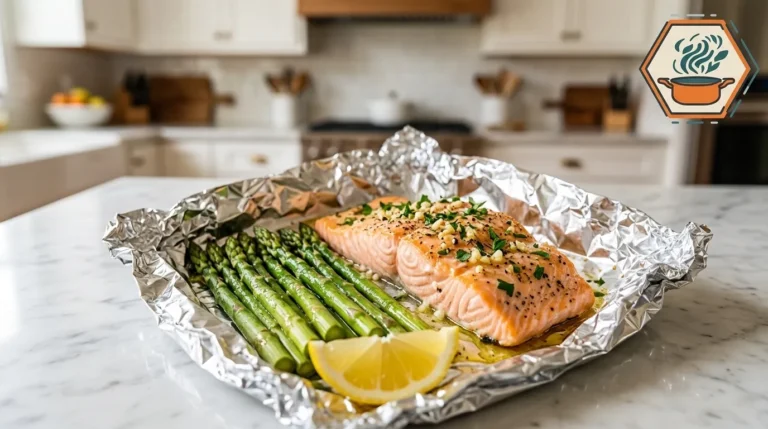
Garlic Lemon Salmon and Asparagus Foil Packets
Tender salmon fillets and fresh asparagus baked in individual foil packets with garlic, lemon, olive oil, and herbs. This easy 30-minute dinner delivers juicy salmon, flavorful vegetables, and minimal cleanup. Perfect for busy weeknights and simple family meals.
- Total Time: 30 minutes
- Yield: 4 servings
Ingredients
4 salmon fillets (5–6 ounces each, about 1¼–1½ pounds total)
1 pound fresh asparagus, woody ends trimmed
3 tablespoons olive oil
4 garlic cloves, finely minced
2 tablespoons freshly squeezed lemon juice
1 teaspoon finely grated lemon zest
½ teaspoon dried Italian seasoning
½ teaspoon salt, or to taste
¼ teaspoon freshly ground black pepper
2 tablespoons fresh parsley, chopped
4 lemon wedges, for serving
Instructions
1. Preheat the oven to 400°F (200°C). Line a rimmed baking sheet with four sheets of heavy-duty aluminum foil, approximately 12 × 18 inches each.
2. Rinse the asparagus, dry thoroughly, and trim the woody ends. Divide evenly among the four foil sheets, arranging the spears in a single layer.
3. Pat the salmon fillets dry with paper towels. Check for pin bones and remove them if needed. Place one fillet beside the asparagus on each sheet, skin-side down if using skin-on salmon.
4. In a small bowl, whisk together the olive oil, minced garlic, fresh lemon juice, lemon zest, Italian seasoning, salt, and black pepper.
5. Spoon the garlic lemon mixture evenly over the salmon and asparagus. Spread the minced garlic across the tops of the fillets.
6. Fold the long sides of each foil sheet together and seal with several folds. Fold in the short ends, leaving a little space above the food for steam to circulate.
7. Arrange the sealed packets seam-side up on the baking sheet. Bake for approximately 15–20 minutes, checking thinner fillets earlier. Cook until the thickest part of each salmon fillet reaches 145°F (63°C).
8. Carefully open the packets away from your face to avoid escaping steam. Sprinkle with chopped fresh parsley and serve immediately with fresh lemon wedges.
Notes
Choose salmon fillets of similar thickness for even cooking. Medium-thickness asparagus spears work best; split very thick spears lengthwise. Cooking time depends on salmon thickness and oven performance. Use a food thermometer to verify 145°F (63°C) in the thickest part of the fish. Sealed foil packets keep salmon moist but do not create a crisp crust. For light browning, transfer nearly cooked salmon to a broiler-safe pan and broil briefly, watching closely. Keep foil away from the broiler element. Refrigerate leftovers promptly and use within 3–4 days. Reheat leftovers to 165°F (74°C).
- Prep Time: 10 minutes
- Cook Time: 20 minutes
- Category: Dinner
- Method: Baking
- Cuisine: American
- Diet: Gluten Free
Frequently Asked Questions
Can I use frozen salmon for foil packets?
Yes, but thaw it completely in the refrigerator before following these cooking instructions.
Pat the thawed fillets dry to remove excess surface moisture.
Cooking directly from frozen requires different timing and may cause the asparagus to become too soft before the fish finishes.
Do I need to flip salmon in foil?
No. The enclosed steam and oven heat cook the fish without flipping.
Keeping the salmon in one position also helps prevent it from breaking apart.
Should salmon be baked covered or uncovered?
For this recipe, bake it covered inside sealed foil packets.
This cooking method helps retain moisture and keeps the garlic lemon mixture close to the fish.
If you prefer a browned surface, use an uncovered finishing method.
How do I know when salmon is fully cooked?
The most reliable method is to insert an instant-read thermometer into the thickest part of the fillet.
The USDA recommends 145°F for fish. Color and flaking can help describe texture, but they should not replace a thermometer.
Can I prepare salmon foil packets ahead of time?
You can trim the asparagus and mix the seasoning ingredients ahead of time.
Keep the salmon refrigerated separately until you’re ready to assemble and cook.
For the freshest flavor and best texture, add the lemon mixture shortly before baking.
Can I cook these foil packets on a grill?
Yes. Use heavy-duty foil and cook over medium, indirect heat with the grill lid closed.
Cooking time will vary depending on grill temperature and fillet thickness.
Check the salmon with a thermometer before serving.
Can I use another vegetable instead of asparagus?
Absolutely.
Thin zucchini slices, green beans, and small broccoli florets are possible alternatives.
Keep in mind that different vegetables have different cooking times. Cut firmer vegetables into smaller pieces or partially cook them first.
Final Thoughts
Garlic Lemon Salmon and Asparagus Foil Packets prove that a homemade dinner doesn’t need a long ingredient list or complicated steps.
The combination of fresh lemon, garlic, olive oil, and tender salmon creates a bright, satisfying meal. Asparagus adds color, freshness, and a pleasant texture.
With careful preparation, properly sealed packets, and an accurate cooking temperature, this recipe is easy to repeat whenever you need a quick dinner.
Serve it straight from the opened foil with chopped parsley and a fresh lemon wedge. Add rice or quinoa if you want a heartier plate.
For more approachable home-cooking ideas, visit Recipesmind, where simple ingredients become delicious everyday meals.