
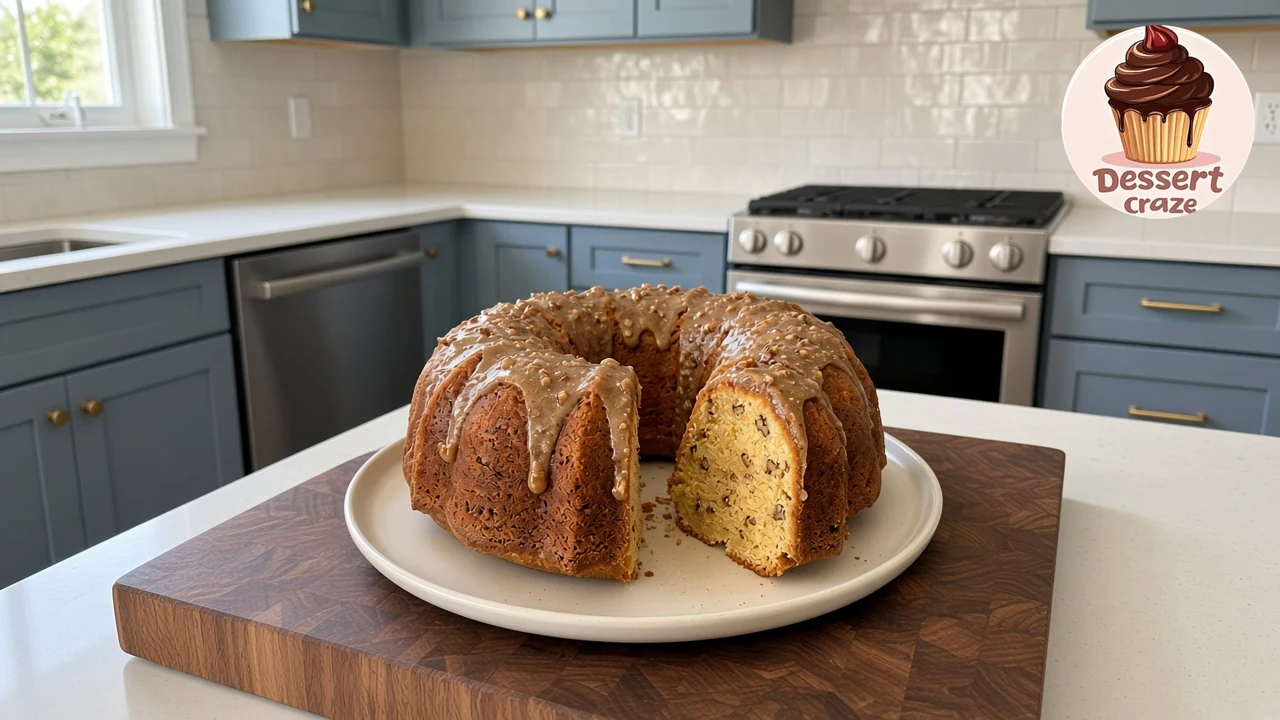
A brown butter pecan praline Bundt cake earns its place on a holiday table. The crumb is golden and buttery, toasted pecans run through every slice, and a thick brown sugar praline glaze settles into the ridges.
The idea comes from a post on the Dessert Craze Facebook page, which showed the finished cake and invited pecan dessert lovers to ask for the recipe in the comments. The baker did share that recipe. The card below follows those exact quantities, oven temperature, bake time, and servings. The wording here is original, with two practical notes: browned butter loses some water, so start checking at 50 minutes and rely on the sour cream for moisture; and a butter-heavy praline glaze can separate if it boils hard, so keep it at a gentle simmer and stir.
This is a Southern-style Bundt, not a plain vanilla cake with nuts on top. The butter is browned first, and pecans appear twice: chopped in the crumb and finely chopped in the glaze. For other pecan sweets, see our pecan cookie bars and related pecan desserts and caramel pecan cheesecake bars.
Affiliate Disclosure: As an Amazon Associate I earn from qualifying purchases. Product links in this article may earn a commission at no additional cost to you.
What’s in This Post
- Why This Brown Butter Pecan Praline Bundt Cake Works
- Tools You’ll Need
- Ingredients, at a Glance
- Toast the Pecans and Brown the Butter
- Mix the Batter
- Bake and Cool the Bundt
- Make the Praline Glaze
- Glaze and Serve
- Timing and Make-Ahead
- Storage and Food Safety
- Common Mistakes and Easy Fixes
- FAQ
Why This Brown Butter Pecan Praline Bundt Cake Works
A Bundt this rich can dry at the edges if you treat it like a standard yellow cake. A few details keep the crumb tender and the glaze thick instead of greasy.
- Browned butter: Cooking 1 cup of unsalted butter until the milk solids turn golden gives the cake a toasted, nutty flavor. Browning also drives off some of the water in the butter, and the 1 cup of sour cream compensates. Start checking at 50 minutes and pull the cake when a skewer comes out clean or with a few moist crumbs.
- Two sugars and sour cream: Packed light brown sugar and granulated sugar sweeten the crumb and help it brown. Room-temperature eggs blend into the still-liquid browned butter, and sour cream keeps the cake moist while its acidity works with the baking soda.
- Toasted pecans, twice: One cup of chopped toasted pecans goes into the batter; another half cup, chopped more finely, goes into the glaze.
- A gently simmered praline glaze: The glaze is butter-heavy: 1/2 cup of butter to only 1/4 cup of heavy cream, plus brown sugar. A hard boil can make the fat separate. Keep the heat at medium-low, stir, and look for a gentle bubble for about 2 minutes. If it splits, take the pan off the heat and whisk in a teaspoon of warm cream.
The same toasted milk solids show up in our caramel apple blondies. For another Southern-style cake with a simple glaze, try the lemon 7-Up cake.
Tools You’ll Need
A few well-chosen pans and utensils make the steps more predictable.
- The recipe calls for a 10-inch Bundt pan. The fluted pan in the photos is the Nordic Ware Original Bundt Pan, 12-Cup, about 10.5 inches across and 12 cups in capacity, and that is the pan this article recommends. Pans labeled “10-inch” can also be 10-cup or 15-cup styles; a much larger pan bakes a shorter cake. (The listing includes other colors and pack sizes; use the 12-cup Original.)
- A light-colored saucepan is essential for browning butter, because you need to see the milk solids turn golden. The All-Clad D3 Stainless 3-Quart Saucepan with Lid is a durable stainless option with a pale interior, and it works for the glaze as well. (The listing includes other capacities; choose the 3-quart size.)
- An OXO Good Grips 11-Inch Balloon Whisk blends the flour, baking powder, baking soda, and salt before they go into the wet mixture. (The listing also offers bundles; this link is for the 11-inch balloon whisk.)
- A heat-safe GIR Ultimate 11-Inch Silicone Spatula (Ultimate 11-inch size, Black; other colors and sizes are also on the listing) folds the batter and pecans and scrapes the glaze from the pan.
- After 15 minutes in the pan, invert the cake onto a serving plate or a Wilton Gold Premium 3-Tier Cooling Rack and cool it completely before you glaze. If you invert onto a rack, move the cake to a plate first, or the glaze will drip through the wires.
You will also want a heatproof bowl for the browned butter, a second bowl for the dry ingredients, a wooden skewer, and butter plus flour (or a baking spray that contains flour) to coat every ridge of the pan.
Ingredients, at a Glance
The cake uses 1 cup (226 g) of unsalted butter, browned and cooled until it is no longer hot but still fluid; 1 cup (200 g) of packed light brown sugar and 3/4 cup (150 g) of granulated sugar; 4 large room-temperature eggs; 2 teaspoons of vanilla extract; and 1 cup (240 g) of sour cream. The dry mix is 2 3/4 cups (345 g) of all-purpose flour, 2 teaspoons of baking powder, 1/2 teaspoon of baking soda, and 1/2 teaspoon of salt, with 1 cup (110 g) of chopped toasted pecans folded in last.
The glaze uses 1/2 cup (113 g) of unsalted butter, 3/4 cup (150 g) of packed light brown sugar, 1/4 cup (60 ml) of heavy cream, 1/2 teaspoon of vanilla extract, 1/2 cup (55 g) of finely chopped toasted pecans, and a pinch of salt. That is about 1 1/2 cups (165 g) of toasted pecans in all. The card lists them as already toasted; the short how-to is in the next section and does not change the ingredient list.
Toast the Pecans and Brown the Butter
If the pecans are still raw, toast them before you mix the batter. Spread them in a single layer and bake at 350°F (175°C) for 6 to 8 minutes, until they smell nutty and look a shade darker. Cool completely, then chop 1 cup for the cake and chop the remaining 1/2 cup more finely for the glaze.
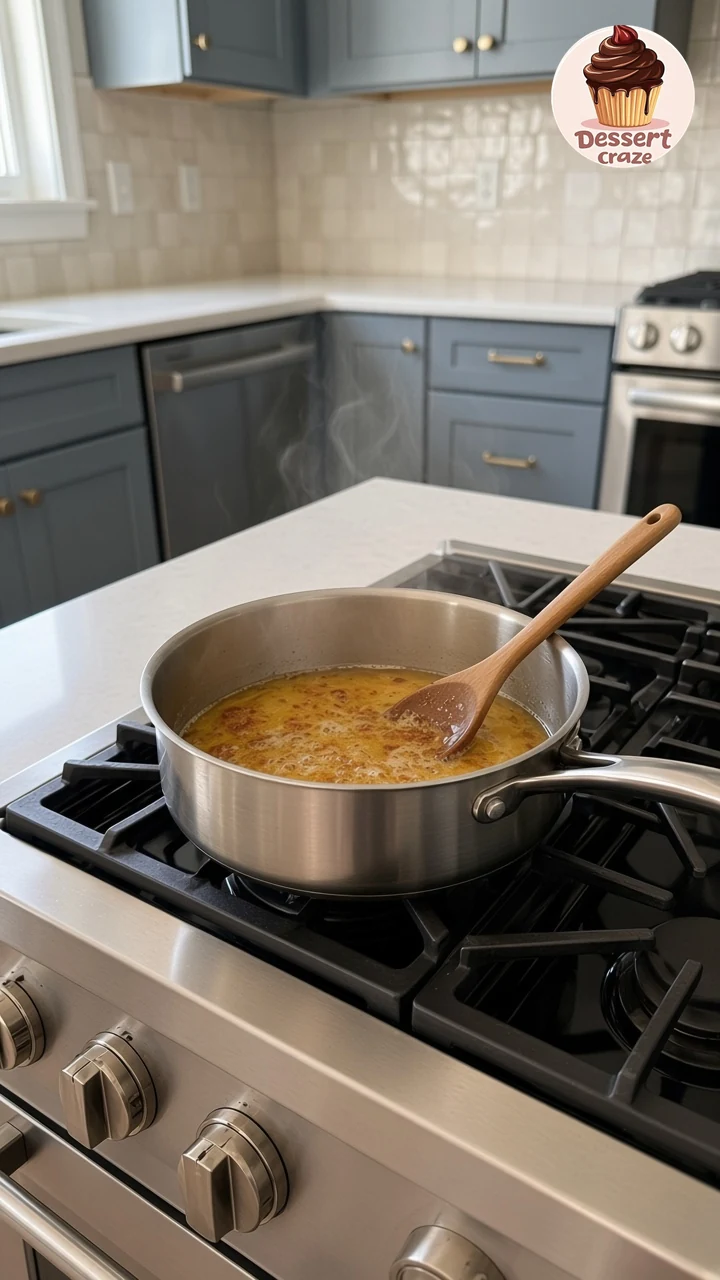
Melt 1 cup of unsalted butter in a light-colored saucepan over medium heat, stirring occasionally, for 5 to 8 minutes. The butter will foam, then the foam will thin and the milk solids will turn golden. When the color is golden brown and the smell is nutty, take the pan off the heat right away. Pour the butter, including the browned bits, into a heatproof bowl and cool it until it is no longer hot but still liquid.
Mix the Batter
While the butter cools, heat the oven to 350°F (175°C). Grease and flour a 10-inch Bundt pan thoroughly, including the inner tube and every ridge. A missed crease is the usual reason a Bundt sticks. If you use a baking spray that contains flour, still check the tight corners and touch up any dry spots.
Beat the packed light brown sugar, granulated sugar, and cooled browned butter until they are combined. Liquid browned butter will not cream the way softened butter does, so do not wait for a pale, fluffy mixture. Add the eggs one at a time, then stir in the vanilla and sour cream.
In a second bowl, whisk the flour, baking powder, baking soda, and salt. Fold the dry mixture into the wet mixture gradually, stopping when no dry flour remains. Gently fold in the 1 cup of chopped toasted pecans.
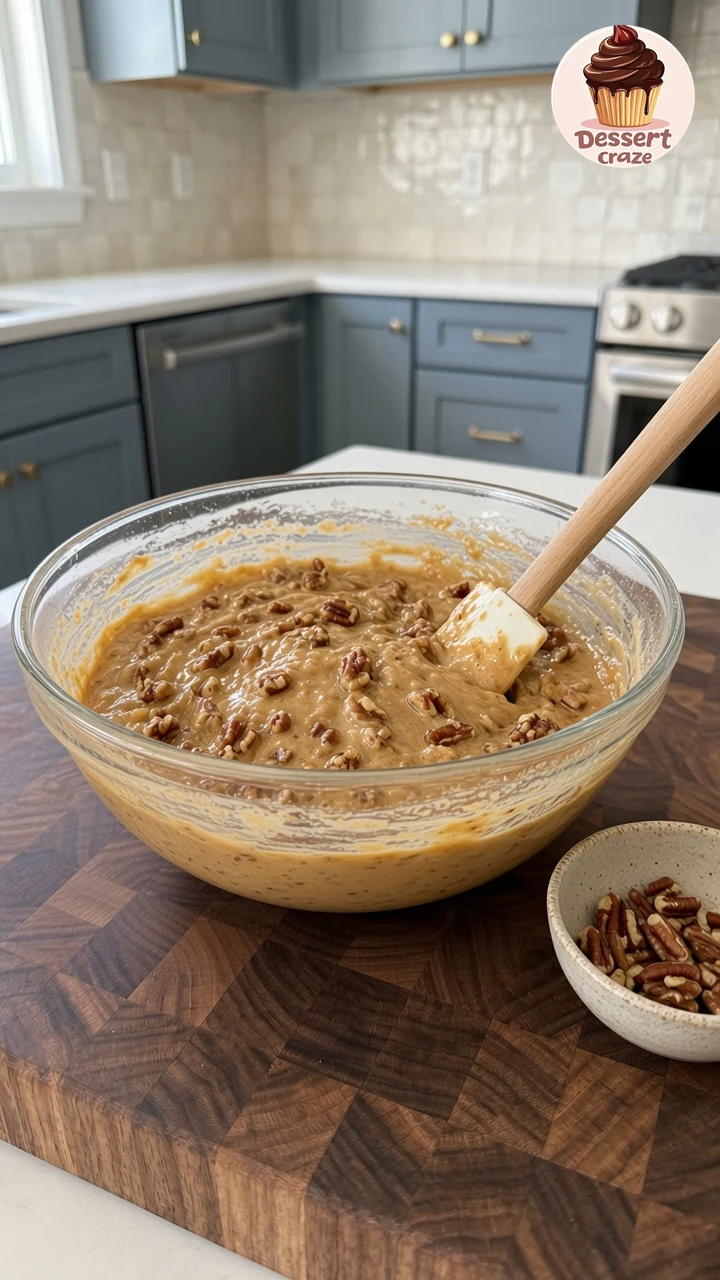
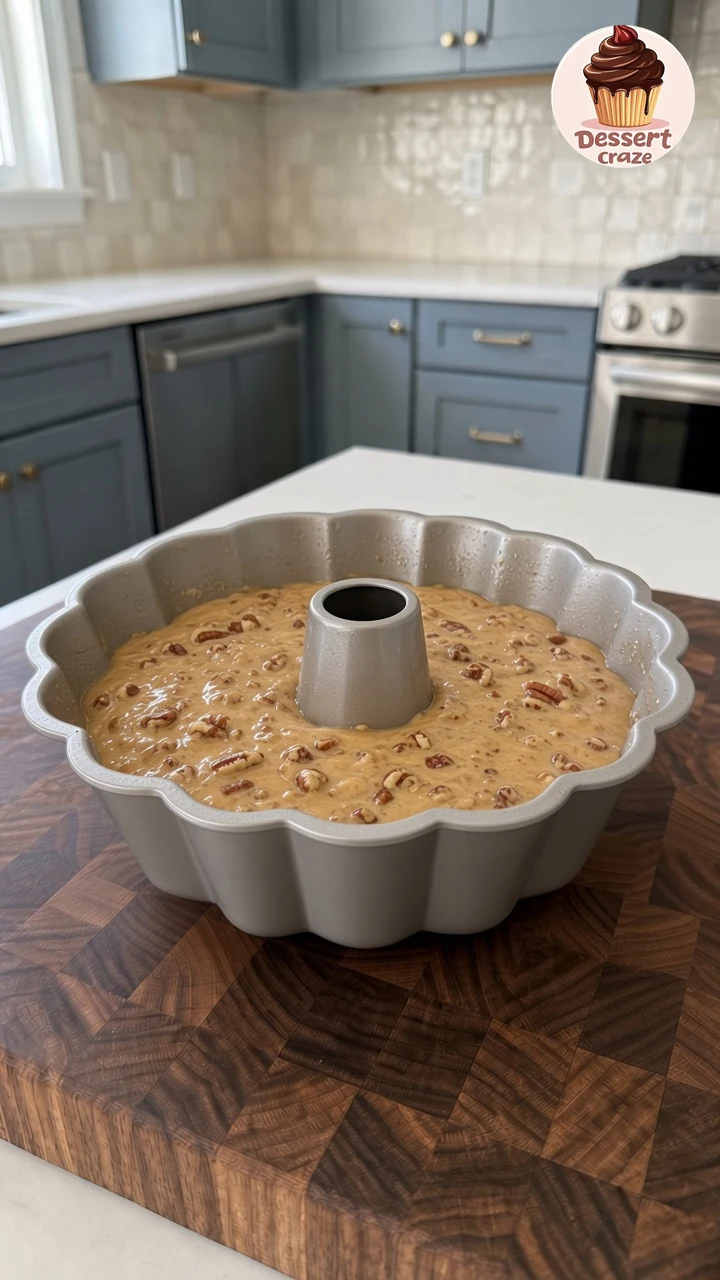
Pour the batter into the prepared pan and smooth the top. The pan should be about two-thirds to three-quarters full, with the center tube clearly visible.
Bake and Cool the Bundt
Bake for 50 to 60 minutes, until a wooden skewer inserted into the thickest part comes out clean or with a few moist crumbs. Start checking at 50 minutes. Because the browned butter has already lost some water, the cake can dry if it stays in the oven after it is done. Tent loosely with foil if the top browns too fast.
Cool the cake in the pan for 15 minutes, then invert it carefully onto a serving plate or a wire rack. Let it cool completely before you glaze, or the praline will slide off. If you turned the cake out onto a rack, move it to a plate once it is cool, then glaze.
Make the Praline Glaze
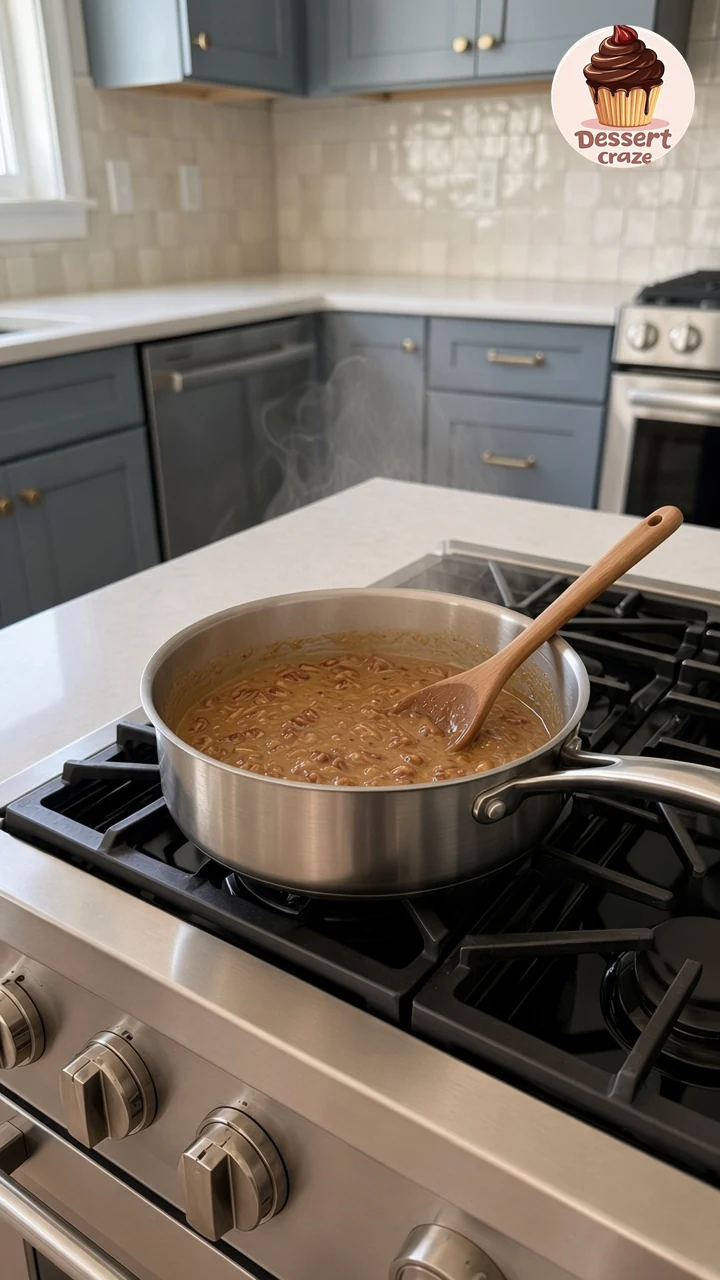
In a saucepan over medium-low heat, melt the remaining 1/2 cup of unsalted butter with the packed light brown sugar and the heavy cream. Stir until the mixture is smooth and just beginning to bubble gently. Simmer about 2 minutes, stirring often. Do not let it boil hard. This glaze has more butter than cream, and a rolling boil is what causes the fat to separate.
Take the pan off the heat and stir in the vanilla, the finely chopped toasted pecans, and the pinch of salt. If the glaze looks broken or greasy, whisk in a teaspoon of warm cream off the heat until it comes back together. Cool several minutes, until it is thick but still spoonable. If it sets too firm, warm it gently with a splash of cream.
Glaze and Serve
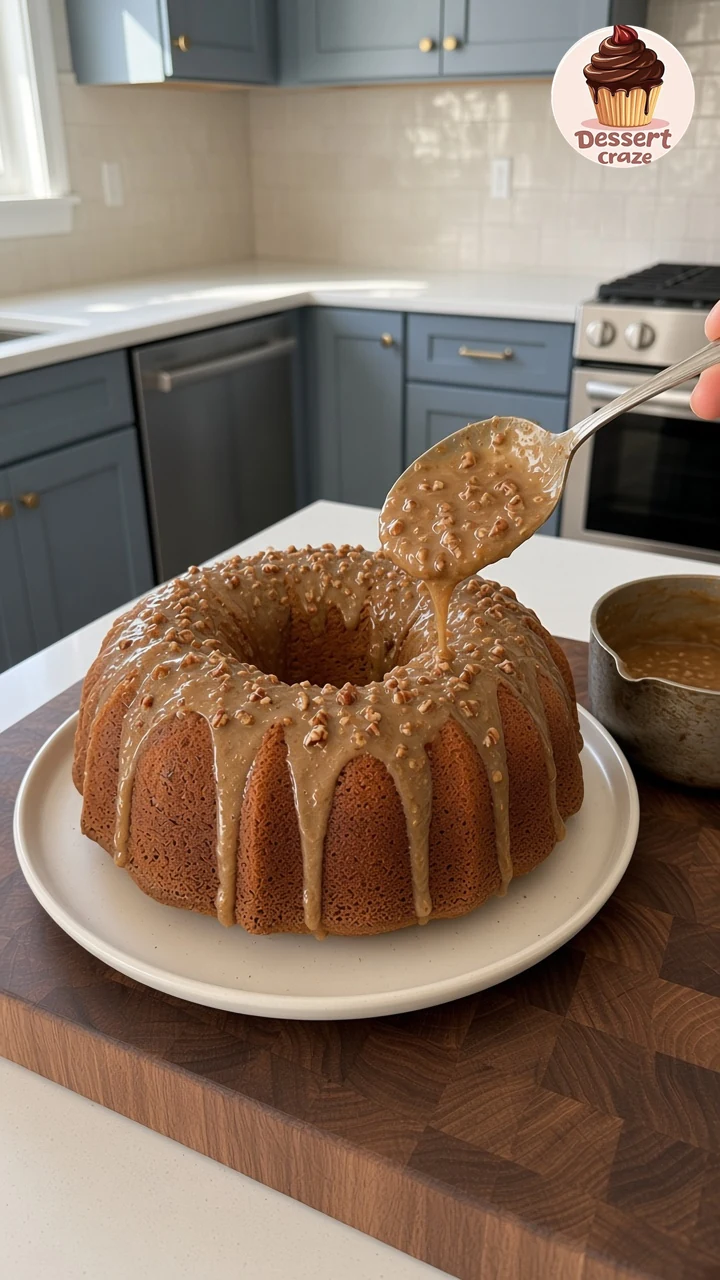
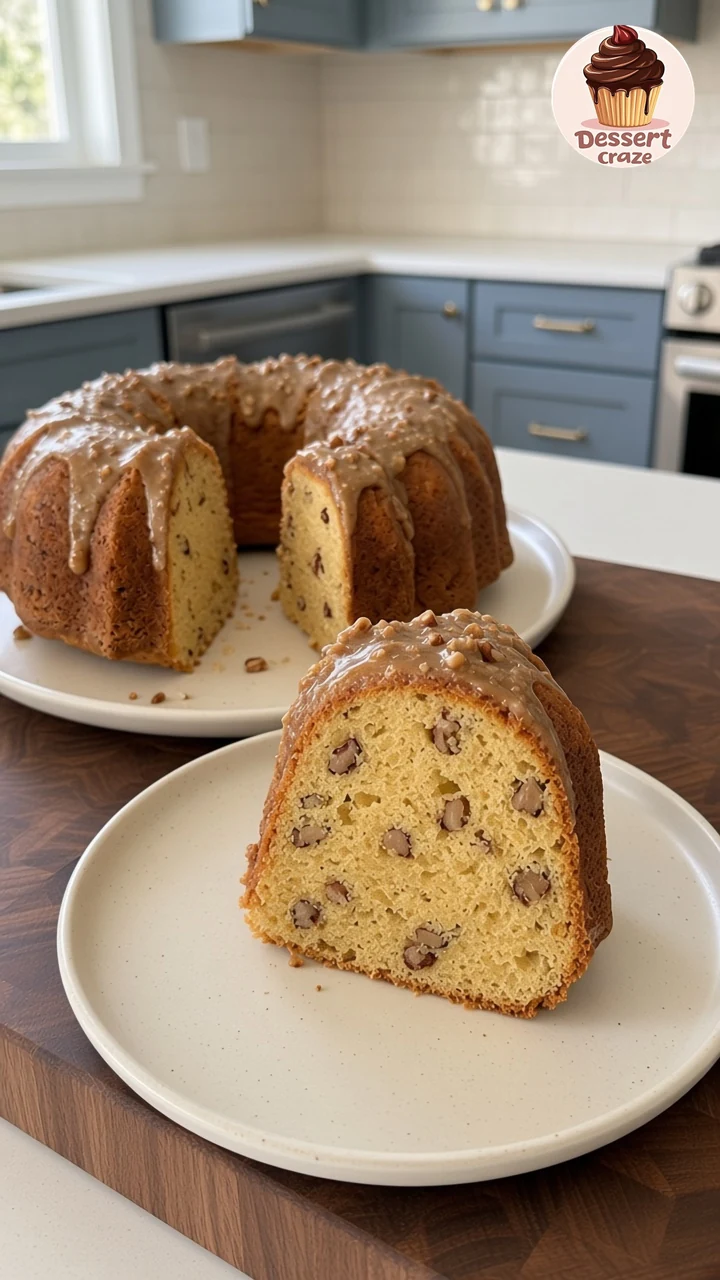
Spoon the warm praline glaze over the completely cooled cake and let it flow down the ridges on its own. Let it set for 15 to 20 minutes before you slice, so the topping holds a clean edge. A long, sharp knife, wiped between cuts, gives the tidiest slices.
Timing and Make-Ahead
Plan on 30 minutes of active prep, 55 minutes of baking (the midpoint of the 50- to 60-minute window; start checking at 50), about 2 hours of cooling, and 15 to 20 minutes for the glaze to set. The browned butter can cool while you grease the pan and whisk the dry ingredients, which is how the 30-minute prep stays realistic. The 2-hour cooling period includes the 15-minute rest in the pan, for a total of about 3 hours 45 minutes until the cake is ready to slice.
- Prep: 30 minutes
- Bake: 50 to 60 minutes (about 55 minutes; start checking at 50)
- Cooling: about 2 hours, including 15 minutes in the pan
- Glaze set: 15 to 20 minutes
- Ready to slice: about 3 hours 45 minutes
- Yield: 12 to 14 servings
You can toast the pecans a day ahead. The baked, unglazed cake can sit covered at room temperature for several hours, or overnight, before you glaze it. Pour the glaze the day you serve the cake. If it thickens in the pan, loosen it with a splash of cream.
Storage and Food Safety
The baker’s storage guidance is to keep the cake covered at room temperature for up to 2 days, or refrigerate it for up to 5 days. The cake contains sour cream, butter, and a cream-and-butter glaze, so prefer a cooler kitchen for a room-temperature hold. Per the FDA’s guidance on storing food safely and the USDA FSIS leftovers and food safety page, refrigerate perishable food within 2 hours of serving (1 hour if the room is above 90°F). The FDA’s safe food handling page covers the same two-hour rule. In a warm kitchen, refrigerate the cake after serving.
Cover leftovers so the crumb does not dry out. If you refrigerate the cake, let a slice sit out for 20 to 30 minutes so the butter in the crumb and glaze softens.
Common Mistakes and Easy Fixes
- Burning the butter: Dark or black milk solids taste bitter. Use a light-colored pan and pull it as soon as the solids are golden. If it goes too far, start over.
- Trying to cream liquid butter until fluffy: Beat only until the sugars and cooled browned butter look combined, then add the eggs.
- A stuck Bundt: Grease and flour every ridge and the center tube. Cool 15 minutes in the pan; much longer and the cake can cling, while a much shorter rest can cause it to split.
- A dry crumb: Start checking at 50 minutes. A few moist crumbs on the skewer are a good sign. Extra minutes past doneness show up quickly after the butter has been browned.
- A separated glaze: Keep a gentle simmer and stir. If it splits, whisk in a teaspoon of warm cream off the heat. If it thickens too much, loosen it with a splash of cream over low heat.
- Glaze that slides off: The cake must be completely cool, and the glaze should be thick but still spoonable.
FAQ
What if I do not have a 10-inch Bundt pan?
Use a classic 12-cup Original Bundt, about 10.5 inches across, which matches the cake in the photos. A 10-cup pan may be a tight fit; do not fill any Bundt more than about three-quarters full. A 15-cup pan will bake a shorter cake, so start checking earlier.
Can I skip browning the butter and use melted butter instead?
You can, but you will lose the toasted, nutty flavor that defines this cake. If you use plain melted butter, still start checking at 50 minutes and bake only until the skewer test is met. The recipe card itself uses browned butter.
Do I have to toast the pecans?
The ingredient list calls for toasted pecans because toasting concentrates their flavor. Raw pecans will work in a pinch, but the cake and glaze will taste flatter. Six to eight minutes at 350°F is enough.
Why did my praline glaze look oily or grainy?
The mixture probably boiled too hard, and the butter separated from the sugar and cream. Take it off the heat and whisk in a teaspoon of warm cream. Next time, stay at medium-low and simmer gently for about 2 minutes, stirring frequently.
Can I bake this cake a day ahead?
Yes. Bake and cool the Bundt, then cover it and hold it at room temperature if your kitchen is cool, or refrigerate it. Make the glaze and spoon it on the day you serve the cake, then let it set for 15 to 20 minutes.
How should I store leftovers?
Follow the baker’s guidance: cover the cake and keep it at room temperature for up to 2 days, or refrigerate it for up to 5 days. After serving, use the FDA two-hour window (one hour above 90°F), and prefer the refrigerator in a warm kitchen.
Print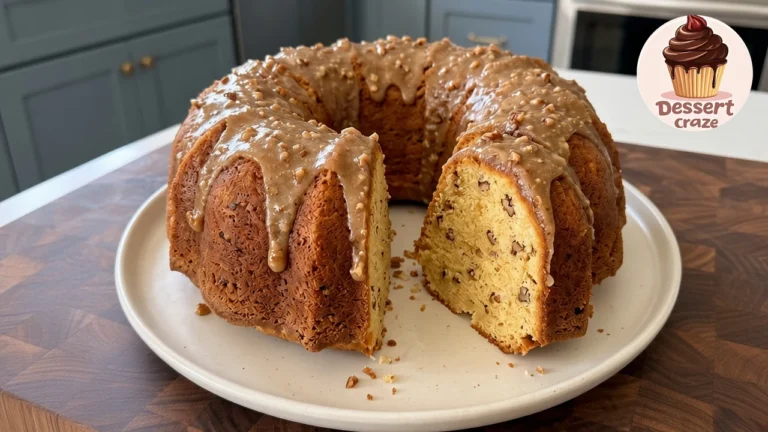
Brown Butter Pecan Praline Bundt Cake
A golden Southern-style Bundt cake made with browned butter and toasted pecans, finished with a thick homemade brown sugar praline glaze.
- Total Time: 3 hours 45 minutes
- Yield: 12 to 14 servings
Ingredients
For the Cake
1 cup (226 g) unsalted butter
1 cup (200 g) packed light brown sugar
3/4 cup (150 g) granulated sugar
4 large eggs, room temperature
2 teaspoons vanilla extract
1 cup (240 g) sour cream
2 3/4 cups (345 g) all-purpose flour
2 teaspoons baking powder
1/2 teaspoon baking soda
1/2 teaspoon salt
1 cup (110 g) chopped toasted pecans
For the Praline Glaze
1/2 cup (113 g) unsalted butter
3/4 cup (150 g) packed light brown sugar
1/4 cup (60 ml) heavy cream
1/2 teaspoon vanilla extract
1/2 cup (55 g) finely chopped toasted pecans
Pinch of salt
Instructions
Brown the butter: Melt 1 cup of unsalted butter in a light-colored saucepan over medium heat, stirring occasionally, for 5 to 8 minutes, until it is golden brown and smells nutty. Pour it into a heatproof bowl, including the browned bits, and let it cool until it is no longer hot but still liquid.
Prepare the pan: Heat the oven to 350°F (175°C). Thoroughly grease and flour a 10-inch Bundt pan, especially the ridges and the center tube.
Mix the batter: Beat the brown sugar, granulated sugar, and cooled browned butter until combined. Add the eggs one at a time, mixing after each addition. Stir in the vanilla and sour cream.
Add the dry ingredients: In another bowl, whisk the flour, baking powder, baking soda, and salt. Gradually fold them into the wet mixture until just combined. Gently fold in the 1 cup of toasted pecans.
Bake: Pour the batter into the prepared pan and smooth the surface. Bake 50 to 60 minutes, until a wooden skewer inserted into the thickest part comes out clean or with a few moist crumbs. Cool in the pan for 15 minutes, then carefully invert onto a serving plate or a wire rack. Let the cake cool completely.
Make the praline glaze: In a saucepan over medium-low heat, melt the remaining 1/2 cup of butter with the brown sugar and heavy cream. Stir until smooth and gently bubbling. Simmer about 2 minutes, stirring frequently. Remove from the heat and stir in the vanilla, chopped pecans, and salt. Cool several minutes, until the glaze is thick but still spoonable.
Glaze and serve: Spoon the warm praline glaze over the completely cooled cake, allowing it to flow naturally down the ridges. Let it set for 15 to 20 minutes before slicing.
Notes
- Timing: 30 minutes active prep + 55 minutes baking (the midpoint of the 50- to 60-minute window; start checking at 50) + about 2 hours of cooling (including 15 minutes in the pan) + 15 to 20 minutes for the glaze to set = about 3 hours 45 minutes until ready to slice. The browned butter can cool while you grease the pan and whisk the dry ingredients.
- Browned butter loses some water as it cooks. The sour cream in the batter helps keep the crumb moist, so start checking the cake at 50 minutes and do not overbake.
- The glaze is butter-heavy and can separate if it boils hard. Keep it at a gentle simmer and stir. If it separates, take the pan off the heat and whisk in a teaspoon of warm cream. If the glaze thickens too much as it cools, warm it gently with a splash of cream.
- Toast the pecans for a richer flavor (about 6 to 8 minutes at 350°F, then cool) before chopping. The ingredient list already calls for toasted pecans.
- Take the browned butter off the heat as soon as the milk solids turn golden. Grease every ridge of the Bundt pan, including the center tube, so the cake releases cleanly.
- Always cool the cake completely before glazing. If you invert it onto a wire rack, move it to a serving plate before you spoon on the glaze.
- The classic pan that matches the photos is a 12-cup Original Bundt (about 10.5 inches across). The recipe calls for a 10-inch Bundt; a much larger 15-cup pan will bake a shorter cake.
- Store the cake covered at room temperature for up to 2 days, or refrigerate it for up to 5 days (the baker’s guidance). After serving, refrigerate perishable food within 2 hours (1 hour above 90°F). In a warm kitchen, prefer the refrigerator.
- Prep Time: 30 minutes
- Cooling Time: 2 hours
- Cook Time: 55 minutes
- Category: Dessert
- Method: Baked
- Cuisine: American
- Diet: Vegetarian