
This post contains affiliate links. As an Amazon Associate I earn from qualifying purchases.
Some of the best kitchen habits are also the easiest. These carrots with olive oil are just that: soft, sweet carrot coins, steamed until tender, then tossed with a spoonful of extra-virgin olive oil and a pinch of salt. It takes about 20 minutes and a single saucepan, and it turns a bag of carrots into a side dish that goes with almost anything.
The idea comes from a short reel shared by Rootmora on Facebook. A spoon drizzles olive oil over a bowl of tender carrots, a quick stir, and every coin turns glossy. The reel starts with the carrots already cooked, so it skips the parts you actually need to know. We filled in every step, from washing and slicing to steaming times, doneness cues, seasoning and storage.
The photos in this post are illustrative AI-generated images. Use the recipe card for exact amounts, times, and yield.
Table of Contents
- Why You’ll Love These Carrots With Olive Oil
- Why Olive Oil and Carrots Make a Smart Pair
- Ingredients You’ll Need
- Helpful Tools
- How to Make Carrots With Olive Oil
- Carrots With Olive Oil Recipe Card
- Steaming vs. Boiling: Which Should You Choose?
- Easy Flavor Variations
- What to Serve With Them
- Storage, Reheating and Make-Ahead
- Frequently Asked Questions
Why You’ll Love These Carrots With Olive Oil
A drizzle of good olive oil coats each coin with a silky, fruity finish and brings out the carrots’ natural sweetness.
- Five basic ingredients. Carrots, extra-virgin olive oil, salt, pepper, and water for steaming.
- One pan, about 20 minutes. Most of that time is hands-off while the carrots steam.
- Kid-friendly and soft. Tender coins are easy to eat, and the flavor is mild and sweet.
- Flexible. Keep them plain like the reel, or dress them up with lemon, garlic, herbs, or a touch of honey.
If you love carrots as a side, you’ll find even more ideas in our roundup of easy diced carrot recipes.
Why Olive Oil and Carrots Make a Smart Pair
The reel’s tip is grounded in real nutrition science, so let’s keep it accurate. Carrots are rich in beta-carotene, the orange pigment your body can turn into vitamin A. According to the NIH Office of Dietary Supplements, vitamin A is important for normal vision, the immune system, and growth. Its vitamin A and carotenoids fact sheet lists carrots among the foods that provide it.
Beta-carotene is fat-soluble. In other words, it dissolves in fat, not water, and your body absorbs it better when some fat is in the same meal. In a small study published in the American Journal of Clinical Nutrition, people who ate a vegetable salad that included carrots with a fat-free dressing absorbed almost no carotenoids. Absorption rose with a reduced-fat dressing and was highest with a full-fat one.
Cooking helps too. The NIH’s health professional fact sheet on vitamin A notes that the body usually absorbs only about 10% to 30% of the beta-carotene in foods, and that cooking and heat treatment can increase how much is available. In another small study, women who ate cooked, pureed carrots and spinach saw a bigger rise in blood beta-carotene than when they ate the same amount raw.
So warm, tender carrots with a spoonful of olive oil really are a smart combination. Just keep it in perspective. These carrots support a balanced diet; they won’t sharpen your eyesight or treat any condition. For nutrient details on specific foods, USDA FoodData Central is a free, reliable tool.
Ingredients You’ll Need
Here’s everything for 4 servings of carrots with olive oil. The exact amounts are in the printable recipe card below.
- Carrots: 1 pound (450 g), about 6 medium. Choose firm carrots with smooth skin and a bright color.
- Extra-virgin olive oil: 1 tablespoon to start. Add up to 1 more tablespoon if you like them richer.
- Salt: 1/4 teaspoon fine sea salt, or to taste. Add 1 teaspoon more to the water if you boil the carrots.
- Black pepper: a pinch of freshly ground pepper.
- Optional extras: 1 to 2 teaspoons fresh lemon juice, 1 small garlic clove, 1 tablespoon chopped fresh parsley or dill, or 1 teaspoon honey for a light glaze.
Helpful Tools
You can make this with basic kitchen gear, but these tools make it quicker and easier:
- OXO Good Grips Stainless Steel Steamer Basket: holds the carrots above the water and fits pots 8 inches wide and up. The extendable handle makes lifting it out easy.
- Cuisinart Chef’s Classic 3-Quart Saucepan with Cover: a lidded saucepan for steaming or boiling. Before you buy, make sure your steamer basket fits inside your pot.
- Kuhn Rikon Original Swiss Peeler: a sharp Y-peeler that strips carrot skin in long, quick strokes.
- Victorinox Fibrox Pro 8-Inch Chef’s Knife: a reliable, sharp knife for slicing even coins.
- OXO Good Grips Precision Pour Glass Oil Dispenser: lets you drizzle olive oil slowly and with control, just like the spoon in the reel.
- MALACASA 24 oz White Porcelain Bowls: simple white bowls that make the bright orange carrots stand out.
You’ll also need a cutting board, a fork, a measuring spoon, a colander if you boil the carrots, and a large spoon for tossing.
How to Make Carrots With Olive Oil
These steps follow the reel and add back everything it skips before and after the drizzle.
Step 1: Wash, Peel and Slice the Carrots
Rinse the carrots under cool running water and scrub them well. The FDA’s produce safety guide recommends washing produce under running water, without soap, even if you plan to peel it. Trim off the tops and the thin root ends.
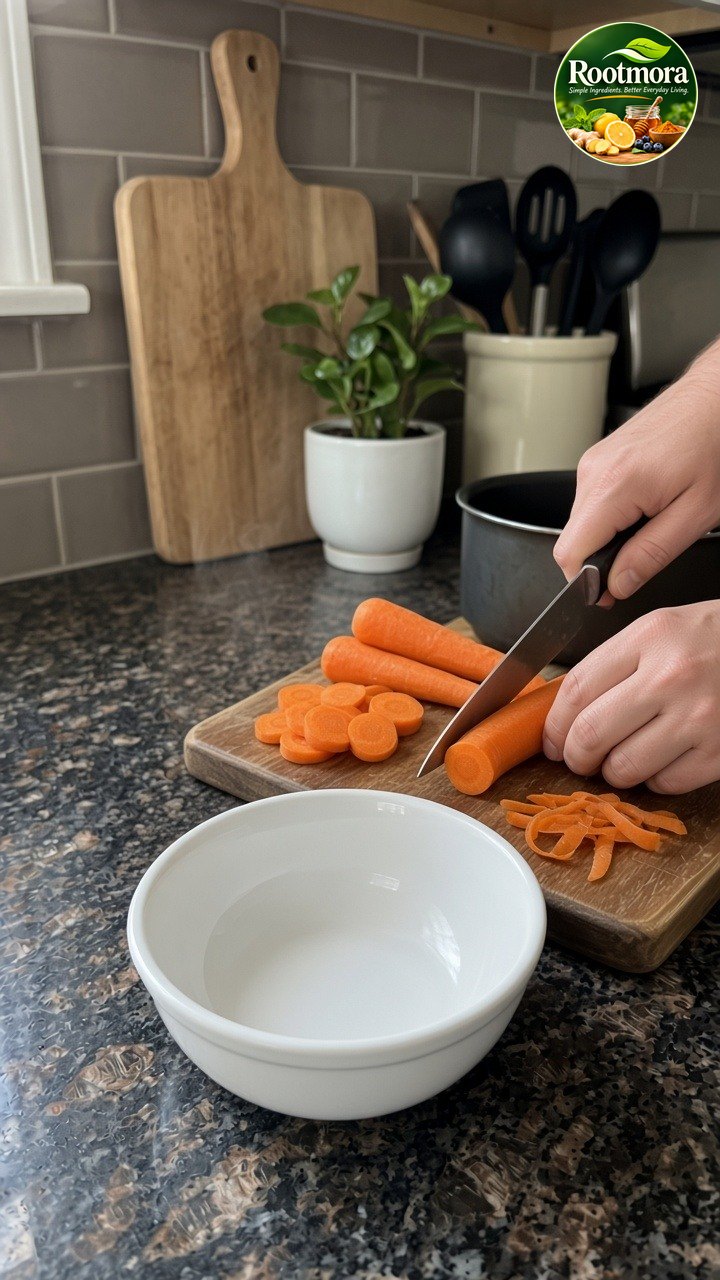
Peel the carrots with a vegetable peeler. Peeling is optional if they’re young and well scrubbed, but peeled carrots look brighter and smoother, like the ones in the reel. Then slice them into even rounds about 1/4 inch thick. Even slices cook evenly, so you won’t get mushy coins next to hard ones. If one end of a carrot is very wide, cut those coins in half.
Step 2: Steam the Carrots Until Fork-Tender
Pour about 1 inch of water into a saucepan and set a steamer basket inside. The water should sit just below the basket, not touching it. Cover the pan and bring the water to a boil over high heat.
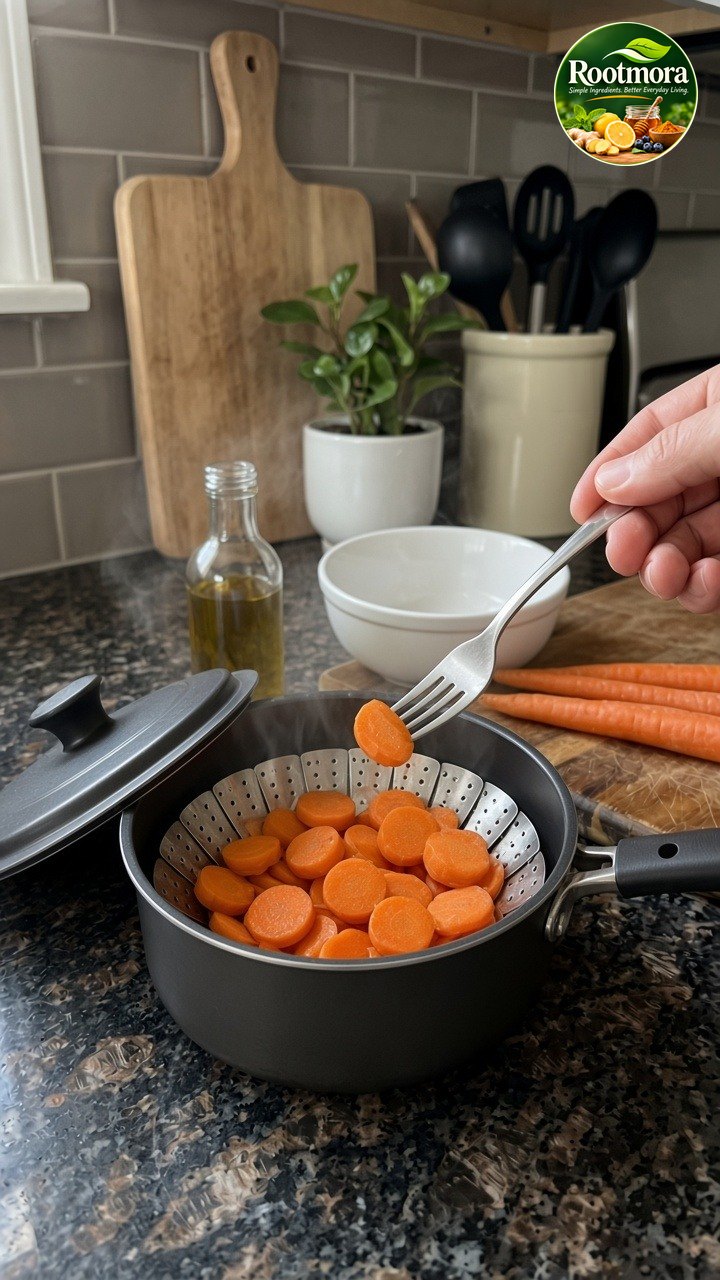
Add the carrot coins in an even layer, cover, and lower the heat to medium so the water keeps a steady boil. Steam for 7 to 10 minutes. Around 7 minutes they’ll be tender with a slight bite. For the soft, spoon-tender texture shown in the reel, go to 9 or 10 minutes. Check by piercing a coin with a fork. It’s ready when the fork slides in with almost no resistance. If the pan starts to run dry, add a splash of hot water.
Prefer to boil? Bring about 4 cups of water and 1 teaspoon of salt to a boil in a saucepan. Add the carrots and simmer for 5 to 7 minutes, until fork-tender, then drain them in a colander.
Step 3: Drain Well
Lift the basket out, or drain the boiled carrots, and let them steam off for about a minute. This small pause helps a lot. Oil and water don’t mix, so wet carrots make the olive oil slide off. Drier carrots let it cling to every coin.
Step 4: Drizzle With Olive Oil and Toss
Tip the warm carrots into a serving bowl. Drizzle 1 tablespoon of extra-virgin olive oil over the top, just like the spoon in the reel.
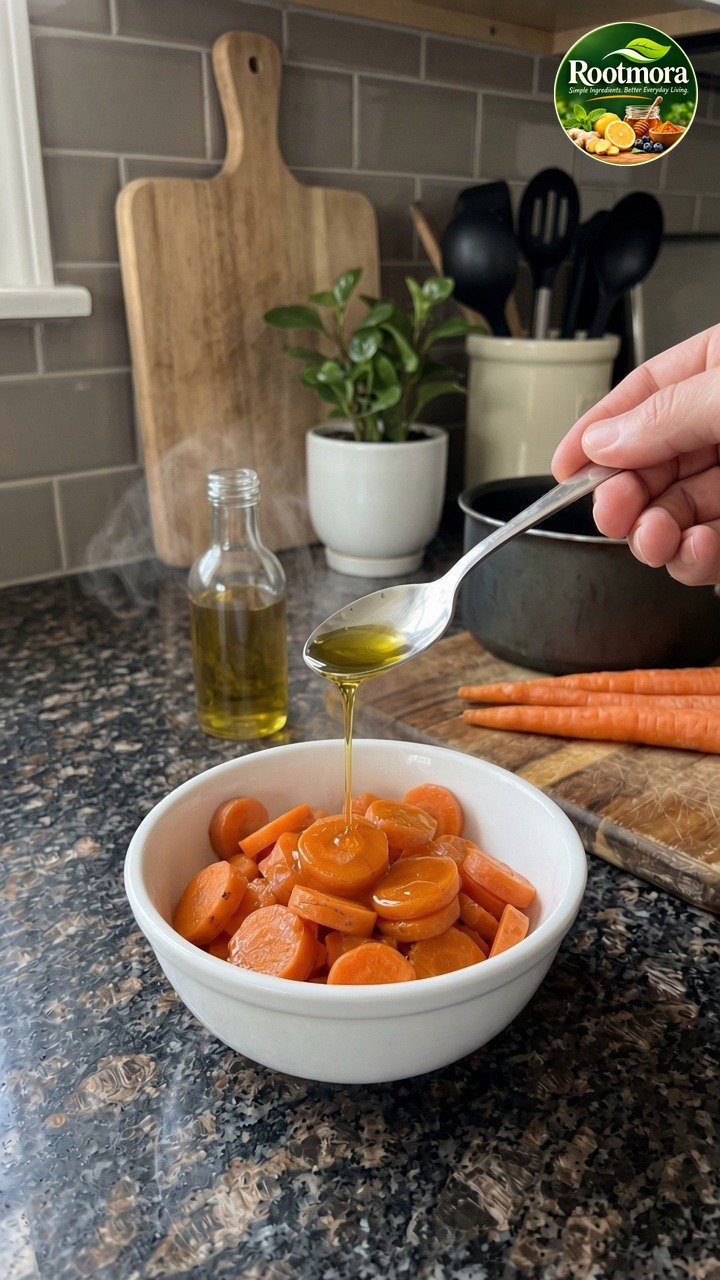
Sprinkle with the salt and a pinch of pepper. Then stir gently with a large spoon until every coin is glossy. Warm carrots soak up the flavor of the oil best, so don’t let them cool first.
Step 5: Taste and Serve
Taste one coin and adjust. Add a little more salt, a squeeze of lemon, or a few more drops of oil if you like. For the classic look from the reel, keep it simple and serve them right away, warm or at room temperature.
Carrots With Olive Oil Recipe Card
Here’s the full printable version, with exact quantities, both cooking methods, and notes.
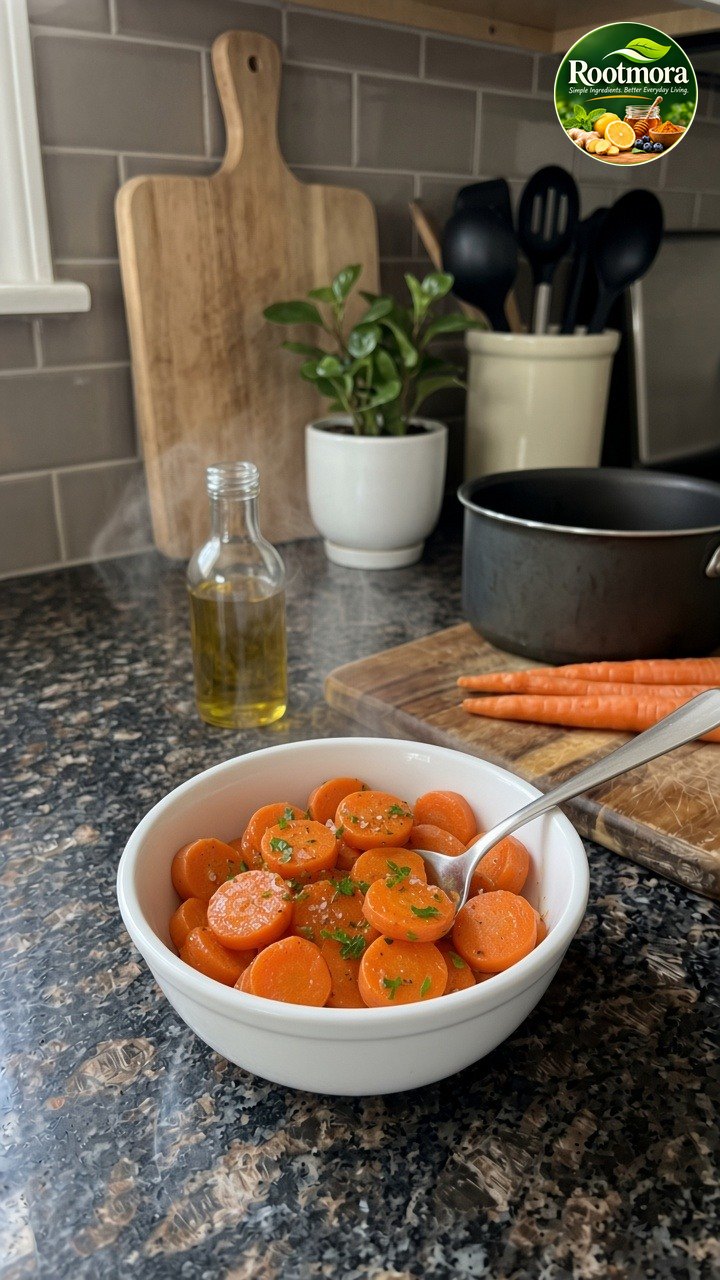
Carrots With Olive Oil
Tender carrot coins, steamed until fork-tender and tossed with extra-virgin olive oil, salt and pepper. A simple, glossy side dish that’s ready in about 20 minutes. Keep it plain, or add lemon, garlic, herbs or a touch of honey.
- Total Time: 22 minutes
- Yield: 4 servings (about 3 cups cooked carrots, about 3/4 cup each)
Ingredients
For the carrots:
- 1 pound (450 g) carrots, about 6 medium
- 1 tablespoon extra-virgin olive oil, plus up to 1 tablespoon more to taste
- 1/4 teaspoon fine sea salt, or to taste
- 1 pinch freshly ground black pepper
- Water for steaming (about 1 inch in the pan)
Optional add-ins:
- 1 to 2 teaspoons fresh lemon juice
- 1 small garlic clove, minced
- 1 tablespoon chopped fresh parsley or dill
- 1 teaspoon honey
Instructions
- Wash: Rinse and scrub the carrots under cool running water (no soap). Trim off the tops and root ends, then peel them.
- Slice: Cut the carrots into even rounds about 1/4 inch thick. Halve any coins from a very wide end so they’re all a similar size.
- Heat the water: Pour about 1 inch of water into a saucepan and set a steamer basket inside; the water should not touch the basket. Cover and bring to a boil over high heat.
- Steam: Add the carrots in an even layer, cover, and lower the heat to medium to keep a steady boil. Steam for 7 to 10 minutes: 7 minutes for tender with a slight bite, 9 to 10 minutes for very soft. They’re done when a fork slides into a coin with almost no resistance. Add a splash of hot water if the pan runs dry.
- Drain: Lift out the basket and let the carrots steam off for about 1 minute so the surface dries a little.
- Dress: Transfer the warm carrots to a serving bowl. Drizzle with 1 tablespoon olive oil, sprinkle with the salt and pepper, and toss gently until every coin is glossy. Add any optional add-ins now (see Notes for garlic).
- Serve: Taste, adjust the salt or oil, and serve warm or at room temperature.
Notes
- Boiling option: bring about 4 cups water and 1 teaspoon salt to a boil, add the carrot coins and simmer 5 to 7 minutes until fork-tender. Drain well in a colander, then continue with step 6. Use a little less salt when dressing.
- Real ready time: about 22 minutes (10 minutes prep, about 3 minutes to bring the water to a boil, 7 to 10 minutes steaming, 1 minute draining).
- Doneness: a fork should slide in easily. Start checking at 7 minutes; overcooked coins break apart when tossed.
- Why olive oil: beta-carotene is fat-soluble, so eating carrots with some fat helps your body absorb more of it; cooking also makes more of it available. Any fat in the same meal helps. These carrots support a balanced diet; they are not a treatment for any condition.
- Garlic: warm the olive oil with the minced garlic in a small pan over low heat for about 1 minute, just until fragrant, then pour it over the carrots.
- Honey is not safe for babies under 1 year old.
- Storage: cool and refrigerate within 2 hours in an airtight container; eat within 3 to 4 days (USDA leftovers guidance). The oil may look cloudy when cold; that’s normal. Reheat covered in the microwave for 1 to 2 minutes until steaming hot (165°F), then add a fresh drizzle of oil. Freezer: up to 3 months (quality guideline); texture softens, best for soups or purees.
- Make-ahead: peel and slice the carrots up to 2 days ahead and keep them airtight in the fridge; steam and dress just before serving.
- Nutrition is an estimate per serving (1 of 4, steamed, with 1 tablespoon olive oil and 1/4 teaspoon salt, no optional add-ins), calculated from standard USDA FoodData Central values. Boiling in salted water adds sodium.
- Prep Time: 10 minutes
- Cook Time: 12 minutes
- Category: Side Dish
- Method: Steamed (Boiled option)
- Cuisine: American
- Diet: Vegan
Steaming vs. Boiling: Which Should You Choose?
Steaming (our first choice): The carrots cook above the water, not in it, so they stay bright and keep their sweet flavor. Water-soluble nutrients, like some B vitamins and vitamin C, can leach into cooking water, and steaming keeps that loss lower. It takes 7 to 10 minutes.
Boiling: Quick and easy, with no special equipment. Salting the water seasons the carrots all the way through. It takes 5 to 7 minutes. Beta-carotene doesn’t dissolve in water, so boiled carrots with olive oil still make a great pairing. Just don’t overcook them.
Easy Flavor Variations
The reel keeps it plain, and that’s delicious. When you want a change, try one of these:
- Lemon and herb: Toss with 1 to 2 teaspoons of fresh lemon juice and 1 tablespoon of chopped parsley or dill.
- Garlic: Warm the olive oil with 1 small minced garlic clove in a small pan over low heat for about 1 minute, just until fragrant, then pour it over the carrots.
- Light honey glaze: Stir 1 teaspoon of honey into the olive oil before tossing. Honey isn’t safe for babies under 1 year old.
- Warm spice: Add a pinch of ground cumin or smoked paprika with the salt.
What to Serve With Them
Carrots with olive oil are an easy, colorful side for weeknight dinners. They go well with our garlic lemon salmon and asparagus foil packets, sticky garlic honey chicken bites, or a simple salmon dinner. Not sure how to cook the fish? Our guide to baked or fried salmon walks you through both.
And if you have extra carrots, blend them into a bright carrot orange ginger juice for breakfast.
Storage, Reheating and Make-Ahead
- Fridge: Let the carrots cool, then refrigerate them within 2 hours in an airtight container. The USDA’s leftovers guidance says to eat refrigerated leftovers within 3 to 4 days.
- Reheating: Microwave them covered for 1 to 2 minutes, stirring once, until steaming hot (165°F). Or warm them in a skillet over medium-low heat with a splash of water. Add a fresh drizzle of olive oil after reheating for the best flavor.
- Cold is fine too: The olive oil may look cloudy in the fridge. That’s normal, and it clears up as the carrots warm. You can also serve them cold, like a simple carrot salad.
- Freezer: You can freeze them for up to 3 months, but the texture turns softer after thawing. They’re best used in soups or purees.
- Make-ahead: Peel and slice the carrots up to 2 days ahead. Keep the coins in an airtight container in the fridge, then steam and dress them just before serving.
Frequently Asked Questions
Do carrots really need olive oil?
They don’t need it to be delicious, but it helps. Beta-carotene is fat-soluble, so eating carrots with some fat helps your body absorb more of it. Olive oil is an easy way to add that fat, but any fat in the same meal also helps.
How much olive oil should I use?
About 1 tablespoon per pound of carrots is plenty for flavor and a glossy finish. Add up to 1 more tablespoon if you like them richer.
Are steamed or boiled carrots better?
Both work. Steaming keeps the carrots out of the water, so they hold on to more of their water-soluble nutrients and flavor. Boiling is quicker and seasons them through. Either way, finish them with olive oil.
Can I use baby carrots?
Yes. Rinse them, then slice them into coins or halve them lengthwise. Whole baby carrots need a few extra minutes to become fork-tender.
How long do carrots with olive oil last in the fridge?
Store them in an airtight container and eat them within 3 to 4 days. Reheat until steaming hot, or enjoy them cold.
Is there a printable version of this recipe?
Yes. The recipe card above has a print button, plus exact quantities, steaming and boiling times, and notes.
A Simple Habit Worth Keeping
Once you’ve made carrots with olive oil, it’s easy to make it a regular habit. Slice evenly, steam until fork-tender, drain well, and finish with a good drizzle of olive oil and a pinch of salt. Will you keep yours plain like the reel, or add lemon and herbs?