
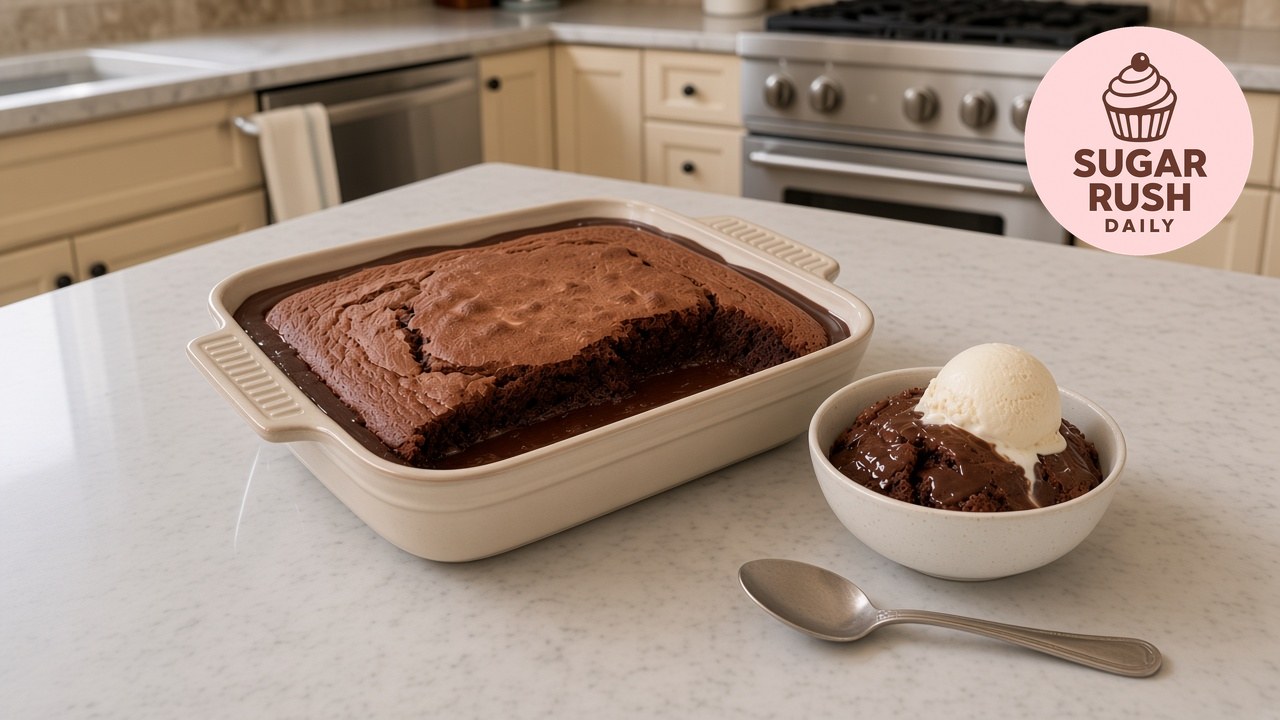
This self-saucing chocolate cake is pure kitchen magic. You stir together a simple cocoa batter, scatter brown sugar and cocoa over the top, pour hot water over everything and bake. In the oven, the water sinks, the batter rises, and the dessert splits into two layers: tender chocolate cake on top and glossy hot fudge sauce underneath.
Old-school cookbooks call it hot fudge pudding cake. Whatever you call it, this self-saucing chocolate cake uses pantry staples, needs no eggs and no mixer, and bakes in one dish. The first warm spoonful, with sauce running everywhere and vanilla ice cream melting on top, makes the whole table go quiet.
The idea came from a short AI-generated video on the Sugar Rush Daily Facebook page. It showed no amounts, temperature or bake time, and a few shots can’t happen in a real kitchen. This recipe fills every gap with real measurements, a classic pudding-cake ratio cross-checked against established published versions, and clear doneness cues.
Affiliate disclosure: As an Amazon Associate, RecipesMind earns from qualifying purchases. Product links below may earn a small commission at no extra cost to you, and every tool is optional.
Table of contents
- Why this self-saucing chocolate cake works
- Ingredients and smart swaps
- Equipment you’ll need
- How to make hot fudge pudding cake
- Recipe card
- Real timing: prep, bake and rest
- What we corrected from the video
- Optional pecan-caramel (“turtle”) and ice cream serving ideas
- Storing and reheating self-saucing chocolate cake
- Frequently asked questions
Why this self-saucing chocolate cake works
A self-saucing chocolate cake looks like a trick, but it’s simple kitchen science. The thick batter contains baking powder, so it rises as it bakes. The brown sugar and cocoa on top dissolve into the hot water and form a sweet chocolate syrup that is heavier than the batter, so it sinks to the bottom while the cake floats up through it.
The syrup reduces as it bakes, and starch from the cake helps it turn silky. That’s why the sauce looks thin straight from the oven but becomes glossy, spoonable fudge after a short rest.
If you love fudgy chocolate desserts, you might also enjoy this rich chocolate fudge cake or these gooey chocolate lava cookie cups, which play with that same molten-center feeling.
Ingredients and smart swaps
Everything for this self-saucing chocolate cake is probably in your pantry already. Exact amounts are in the recipe card.
- All-purpose flour: spoon it into the cup and level it off. Packed flour makes a dry cake that soaks up the sauce.
- Unsweetened cocoa powder: natural or Dutch-process both work, because this cake rises with baking powder, not baking soda. Natural cocoa gives a bright, old-fashioned chocolate flavor; Dutch-process gives a darker color and deeper fudge taste. King Arthur Baking explains the difference well in its guide to Dutch-process vs. natural cocoa.
- Baking powder: make sure it’s fresh, or the cake layer turns dense.
- Whole milk and melted butter: for a moist, rich cake. 2% milk works too.
- Light or dark brown sugar: light gives a classic caramel-chocolate sauce; dark adds deeper molasses notes.
- Instant espresso powder (optional): half a teaspoon deepens the chocolate flavor without making the cake taste like coffee.
- Boiling or very hot water: about 190°F to 212°F, just off the boil from a kettle. It dissolves the topping evenly; lukewarm tap water leaves gritty patches and a thin sauce.
Equipment you’ll need
A self-saucing chocolate cake needs no mixer. The dish matters most, because the sauce bubbles up as it bakes.
- A deep 8×8-inch (2-quart) baking dish, at least 2 inches deep. A ceramic dish like this DOWAN 8×8 ceramic baking dish goes from oven to table. A 9×9-inch dish works too.
- A rimmed baking sheet to set the dish on in the oven, to catch any bubbling sauce. These Nordic Ware Naturals half sheet pans won’t warp.
- A balloon whisk, such as the OXO Good Grips 11-inch balloon whisk.
- A heatproof glass measuring cup for a controlled pour, like the 2-cup from this Pyrex Essentials glass measuring cup set.
- A small strainer to sift lumpy cocoa, like the OXO Good Grips 8-inch strainer.
- A wire cooling rack for resting, like this Checkered Chef stainless cooling rack.
How to make hot fudge pudding cake
Heat the oven to 350°F (175°C). Set an ungreased 8×8-inch baking dish on a rimmed baking sheet.
Step 1: Mix the chocolate cake batter
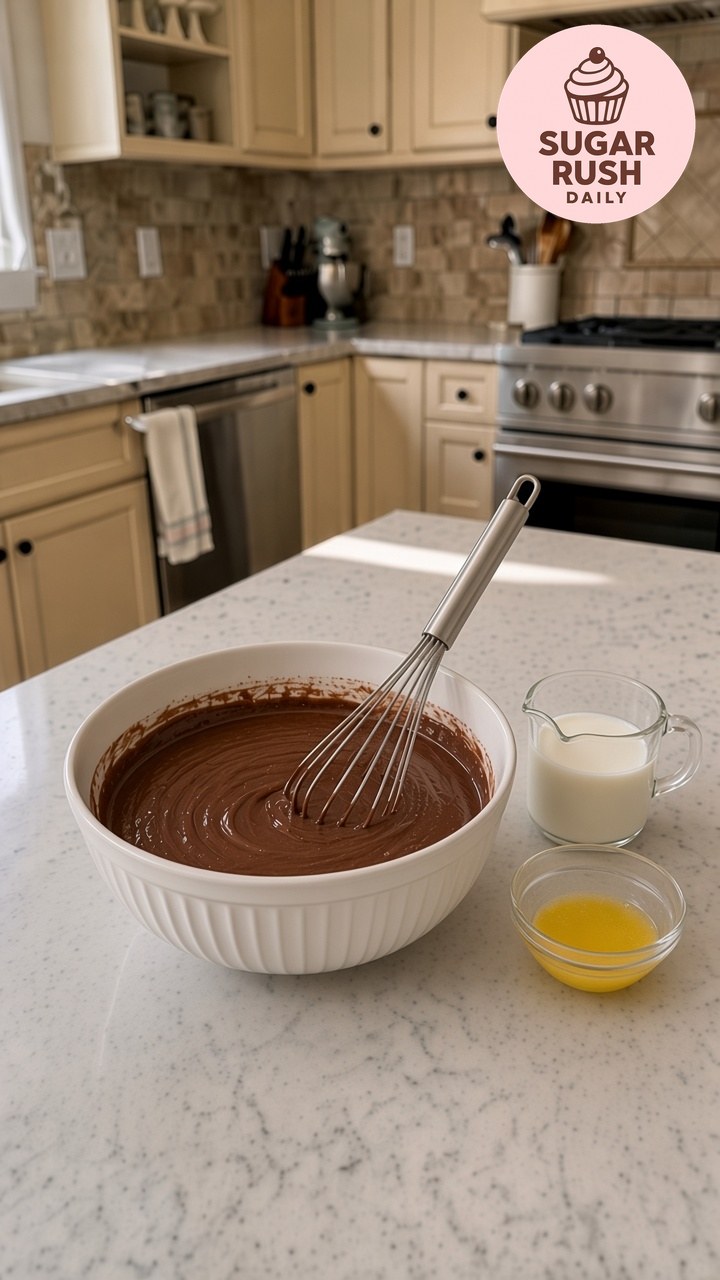
In a medium bowl, whisk the flour, granulated sugar, 3 tablespoons cocoa, baking powder, salt and espresso powder (if using). Add the milk, melted butter and vanilla, and whisk just until smooth, about 30 seconds. It will be thicker than regular cake batter; that’s right. Spread it evenly in the dish.
Step 2: Scatter the brown sugar and cocoa topping
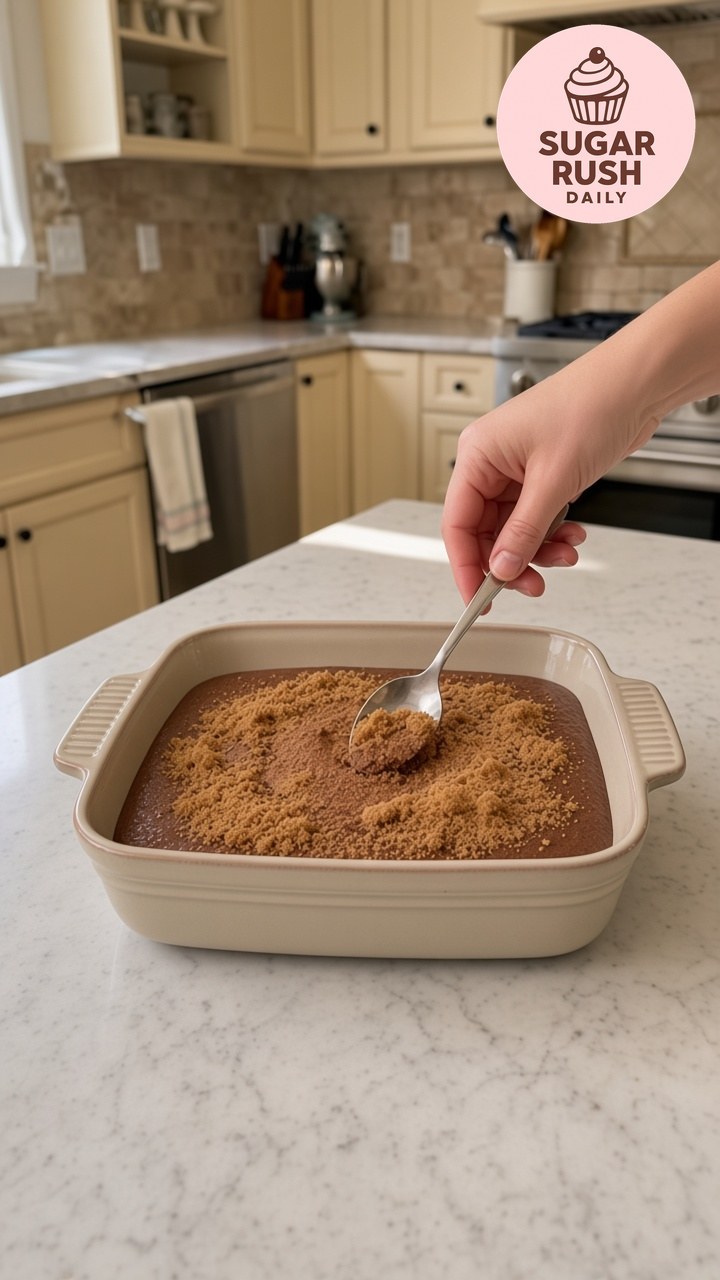
Stir the brown sugar and remaining 1/4 cup cocoa together, breaking up lumps. Sprinkle it evenly over the batter to the edges without pressing it in.
Step 3: Pour the hot water over the back of a spoon
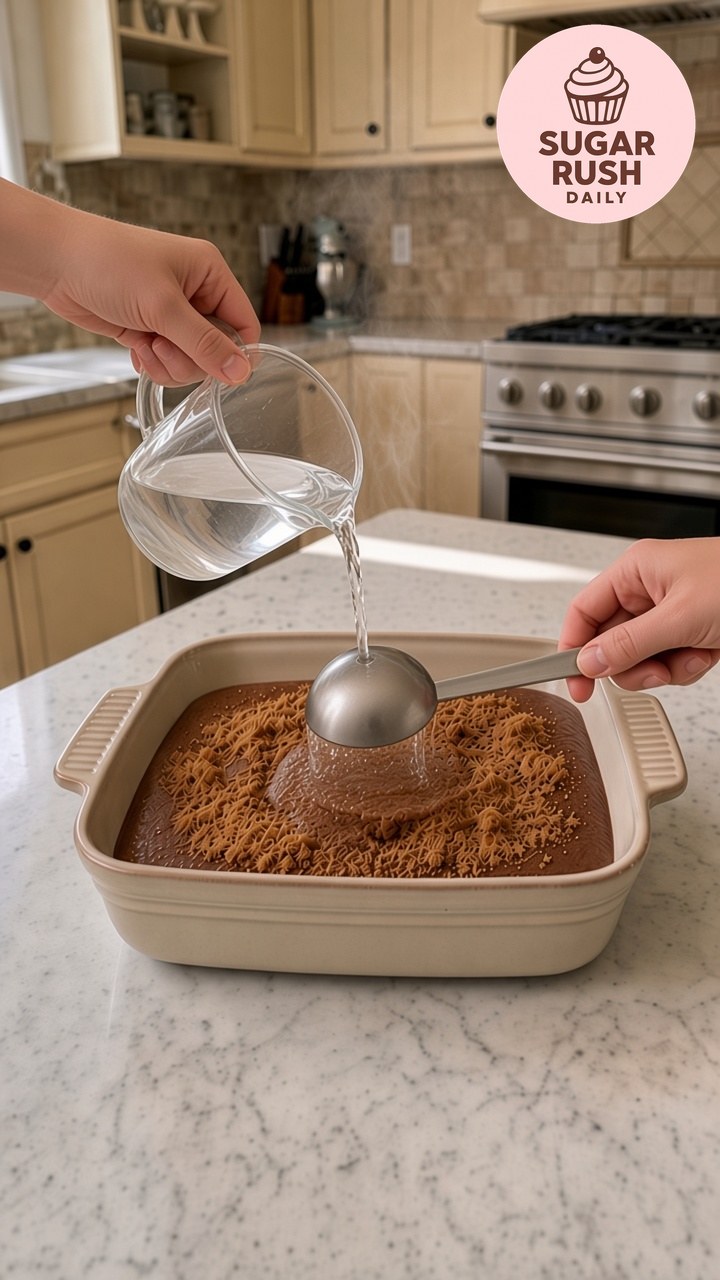
This is the step the video gets wrong. Hold a large spoon upside down an inch above the topping and pour the boiling water slowly over its rounded back, moving around the dish. The spoon breaks the stream so the water spreads gently instead of drilling holes in the batter. It will look like a soupy mess. Do not stir.
Step 4: Bake, then let it rest
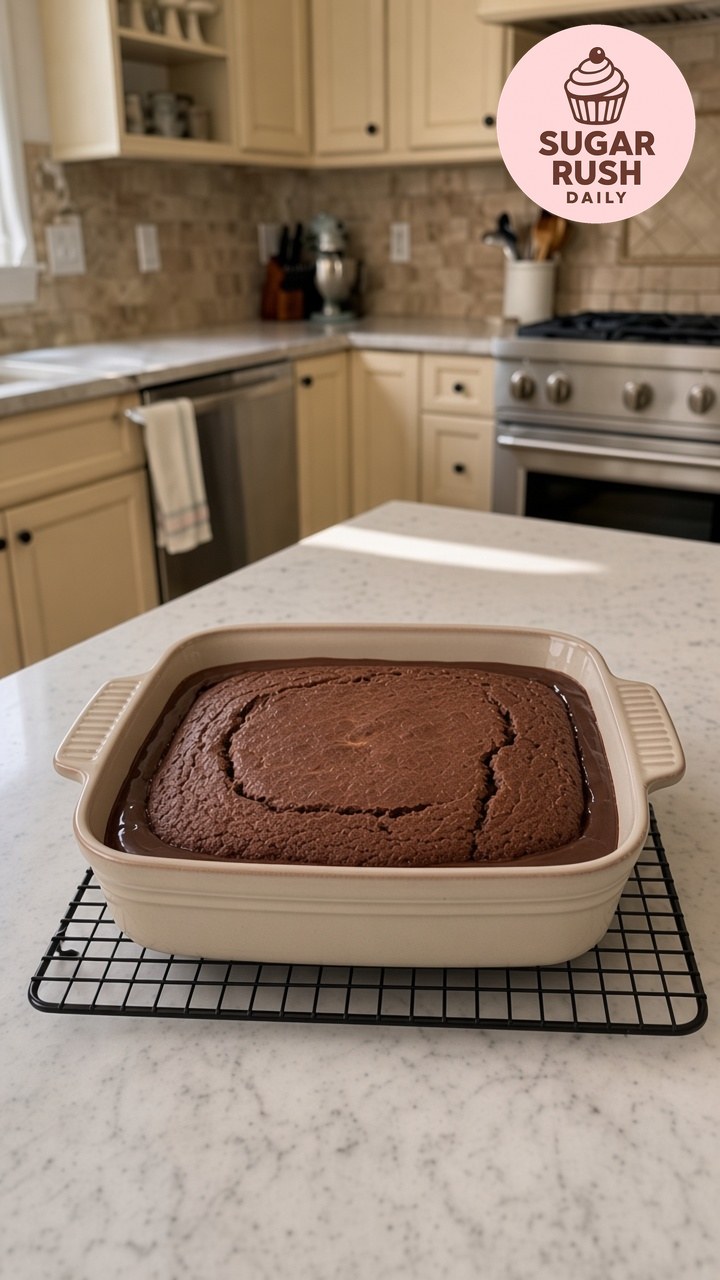
Bake an 8×8-inch dish for 35 to 40 minutes (9×9-inch: 30 to 35 minutes). It’s done when the top looks puffed, matte and lightly cracked, springs back slightly when touched in the center, and dark sauce bubbles at the edges.
The overbaking trap: a toothpick pushed to the bottom of a self-saucing chocolate cake always comes out wet, because that’s the fudge. Test only the top inch of cake for moist crumbs, not raw batter. Bake until the bottom is dry and the sauce disappears.
Move the dish to a wire rack and rest it 10 to 15 minutes. The sauce is scalding and thin straight from the oven; resting cools it and thickens it into glossy fudge.
Step 5: Scoop and serve warm
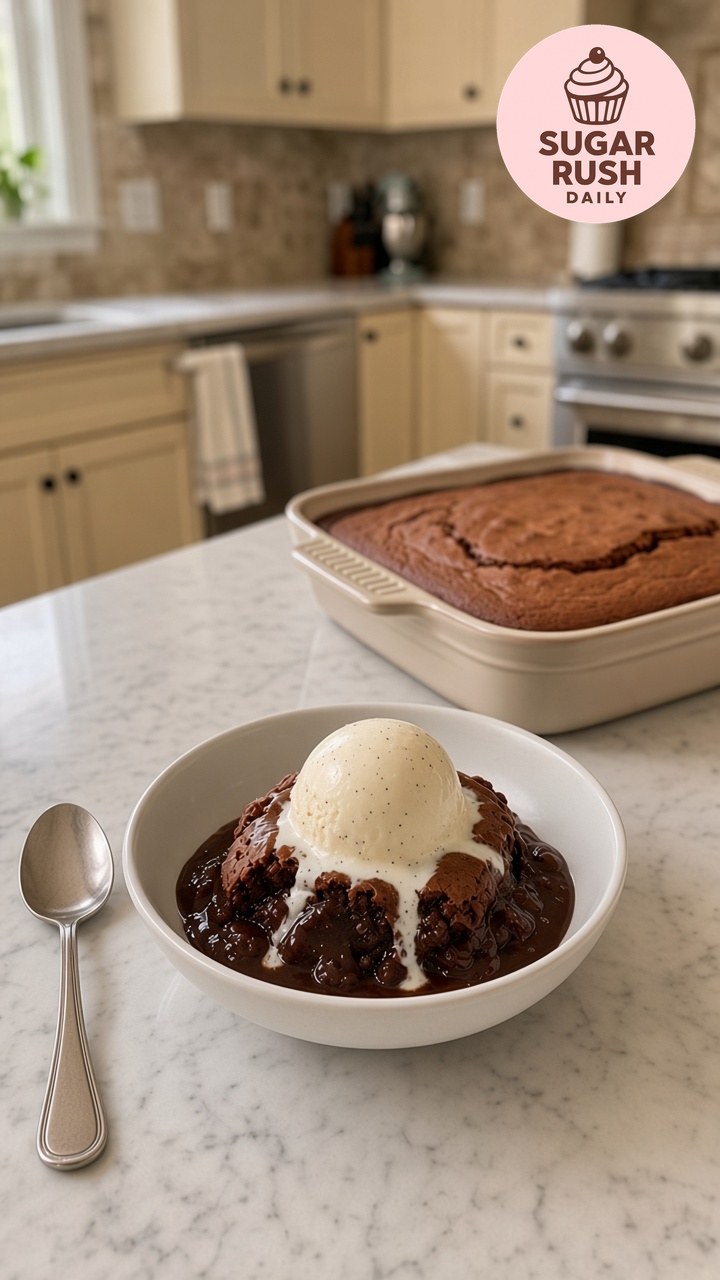
Scoop portions into bowls, digging to the bottom so each serving gets cake and plenty of sauce. Spoon extra sauce over the top and add vanilla ice cream or whipped cream. Hot fudge pudding cake is scooped, not sliced, and that’s half the fun.
Recipe card
Print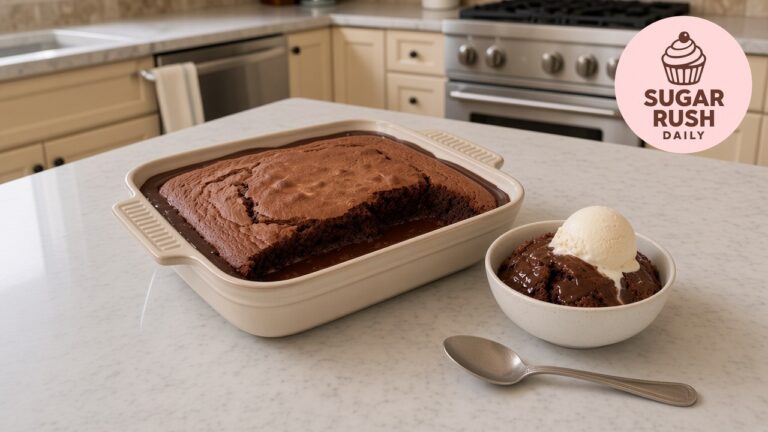
Self-Saucing Chocolate Cake (Hot Fudge Pudding Cake)
This easy self-saucing chocolate cake bakes into two layers in one dish: soft, tender chocolate cake on top and glossy hot fudge sauce underneath. No eggs, no mixer, just pantry staples, boiling water and a 10 to 15 minute rest before scooping it warm with vanilla ice cream.
- Total Time: 1 hour 5 minutes
- Yield: 6 to 8 servings
Ingredients
For the Chocolate Cake Batter
- 1 cup (125 g) all-purpose flour, spooned and leveled
- 3/4 cup (150 g) granulated sugar
- 3 tablespoons (16 g) unsweetened cocoa powder, natural or Dutch-process
- 2 teaspoons baking powder
- 1/4 teaspoon fine salt
- 1/2 teaspoon instant espresso powder (optional)
- 1/2 cup (120 ml) whole milk
- 1/4 cup (57 g) unsalted butter, melted and slightly cooled
- 1 1/2 teaspoons pure vanilla extract
For the Hot Fudge Topping
- 1 cup (200 g) packed light or dark brown sugar
- 1/4 cup (21 g) unsweetened cocoa powder
- 1 1/2 cups (355 ml) boiling or very hot water (about 190°F to 212°F)
Optional Serving Garnishes
- Vanilla ice cream or lightly sweetened whipped cream
- 1/2 cup (55 g) chopped pecans, toasted
- 1/4 cup (60 ml) caramel sauce, warmed
Instructions
- Heat the oven to 350°F (175°C). Set an ungreased deep 8×8-inch (2-quart) ceramic, stoneware or glass baking dish, at least 2 inches deep, on a rimmed baking sheet.
- In a medium bowl, whisk the flour, granulated sugar, 3 tablespoons cocoa, baking powder, salt and espresso powder (if using). Add the milk, melted butter and vanilla and whisk just until smooth and thick, about 30 seconds. Spread the batter evenly in the dish.
- Stir the brown sugar and 1/4 cup cocoa together, breaking up lumps. Sprinkle evenly over the batter all the way to the edges; do not press it in.
- Hold a large spoon upside down about 1 inch above the topping and slowly pour the boiling water over the back of the spoon, moving it around the dish so the water spreads gently. Do not stir.
- Bake on the rimmed sheet for 35 to 40 minutes (30 to 35 minutes in a 9×9-inch dish), until the top is puffed, matte and lightly cracked, springs back slightly when gently touched in the center, and sauce bubbles around the edges. A toothpick in the top inch of cake should show moist crumbs; the bottom will always be saucy.
- Transfer the dish to a wire rack and rest 10 to 15 minutes so the sauce cools slightly and thickens into glossy fudge.
- Scoop warm portions into bowls, digging to the bottom so each serving gets cake and sauce. Spoon extra sauce over the top and add ice cream or whipped cream, plus toasted pecans and warm caramel if you like.
Notes
- Real timing: about 15 minutes active prep, 35 to 40 minutes baking and a mandatory 10 to 15 minute rest. True ready-to-serve time is about 60 to 70 minutes. The sauce is scalding and thin straight from the oven and thickens as it rests.
- Water trick: pour the boiling water gently over the back of a spoon held close to the surface so it doesn’t punch holes in the batter, and never stir before baking.
- Pan size: 8×8-inch gives a thicker cake and deeper sauce (35 to 40 minutes); 9×9-inch bakes in 30 to 35 minutes. In a metal pan, start checking 5 minutes early. Always bake on a rimmed sheet to catch drips.
- Don’t overbake: the bottom is supposed to be saucy. Baking until a toothpick comes out clean from the bottom cooks the fudge sauce away.
- Cocoa: natural or Dutch-process both work because the cake rises with baking powder. Dark brown sugar gives a deeper, molasses-rich fudge.
- Pecan-caramel (‘turtle’) serving: never frost the hot cake. Add toasted pecans, warm caramel and ice cream or chilled whipped cream to individual bowls right before serving.
- Crowd size: double everything and bake in a deep 9×13-inch (3-quart) dish on a rimmed sheet for about 40 to 45 minutes.
- Storage: refrigerate leftovers within 2 hours (1 hour above 90°F), covered, for up to 3 to 4 days. Reheat bowls in the microwave 20 to 35 seconds, or the covered dish at 300°F for 15 to 20 minutes. Freezing is not recommended.
- Nutrition is an estimate per serving (1/8 of the dish, without garnishes), calculated from USDA ingredient data.
- Prep Time: 15 minutes
- Rest Time: 15 minutes
- Cook Time: 35 minutes
- Category: Dessert
- Method: Baking
- Cuisine: American
- Diet: Vegetarian
Real timing: prep, bake and rest
Here’s how the hour really breaks down for this self-saucing chocolate cake:
- Active prep: about 15 minutes.
- Bake: 35 to 40 minutes at 350°F (175°C) in an 8×8-inch dish, or 30 to 35 minutes in a 9×9-inch dish.
- Rest: 10 to 15 minutes, inactive but essential.
- True ready-to-serve time: about 60 to 70 minutes from start to first spoonful.
An 8×8 dish makes a thicker cake and deeper sauce, so it needs a few more minutes than a 9×9. Ceramic and glass heat more slowly than metal but hold heat longer, so the sauce keeps bubbling after baking. In a metal pan, start checking 5 minutes early.
What we corrected from the video
The AI-generated clip mixes two different desserts. Here’s what we changed so your self-saucing chocolate cake actually works:
- No recipe: this version adds amounts, temperature, pan size, bake and rest times, and yield.
- The frosting and pecan mix-up: a plain pudding cake comes out of the oven mid-video, yet the first and last shots show it covered in whipped chocolate frosting, pecans and caramel. Frosting melts straight into a hot self-saucing cake, and warm pudding cake is scooped, not cut into frosted squares. Add toppings to each bowl instead (see below).
- Pouring water from high up: a heavy stream blasts craters in the batter. Pour gently over the back of a spoon, and don’t stir.
- Fudge overflowing onto the counter: use a dish at least 2 inches deep, set on a rimmed sheet in the oven.
- Digging in right away: fresh sauce is scalding and thin. Rest 10 to 15 minutes.
Optional pecan-caramel (“turtle”) and ice cream serving ideas
Loved the pecans and caramel in the video? Add them to your self-saucing chocolate cake at the end, one bowl at a time, so nothing melts into a puddle.
- Toast the pecans: toast 1/2 cup chopped pecans at 350°F for 6 to 8 minutes, until fragrant.
- Warm the caramel: microwave 1/4 cup caramel sauce for 10 to 15 seconds.
- Build each bowl: warm cake and sauce, a scoop of vanilla ice cream, a caramel drizzle and pecans.
- Want a frosting-like finish? Whip cold heavy cream with a little cocoa and powdered sugar and spoon it onto each serving.
- Feeding a crowd: double everything and bake your hot fudge pudding cake in a deep 9×13-inch (3-quart) dish on a rimmed sheet for about 40 to 45 minutes.
More chocolate ideas: this fudgy chocolate poke sheet cake or these midnight raspberry lava cupcakes.
Storing and reheating self-saucing chocolate cake
Like any dessert made with milk and butter, especially once ice cream or whipped cream is added, don’t leave leftovers out more than 2 hours (1 hour above 90°F). The USDA’s leftovers and food safety guidance recommends refrigerating leftovers promptly and using them within 3 to 4 days.
- Fridge: cover tightly and refrigerate up to 3 to 4 days. The sauce firms up when cold and soaks partly into the cake; that’s normal.
- Reheat one bowl: microwave, loosely covered, 20 to 35 seconds until the sauce is glossy again.
- Reheat the dish: cover with foil and warm at 300°F for 15 to 20 minutes. Let a cold ceramic or glass dish stand 15 minutes first.
- Freezing: not recommended; a thawed self-saucing chocolate cake turns soggy and the sauce grainy. Enjoy it fresh, or chilled and reheated.
Another cozy make-ahead dessert: this cinnamon roll bread pudding.
Frequently asked questions
Why didn’t my cake make a fudge sauce?
Usually the water wasn’t hot enough, the layers were stirred, or the cake was overbaked until the sauce cooked off. Use boiling water, don’t stir, and pull it when the top springs back.
Can I use Dutch-processed cocoa?
Yes. This self-saucing chocolate cake rises with baking powder, so both cocoas work. Dutch-process tastes darker and deeper; natural tastes brighter.
Can I make it ahead?
It’s best within an hour of baking. Mix the dry batter ingredients and the topping in separate bowls up to a day ahead, then finish just before baking.
Can I double it in a 9×13 pan?
Yes. Double everything, use a deep 9×13-inch (3-quart) dish on a rimmed sheet and bake about 40 to 45 minutes.
How do I add pecans and caramel without melting the frosting?
Skip frosting on the hot cake. Add pecans, warm caramel and ice cream or chilled whipped cream to each bowl just before serving.
Why pour the water over a spoon?
It softens the stream so the water spreads evenly instead of punching holes in the batter, keeping the layers clean.
Is this cake eggless?
Yes. This classic self-saucing chocolate cake contains no eggs. It does contain milk, butter and wheat.
Warm, gooey and made in one dish, this self-saucing chocolate cake turns a plain weeknight into dessert night. Pour gently, don’t stir, and give it those 15 minutes to rest. For another from-scratch favorite, bake this classic moist chocolate cake next.