
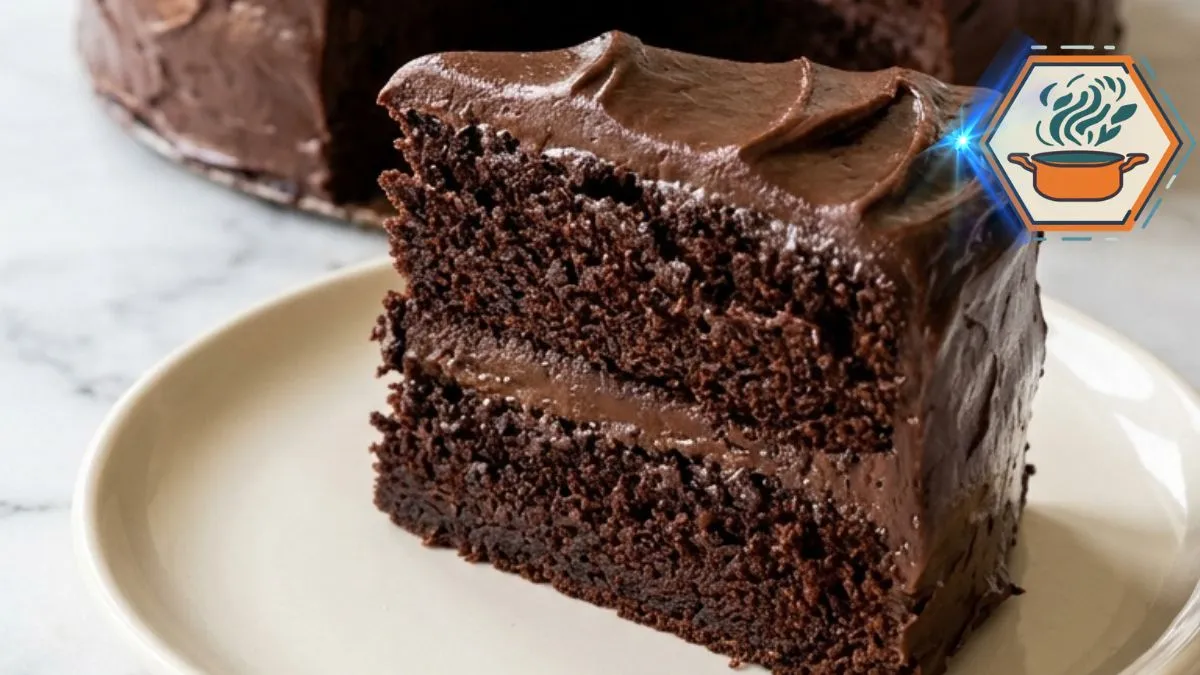
There is a moment when a Chocolate Fudge Cake stops looking like a bowl of simple ingredients and starts feeling special. It happens when hot coffee meets cocoa. The chocolate aroma becomes stronger, the batter turns dark and glossy, and you know this is not going to be an ordinary chocolate cake.
The goal of this recipe is simple: a dark, moist cake with a dense yet tender crumb and a generous layer of glossy fudge frosting. The method also matters. Small details such as measuring flour correctly, using room-temperature eggs, choosing the right cocoa, and cooling the cake fully can make the difference between a dry cake and the fudgy result you wanted. For more guidance on baking cakes, King Arthur Baking’s cake guide covers useful fundamentals for home bakers.
You also need to know when the cake is truly baked. Chocolate batter makes visual clues harder to see than they are with vanilla cake. A matte surface, edges beginning to pull from the pan, a center that springs back gently, and a clean tester are useful signs. King Arthur Baking’s cake doneness guide explains why using several clues is more reliable than depending on baking time alone.
JUMP TO
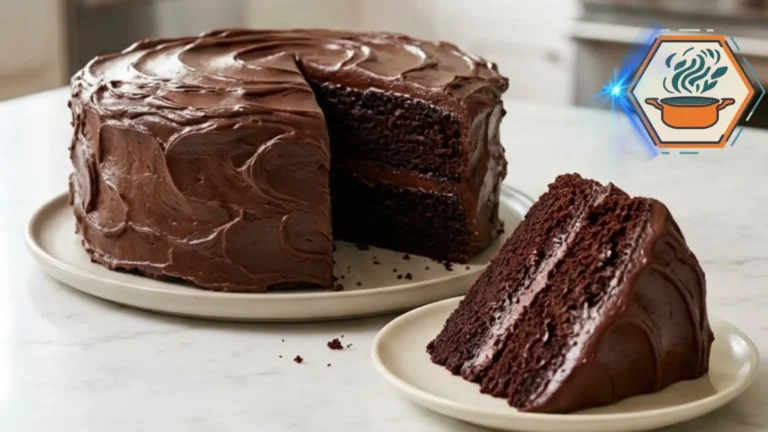
Chocolate Fudge Cake
- Total Time: 1 hour
- Yield: 12 servings
Ingredients
Chocolate Fudge Cake
2 cups (250 g) all-purpose flour
2 cups (400 g) granulated sugar
3/4 cup (65 g) natural unsweetened cocoa powder
2 teaspoons baking powder
1 1/2 teaspoons baking soda
1 teaspoon fine salt
2 large eggs, room temperature
1 cup (240 ml) buttermilk, room temperature
1/2 cup (120 ml) neutral vegetable oil
2 teaspoons vanilla extract
1 cup (240 ml) hot brewed coffee or hot water
Chocolate Fudge Frosting
1 cup (225 g) unsalted butter
2/3 cup (55 g) natural unsweetened cocoa powder
6 tablespoons (90 ml) whole milk, plus more only if needed
4 cups (480 g) powdered sugar, sifted
2 teaspoons vanilla extract
1/8 teaspoon fine salt
Instructions
1. PREPARE THE OVEN AND PANS
Preheat the oven to 350°F (175°C). Lightly grease two 9-inch round cake pans. Line the bottoms with parchment paper, then lightly grease the parchment.
2. MIX THE DRY INGREDIENTS
In a large mixing bowl, whisk together the flour, sugar, cocoa powder, baking powder, baking soda, and salt. Break up any visible cocoa lumps.
3. ADD THE WET INGREDIENTS
Add the eggs, buttermilk, vegetable oil, and vanilla. Mix on low speed or whisk just until the mixture is smooth and no dry flour remains. Scrape the sides and bottom of the bowl.
4. ADD THE HOT COFFEE
Slowly pour in the hot coffee while mixing on low speed. The batter will become quite thin. This is normal. Do not add extra flour.
5. DIVIDE THE BATTER
Divide the batter evenly between the two prepared 9-inch pans. For layers of equal thickness, weigh the filled pans or weigh the batter as you divide it.
6. BAKE
Bake at 350°F (175°C) for about 30 to 35 minutes. Begin checking near 28 to 30 minutes because ovens and pans vary. The cakes are ready when the centers spring back lightly and a toothpick inserted in the center comes out without wet batter. A few moist crumbs are fine.
7. COOL THE CAKES
Place the pans on wire racks for 10 to 15 minutes. Carefully loosen the edges and turn the cakes onto the racks. Remove the parchment. Allow the layers to cool completely before frosting.
8. MAKE THE FUDGE FROSTING
Melt the butter gently in a medium saucepan over low heat. Whisk in the cocoa powder until smooth. Remove from the heat.
9. ADD THE SUGAR AND MILK
Gradually beat in the sifted powdered sugar, alternating with small additions of milk. Add the vanilla and salt. Beat until the frosting is smooth, thick, and spreadable.
10. ADJUST THE FROSTING
If the frosting is too thick, add whole milk 1 teaspoon at a time. If it is too soft, let it cool briefly before adding more powdered sugar.
11. ASSEMBLE
Place one completely cooled cake layer on a serving plate. Spread a generous layer of fudge frosting over the top. Add the second cake layer.
12. FROST THE CAKE
Cover the top and sides with the remaining fudge frosting. Use an offset spatula or the back of a spoon to make broad, natural chocolate swirls.
13. SET AND SLICE
Allow the frosted cake to stand for about 30 minutes before slicing. For cleaner slices, use a sharp knife and wipe the blade between cuts.
Notes
1. PREPARE THE OVEN AND PANS
Preheat the oven to 350°F (175°C). Lightly grease two 9-inch round cake pans. Line the bottoms with parchment paper, then lightly grease the parchment.
2. MIX THE DRY INGREDIENTS
In a large mixing bowl, whisk together the flour, sugar, cocoa powder, baking powder, baking soda, and salt. Break up any visible cocoa lumps.
3. ADD THE WET INGREDIENTS
Add the eggs, buttermilk, vegetable oil, and vanilla. Mix on low speed or whisk just until the mixture is smooth and no dry flour remains. Scrape the sides and bottom of the bowl.
4. ADD THE HOT COFFEE
Slowly pour in the hot coffee while mixing on low speed. The batter will become quite thin. This is normal. Do not add extra flour.
5. DIVIDE THE BATTER
Divide the batter evenly between the two prepared 9-inch pans. For layers of equal thickness, weigh the filled pans or weigh the batter as you divide it.
6. BAKE
Bake at 350°F (175°C) for about 30 to 35 minutes. Begin checking near 28 to 30 minutes because ovens and pans vary. The cakes are ready when the centers spring back lightly and a toothpick inserted in the center comes out without wet batter. A few moist crumbs are fine.
7. COOL THE CAKES
Place the pans on wire racks for 10 to 15 minutes. Carefully loosen the edges and turn the cakes onto the racks. Remove the parchment. Allow the layers to cool completely before frosting.
8. MAKE THE FUDGE FROSTING
Melt the butter gently in a medium saucepan over low heat. Whisk in the cocoa powder until smooth. Remove from the heat.
9. ADD THE SUGAR AND MILK
Gradually beat in the sifted powdered sugar, alternating with small additions of milk. Add the vanilla and salt. Beat until the frosting is smooth, thick, and spreadable.
10. ADJUST THE FROSTING
If the frosting is too thick, add whole milk 1 teaspoon at a time. If it is too soft, let it cool briefly before adding more powdered sugar.
11. ASSEMBLE
Place one completely cooled cake layer on a serving plate. Spread a generous layer of fudge frosting over the top. Add the second cake layer.
12. FROST THE CAKE
Cover the top and sides with the remaining fudge frosting. Use an offset spatula or the back of a spoon to make broad, natural chocolate swirls.
13. SET AND SLICE
Allow the frosted cake to stand for about 30 minutes before slicing. For cleaner slices, use a sharp knife and wipe the blade between cuts.
- Prep Time: 25 minutes
- Cook Time: 35 minutes
- Category: Dessert
- Method: Baking
- Cuisine: American
- Diet: Vegetarian
What Makes This Chocolate Fudge Cake Special?
Some chocolate cakes are light and airy. Others resemble brownies. This recipe sits deliciously between those two styles.
The crumb is tender enough to be unmistakably cake, but it has the rich chocolate character people expect from a fudge cake. Oil supplies moisture, while buttermilk brings acidity and a subtle tang. Cocoa supplies concentrated chocolate flavor.
Then comes the hot coffee.
Coffee does not need to make the finished cake taste like a cup of coffee. Here, its job is to support the cocoa and create a deeper chocolate profile. If you do not want to use coffee, hot water works too. King Arthur Baking also notes that coffee or espresso can intensify chocolate flavor in chocolate cakes.
The final piece is the frosting. It is made with butter, cocoa, milk, powdered sugar, and vanilla. The result is thick, smooth, chocolatey, and easy to spread.
Chocolate Fudge Cake Ingredients
For the cake, you will need:
- 2 cups (250 g) all-purpose flour
- 2 cups (400 g) granulated sugar
- 3/4 cup (65 g) unsweetened natural cocoa powder
- 2 teaspoons baking powder
- 1 1/2 teaspoons baking soda
- 1 teaspoon fine salt
- 2 large eggs, at room temperature
- 1 cup (240 ml) buttermilk, at room temperature
- 1/2 cup (120 ml) neutral vegetable oil
- 2 teaspoons vanilla extract
- 1 cup (240 ml) hot brewed coffee or hot water
For the fudge frosting:
- 1 cup (225 g) unsalted butter
- 2/3 cup (55 g) unsweetened cocoa powder
- 6 tablespoons (90 ml) whole milk
- 4 cups (480 g) powdered sugar, sifted
- 2 teaspoons vanilla extract
- Small pinch of salt, optional but recommended
That tiny pinch of salt in the frosting is worth adding. It helps balance its considerable sweetness without making the frosting taste salty.
Which cocoa powder should you use?
Use natural unsweetened cocoa powder for the most predictable result.
This recipe contains both baking soda and acidic buttermilk. Cocoa type can affect the chemistry of recipes containing chemical leaveners. Natural cocoa is acidic, while Dutch-process cocoa has been alkalized. King Arthur Baking recommends following the cocoa type specified by a recipe when leavening depends on that chemistry.
That is an easy detail to overlook, but it matters when you want repeatable results.
Equipment You’ll Need
Nothing unusual is required:
- One 9 x 13-inch baking pan or two 9-inch round cake pans
- Parchment paper
- Two large mixing bowls
- Whisk
- Silicone spatula
- Measuring cups and spoons or, preferably, a kitchen scale
- Small saucepan
- Cooling rack
- Offset spatula or frosting knife
A scale is particularly useful for flour, cocoa, and powdered sugar. Too much flour is one of the easiest ways to turn a moist cake into a dry one.
Before You Start: Details That Matter
Preheat your oven to 350°F (175°C).
Do not start mixing immediately after turning on the oven. Give it enough time to reach temperature.
Grease the pans lightly. For round cakes, place a circle of parchment on the bottom, then lightly grease the parchment. For a sheet cake, lining the bottom makes removal easier if you plan to take the whole cake out of its pan.
Bring the eggs and buttermilk close to room temperature before mixing.
Most importantly, prepare the coffee last so it remains hot when you need it.
Measure flour carefully
If you own a scale, use the 250 g measurement.
Without a scale, loosen the flour first. Spoon it gently into the measuring cup, then level the top without pressing it down.
Never pack flour into the cup.
How to Make Chocolate Fudge Cake
1. Prepare the pans
Set the oven to 350°F (175°C).
Grease and line either a 9 x 13-inch pan or two 9-inch round pans.
If using two round pans, divide the batter as evenly as possible. A scale can help you create layers of similar thickness.
2. Combine the dry ingredients
In a large bowl, whisk together:
- Flour
- Sugar
- Cocoa powder
- Baking powder
- Baking soda
- Salt
Spend about 30 seconds whisking.
Cocoa sometimes forms small lumps. If yours is particularly lumpy, sift it before adding it.
3. Add the wet ingredients
Add the eggs, buttermilk, vegetable oil, and vanilla.
Mix on low speed or whisk by hand until the dry patches disappear. Scrape the bottom and sides of the bowl.
Continue only until the mixture is smooth.
You are making cake, not trying to beat as much air as possible into the batter. Excess mixing after flour has been hydrated can work against the tender texture we want.
4. Add the hot coffee
Slowly pour 1 cup of hot coffee into the batter while stirring.
Do not panic when the batter becomes thin.
That is expected.
Chocolate cake formulas using plenty of liquid can produce surprisingly fluid batter. A similarly styled King Arthur chocolate cake recipe specifically notes that its batter is thin before baking.
Scrape the bowl one final time to make sure no thick mixture remains at the bottom.
5. Fill the pan
Pour the batter into your prepared pan.
For layer cakes, distribute it evenly between both pans.
Gently tap each pan once or twice against the counter to release large trapped air pockets. Do not repeatedly slam the pans down.
6. Bake
Bake for approximately 30 to 35 minutes.
Start checking earlier if your oven tends to run hot or if you are using two round pans.
Do not repeatedly open the oven during the early part of baking. Heat loss can interfere with the cake’s rise.
Near the end, look for several signs:
- The surface looks set and matte.
- The edges are beginning to pull slightly from the pan.
- The center springs back after a very gentle touch.
- A tester inserted into the center comes out clean or with a few moist crumbs rather than wet batter.
These physical clues are more useful than blindly following the clock.
7. Cool completely
Place the pan on a wire rack.
For a sheet cake, you can let it cool completely in the pan.
For round layers, allow them to cool in their pans for about 10 to 15 minutes. Carefully loosen the edges and turn them onto racks.
Remove the parchment.
Then leave the cake alone until it is completely cool.
This step requires patience.
Frosting a warm cake can melt the butter in the frosting. Instead of the thick, glossy chocolate covering shown in a classic fudge cake, you may end up with frosting sliding down the sides.
How to Make Thick Fudge Frosting
Now we reach the part that gives this cake its signature appearance.
1. Melt the butter
Place 1 cup unsalted butter in a medium saucepan over low to medium-low heat.
Melt it gently.
You do not need to brown the butter.
2. Add the cocoa
Remove the saucepan from direct heat or keep it over very low heat.
Whisk in 2/3 cup cocoa powder.
Keep whisking until the mixture is dark, smooth, and free from obvious dry cocoa pockets.
3. Add sugar and milk gradually
This detail is important.
Do not dump all four cups of powdered sugar into the saucepan at once.
Add some sifted powdered sugar, then a little milk. Beat until smooth. Repeat, alternating between sugar and milk.
This gives you much better control over consistency.
4. Finish with vanilla
Stir in the vanilla and optional pinch of salt.
The frosting should be thick but spreadable.
If it seems too stiff, add milk one teaspoon at a time.
If it is too loose, add a small amount of sifted powdered sugar.
Remember that the frosting becomes firmer as it cools.
How to Get That Thick, Glossy Fudge Cake Look
The visual target is not a perfectly polished fondant cake.
This cake should look generous.
Spread a thick coat of chocolate frosting over the completely cooled cake. For a layer cake, place the first layer on your serving plate and spread frosting across its top. Add the second layer, then cover the top and sides.
Use the back of a spoon or an offset spatula to create broad, soft swirls.
Leave enough frosting on top to create that rich fudge-like appearance.
For cleaner slices, let the finished cake stand for approximately 30 minutes before cutting it.
Use a sharp knife and wipe the blade between cuts.
That small step creates a much neater contrast between the dark cake layers and glossy frosting.
Why Buttermilk Matters
Buttermilk is doing more than adding liquid.
Its acidity works with the baking soda in the formula. It also brings a mild tang that helps balance the cake’s sweetness.
Do not automatically replace it with plain milk. King Arthur Baking specifically cautions against simply using plain milk in recipes that depend on buttermilk alongside baking soda.
If you regularly bake cakes, keeping real cultured buttermilk on hand can be worthwhile.
Coffee or Water?
Both work, but they produce slightly different results.
Hot coffee is my first choice when the goal is an intense chocolate flavor. It gives the cocoa more depth without necessarily making coffee the dominant flavor.
Hot water is the better choice if you want the chocolate profile to remain more neutral.
Whichever you choose, add it slowly.
The batter will look much thinner after this step. Resist the temptation to compensate with extra flour.
How to Keep Chocolate Fudge Cake Moist
A great Chocolate Fudge Cake depends as much on technique as ingredients.
First, do not add extra flour because the batter looks thin. It is supposed to be fluid.
Second, avoid overbaking. Five unnecessary minutes in a hot oven can change the crumb noticeably.
Third, keep the oil. Butter tastes wonderful, but oil remains liquid at room temperature and works very well in cakes designed around a moist crumb.
Finally, cover leftovers properly. Leaving cut cake exposed lets moisture escape.
If you enjoy learning why small ingredient choices matter in baking, our guide to using pineapple in baking discusses another ingredient whose moisture and acidity can affect baked desserts.
Common Chocolate Fudge Cake Mistakes
The cake is dry
The most likely causes are too much flour or excessive baking time.
Measure flour by weight when possible. Begin checking the cake before the maximum suggested baking time.
The center sank
A small amount of settling is not necessarily a disaster. A major collapse can happen when the center has not developed enough structure before the cake leaves the oven.
Avoid opening the oven too early. Check the center carefully before removing the cake.
The frosting is runny
It may simply be too warm.
Allow it to cool slightly before adding more powdered sugar. Remember that butter-based frosting firms as its temperature drops.
The frosting has lumps
Sift the powdered sugar and cocoa.
This takes only a little extra time and makes a noticeable difference in the finished texture.
The frosting melted on the cake
The cake was probably still warm.
Wait until the layers are completely cool before decorating.
The cake tastes less chocolatey than expected
Check your cocoa first. Old cocoa that has been sitting open for a long time may give a less satisfying result.
Coffee can also bring greater depth to the chocolate profile.
Serving Ideas
This cake needs very little decoration.
Its thick chocolate frosting is already the star.
Serve slices as they are, or add fresh strawberries or raspberries for a fresh contrast. A small spoonful of unsweetened whipped cream also works well if you want something lighter beside the rich cake.
For another fruit-and-chocolate combination, see our guide to what strawberry puree is made of. Homemade puree can make a bright accompaniment when served separately from the cake.
Chocolate fans looking for more dessert techniques may also enjoy our guide to mastering caramelized sugar.
Storage and Make-Ahead Tips
Once the frosting has set, keep the cake well covered so the cut surfaces do not dry out.
For longer storage, refrigeration is the more cautious choice for perishable foods, especially in a warm kitchen. General USDA guidance stresses correct storage and following product-specific storage directions to maintain food quality and safety.
Before serving a refrigerated butter-based cake, you can let your portion lose some of its chill so the frosting and crumb soften.
Unfrosted cake layers are also convenient to make ahead. Cool them completely, wrap them carefully, and freeze them. King Arthur notes that unfrosted chocolate cake layers can be wrapped and frozen before decorating.
A Cake Worth Waiting For
The first temptation is to slice this cake as soon as the frosting touches the top.
Wait.
Give that chocolate covering its 30 minutes to settle. Then cut through the frosting and into the dark crumb beneath it.
That is where all those small decisions come together: correctly measured flour, natural cocoa, tangy buttermilk, hot coffee, enough baking time but not too much, complete cooling, and a frosting thick enough to stay exactly where you spread it.
The result is a Chocolate Fudge Cake that does not need complicated decoration to make an impression.
It is dark. It is rich. It is moist. And every slice carries a thick layer of cocoa frosting.
For more home-baking ideas, techniques, and recipes, visit RecipesMind.
Chocolate Fudge Cake FAQs
What is the difference between chocolate cake and chocolate fudge cake?
Chocolate cake covers a wide range of textures. A fudge-style chocolate cake is generally associated with a richer, denser, more intensely chocolatey result. This recipe combines a moist cocoa cake with a thick fudge frosting to create that character.
What makes a chocolate cake moist and fudgy?
Several details contribute. Oil supplies lasting moisture, buttermilk adds liquid and acidity, and correct baking time prevents the crumb from drying out. The generous cocoa frosting adds another rich layer.
Can I use hot water instead of coffee?
Yes. Use the same amount: 1 cup (240 ml). Coffee gives the chocolate greater depth, while water keeps the flavor simpler.
Why is my Chocolate Fudge Cake batter so thin?
The cup of hot coffee or water makes this batter fluid. That is intentional. Do not add extra flour merely to make it resemble a thicker cake batter.
Can I make this as a layer cake?
Yes. Divide the batter between two greased and parchment-lined 9-inch round pans. Watch the layers closely near the end of baking because pan material and individual ovens affect timing.
How do I know when chocolate cake is done?
Look for several clues together. The surface should appear matte, the center should spring back gently, the edges may begin pulling from the pan, and a tester should show no wet batter.
Can I frost the cake while it is warm?
No. Let it cool completely first. Warm cake can soften or melt butter-based fudge frosting and make the layers harder to decorate.
Why did my fudge frosting become too thick?
It probably cooled too much or contains slightly too much powdered sugar. Mix in milk one teaspoon at a time until it becomes spreadable again. Avoid adding a large splash because the consistency can change quickly.
What is the best cocoa powder for this recipe?
Use natural unsweetened cocoa powder for the recipe as written. Cocoa acidity matters in recipes containing baking soda, so changing cocoa types can affect the result.
Can Chocolate Fudge Cake be made ahead?
Yes. Bake the cake ahead, cool it completely, and wrap the layers carefully. You can frost it later. This is especially useful for a layer cake because cold, stable layers can be easier to handle.
What is the secret to getting neat cake slices?
Allow the frosting to set before cutting. Use a sharp knife, make one confident cut, then wipe the blade clean before the next slice. This keeps crumbs and frosting from building up on the knife and gives every piece a cleaner finish.