
Maple cinnamon swirl bread brings together a soft yeast-raised loaf, a dark cinnamon ribbon, and a light maple-butter glaze. The crust turns golden, the center stays tender, and every slice reveals the spiral tucked inside. It is a cozy weekend baking project, especially with coffee waiting nearby.
This is real yeast bread, not a cinnamon quick bread or a pan of cinnamon rolls. You will knead a soft dough, let it rise twice, and roll the filling inside before baking. The maple flavor comes from pure maple syrup in the finishing glaze, so it does not interfere with the dough’s hydration.
This recipe is an editorial formulation informed by established bread-baking methods, not a kitchen-tested recipe. Times, yield, and nutrition are estimates. The illustrative AI-assisted images show the intended appearance, not results from a kitchen test.
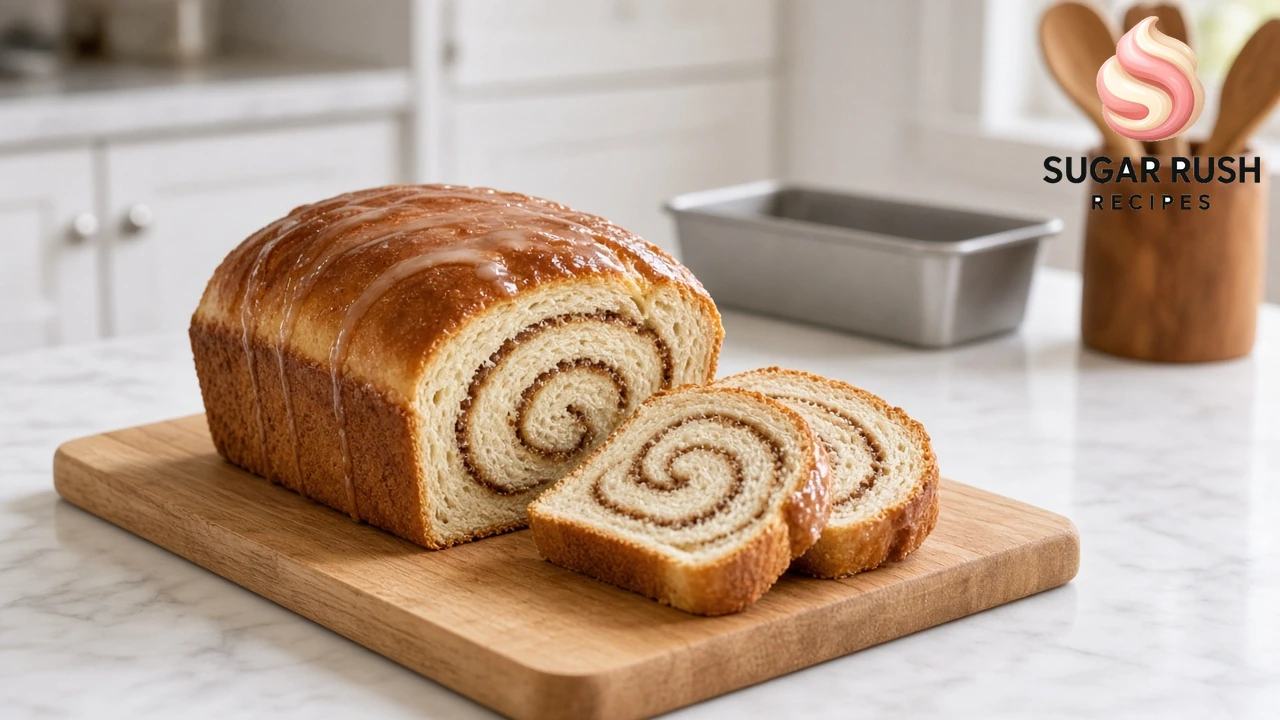
Table of contents
- Why this loaf works
- Ingredients and substitutions
- Equipment and realistic timing
- How to make maple cinnamon swirl bread
- Recipe card
- Troubleshooting the swirl
- Serving, storage, and freezing
- Frequently asked questions
Why this maple cinnamon swirl bread works
Milk and butter enrich the dough without turning it into a heavy pastry. Kneading develops the gluten that supports the loaf, while two separate rises create a lighter texture. The filling stays inside the dough rather than becoming an exposed topping that can scorch.
A long rectangle gives the cinnamon layer room to wind into a recognizable spiral. Rolling from a short edge makes a log that fits the loaf pan. The exterior should have a rounded golden crown; the spiral belongs on the cut face, not stamped across the top.
The finishing glaze is deliberately simple: maple syrup and butter, with no powdered sugar. Expect a thin amber sheen and a little sticky sweetness, not thick white icing. Some glaze will soak into the crust, which is normal for this style of finish.
For a useful comparison, King Arthur Baking’s cinnamon swirl bread demonstrates the same basic two-rise, rolled-loaf technique. Its formula differs from this one, but its shaping and cooling guidance are helpful foundations.
Ingredients for one cinnamon swirl loaf
Dough
- 3 cups (360 g) all-purpose flour, plus a little for the counter
- 2 1/4 teaspoons (7 g) instant yeast
- 3 tablespoons (37 g) granulated sugar
- 1 teaspoon (6 g) fine table salt
- 1 cup (240 g) whole milk, lukewarm, about 100–110°F (38–43°C)
- 3 tablespoons (43 g) unsalted butter, softened
- A little neutral oil for the bowl and butter for greasing the pan
Cinnamon filling
- 2 tablespoons (28 g) unsalted butter, very soft but not melted
- 1/4 cup (50 g) packed light brown sugar
- 2 teaspoons ground cinnamon
- 1 teaspoon (3 g) all-purpose flour
Amber maple glaze
- 3 tablespoons (60 g) pure maple syrup
- 1 tablespoon (14 g) unsalted butter
Weighing the flour helps keep the dough soft. If using cups, spoon flour into the cup and level it; scooping directly from the bag can add too much. Begin with the listed amount and adjust only if the dough remains genuinely unmanageable after kneading starts.
All-purpose flour can support a moderate enriched loaf like this. Bread flour is an alternative, but it absorbs liquid differently and may need a teaspoon or two of extra milk. Do not substitute self-rising flour, almond flour, or a gluten-free blend without a separately developed formula.
Choose real maple syrup rather than pancake syrup for the glaze. Dark, robust maple syrup gives a stronger flavor and deeper amber color. The cinnamon filling uses brown sugar for a gentle molasses note; do not pour maple syrup into the filling, where extra liquid can encourage leaking.
Equipment and realistic timing
You need an 8 1/2-by-4 1/2-inch metal loaf pan, a large bowl, a rolling pin, a pastry brush, a cooling rack, and an instant-read thermometer. A stand mixer with a dough hook is convenient, but hand kneading works too. A larger 9-by-5-inch pan produces a lower loaf and may bake faster.
As an Amazon Associate, RecipesMind earns from qualifying purchases. If you need a pan, the USA Pan 8 1/2-by-4 1/2-inch loaf pan matches the dimensions used here. An equivalent pan you already own is fine; no specialty bread machine is necessary.
- Escali Primo digital kitchen scale — weighs flour in grams; tare the empty bowl first.
- TempPro TempSwift TP19H instant-read thermometer — checks the warm milk and baked center. Do not leave it in the oven.
- J.K. Adams French tapered rolling pin — rolls the dough into a long rectangle.
- OXO Non-Stick Pro Ceramic cooling rack — supports the loaf while air circulates underneath.
Plan on about 35 minutes of active preparation, 90 minutes for the first rise, 60 minutes for the second, 45 minutes baking, 2 hours cooling, and 15 minutes after glazing. That is about 6 hours 5 minutes from starting to slicing, not a 45-minute recipe.
Depending on room temperature and dough development, the first rise may take 60–90 minutes and the second 60–90 minutes. With a 40–45-minute bake, the practical window is roughly 5 hours 30 minutes to 6 hours 35 minutes. Cooler kitchens can take longer. Watch the dough rather than forcing it to match a timer. Preheating happens during the second rise, and warming the glaze happens near the end of cooling.
How to make maple cinnamon swirl bread
1. Mix a soft dough
Stir the flour, yeast, sugar, and salt together. Add the lukewarm milk and softened butter. Mix until no dry patches remain. The dough may look rough initially; avoid immediately adding handfuls of flour. Milk should feel warm, not hot, and a thermometer is more reliable than touch.
2. Knead until smooth
Knead by hand for about 8–10 minutes, or with a dough hook on the mixer’s recommended low kneading speed. Look for a smooth, elastic dough that feels slightly tacky rather than wet. A small piece should stretch into a thin membrane before tearing. If needed, dust in flour a teaspoon at a time; too much makes the finished bread dry.
3. Let the dough rise
Lightly oil the bowl, turn the dough inside to coat it, and cover. Leave in a comfortably warm, draft-free spot for about 60–90 minutes, until roughly doubled. Do not place the bowl in a hot oven. A photograph cannot tell you whether your dough is ready: judge the increase in volume in your own bowl.
4. Spread the filling
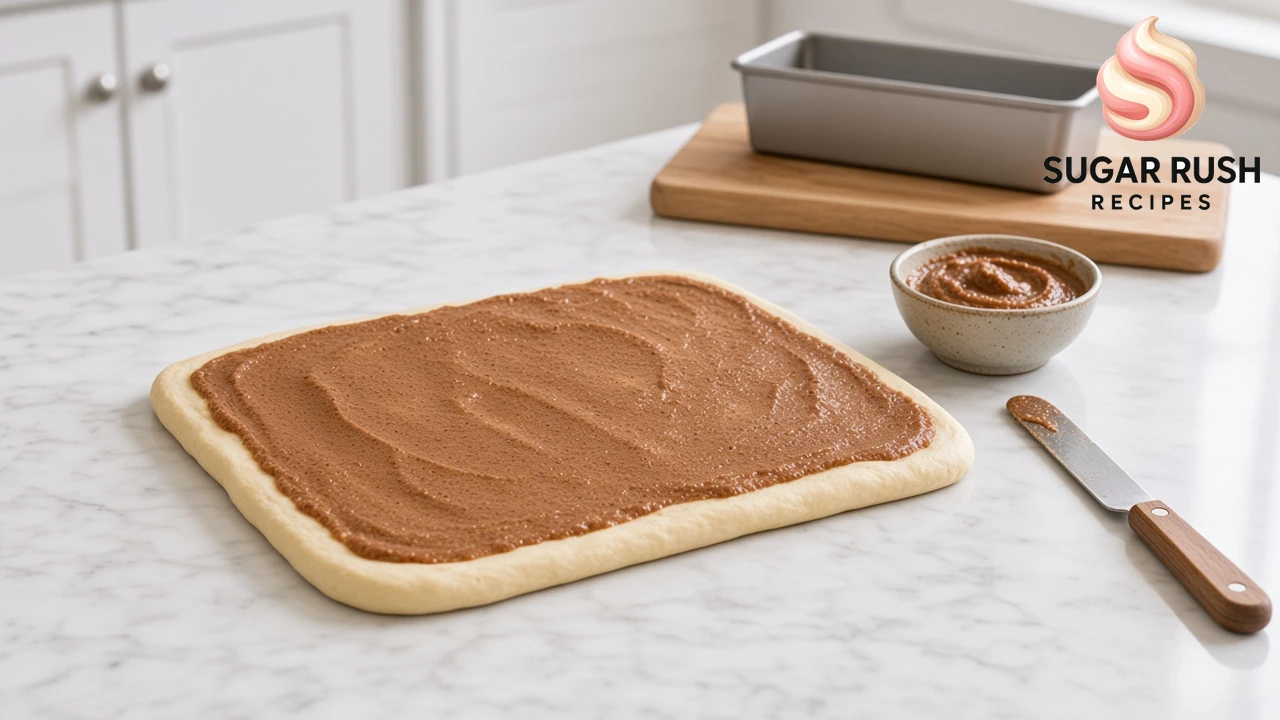
Grease the loaf pan. Mix the soft filling butter, brown sugar, cinnamon, and teaspoon of flour into a spreadable paste. Gently press excess gas from the risen dough, then roll it on a lightly floured counter into an approximately 8-by-20-inch rectangle. If it springs back, pause for 5 minutes and resume gently; allow extra time for this pause.
Spread a thin, even filling layer, leaving about 1 inch bare at the far short edge. Avoid thick mounds, which can separate the bread layers. The dough should remain intact without holes or stretched see-through patches.
5. Roll and proof again
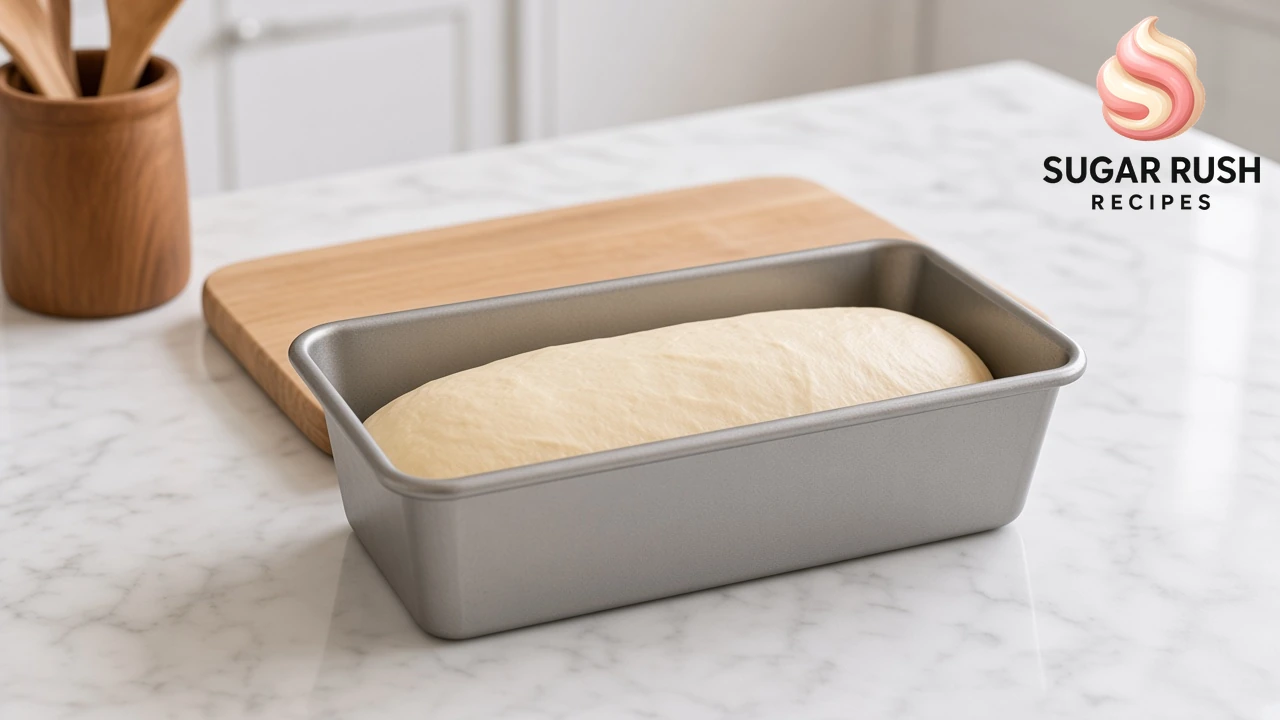
Starting at the filled short edge, roll into an 8-inch log, snugly but without stretching or squeezing out the filling. Pinch the final seam and ends closed. Place seam-side down in the prepared pan. Cover loosely and let rise for about 60–90 minutes, until the crown sits roughly 1/2–1 inch above the rim. The pan image shows the shaped loaf before this final expansion.
6. Bake until the center is done
During the final rise, preheat the oven to 350°F (175°C), conventional setting, with a rack in the lower-middle position. Bake for about 40–45 minutes. If the crown darkens early, lay a loose foil tent over it after about 20–25 minutes.
Check the center with an instant-read thermometer, aiming for about 195°F (91°C) in the bread crumb rather than a pocket of filling. The loaf should have a firm golden crust, not a wet center. Color alone is not enough. Established references vary slightly on internal temperature: King Arthur uses at least 190°F for its cinnamon loaf, while Sally’s cinnamon swirl bread guidance uses 195–200°F.
7. Cool, glaze, and slice
Rest the loaf in the pan for 10 minutes, then gently turn it onto a rack. Cool for about 1 hour 50 minutes more, or until completely cool. Larger or warmer loaves may need longer. Cutting early can compress the crumb and make it seem gummy.
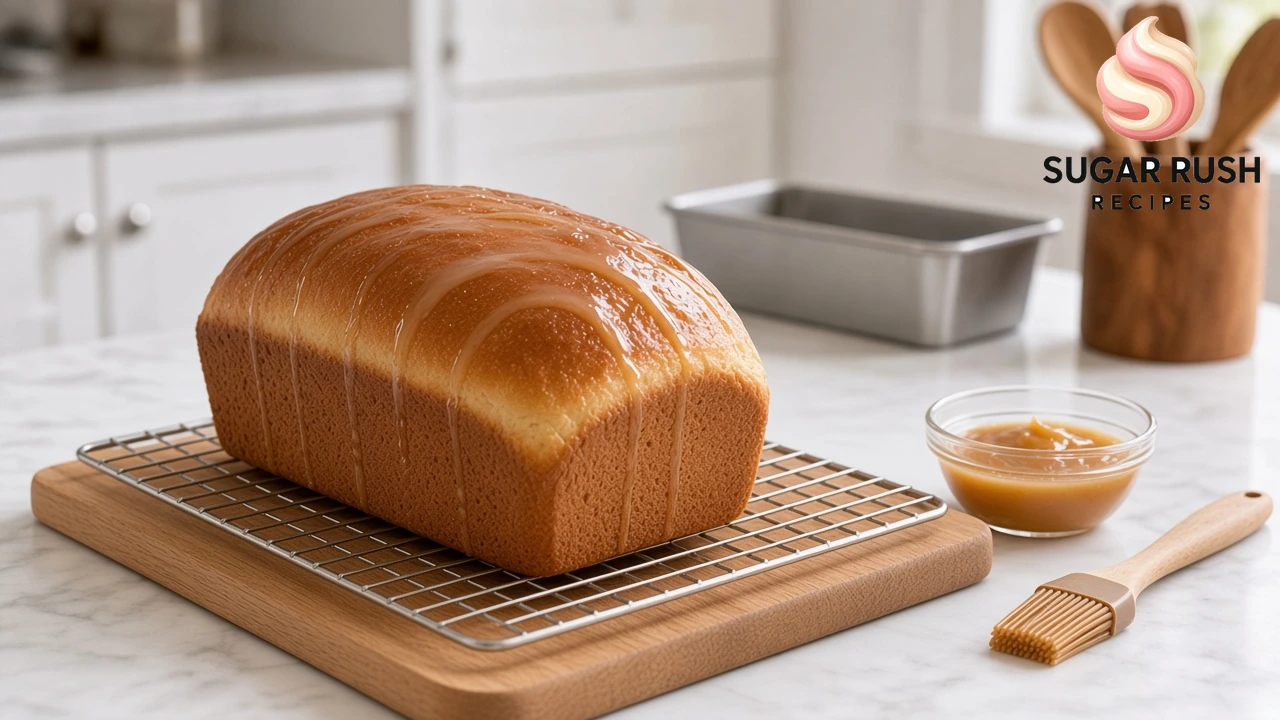
Near the end of cooling, warm the maple syrup and tablespoon of butter over low heat for about 2–3 minutes, stirring just until melted and combined. Do not boil into candy. Let it become lukewarm, stir again, and brush a thin layer over the cooled crown. Rest for 15 minutes before slicing with a serrated knife. This glaze stays slightly tacky; it will not form a hard icing shell.
Maple cinnamon swirl bread recipe card
Print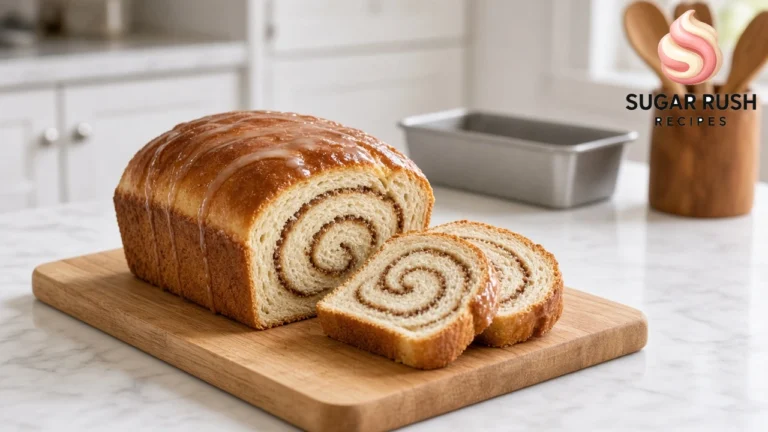
Maple Cinnamon Swirl Bread
Soft milk-and-butter yeast bread rolled with brown sugar cinnamon filling and brushed with a thin amber maple-butter glaze. Editorial formulation; timing and nutrition are estimates, not kitchen-tested results.
- Total Time: 365 minutes
- Yield: 1 loaf (12 slices)
Ingredients
DOUGH
3 cups (360 g) all-purpose flour, plus a little for dusting
2 1/4 teaspoons (7 g) instant yeast
3 tablespoons (37 g) granulated sugar
1 teaspoon (6 g) fine table salt
1 cup (240 g) whole milk, lukewarm, 100–110°F (38–43°C)
3 tablespoons (43 g) unsalted butter, softened
Neutral oil for bowl and butter for greasing pan
FILLING
2 tablespoons (28 g) unsalted butter, very soft, not melted
1/4 cup (50 g) packed light brown sugar
2 teaspoons ground cinnamon
1 teaspoon (3 g) all-purpose flour
GLAZE
3 tablespoons (60 g) pure maple syrup
1 tablespoon (14 g) unsalted butter
Instructions
1. Mix flour, instant yeast, sugar, and salt. Add lukewarm milk and softened dough butter; stir to form a soft dough.
2. Knead by hand 8–10 minutes, or with a dough hook on the manufacturer’s recommended low kneading speed, until smooth, elastic, and slightly tacky. Add flour only a teaspoon at a time if genuinely too sticky; a small piece should stretch thinly before tearing.
3. Place in a lightly oiled bowl, turn to coat, cover, and rise 60–90 minutes until roughly doubled. Avoid a hot oven.
4. Grease an 8 1/2-by-4 1/2-inch metal loaf pan. Mix filling butter, brown sugar, cinnamon, and flour into a soft paste. Gently deflate dough and roll on a lightly floured surface into an approximately 8-by-20-inch rectangle. If it resists, rest 5 minutes, allowing extra elapsed time.
5. Spread filling thinly and evenly, leaving 1 inch bare along the far short edge. Starting from the filled short edge, roll into an 8-inch log. Pinch seam and ends shut; place seam-side down in pan.
6. Cover loosely and rise 60–90 minutes until the crown stands about 1/2–1 inch above the rim. During this rise, preheat a conventional oven to 350°F (175°C), lower-middle rack.
7. Bake 40–45 minutes until golden and the center crumb reaches about 195°F (91°C). Avoid measuring a filling pocket. Tent loosely with foil after 20–25 minutes if browning too quickly; extend baking if the center is not done.
8. Cool 10 minutes in the pan, then turn onto a rack and cool about 1 hour 50 minutes more, or until completely cool.
9. Near the end of cooling, warm maple syrup and glaze butter over low heat 2–3 minutes just until melted and combined; do not boil. Cool glaze to lukewarm, stir, and brush a thin layer over cooled loaf. Rest 15 minutes; slice with a serrated knife.
Notes
TIMING: 35 minutes active prep + 45 minutes baking + 90 minutes first rise + 60 minutes final rise + 120 minutes cooling + 15 minutes after glazing = 365 minutes (6 hours 5 minutes). Additional inactive time is 285 minutes (4 hours 45 minutes). Glaze warming overlaps cooling; preheating overlaps final proof. Both rises vary; typical elapsed range 5 hours 30 minutes–6 hours 35 minutes, longer in cool kitchens. These are planning estimates, not measured test results. If Tasty has an additional-time field, enter 285 minutes; keep total at 365 minutes without double-counting.
YIELD: 1 loaf, approximately 12 slices.
This is a yeast loaf, not quick bread. Keep cinnamon filling inside; do not braid or cut an exterior spiral. Thin amber glaze remains tacky and may soak in; it is not hard white icing.
Active dry yeast: use the same amount, soften in listed milk with 1 teaspoon of the measured sugar for 5–10 minutes; follow package temperature directions and allow extra rising time.
Storage: ideally glaze only what you serve. Wrap cooled unglazed bread and keep at cool room temperature 2–3 days; refrigerate glazed leftovers and use within 3 days as a conservative recommendation. Freeze unglazed slices up to 3 months for best quality. Discard whole loaf if mold appears. Avoid sticky glazed slices in a pop-up toaster.
Contains wheat and milk. Never taste raw dough; wash hands and work surfaces after handling flour.
Nutrition is an approximate ingredient-based calculation per 1/12 loaf with all glaze, excluding pan grease and dusting flour; not laboratory analysis.
- Prep Time: 35 minutes
- Additional Time: 285 minutes
- Cook Time: 45 minutes
- Category: Breakfast
- Method: Baking
- Cuisine: American
- Diet: Vegetarian
Troubleshooting the cinnamon swirl
A dense loaf: The dough may have needed more kneading or more rising time. Excess flour also limits tenderness. Let the dough become elastic before the first rise, and wait for visible expansion during both rises.
A large tunnel around the filling: Layers can separate as steam forms. Spread the filling thinly, roll evenly without trapping loose pockets, and seal the seam. Small gaps are normal; a perfectly identical spiral in every slice is not a realistic promise.
A dark top with an underdone middle: Tent the crown and continue baking until the center is done. Next time, check oven temperature with an oven thermometer and avoid an upper rack.
A sunken crown: Overproofing or underbaking may be responsible. Do not let the dough balloon far above the pan, and check the center before removing the loaf. Let it cool fully before judging its texture.
Serving, storage, and freezing
Serve a slice with coffee, tea, or fresh fruit. Because the glaze already adds sweetness, extra syrup is optional. For a different cinnamon treat, try these cinnamon sugar apple pie roll-ups. Prefer a loaf without kneading or proofing? Four-ingredient banana bread is a different, quick-bread-style option.
For best flexibility, glaze only the portion you plan to serve. Keep completely cooled, unglazed bread tightly wrapped at cool room temperature for about 2–3 days, or freeze sooner. Store glazed leftovers covered in the refrigerator and use within 3 days as a conservative household recommendation; refrigeration can firm the crumb. These are quality-oriented estimates, not a validated shelf-life study. Discard the entire loaf if mold appears.
Freeze cooled, unglazed slices in a well-sealed freezer bag for up to 3 months for best quality. Separate slices with parchment, thaw only what you need, and glaze after thawing. Warm slices gently in a low oven; avoid putting sticky glazed bread directly into a pop-up toaster.
Do not taste raw dough. The FDA’s raw-flour safety guidance explains that flour can carry harmful bacteria. Wash hands, utensils, and work surfaces after handling it. This recipe contains wheat and milk; it is not gluten-free or dairy-free.
Frequently asked questions
Can I use active dry yeast?
Yes. Use the same 2 1/4 teaspoons, soften it in the listed warm milk with a teaspoon of the measured sugar for 5–10 minutes, then proceed. Follow the yeast package’s temperature guidance. Allow additional time if rising is slower.
Can I skip the second rise?
No. The shaped loaf needs time to expand before baking. Skipping that stage commonly leaves a tight, heavy crumb instead of a tender slice.
Why is the glaze not white?
It contains maple syrup and butter, not powdered sugar. Its intended appearance is a thin amber glaze, and the color varies with the syrup. It may soak into the crust rather than remain in thick stripes.
Can I make the bread ahead?
Bake and cool it the day before, wrap it unglazed, and add fresh glaze before serving. Freezing the baked loaf is simpler than improvising an overnight proof with this untested formulation.
Does maple syrup replace the dough sugar?
Not directly. Syrup adds water as well as sweetness. Keep the dough formula as written and use maple syrup in the glaze for a predictable starting point.