
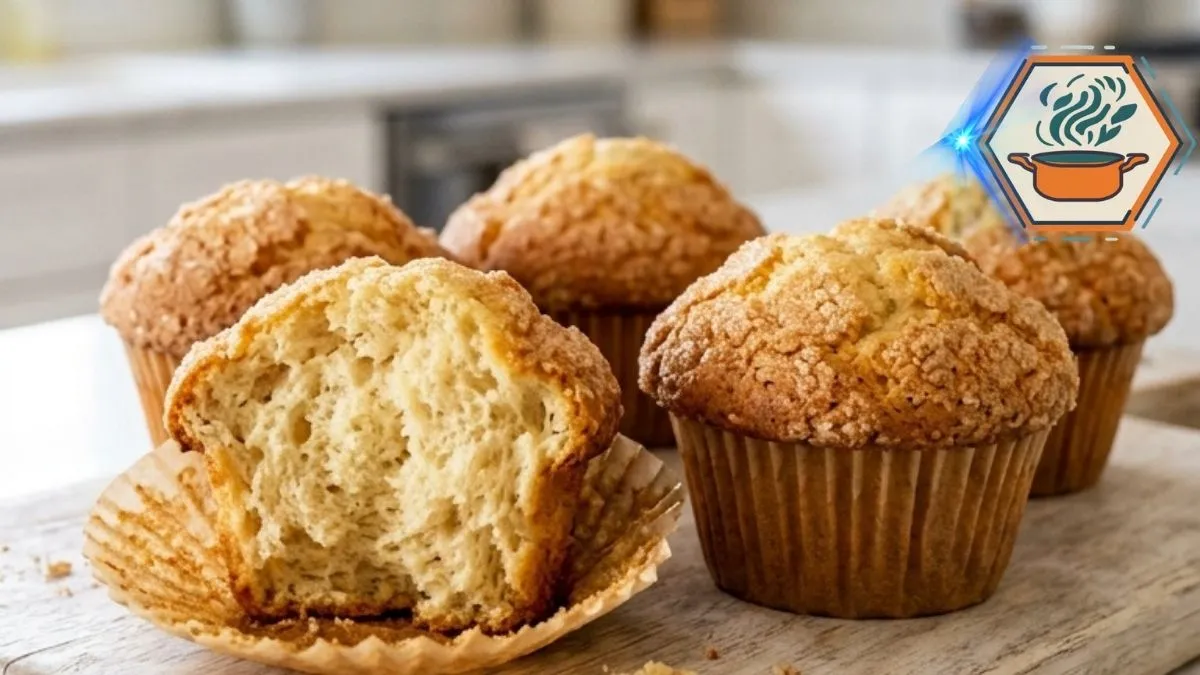
There is something special about pulling a tray of fluffy butter muffins from the oven early in the morning. The kitchen smells like warm butter and vanilla. The tops are golden, the centers are soft, and one muffin usually disappears before the rest have even cooled.
That is exactly the kind of muffin I wanted from this recipe. Nothing fancy. No complicated filling. Just a classic homemade muffin with a tender crumb, buttery flavor, tall top, and a light crust that gives way to a soft center.
The ingredient list in a basic muffin may look almost too simple: flour, sugar, eggs, milk, butter, and baking powder. Yet those ingredients need the right proportions and technique. Salt and vanilla also matter. Salt balances the sweetness, while vanilla gives a plain muffin a warmer flavor.
The mixing method matters just as much. King Arthur Baking recommends combining the wet and dry ingredients briefly because too much mixing can work against a light, tender muffin. Their basic muffin formula also uses baking powder, milk, eggs, and butter or oil in proportions similar to the classic method used here.
If you enjoy simple baking recipes, you may also like our 3-ingredient banana bread when you want another easy breakfast bake.
Affiliate disclosure: As an Amazon Associate I earn from qualifying purchases. This article may contain affiliate links to kitchen tools I find useful for preparing this recipe.
jump to
Why These Fluffy Butter Muffins Work
A good muffin needs balance.
Too much flour can make it dry. Too much liquid can make it heavy. Too much mixing can give it a firm or rubbery texture. Old baking powder can leave you with disappointing flat tops.
This recipe addresses those problems while staying close to the simple muffins shown in the inspiration photo.
You get:
- A soft and moist center
- A buttery flavor
- Tall, rounded tops
- Lightly golden edges
- A delicate sugar crust
- Simple pantry ingredients
- About 12 standard muffins
The small details are important.
For example, the original visual lists baking powder but does not mention salt or vanilla. I recommend both. Neither changes the character of the muffin, but each makes the finished flavor much better.
There is also a little extra sugar on top. This is the detail that helps create the slightly textured, golden crust seen in the photo.
Ingredients You’ll Need
For 12 standard fluffy butter muffins, gather:
Dry ingredients
- 2 cups (240 g) all-purpose flour
- 1/2 cup (100 g) granulated sugar
- 1 tablespoon baking powder
- 1/2 teaspoon fine salt
Wet ingredients
- 2 large eggs
- 1 cup (240 ml) whole milk
- 1/2 cup (113 g) unsalted butter, melted and slightly cooled
- 1 teaspoon pure vanilla extract
For the golden top
- 2 to 3 tablespoons coarse or granulated sugar
- 1 tablespoon melted butter, optional
Whole milk gives these muffins a richer texture than very low-fat milk. Unsalted butter lets you control the amount of salt and provides the classic buttery flavor we’re after.
Fresh baking powder is particularly important. King Arthur Baking notes that old baking powder can prevent muffins from rising properly.
The Secret to Tall, Fluffy Muffins
Here is where a simple recipe can go wrong.
You do not need to beat muffin batter until perfectly smooth.
In fact, don’t.
When flour meets liquid, gluten begins to develop. Aggressive or prolonged mixing can create a tougher muffin rather than the soft crumb we want.
Mix the batter only until you no longer see large pockets of dry flour.
A few small lumps are fine.
King Arthur’s basic muffin instructions make the same point: gentle, brief mixing helps produce tender muffins.
Ingredient temperature matters too.
Cold milk mixed directly with warm melted butter can cause the butter to firm up. For better results, bring the milk and eggs closer to room temperature before mixing.
For easy, evenly portioned muffins, a spring-loaded scoop is useful. You can browse a suitable Amazon muffin and cookie scoop search.
How to Make Fluffy Butter Muffins
1. Prepare the oven and pan
Preheat your oven to 425°F (220°C).
Line a standard 12-cup muffin pan with paper liners.
Lightly grease the liners if they tend to stick.
A good metal muffin pan helps the sides and bottoms brown evenly. Here is an Amazon 12-cup muffin pan search.
2. Mix the dry ingredients
Place the flour, sugar, baking powder, and salt in a large bowl.
Whisk for about 20 seconds.
Don’t skip this quick step.
It distributes the baking powder through the flour. That helps the muffins rise more evenly.
3. Combine the wet ingredients
In another bowl, whisk the eggs until the yolks and whites are fully combined.
Add the milk and vanilla.
Slowly whisk in the melted butter.
The butter should be warm, not piping hot. Very hot butter is not what you want around raw eggs.
4. Bring wet and dry together
Pour the wet mixture into the dry ingredients.
Use a silicone spatula to fold everything together.
Scrape from the bottom and fold toward the center.
Stop as soon as the flour is almost completely incorporated.
The batter should be thick and scoopable rather than runny.
5. Fill the muffin cups
Divide the batter evenly between the 12 cups.
Aim for roughly three-quarters full.
King Arthur also uses this general filling level for its basic muffins.
Even portions are more than cosmetic. Muffins of similar size finish baking at roughly the same time.
6. Add the crust
Sprinkle each muffin with a little coarse sugar.
This was one of the missing details worth adding to the original concept.
Sugar on the surface gives the finished muffin a prettier top and a delicate sweet crunch. Coarse sparkling sugar is especially useful because it keeps more of its texture during baking.
For a more buttery finish like the muffins in the inspiration photo, lightly brush the tops with melted butter after baking.
7. Bake
Place the pan on the center rack.
Bake at 425°F (220°C) for 5 minutes.
Then reduce the oven to 375°F (190°C) without opening the door.
Continue baking for approximately 10 to 14 minutes, or until the muffins are risen and golden.
The exact time depends on your oven and muffin pan.
Insert a toothpick into the center of a muffin. It should come out clean or with a few moist crumbs rather than wet batter.
Do not taste raw batter. USDA food-safety guidance advises against eating raw or undercooked shell eggs because they may contain Salmonella.
How to Get That Golden, Slightly Crisp Muffin Top
The photo that inspired this recipe shows more than a soft muffin. The tops have visible texture and a lightly crisp appearance.
Three details help recreate that result.
First, sprinkle sugar over the raw batter.
Second, give the muffins good initial heat. The hot oven encourages early expansion and browning. After the first few minutes, lowering the temperature gives the centers time to finish without excessively dark tops.
Third, don’t trap steam around the finished muffins.
Leave them in the pan for about 5 minutes, then move them to a wire rack.
You can find a suitable Amazon baking cooling rack search.
Cooling on a rack allows air to circulate around the muffins. Leaving baked muffins sitting in the hot pan too long can affect their texture; King Arthur likewise recommends moving baked muffins to a rack after a short cooling period.
What Should the Finished Muffin Look Like?
Break one open while it is still slightly warm.
The exterior should be golden.
The inside should be pale, tender, and fluffy. You should see small, fairly even air pockets rather than one dense mass.
The top should have a gentle dome with a slightly rough surface.
It should taste buttery but not greasy.
Most importantly, it should hold together when pulled apart while remaining soft enough to tear easily with your fingers.
That is the texture we’re trying to reproduce from the inspiration photo.
Common Muffin Mistakes to Avoid
Overmixing the batter: This is probably the most common mistake. Stop stirring once the ingredients come together.
Packing flour into the measuring cup: Too much flour produces a drier batter. A kitchen scale is the most reliable option. Use 240 g of all-purpose flour for this recipe.
Using old baking powder: Your muffins depend on chemical leavening for their rise. Fresh baking powder makes a noticeable difference.
Using very hot melted butter: Let it cool slightly before combining it with the eggs.
Opening the oven too soon: Leave the door closed during the initial high-temperature stage.
Overbaking: Start checking before you think the muffins are finished. They can go from moist to dry surprisingly quickly.
Leaving them in the hot pan: Give them a short rest, then transfer them to a rack.
If baking technique interests you, our guide to the secret to crunchy cookies explains how ingredients and baking choices affect texture in another classic bake.
Useful Equipment
You don’t need a stand mixer.
In fact, I prefer making these muffins by hand because it is easier to avoid overworking the batter.
A practical setup includes:
- Two mixing bowls
- A balloon whisk
- A flexible silicone spatula
- Measuring cups or a digital scale
- A 12-cup muffin pan
- Paper liners
- A large cookie scoop
- A cooling rack
If you prefer reusable cups, an Amazon silicone muffin liners search is another natural option.
Easy Muffin Variations
Once you know the basic recipe, you can change it without rebuilding everything from scratch.
For blueberry muffins, gently fold about 1 cup of blueberries into the batter.
For chocolate chip muffins, add 3/4 to 1 cup of chocolate chips.
For lemon muffins, add finely grated lemon zest.
For cinnamon muffins, add 1 teaspoon ground cinnamon to the dry ingredients.
For a stronger vanilla flavor, increase the vanilla slightly or add vanilla bean paste.
Keep additions reasonable. Loading a basic batter with too much fruit or chocolate can weigh it down.
If you enjoy fruit-forward breakfast baking, our banana flavor boost guide has more ideas for getting stronger natural flavor into baked goods.
Serving Ideas
These muffins are best when they’re still a little warm.
Split one open and add a thin pat of salted butter. The butter melts into the soft crumb and gives you that simple bakery-style breakfast experience.
You can also serve them with:
- Strawberry jam
- Raspberry preserves
- Honey
- Peanut butter
- Fresh berries
- Greek yogurt
- Scrambled eggs
- Coffee or tea
For brunch, place the muffins in a basket lined with a clean kitchen towel. Serve them alongside fruit, eggs, and coffee.
Nothing complicated is required.
That is part of their charm.
How to Store Homemade Muffins
Allow the muffins to cool completely before storing them.
Putting warm muffins into a closed container traps moisture. That can soften the crust you worked to create.
Once cool, keep them in an airtight container at room temperature for about 2 days for best texture.
King Arthur gives a similar two-day room-temperature recommendation for its oat muffins and recommends freezing for longer storage.
If the tops become softer overnight, warm the muffins briefly before serving.
Can You Freeze Butter Muffins?
Yes.
Let the muffins cool completely.
Place them in a freezer-safe bag or container. Remove as much excess air as practical and freeze.
King Arthur notes that basic muffins freeze well and suggests storage for up to three months.
Thaw one at room temperature when you want it.
You can then warm it gently in the oven.
This makes fluffy butter muffins especially useful for busy mornings. Bake once, freeze the extras, and breakfast is already partly prepared.
Print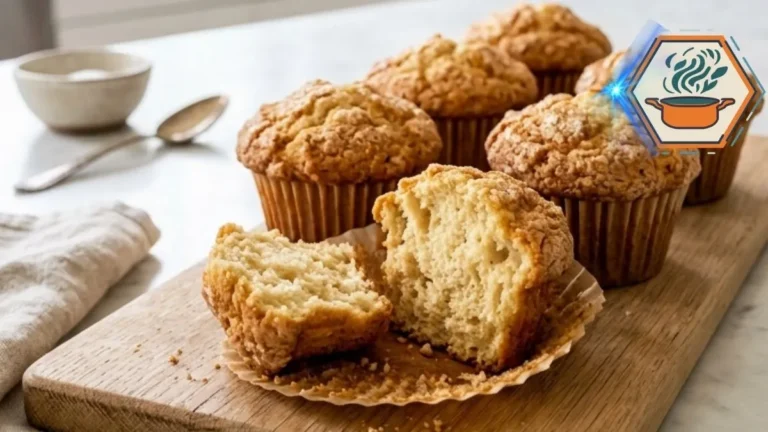
Fluffy Butter Muffins
Soft and fluffy butter muffins with tender centers and golden sugar-crusted tops. This easy homemade muffin recipe uses simple ingredients and a two-temperature baking method for beautifully risen muffins.
- Total Time: 30–34 minutes
- Yield: 12 muffins
Ingredients
- 2 cups (240 g) all-purpose flour
- 1/2 cup (100 g) granulated sugar
- 1 tablespoon baking powder
- 1/2 teaspoon fine salt
- 2 large eggs, preferably at room temperature
- 1 cup (240 ml) whole milk, preferably at room temperature
- 1/2 cup (113 g) unsalted butter, melted and slightly cooled
- 1 teaspoon pure vanilla extract
- 2 to 3 tablespoons coarse or granulated sugar, for topping
- 1 tablespoon melted butter, optional, for brushing after baking
Instructions
- Preheat the oven to 425°F (220°C). Line a standard 12-cup muffin pan with paper liners.
- In a large bowl, whisk together the flour, granulated sugar, baking powder, and salt until evenly combined.
- In a separate bowl, whisk the eggs. Add the whole milk and vanilla extract. Slowly whisk in the melted, slightly cooled butter.
- Pour the wet ingredients into the dry ingredients. Fold gently with a spatula until no large pockets of dry flour remain. Do not beat the batter smooth. A few small lumps are fine.
- Divide the batter evenly among the 12 muffin cups, filling each about three-quarters full.
- Sprinkle the tops with 2 to 3 tablespoons of coarse or granulated sugar.
- Bake at 425°F (220°C) for 5 minutes.
- Without opening the oven door, reduce the temperature to 375°F (190°C). Continue baking for about 10 to 14 minutes, until the tops are risen and golden.
- Check the center with a toothpick. It should come out clean or with a few moist crumbs, but no wet batter.
- Let the muffins rest in the pan for about 5 minutes. Transfer them to a wire rack.
- For a richer buttery finish, lightly brush the warm tops with the optional tablespoon of melted butter.
- Let cool slightly and serve warm.
Notes
- Measure flour carefully: For the most repeatable result, use 240 g rather than packing flour into measuring cups.
- Do not overmix: Stop folding once the flour is incorporated. Overmixing can produce a firmer crumb.
- Butter temperature: Melted butter should be slightly cooled before it meets the eggs.
- Room-temperature ingredients: Using milk and eggs that are not refrigerator-cold helps prevent the melted butter from rapidly solidifying.
- Fresh baking powder: Old baking powder may result in flatter muffins.
- Golden crust: Sugar sprinkled before baking gives the tops their sweet, lightly crisp finish.
- Ovens vary: Begin checking during the final few minutes rather than relying solely on the clock.
- Storage: Cool completely before placing in an airtight container. Best texture is within about 2 days.
- Freezing: Once completely cool, muffins can be frozen in a freezer-safe container or bag.
- Prep Time: 5 minutes
- Default to prep + cook: 30–34 minutes
- Cook Time: 15–19 minutes
- Category: Breakfast
- Method: Baking
- Cuisine: American
Frequently Asked Questions
Why aren’t my muffins fluffy?
Old baking powder, too much flour, and excessive mixing are common causes. Measure accurately and fold the wet and dry ingredients together only until combined.
What makes muffins rise higher?
Fresh baking powder is essential. Proper batter consistency and enough oven heat also matter. Avoid opening the oven during the first stage of baking.
Should muffin batter be smooth?
No. A muffin batter does not need to look perfectly smooth. A few small lumps are preferable to excessive stirring.
Is butter or oil better for muffins?
Both can work, but they produce somewhat different results. Oil can give muffins a very moist texture, while butter contributes the classic dairy flavor wanted in this recipe. King Arthur’s basic muffin formula allows either melted butter or vegetable oil.
Why do you put sugar on top of muffins?
It adds sweetness, texture, and an attractive finish. Coarse sugar can create a more noticeable crunchy surface than ordinary fine sugar.
Can I make these muffins without paper liners?
Yes. Grease the muffin wells thoroughly before adding the batter.
Can I add fruit?
Yes. Blueberries are an easy choice. Fold them in gently near the end so you don’t unnecessarily mix the batter.
How do I know when muffins are done?
Look for risen, golden tops. Insert a toothpick into the center. It should come out clean or with a few moist crumbs.
Final Baking Notes
The best part of this recipe is its simplicity.
You begin with ordinary ingredients: flour, sugar, eggs, milk, butter, and baking powder. Add salt for balance, vanilla for flavor, and a small amount of sugar on top for that golden crust.
Then technique does the rest.
Measure the flour carefully. Use fresh baking powder. Keep the butter from being too hot. Mix gently. Fill the cups evenly. Don’t overbake the muffins. Move them to a rack after their short rest.
Those details turn a vague six-ingredient idea into a recipe that someone can actually reproduce at home.
And when you break the first warm muffin apart, you should find exactly what you were looking for: a golden top, a soft pale center, a buttery aroma, and a tender crumb that pulls apart easily.
Sometimes breakfast really can be that simple.