
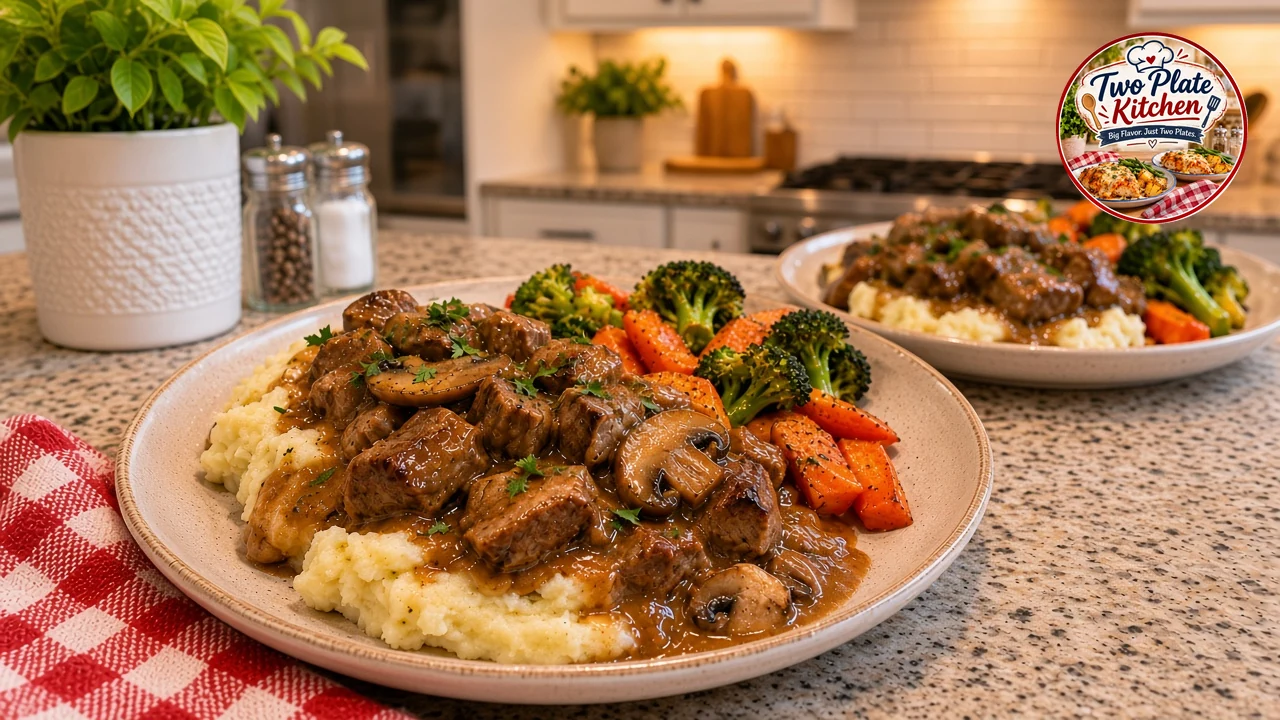
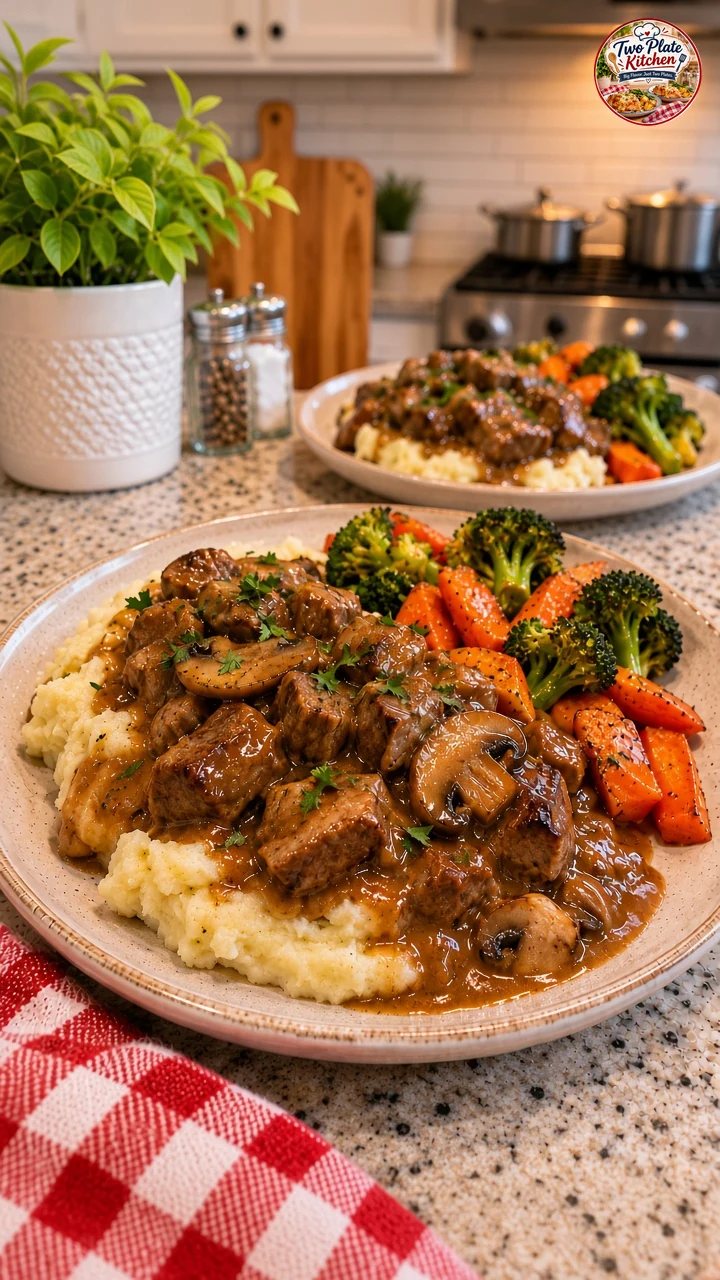
Beef tips and mushroom gravy is the kind of dinner that makes a regular weeknight feel like a night out. Bite-size pieces of beef chuck are browned in a heavy pot, then simmered low and slow in a savory cremini mushroom gravy until they are tender enough to cut with a fork. Spoon everything over buttery Yukon Gold mashed potatoes, add a pan of roasted carrots and broccoli, and you have a cozy, steakhouse-style plate without the restaurant bill.
This version is sized for two, so there is no giant pot of leftovers taking over the fridge. It starts with just 12 ounces of chuck, one pot for the beef and gravy, one sheet pan for the vegetables, and one saucepan for the potatoes. Most of the cooking time is hands-off simmering, which means you can set the table, catch up on your day, or pour a drink while the pot does the work.
This recipe was inspired by a post shared by Two Plate Kitchen on Facebook. RecipesMind wrote the method, food-safety notes, timing plan, and storage guidance below using standard braising technique and U.S. food-safety guidance, and corrected a few shortcuts from the original video (such as switching pans and skipping the long simmer). It has not been kitchen-tested by RecipesMind, so use the doneness cues as your guide. Images are AI-generated recipe illustrations based on the post, not photographs of a kitchen test.
In this article
Why These Beef Tips Turn Out So Tender
Have you ever ordered beef tips at a diner and gotten chewy little nuggets instead of soft, juicy bites? The difference almost always comes down to two things: the cut of beef and the patience you give it.
- Chuck is the right cut. It comes from the hard-working shoulder, so it is full of connective tissue and marbling. Cooked quickly, it is tough. Cooked slowly in liquid, that connective tissue melts into gelatin, which makes the meat tender and gives the gravy a silky body.
- Browning builds the flavor. A deep brown crust on the beef, plus the browned bits left in the pot, is where most of the rich, roasted flavor of the gravy comes from.
- A gentle simmer, not a boil. A lazy simmer with just a few bubbles keeps the meat juicy. A hard boil tightens the muscle fibers and can leave beef dry and stringy even after hours. The Exploratorium’s science of braising explains why a gentle simmer beats a rolling boil for tough cuts.
- One pot does everything. The beef, mushrooms, and gravy all cook in the same heavy pot, so none of that flavor gets left behind in a second pan.
Ingredients for Beef Tips and Mushroom Gravy
The full quantities are in the printable recipe card below. Here is what each ingredient does and what you can swap.
Boneless beef chuck (12 ounces): Buy a small chuck roast or chuck steak and cut it into 1-inch cubes yourself. Trim off thick pieces of hard fat and silverskin, but leave the thin streaks of marbling, because that is what keeps the beef juicy. Packages labeled “stew meat” can be a mix of cuts that cook unevenly, so some pieces may still be firm when others are tender.
Seasoning: Salt, black pepper, and garlic powder go on the beef before it hits the pan. Seasoning first means the crust is flavorful, not just the gravy.
Cremini mushrooms (4 ounces): Also called baby bella mushrooms, they have more flavor than white button mushrooms. Wipe them clean with a damp paper towel and slice them about 1/4 inch thick. White mushrooms work if that is what you have.
Onion, garlic, and dried thyme: A quarter of a yellow onion and two cloves of garlic are plenty for two servings. Thyme gives the gravy that classic, savory pot-roast aroma.
Butter and flour: The butter helps the mushrooms brown, and one tablespoon of all-purpose flour thickens the gravy. For a gluten-free version, skip the flour and thicken the finished gravy with a cornstarch slurry instead (see the FAQ), and check that your broth is gluten-free.
Low-sodium beef broth (1 cup, plus extra): Low-sodium broth matters here because the gravy reduces as it simmers, and regular broth can make it too salty. Keep an extra 1/2 cup of broth or water nearby to top up the pot.
For the sides: Two medium Yukon Gold potatoes (about 1 pound) make a naturally creamy mash with just butter and warm milk. One cup each of carrots and broccoli florets, tossed with olive oil and Italian seasoning, roast into sweet, browned edges at 425°F.
Helpful Tools for Beef Tips
As an Amazon Associate, RecipesMind earns from qualifying purchases. The links below are affiliate links; buying through them costs you nothing extra. Equipment you already own works fine if it does the same job.
- Lodge 3-quart enameled cast iron Dutch oven for searing, building the gravy, and simmering, all in one heavy pot with a tight-fitting lid. A 3-quart size is ideal for two servings because the broth does not spread too thin and evaporate.
- OXO Good Grips wooden corner spoon for scraping every browned bit off the bottom of the pot when you add the broth.
- TempPro TP19H instant-read thermometer to check the beef and the leftovers when you reheat them.
- Victorinox Fibrox Pro 8-inch chef’s knife for cubing the chuck evenly and slicing the mushrooms and onion.
- Nordic Ware Naturals half sheet pans (2-pack) for roasting the carrots and broccoli in a single layer.
- OXO Good Grips swivel peeler for peeling the potatoes quickly.
- OXO Good Grips stainless steel potato masher for fluffy mashed potatoes without dragging out a mixer.
- Pyrex Simply Store glass storage containers (3-pack) for storing or freezing leftover beef and gravy.
Step 1: Season and Sear the Beef
Cut the chuck into 1-inch cubes, keeping them as even as you can so they cook at the same rate. Pat the cubes very dry with paper towels. Moisture on the surface steams the meat instead of browning it. Season all sides with 1/2 teaspoon salt, 1/4 teaspoon black pepper, and 1/4 teaspoon garlic powder. Wash your hands, knife, and cutting board with hot, soapy water after handling the raw beef.
Heat 1 tablespoon of olive oil in your Dutch oven or heavy, lidded skillet over medium-high heat until it shimmers. Add the beef in a single layer with space between the pieces. In a 3-quart pot that usually means two batches. Let the cubes sit undisturbed for 2 to 3 minutes until they release easily and have a deep brown crust, then turn and brown at least two more sides.
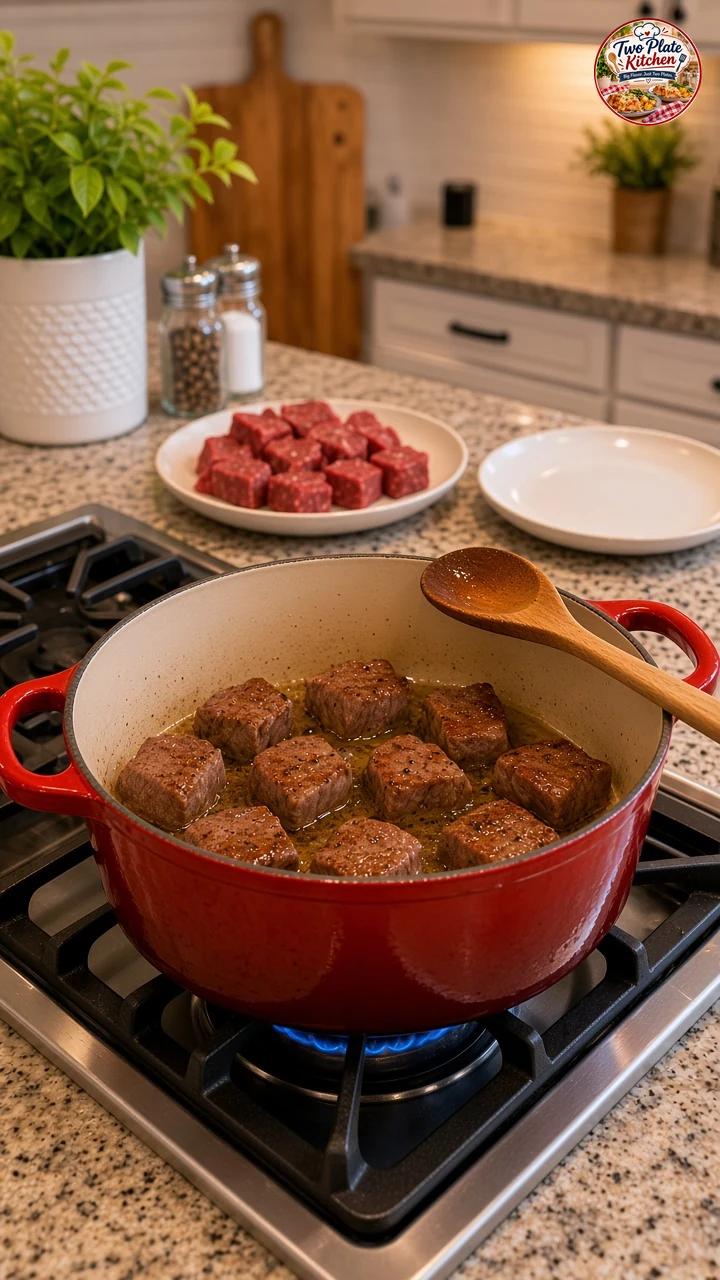
Move the browned beef to a clean plate, not the plate that held the raw meat. It will still be pink inside and firm at this point. That is expected, because it finishes cooking in the gravy. Do not wash the pot: those dark, sticky bits on the bottom are flavor.
Step 2: Build the Mushroom Gravy
Lower the heat to medium and melt 1 tablespoon of butter in the same pot. Add the diced onion and all 4 ounces of sliced mushrooms. Cook for 5 to 7 minutes, stirring now and then, until the mushrooms release their liquid, it cooks off, and they turn golden brown. If the bottom of the pot starts to look too dark, add a tablespoon of broth and scrape.
Stir in the minced garlic and 1/4 teaspoon dried thyme and cook just until fragrant, about 30 seconds. Sprinkle the flour over the vegetables and stir constantly for 1 minute to cook out the raw flour taste.
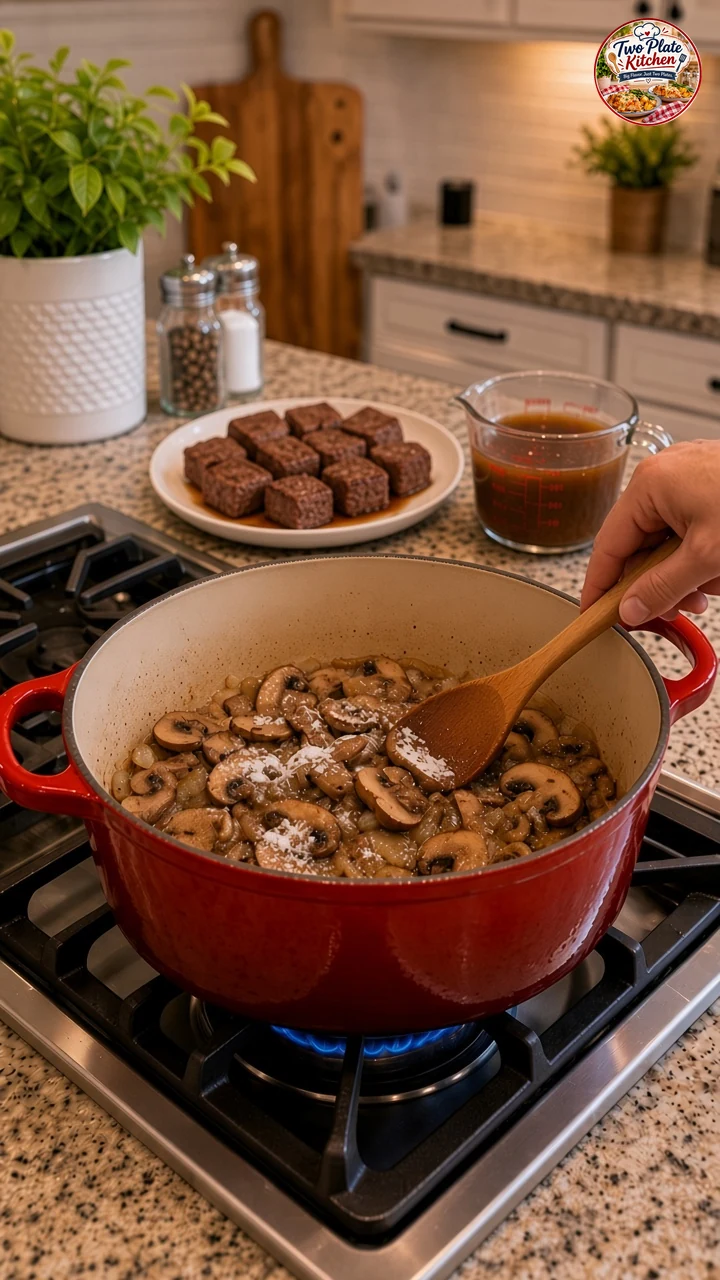
Now pour in the broth slowly, a splash at a time at first, while you scrape the bottom of the pot with a wooden spoon. Adding it gradually keeps the flour from clumping and lifts all the browned bits into the gravy. Once all the broth is in, the gravy should look smooth and slightly thickened.
Step 3: Simmer Low and Slow Until Fork-Tender
Return the beef and any juices from the plate to the pot. The liquid should come at least halfway up the beef; if it does not, add a little more broth. Bring it to a gentle simmer, then cover with the lid and turn the heat to low.
Simmer for 75 to 105 minutes, stirring every 20 to 30 minutes. You want only a few small bubbles breaking the surface. If the gravy gets too thick or starts to stick, add broth or water 2 tablespoons at a time. Cooking time depends on your stove, your pot, and the beef itself, so start checking at 75 minutes.
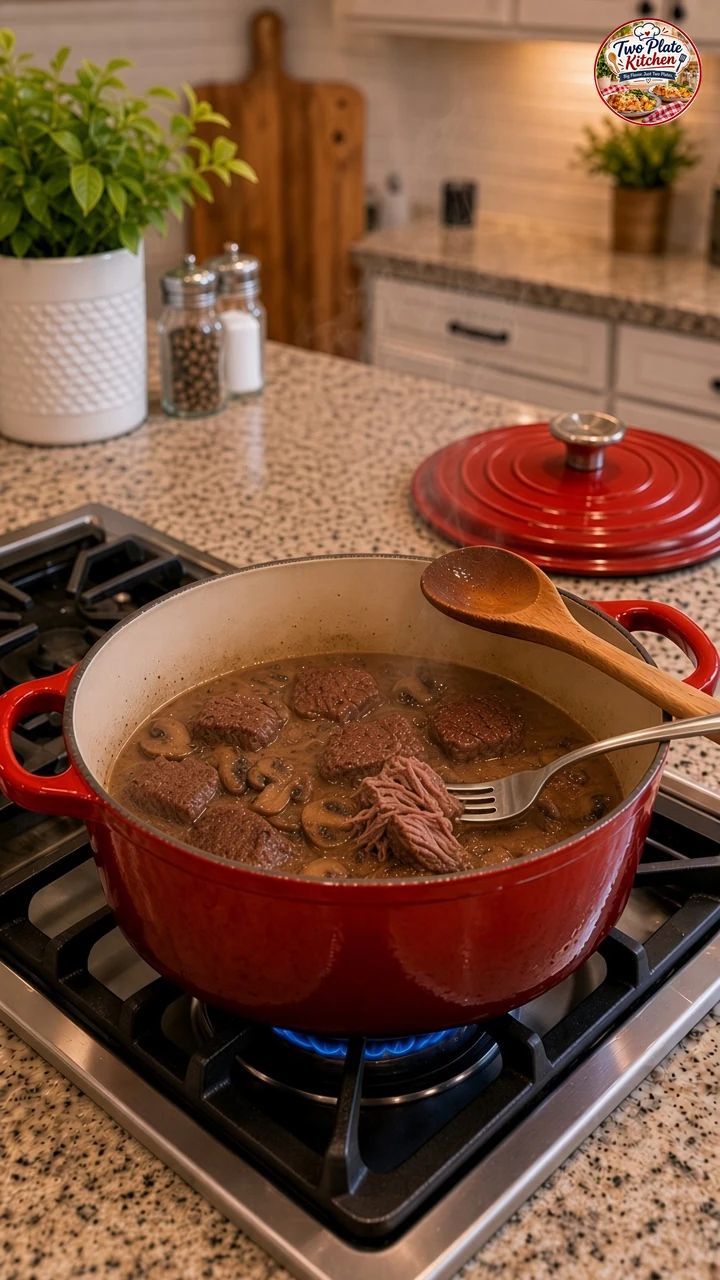
How to tell when it is done: a fork should slide into a cube with almost no resistance and the meat should pull apart easily. If you like to use a thermometer, fork-tender chuck usually reads around 195°F to 205°F inside. That is far above the safe minimum of 145°F for whole cuts of beef, so tenderness, not safety, is what you are waiting for here. If the beef is still chewy, cover it and keep simmering in 15-minute rounds. Tough beef simply needs more time.
Taste the gravy at the end and add salt and pepper as needed. If it is thinner than you like, simmer uncovered for 3 to 5 minutes. If it is too thick, stir in a splash of broth.
Step 4: Roast the Vegetables and Make the Mash
About 40 minutes before you expect the beef to be done, heat the oven to 425°F (220°C). Toss the carrots with half the olive oil and half the Italian seasoning, plus a pinch of salt and pepper, and spread them on a sheet pan. Carrots take longer than broccoli, so roast them alone for 10 minutes. Then toss the broccoli with the remaining oil and seasoning, add it to the pan in a single layer, and roast 15 to 20 minutes more, until both are tender and browned at the edges.
While the vegetables roast, peel the potatoes and cut them into even 1- to 1 1/2-inch chunks. Put them in a saucepan, cover with cold water by an inch, and add a generous pinch of salt. Bring to a boil, then simmer for about 15 minutes, until a knife slides through easily. Drain well, return them to the warm pot for a minute to steam off extra moisture, and mash with 1 tablespoon butter and 2 to 3 tablespoons warm milk. Season with salt and pepper and cover to keep warm.
Step 5: Plate It Up
Divide the mashed potatoes between two large plates and make a slight well in the middle. Spoon the beef tips and plenty of mushroom gravy directly over the potatoes. Add the roasted carrots and broccoli alongside, then finish with a sprinkle of chopped fresh parsley.
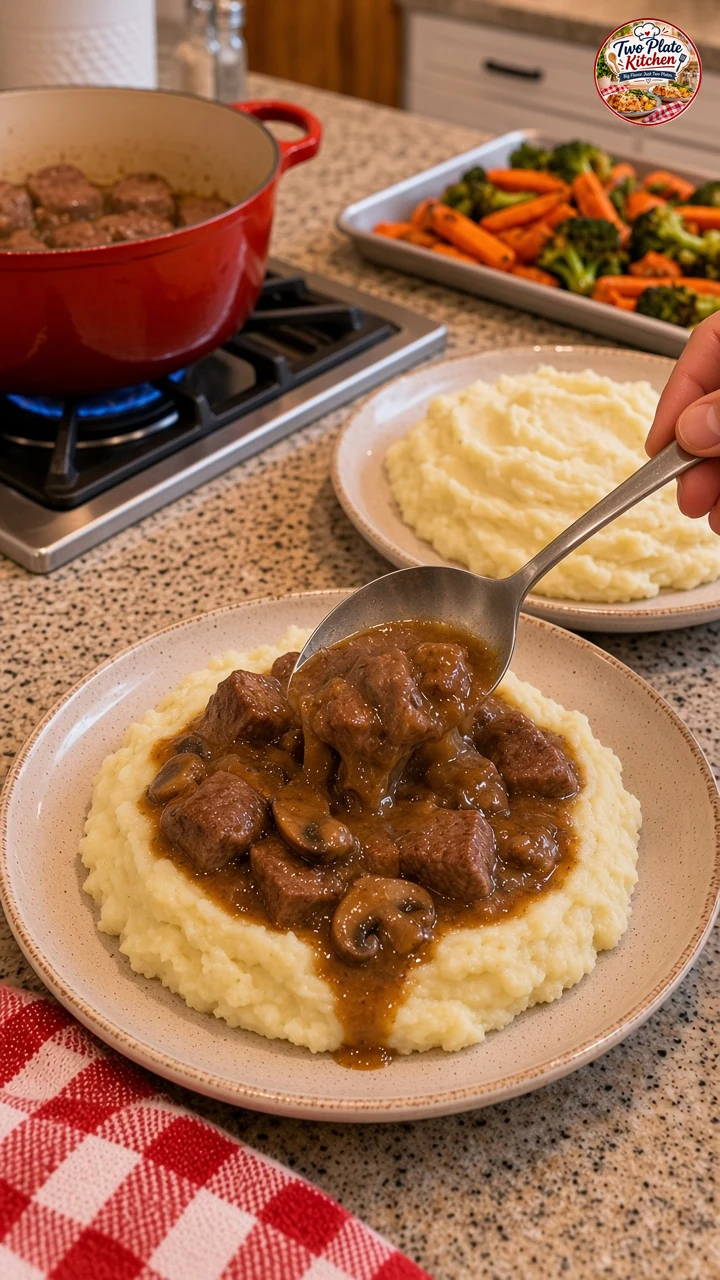
Serve right away while everything is hot. If one part finishes early, keep it warm: the covered beef holds well on the lowest heat, the mash stays warm with the lid on, and the vegetables can sit in the turned-off oven for a few minutes.
Timing Plan: How Long This Really Takes
- Prep: about 15 minutes to cube and season the beef, slice the mushrooms, and chop the onion, garlic, and parsley. The potatoes and vegetables can be prepped during the simmer.
- Searing and gravy: about 20 to 25 minutes for browning the beef in batches, cooking the mushrooms and onion, and adding the broth.
- Covered simmer: 75 to 105 minutes, mostly hands-off. The sides are made during the last 40 minutes.
- Final adjustments and plating: about 5 minutes.
- Ready to serve: about 2 hours from start, with a realistic range of 1 hour 45 minutes to 2 hours 15 minutes depending on how quickly your beef turns tender.
Beef Tips and Mushroom Gravy for Two Recipe
Print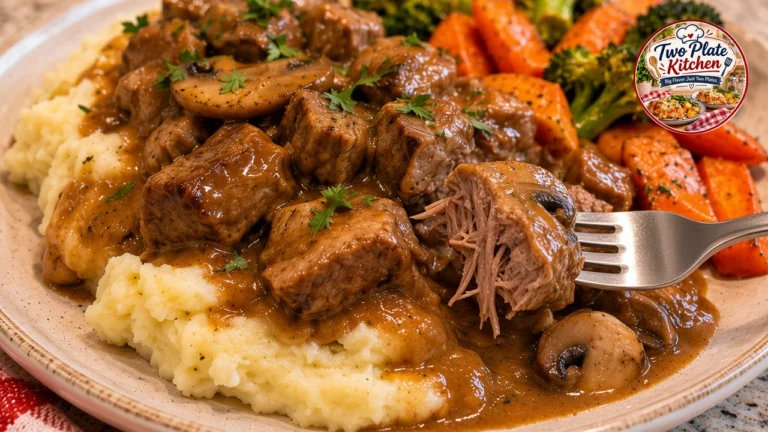
Tender Beef Tips and Mushroom Gravy for Two
Bite-size beef chuck seared in one heavy pot, then simmered low and slow in a savory cremini mushroom gravy until fork-tender. Served over buttery Yukon Gold mashed potatoes with roasted carrots and broccoli, it’s a cozy steakhouse-style dinner sized for two. Inspired by Two Plate Kitchen. Not kitchen-tested by RecipesMind; times are estimates.
- Total Time: 2 hours 5 minutes
- Yield: 2 servings
Ingredients
For the beef tips
- 12 oz boneless beef chuck, trimmed and cut into 1-inch cubes
- 1 tbsp olive oil
- 1/2 tsp salt
- 1/4 tsp black pepper
- 1/4 tsp garlic powder
For the mushroom gravy
- 4 oz cremini mushrooms, sliced about 1/4 inch thick
- 1/4 medium yellow onion, diced
- 2 garlic cloves, minced
- 1 tbsp unsalted butter
- 1 tbsp all-purpose flour
- 1 cup low-sodium beef broth, plus up to 1/2 cup extra as needed
- 1/4 tsp dried thyme
- Salt and pepper, to taste
- Fresh parsley, chopped, for garnish
For the mashed potatoes
- 2 medium Yukon Gold potatoes (about 1 lb)
- 1 tbsp unsalted butter
- 2–3 tbsp milk, warmed
- Salt and pepper
For the roasted vegetables
- 1 cup broccoli florets
- 1 cup carrots, cut into small pieces
- 1 tbsp olive oil, divided
- 1/2 tsp Italian seasoning, divided
- Salt and pepper
Instructions
- Prep the beef: Pat the beef cubes very dry with paper towels. Season all sides with the salt, pepper, and garlic powder. Wash hands, knife, and board in hot, soapy water after handling raw beef.
- Sear: Heat the olive oil in a heavy 3-quart Dutch oven or lidded heavy skillet over medium-high heat until shimmering. Add the beef in a single uncrowded layer (work in 2 batches if needed) and brown 2–3 minutes per side until deeply browned on at least 3 sides.
- Set aside: Transfer the browned beef to a clean plate. It will not be tender or fully cooked yet. Don’t wash the pot.
- Mushrooms and onion: Reduce heat to medium. Melt the butter in the same pot. Add the onion and all the mushrooms and cook 5–7 minutes, stirring occasionally, until softened, their liquid has evaporated, and they are lightly browned.
- Aromatics: Add the garlic and thyme and stir for 30 seconds, until fragrant.
- Flour: Sprinkle the flour over the mushroom mixture and stir constantly for 1 minute.
- Deglaze: Slowly pour in the broth, a splash at a time at first, scraping up all the browned bits from the bottom of the pot, until smooth.
- Return the beef: Add the beef and its juices back to the pot. The liquid should come at least halfway up the beef; add a little more broth if needed. Bring to a gentle simmer.
- Simmer until fork-tender: Cover and cook over low heat for about 75–105 minutes, stirring every 20–30 minutes, until a fork slides into the beef with almost no resistance (about 195–205°F inside). Keep it at a gentle simmer, never a boil. Add broth or water 2 tbsp at a time if the gravy gets too thick. If the beef is still chewy, keep simmering in 15-minute rounds.
- Roast the vegetables: About 40 minutes before the beef should be done, preheat the oven to 425°F (220°C). Toss the carrots with half the oil, half the Italian seasoning, salt, and pepper on a rimmed sheet pan. Roast 10 minutes. Toss the broccoli with the remaining oil and seasoning, add to the pan in a single layer, and roast 15–20 minutes more, until both are tender and browned.
- Mash the potatoes: Peel and cut the potatoes into 1- to 1 1/2-inch chunks. Cover with cold salted water by 1 inch, bring to a boil, and simmer about 15 minutes, until very tender. Drain, return to the warm pot for 1 minute to steam dry, then mash with the butter and warm milk. Season with salt and pepper and cover to keep warm.
- Finish the gravy: Taste and adjust the salt and pepper. If needed, simmer uncovered for 3–5 minutes to thicken, or add a splash of broth to thin.
- Plate: Divide the mashed potatoes between two large plates. Spoon the beef tips and mushroom gravy over the potatoes, add the roasted carrots and broccoli alongside, and finish with fresh parsley. Serve hot.
Notes
- Times: 15 minutes prep + about 1 hour 50 minutes cooking (20–25 min searing and gravy, 75–105 min covered simmer, ~5 min finishing) = about 2 hours 5 minutes total. Realistic ready-to-serve range: 1 hour 45 minutes to 2 hours 15 minutes, depending on how quickly the chuck turns tender. The potatoes and vegetables are prepped and cooked during the simmer, so they add no extra time.
- Beef: Use chuck (a small chuck roast or chuck steak you cube yourself). Lean cuts like sirloin turn dry with a long simmer. Tenderness is the doneness cue: fork-tender chuck is usually around 195–205°F inside, well above the USDA safe minimum of 145°F for whole cuts of beef.
- Pan: Use ONE heavy pot with a tight lid for searing, gravy, and simmering, so the browned bits flavor the gravy. A 3-quart size keeps the 1 cup of broth from evaporating too fast.
- Oven option: After step 8, cover and braise in a 325°F oven; start checking at 75 minutes.
- Thicker gravy / gluten-free: Stir 1 tsp cornstarch into 1 tbsp cold water and simmer it into the gravy for 1 minute. For gluten-free, skip the flour, use the slurry, and check the broth label.
- Storage: Refrigerate within 2 hours (1 hour above 90°F) in shallow covered containers; beef and gravy keep 3–4 days, as do the potatoes and vegetables (store separately). Freeze the beef and gravy up to 2–3 months for best quality (mashed potatoes and broccoli don’t freeze well). Thaw in the fridge. Reheat to 165°F, adding a splash of broth.
- Allergens: Contains milk (butter, milk) and wheat (flour). No dietary claim is made.
- Not kitchen-tested by RecipesMind. Nutrition values are estimates.
- Prep Time: 15 minutes
- Cook Time: 1 hour 50 minutes
- Category: Dinner
- Method: Braised (stovetop) and Oven-Roasted
- Cuisine: American
Common Mistakes to Avoid
- Crowding the pot. Too many cubes at once drop the temperature, and the beef steams gray instead of browning. Work in batches.
- Skipping the pat-dry step. Wet beef will not brown well, and the gravy loses depth.
- Switching pans. Searing in one pan and making the gravy in another leaves the best flavor behind. Keep everything in the same heavy pot.
- Boiling instead of simmering. A rolling boil makes chuck tough and stringy. Keep the heat low enough for just a few lazy bubbles.
- Pulling the beef too early. Chuck goes through a chewy stage before it turns tender. If it fights back against a fork, it needs more time, not less.
- Salting the gravy at the start. The gravy reduces as it simmers, so taste and add salt only at the end.
Variations and Serving Ideas
Mashed potatoes are the classic base because they soak up every drop of gravy, but these beef tips are just as good over buttered egg noodles, white or brown rice, or a slice of toasted crusty bread. For a lower-carb plate, try them over mashed cauliflower.
- Oven-braised: After adding the beef back, cover the pot and braise in a 325°F oven instead of on the stove. The steady, all-around heat makes it nearly impossible to scorch the bottom. Start checking for tenderness at 75 minutes.
- Creamier gravy: Stir in 2 tablespoons of heavy cream or sour cream at the very end, off the heat, for a stroganoff-style sauce.
- Deeper flavor: Add 1 teaspoon Worcestershire sauce or 1 teaspoon tomato paste with the garlic.
- Extra mushrooms: Mushroom lovers can double them to 8 ounces; brown them in two batches so they do not steam.
- Different vegetables: Swap the broccoli for green beans or Brussels sprouts, or roast the carrots with a few baby potatoes.
If you enjoy cozy dinners sized for two, try our garlic butter steak with mushroom gravy, the Salisbury steak for two, or a pan of cheesy beef baked ziti for two. On chicken night, mini chicken pot pies for two are another comforting option, and carrots with olive oil make an easy side any day of the week.
Storage, Freezing and Reheating
Refrigerate leftovers within 2 hours of cooking, or within 1 hour if the room is above 90°F. That is the standard advice in the FoodSafety.gov 4 Steps to Food Safety. Spread the beef and gravy in shallow containers so it cools quickly.
Refrigerator: Store the beef tips and gravy in an airtight container at 40°F or below for 3 to 4 days, in line with the FoodSafety.gov cold food storage chart for cooked meat, soups, and stews. Store the mashed potatoes and vegetables in separate containers; they keep for the same 3 to 4 days.
Freezer: The beef tips and gravy freeze well for 2 to 3 months for the best quality. Leave a little headspace in the container and label it with the date. Thaw overnight in the refrigerator, not on the counter. Mashed potatoes and roasted broccoli tend to turn watery or soft after freezing, so they are best made fresh.
Reheating: Warm the beef and gravy in a covered saucepan over medium-low heat, stirring and adding a splash of broth or water because the gravy thickens in the fridge. Heat until it is steaming hot and reaches 165°F on an instant-read thermometer, the recommended temperature for leftovers. In the microwave, cover the dish, stir halfway through, and let it stand for a minute before checking the temperature.
Frequently Asked Questions
Can I make beef tips and mushroom gravy with sirloin instead of chuck?
You can, but cook it differently. Sirloin is lean and does not have the connective tissue that softens during a long simmer, so it turns dry and tough after 90 minutes. If you use sirloin tips, sear them, make the gravy, and simmer the beef in it for only about 5 minutes. For the slow-simmered, fall-apart texture in this recipe, chuck is the better choice.
Why are my beef tips still tough after 90 minutes?
They most likely need more time, not less. Chuck goes through a firm, chewy stage before the connective tissue breaks down. Make sure the pot is covered and simmering gently, add a splash of broth if it looks dry, and check again every 15 minutes. Larger cubes and very lean pieces can take closer to 2 hours.
Can I make this in a slow cooker?
Yes. Sear the beef and make the gravy on the stove as written, then transfer everything to a small slow cooker. Cook on LOW for about 6 to 7 hours or HIGH for about 3 to 4 hours, until fork-tender. A small 1.5- to 3-quart slow cooker works best for this amount.
How do I thicken the gravy without more flour?
Stir 1 teaspoon of cornstarch into 1 tablespoon of cold water until smooth, then stir it into the simmering gravy and cook for 1 minute until glossy and thickened. You can also simmer the gravy uncovered for a few minutes to reduce it.
Can I double this recipe?
Yes. Use a 5- to 6-quart Dutch oven, sear the beef in three or four batches so the pot never gets crowded, and keep the liquid at least halfway up the beef. The simmering time stays about the same, though a fuller pot may take a little longer to come to a simmer.
Can I make it ahead?
Absolutely. Like most braised dishes, beef tips in gravy often taste even better the next day. Cool, refrigerate, and reheat to 165°F as described above, then make fresh mashed potatoes and roasted vegetables while it warms up.
Tender beef, a rich mushroom gravy, and a mound of creamy potatoes: this is comfort food that rewards a little patience. Get it simmering, let the pot do the work, and enjoy a cozy dinner for two.