
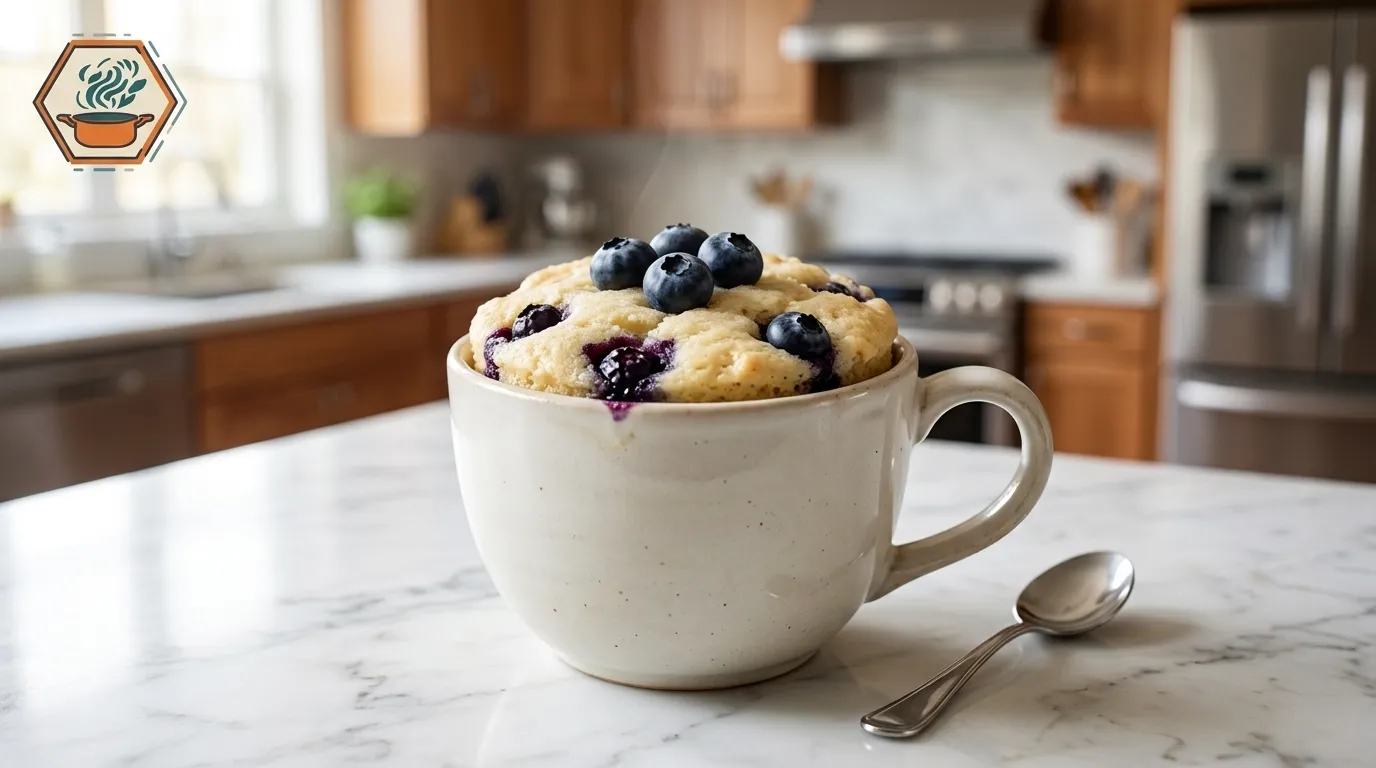
Some mornings call for something warm and homemade, but not an entire cake sitting on the kitchen counter. That is exactly where this Sugar-Free Blueberry Mug Cake earns its place. You mix a few simple ingredients in one mug, scatter fresh blueberries through the batter, and about 90 seconds later, you have a soft little cake ready for a spoon.
The first time you make a microwave mug cake, the speed can feel almost suspicious. Cake normally means preheating an oven, measuring several cups of flour, preparing a pan, and waiting. This recipe takes another route. Almond flour, coconut flour, egg, butter, vanilla, and blueberries make a single portion with no added sugar. If you are new to baking with these flours, King Arthur Baking notes that coconut flour absorbs considerably more liquid than regular flour and should not be treated as a 1:1 substitute. King Arthur Baking You can read their guide to keto baking for more background.
There is also one important detail that short social-media recipes often leave out: microwaves vary considerably in power. Sixty seconds in one microwave can produce a moist cake, while the same time in another can leave the middle undercooked. Because this recipe contains a raw egg, USDA guidance recommends cooking egg mixtures to 160°F (71.1°C). Ask USDA The USDA also recommends using cookware specifically labeled microwave-safe. Ask USDA
JUMP TO
Why You’ll Love This Sugar-Free Blueberry Mug Cake
Imagine cutting into the warm top with a spoon. The center is tender and moist. Some blueberries remain whole, while others burst during cooking and create little purple pockets throughout the pale vanilla crumb.
That is the result we want.
This is not supposed to become dry, firm, or rubbery. Nor should it resemble scrambled egg hidden inside cake batter.
The recipe works because each ingredient has a specific job.
Almond flour provides richness and tenderness. Coconut flour absorbs part of the liquid and helps give the small cake more structure. King Arthur Baking similarly uses almond and coconut flours together in grain-free baking and notes the strong absorbency of coconut flour. King Arthur Baking
The egg binds the ingredients and gives the cake lift and structure. Butter adds richness, while almond milk provides enough additional moisture to balance the coconut flour.
Finally, baking powder helps the batter rise quickly in the microwave.
The result is a convenient single-serving blueberry cake that can be ready in roughly seven minutes from start to finish.
Ingredients You’ll Need
For one 10- to 12-ounce microwave-safe mug or ramekin, prepare:
- 3 tablespoons fine almond flour
- 1 tablespoon coconut flour
- 1 tablespoon granulated sugar-free sweetener suitable for baking
- 1/4 teaspoon baking powder
- A small pinch of fine salt
- 1 large egg
- 1 tablespoon unsweetened almond milk
- 1 tablespoon unsalted butter, melted and slightly cooled
- 1/2 teaspoon vanilla extract
- 2 tablespoons fresh blueberries, plus a few for the top if desired
For results close to the reference photo, use fine blanched almond flour rather than coarse almond meal. A finer flour produces a more cake-like crumb and a smoother batter.
If these ingredients are not already in your pantry, these Amazon searches can help you find the basic supplies: fine blanched almond flour on Amazon, coconut flour on Amazon, and granulated sugar-free baking sweetener on Amazon. (Replace these with your Amazon affiliate links before publishing.)
The Mug Matters More Than You Think
Use a 10- to 12-ounce microwave-safe ceramic mug with relatively straight sides.
Do not use a tiny coffee cup. The batter needs empty space above it because it rises quickly during cooking. An overfilled mug can spill into the microwave before the center has cooked.
A wide 10- to 12-ounce off-white ceramic mug will also give you a presentation much closer to your reference image.
You can browse 10–12 oz microwave-safe ceramic mugs on Amazon before replacing this with your preferred affiliate product.
Lightly grease the inside of the mug, including the lower portion of the sides. You only need a thin coating.
How to Make a Sugar-Free Blueberry Mug Cake
Start by melting the butter. Let it cool briefly. Butter that is extremely hot can begin cooking the egg as soon as the two meet.
Lightly grease your microwave-safe mug.
Add the almond flour, coconut flour, sugar-free sweetener, baking powder, and salt directly to the mug.
Stir very thoroughly.
This small step matters. A pocket of baking powder can leave an unpleasant bitter taste, while a pocket of coconut flour can turn into a dry lump.
Next, add the egg, almond milk, melted butter, and vanilla.
Stir until no dry flour remains around the bottom or sides of the mug. The batter should be thick and creamy rather than watery.
Let it stand for about 30 seconds. This short rest gives the coconut flour a chance to absorb moisture.
Fold in most of the blueberries gently.
Do not crush them.
Reserve three or four attractive blueberries for the top. This small detail helps reproduce the visual style in your reference: a pale, rustic cake surface with several dark-blue berries clearly visible.
Place those berries on top without pushing them deeply into the batter.
How Long Should You Microwave It?
Start with 60 seconds on high.
Then check the center.
If it still looks wet and liquid, continue cooking in 10-second increments. Most cakes should take roughly 60 to 90 seconds, but microwave wattage, mug shape, ingredient temperature, and even the size of the egg can change the cooking time.
Do not automatically cook it for the full 90 seconds.
That is one of the easiest ways to turn a tender mug cake into a dry one.
The surface should look set rather than liquid, while the crumb should remain moist. Because the recipe contains egg, use a clean instant-read thermometer when needed and confirm the center reaches 160°F (71.1°C), in line with USDA guidance for egg mixtures. Ask USDA
Leave the mug untouched for one minute after microwaving.
That resting period is part of the recipe, not wasted time. The cake is extremely hot and continues settling after it leaves the microwave.
How to Get the Soft, Fluffy Texture in the Photo
There are several tiny details behind a good mug cake.
First, measure the coconut flour accurately. Do not add a heaping tablespoon. Coconut flour is highly absorbent, so even a seemingly small excess can noticeably dry the batter. King Arthur Baking
Second, do not pack the almond flour firmly into the spoon.
Third, mix until smooth but stop once everything is combined.
Most importantly, do not overcook the cake.
A microwave cooks quickly from the inside. Waiting for the entire surface to look dry can mean the center has already cooked too far.
You may notice small cracks and uneven raised sections on top. That is normal and actually helps create the homemade appearance shown in the reference photo.
Can You Get a Golden Crust in a Microwave?
This detail deserves clarification.
A standard microwave mug cake does not develop the same browned crust as an oven-baked cake. Microwave cooking primarily heats the moisture in the food, so expecting a deeply caramelized bakery-style crust from 60–90 seconds of microwave cooking is unrealistic.
For this particular recipe, that is fine.
The reference appearance is better described as a pale golden, softly set, rustic top, not a hard brown crust.
For the closest appearance, keep a few blueberries exposed on top and avoid covering the cake with sauce, powdered sweetener, or whipped cream before photography.
If you deliberately want a browned top instead, you would need an additional browning method, such as a suitable oven-safe ramekin under a broiler. That creates a different recipe and will not reproduce the same microwave-only result.
Fresh or Frozen Blueberries?
Fresh blueberries are my first choice when the goal is to reproduce this recipe and its appearance.
They hold their shape better and are less likely to tint all the surrounding batter purple.
Frozen blueberries can work, but do not thaw them first. Thawed berries release juice very quickly. That can add unwanted moisture and turn the batter blue-gray.
Fold frozen berries into the batter directly from the freezer. You may need a little extra microwave time.
For more fruit-based baking inspiration, see our guide to using pineapple in baking or learn what strawberry puree is made of.
Easy Variations
Once you have made the original version successfully, small variations are easy.
For a brighter flavor, add a little finely grated lemon zest. Lemon and blueberries pair naturally without changing the basic texture.
For more vanilla flavor, add a tiny extra splash of vanilla extract.
You can also add a few chopped nuts for texture, although they will make the finished cake look different from the reference image.
If you enjoy quick fruit-based breakfasts, our 3-ingredient banana bread guide is another useful recipe to keep nearby.
One change I would not make casually is replacing coconut flour with an equal amount of another flour. Coconut flour behaves very differently because of its high absorbency. King Arthur specifically advises against treating it as a 1:1 replacement for ordinary flour. King Arthur Baking
Common Mug Cake Mistakes
If your first mug cake is dry, dense, or overflowing, there is usually a simple explanation.
- Dry or rubbery cake: It was probably microwaved too long.
- Wet center: Add another 10 seconds and check again.
- Very thick, dry batter: Too much coconut flour may have been used.
- Cake overflowing: Your mug is too small or was filled too high.
- Uneven bitter flavor: The baking powder was not mixed evenly.
- Purple batter: The blueberries were crushed or thawed before mixing.
- Eggy texture: The ingredients may not have been mixed thoroughly, or the ratio was changed.
- Dense cake: Old baking powder or inaccurate flour measurements may be responsible.
Mug cakes are simple, but because the quantities are tiny, small measurement errors have a larger effect than they would in a full-size cake.
Serving Your Blueberry Mug Cake
Let the cake rest for one minute, add the reserved fresh blueberries, and serve it warm directly from the mug.
That is all it needs.
A small spoon beside a warm ceramic mug makes this dessert feel far more special than its seven-minute preparation time suggests.
You can add unsweetened yogurt or another sugar-free topping if you wish. But for the appearance in the reference image, keep the presentation simple: visible cake surface, scattered whole blueberries, an off-white mug, and no heavy topping.
For another quick breakfast idea, take a look at our pumpkin pecan waffles.
Storage and Reheating
This recipe is at its best immediately after cooking.
Because it takes only a few minutes and makes one serving, there is little advantage to preparing it far in advance.
If you do have leftovers, cover and refrigerate them promptly. USDA guidance says cooked egg dishes kept as leftovers should be refrigerated and used within three to four days. Ask USDA For quality, however, I would eat this little cake much sooner because microwave cakes tend to become firmer as they sit.
When reheating leftovers, USDA guidance calls for reheating to 165°F (73.8°C). Ask USDA
Frequently Asked Questions
Can I make this blueberry mug cake without sugar?
This recipe uses a granulated sugar-free sweetener instead of added sugar. Remember that “sugar-free” and “no added sugar” are not always identical nutritional claims because ingredients such as blueberries contain naturally occurring sugars. Check your specific ingredient labels if you are tracking sugar closely.
Why is my mug cake rubbery?
Overcooking is the most common reason. Begin checking at 60 seconds and add only 10 seconds at a time.
Can I use only almond flour?
I would not make that substitution tablespoon-for-tablespoon and expect the same result. Coconut flour absorbs far more moisture than almond flour, so changing one affects the entire wet-to-dry ratio. King Arthur Baking
Can I use frozen blueberries?
Yes. Add them while still frozen rather than thawing them first. Expect that the cake may require slightly more cooking time.
Can I use regular milk instead of almond milk?
Yes. One tablespoon of regular milk can replace the unsweetened almond milk if dietary requirements are not a concern.
Why does my cake rise and then fall slightly?
A small amount of settling is normal. Steam expands rapidly during microwave cooking. Once cooking stops, some of that steam escapes and the cake can settle.
What size mug should I use?
A 10- to 12-ounce microwave-safe mug gives the batter enough room to rise without spilling over. USDA guidance recommends using only cookware labeled as microwave-safe for microwave cooking. Ask USDA
Is this recipe gluten-free?
The listed ingredients contain no wheat flour, and almond and coconut flour are commonly used in grain-free baking. King Arthur Baking If you need the finished recipe to meet a strict gluten-free requirement, verify that every packaged ingredient you buy is appropriately labeled and has not been subject to unwanted cross-contact.
Print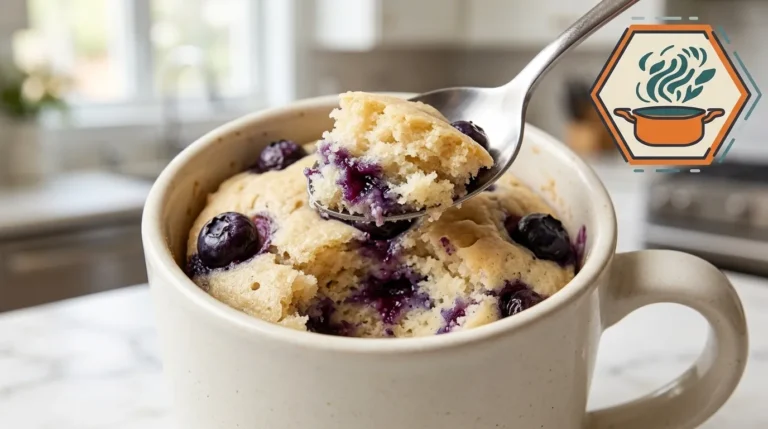
Sugar-Free Blueberry Mug Cake
A soft and fluffy sugar-free blueberry mug cake made with almond flour, coconut flour, and fresh blueberries. Ready in about 7 minutes for an easy single-serving breakfast, snack, or dessert.
- Total Time: 7 minutes
- Yield: 1 mug cake
Ingredients
3 tablespoons fine blanched almond flour
1 tablespoon coconut flour
1 tablespoon granulated sugar-free sweetener suitable for baking
1/4 teaspoon baking powder
1 small pinch fine salt
1 large egg
1 tablespoon unsweetened almond milk
1 tablespoon unsalted butter, melted and slightly cooled
1/2 teaspoon vanilla extract
2 tablespoons fresh blueberries, plus a few extra for topping if desired
Instructions
1. Lightly grease the inside of a microwave-safe 10- to 12-ounce ceramic mug or ramekin.
2. Add the almond flour, coconut flour, sugar-free sweetener, baking powder, and salt. Stir thoroughly so the baking powder and coconut flour are evenly distributed.
3. Add the egg, almond milk, melted and slightly cooled butter, and vanilla extract. Stir until the batter is smooth and no dry flour remains at the bottom or around the sides of the mug.
4. Let the batter rest for about 30 seconds so the coconut flour can absorb some of the liquid.
5. Gently fold in 2 tablespoons of fresh blueberries. Reserve 3 to 4 attractive blueberries for the top.
6. Place the reserved blueberries over the surface without pushing them deeply into the batter.
7. Microwave on high for 60 seconds. Check the center. If it is still visibly wet, continue microwaving in 10-second intervals until set. Depending on microwave wattage and mug shape, total cooking time may range from about 60 to 90 seconds.
8. For food safety, the egg-based cake should reach 160°F (71°C) in the center.
9. Let the mug cake rest for 1 minute after cooking. The cake will continue to settle during this time.
10. Add a few fresh blueberries on top if desired and serve warm directly from the mug.
Notes
Microwave power varies, so begin checking the cake after 60 seconds rather than automatically cooking it for 90 seconds.
Measure coconut flour carefully. It absorbs a large amount of liquid, and adding too much can make the cake dry.
Use fine blanched almond flour rather than coarse almond meal for a softer, more cake-like texture.
Fresh blueberries give the closest appearance to the photographed cake. If using frozen blueberries, add them directly from frozen rather than thawing them first.
Do not expect a dark oven-style crust. A standard microwave does not brown cake in the same way as an oven. The finished surface should be softly set, pale golden, slightly irregular, and moist.
For the reference-photo appearance, reserve several blueberries for the top and avoid covering the finished cake with powdered sweetener, frosting, or sauce.
- Prep Time: 5 minutes
- Cook Time: 1 minute 30 seconds
- Category: Breakfast
- Method: Microwave
- Cuisine: American-inspired
- Diet: Gluten Free
Final Recipe Notes for Consistent Results
The secret to this Sugar-Free Blueberry Mug Cake is not adding more ingredients. It is paying attention to the small ones.
Use a 10- to 12-ounce microwave-safe mug. Measure coconut flour carefully. Use fresh blueberries for the closest visual result. Mix the dry ingredients before adding the liquids. Let the batter rest briefly. Start checking at 60 seconds. Continue only in 10-second bursts, and make sure the egg-based cake reaches a safe temperature.
Then give it that final minute of rest.
What comes out of the microwave should be a small, warm vanilla cake with a tender pale crumb, an irregular softly set top, and blueberries bursting through it — very close to the simple homemade look of your reference photo.
It is quick enough for a busy morning, small enough for one person, and satisfying when you want something freshly made without baking an entire cake.