
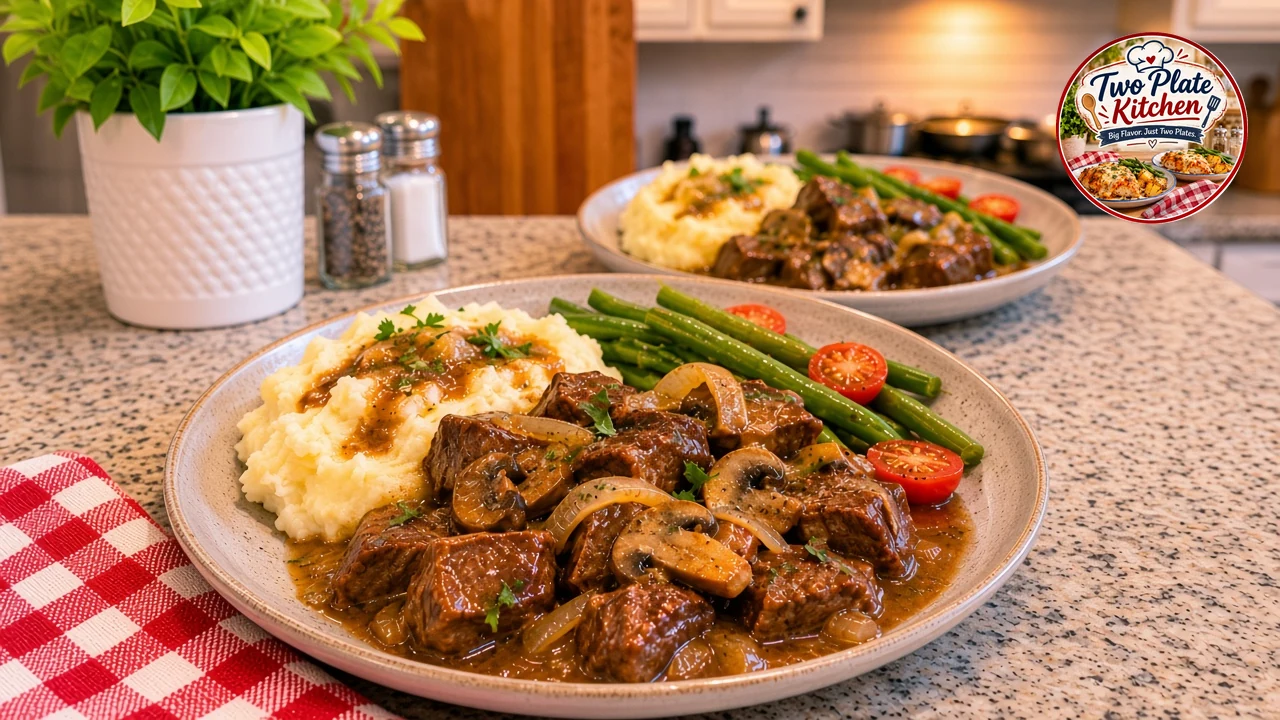
Skillet steak tips are what you make when you want a steakhouse-style dinner on a weeknight without cooking for a crowd. Chunks of tender sirloin get a hard sear in a hot cast iron pan, then the same skillet turns into a jammy onion and mushroom gravy built on all those browned bits. Buttery mashed potatoes sit beside the steak, with garlicky green beans and blistered cherry tomatoes.
Sized for two, it takes about 30 minutes of skillet time and roughly 45 minutes for the whole dinner, sides included. And yes, there is extra gravy. Do you love spooning a little more over your steak? You will have enough.
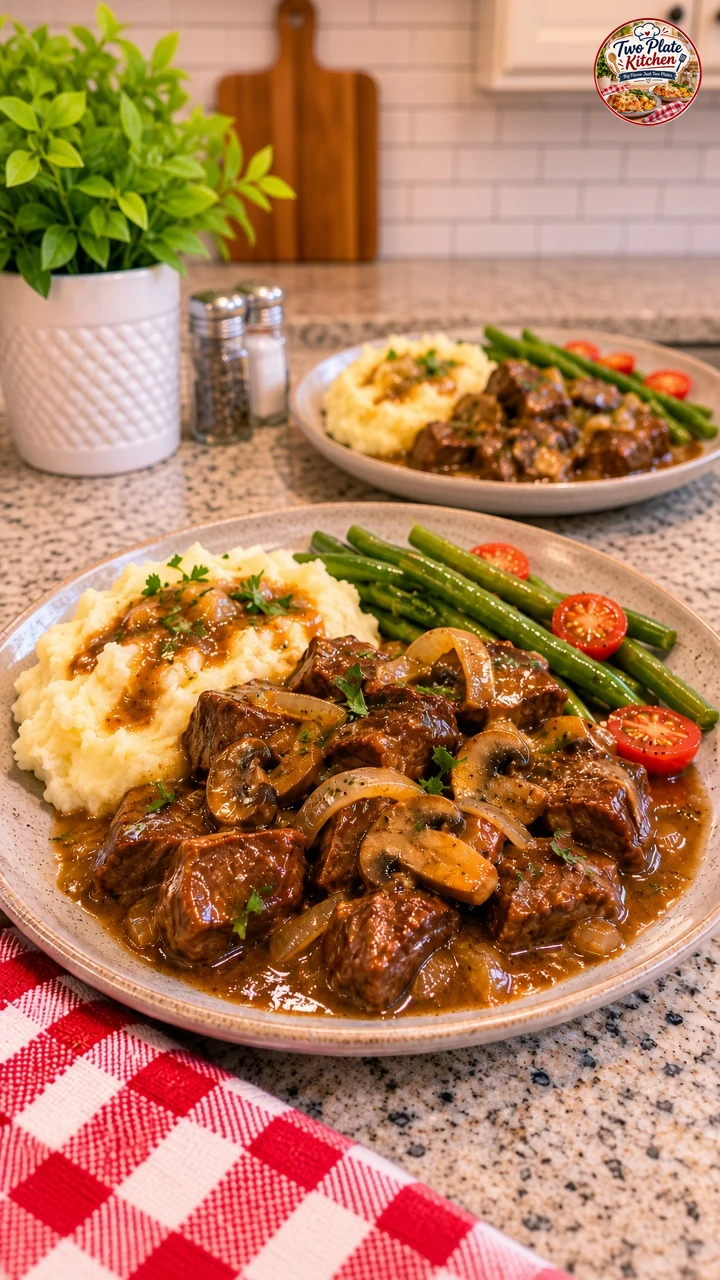
This recipe was inspired by a post shared by Two Plate Kitchen on Facebook. RecipesMind wrote the ingredient amounts, method, timing plan, and food-safety notes below using standard home-cooking technique and U.S. food-safety guidance, and corrected a few shortcuts seen in the original video (an overcrowded pan and no doneness check). It has not been kitchen-tested by RecipesMind, so use the cues and a thermometer as your guide. Images are AI-generated recipe illustrations based on the post, not photographs of a kitchen test.
In this article
Skillet Steak Tips or Slow-Simmered Beef Tips? Which One to Make
RecipesMind already has a cozy beef tips and mushroom gravy for two. The two look like cousins on the plate, but they are cooked very differently.
- Make these skillet steak tips when you want dinner fast. A tender steak cut is seared to a juicy medium, rested, and tossed with pan gravy for a minute at the end. Dinner is ready in about 45 minutes.
- Make the slow-simmered beef tips on a slower afternoon. It uses beef chuck, a tougher cut that needs about an hour and a half of gentle simmering to turn fork-tender, spooned over the mashed potatoes.
- The rule of thumb: tender steak cuts want high heat and short cooking; tough cuts like chuck and stew meat want low heat and time. Mix them up and you get chewy beef.
Why These Skillet Steak Tips Stay Tender
- A tender cut, cooked fast. Top sirloin is lean but tender enough to cook like a steak, so a few minutes in a hot pan is all it needs.
- Dry meat, hot pan, two batches. Dry cubes in preheated cast iron, with room between them, brown instead of steaming gray.
- A rest, then a quick dip. The steak rests while you make the gravy and goes back in only to rewarm. Simmering it would tighten it.
- A thermometer, not a guess. Small cubes cook fast, so check the thickest pieces for 145°F.
The Best Cut for Skillet Steak Tips
“Steak tips” is a regional name rather than one specific cut. In much of New England, it usually means sirloin flap, also sold as sirloin bavette or flap meat, a coarse-grained, flavorful cut from the bottom sirloin. Elsewhere, butchers often cut tips from top sirloin.
For this recipe, top sirloin steak about 1 1/4 inches thick is the easiest choice: it is widely available, cuts into neat cubes, and stays tender when seared. Sirloin flap works beautifully too if you find it, but cut it across the grain into chunks. Skip packages labeled “stew meat” or “beef for stew”; they are usually chuck or round, which need long braising, like our slow-simmered beef tips.
Ingredients for Skillet Steak Tips and the Sides
The exact amounts are in the recipe card below. A few notes on the key ingredients:
- Top sirloin (1 pound): Trim any thick fat or gristle and cut it into 1 1/4-inch cubes. Bigger pieces brown before the inside overcooks.
- A high-heat oil: Avocado, canola, or vegetable oil handles a hot cast iron pan without burning the way butter or olive oil would.
- Onion and cremini mushrooms: Slice one large yellow onion into thick half-moon petals so they turn jammy but still look like onions. White button mushrooms work if you cannot find cremini.
- Low-sodium beef broth: The gravy reduces and the steak is already seasoned, so low-sodium broth keeps the salt in check. Worcestershire and a little Dijon add steakhouse depth.
- Sides: Yukon Gold potatoes, butter, and warm milk for the mash; green beans, cherry tomatoes, olive oil, and garlic for the vegetables.
Helpful Tools for Skillet Steak Tips
As an Amazon Associate, RecipesMind earns from qualifying purchases. The links below are affiliate links; buying through them costs you nothing extra. Equipment you already own works fine if it does the same job.
- Lodge 12-inch pre-seasoned cast iron skillet with silicone handle holder for a hard sear and a gravy full of browned bits; the sleeve helps with the hot handle.
- TempPro TP19H instant-read thermometer to check the thickest steak tips for 145°F and leftovers for 165°F.
- OXO Good Grips 12-inch tongs with silicone heads for turning each cube while keeping your hands away from the hot oil.
- Beckon Ware 13-inch splatter screen to keep the stovetop cleaner while the steak sears.
- OXO Good Grips 3-piece wooden utensil set for stirring the onions and scraping up the fond when the broth goes in.
- John Boos maple cutting board with juice groove for cubing the steak; the groove catches the juices.
- HIC stainless steel potato masher for fluffy mashed potatoes.
- Pyrex 7-cup round glass storage containers (2-pack) for leftovers and extra gravy.
Step 1: Start the Mashed Potatoes
Potatoes take the longest, so they go first. Peel 1 pound of Yukon Gold potatoes, cut them into 1 1/2-inch chunks, and cover them with cold water by an inch in a medium saucepan. Add a good pinch of salt, bring to a boil, then simmer for 15 to 18 minutes, until a knife slides in with no resistance.
Drain, return the potatoes to the warm pot for a minute to steam dry, then mash with 2 tablespoons of butter and about 1/3 cup of warm milk. Season with salt and pepper, cover, and keep warm on the lowest heat while you cook the steak.
Step 2: Cut, Dry and Season the Steak
While the potato water heats, trim the steak and cut it into 1 1/4-inch cubes. Pat the cubes very dry with paper towels; surface moisture is the enemy of a good crust. Toss them with 3/4 teaspoon kosher salt and 1/2 teaspoon black pepper and let them sit while you slice the onion and mushrooms, up to 30 minutes.
Wash your hands, knife, and board with hot, soapy water after handling raw beef, and set out a clean plate for the cooked steak.
Step 3: Sear the Skillet Steak Tips in Two Batches
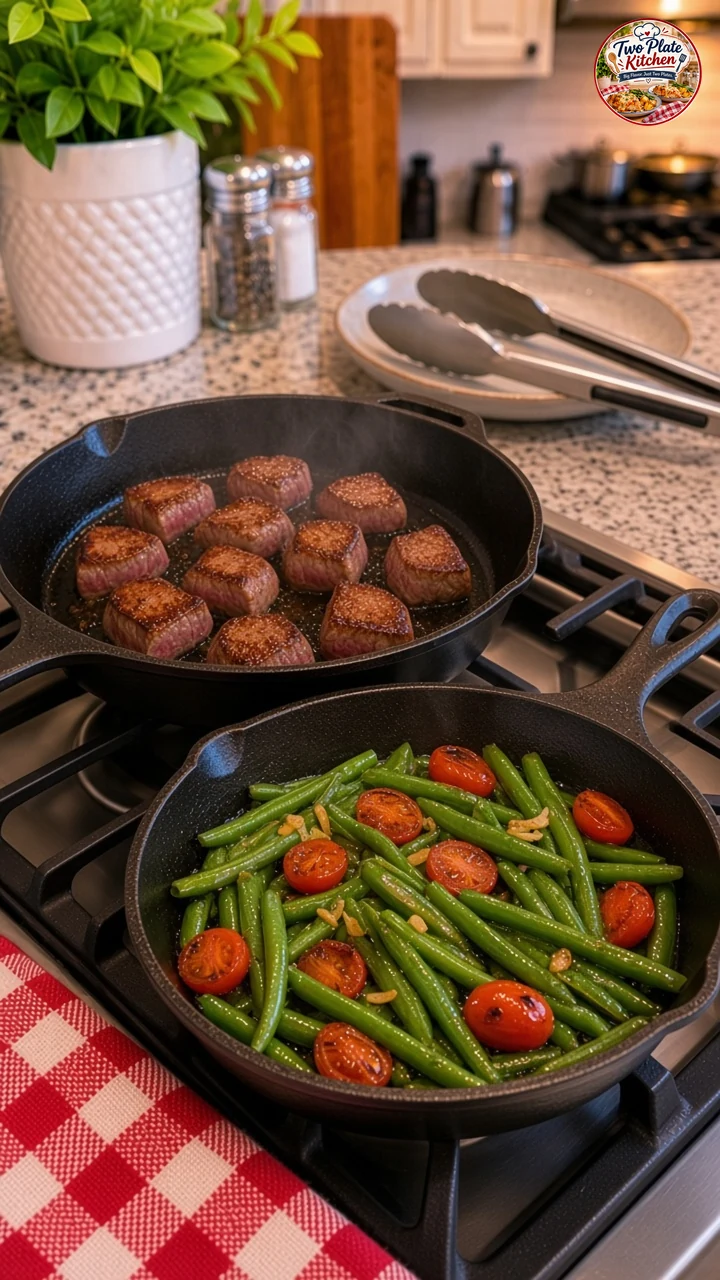
Heat a 12-inch cast iron skillet over medium-high heat for 3 to 4 minutes, then add 1 tablespoon of oil and swirl. When the oil shimmers, add half the steak in a single layer with space between the pieces. Leave it alone for about 2 minutes, until a deep brown crust forms and the cubes release easily.
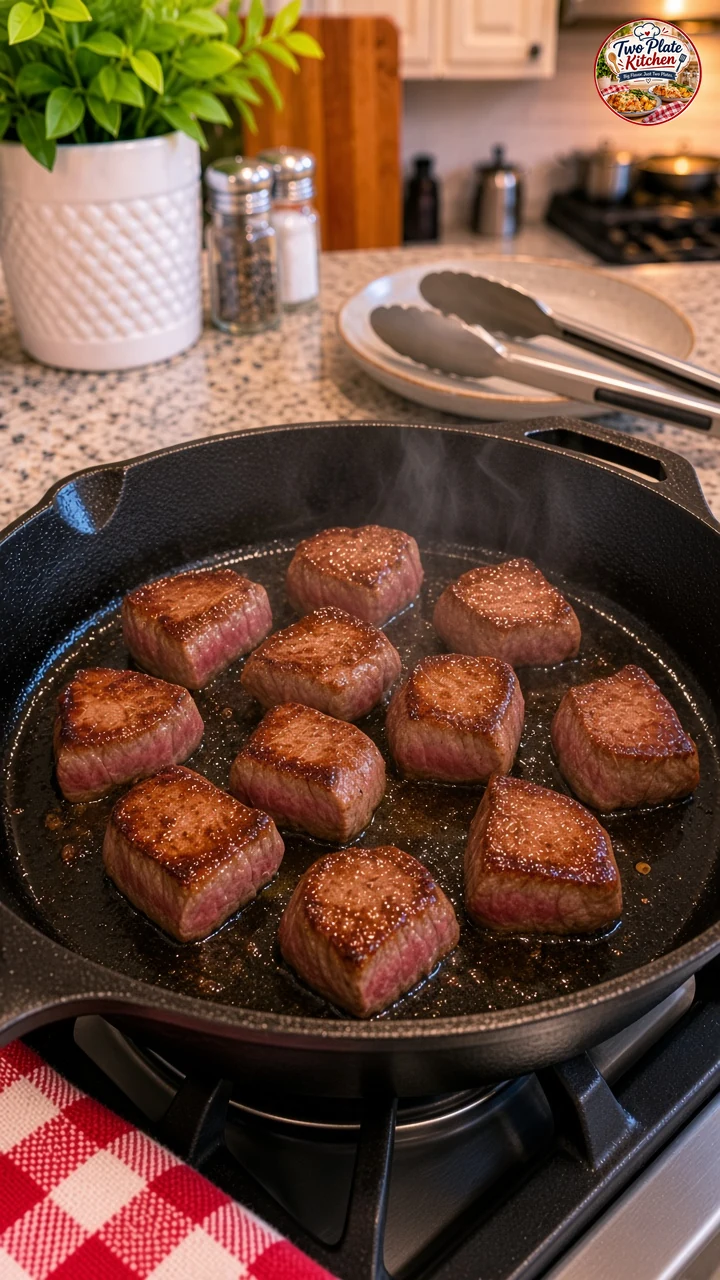
Turn the pieces with tongs and sear 1 to 2 minutes per side on two or three more sides, about 5 to 6 minutes total. Check the thickest piece with an instant-read thermometer: the safe minimum internal temperature for beef steaks is 145°F, followed by a 3-minute rest. At 145°F the centers are still pink and juicy. Move the steak to the clean plate, add a teaspoon more oil if the pan looks dry, and repeat with the second batch.
The USDA Food Safety and Inspection Service advises measuring 145°F before the steak leaves the heat; here it rests for about ten minutes while you make the gravy.
Step 4: Cook the Onions and Mushrooms in the Drippings
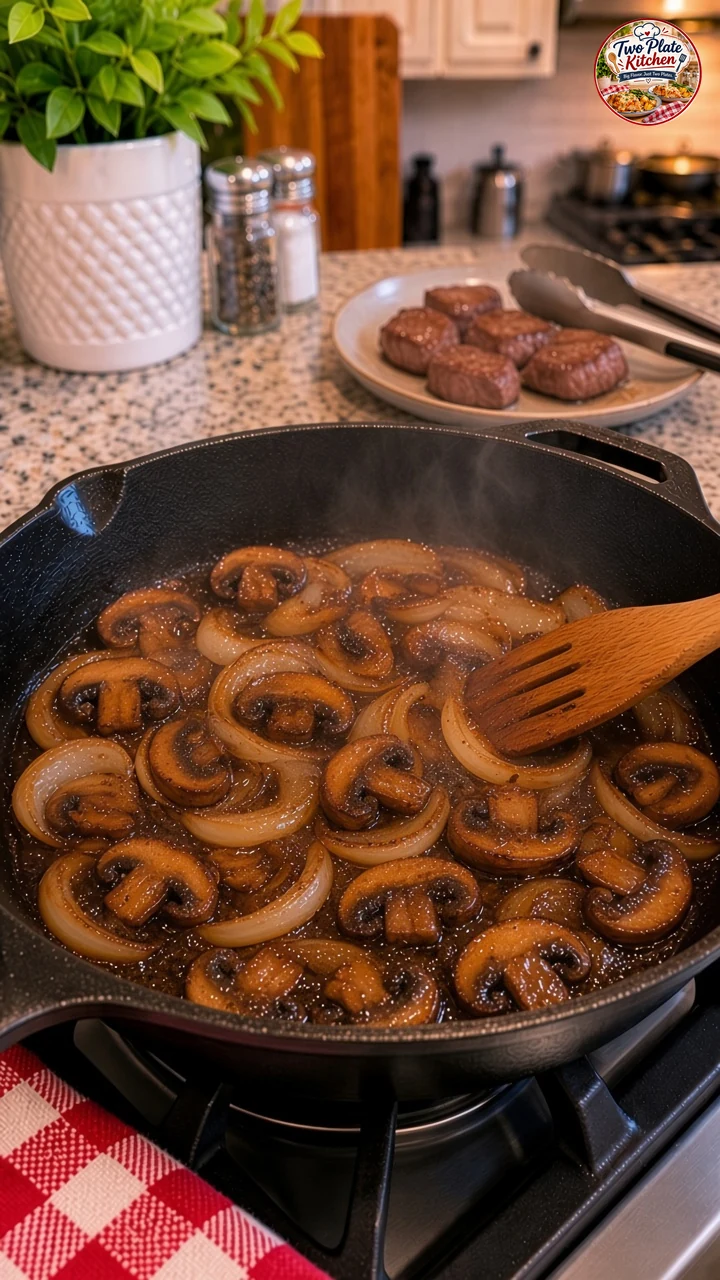
Turn the heat down to medium and add 1 tablespoon of butter to the same unwashed skillet. Add the sliced onion with a pinch of salt and cook, stirring now and then, for 6 to 8 minutes, until soft, sweet, and golden at the edges.
Add 8 ounces of thickly sliced cremini mushrooms and cook for 5 to 6 minutes more, until their liquid has cooked off and they are browned. Stir in 2 minced garlic cloves and 1/2 teaspoon dried thyme for 30 seconds, just until fragrant.
Step 5: Make the Pan Gravy
Sprinkle 1 1/2 tablespoons of flour over the onions and mushrooms and stir for 1 minute to cook out the raw flour taste. Pour in 1 1/4 cups of low-sodium beef broth a splash at a time at first, stirring and scraping the bottom of the skillet with a wooden spoon. Going slowly keeps it smooth and lifts the fond into the sauce.
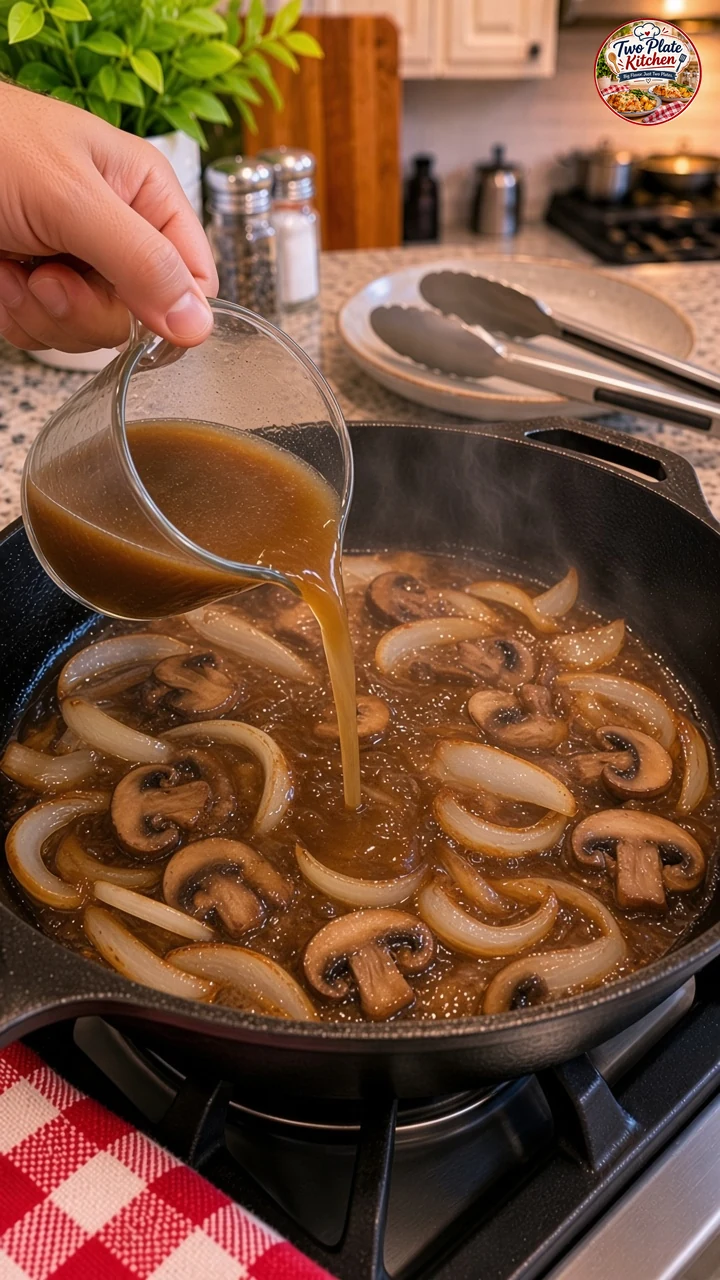
Stir in 1 teaspoon Worcestershire sauce and 1 teaspoon Dijon mustard, if using. Simmer gently for 3 to 4 minutes, until the gravy coats the back of a spoon. Taste and adjust the salt and pepper. If it gets too thick, add a splash more broth.
Step 6: Garlic Green Beans with Blistered Cherry Tomatoes
While the onions cook, set a second skillet (10-inch is fine) over medium-high heat with 1 tablespoon of olive oil. Add 8 ounces of trimmed green beans and 2 tablespoons of water, cover, and steam for 3 minutes. Uncover and cook 2 to 3 minutes more, until crisp-tender and lightly spotted.
Push the beans to one side, add 1 cup of halved cherry tomatoes cut side down, and let them sear for 1 to 2 minutes, until blistered at the edges. Add 1 sliced garlic clove for the last 30 seconds, season with salt and pepper, and turn off the heat.
Step 7: Return the Steak Tips Briefly and Plate
Turn the gravy down to low. Add the rested steak tips and every drop of juice from their plate, and stir gently for about 1 minute, only until the steak is coated and warmed through. Keep it off the boil so the steak stays tender. Scatter chopped parsley over the top.
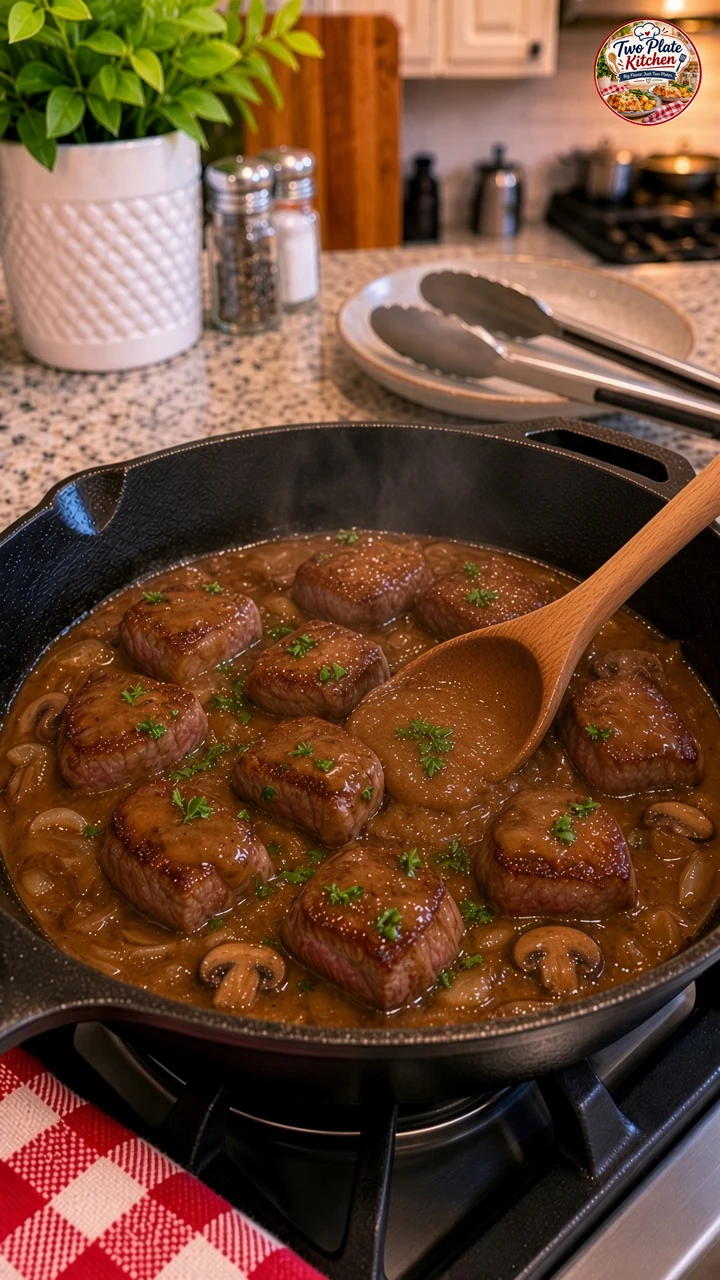
Spoon the mashed potatoes onto one side of each plate and the steak tips with plenty of onion and mushroom gravy right beside them, letting a little gravy run toward the potatoes. Add the green beans and tomatoes on the other side and serve right away.
Looking for more cozy dinners for two? Try our garlic butter steak bites and mashed potatoes when you want a buttery sauce instead of gravy, the garlic butter steak with mushroom gravy for whole steaks, or the Salisbury steak with onion and mushroom gravy and meatballs and gravy for two for budget-friendly ground beef nights. Curious about other steak cuts? Here is whether picanha is a good cut of steak.
Timing Plan: How Long This Really Takes
- Prep: about 15 minutes to peel the potatoes, cube the steak, and slice the vegetables while the potato water heats.
- Searing: about 12 minutes for two batches of 5 to 6 minutes each.
- Onions, mushrooms, and gravy: about 16 to 19 minutes, while the steak rests.
- Green beans and tomatoes: about 8 minutes, cooked in a second skillet during the gravy step.
- Ready to serve: about 45 minutes from start, or 40 to 50 minutes depending on your stove. The mashed potatoes simmer during the skillet steps, so they add no extra time.
Skillet Steak Tips for Two Recipe
Print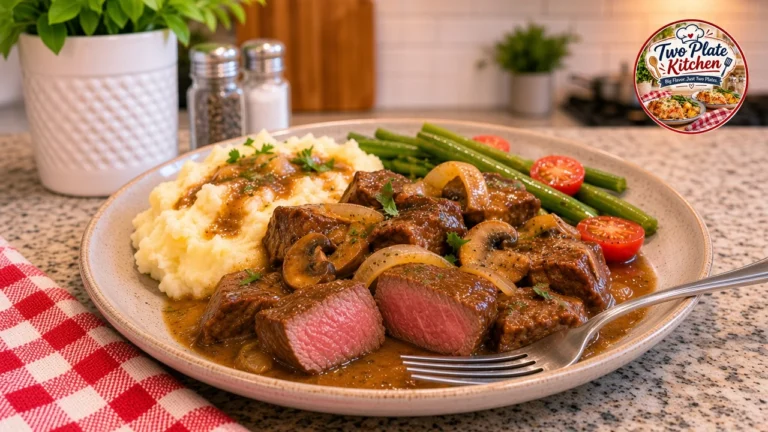
Skillet Steak Tips with Onion & Mushroom Gravy for Two
Tender sirloin steak tips seared in two batches in a hot cast iron skillet, rested, then tossed for just a minute in a jammy onion and cremini mushroom pan gravy. Served beside buttery mashed potatoes with garlic green beans and blistered cherry tomatoes, it’s a quick steakhouse-style dinner for two. Inspired by Two Plate Kitchen. Not kitchen-tested by RecipesMind; times are estimates.
- Total Time: 45 minutes
- Yield: 2 servings
Ingredients
For the steak tips
1 lb top sirloin steak (about 1 1/4 inches thick), trimmed and cut into 1 1/4-inch cubes
3/4 tsp kosher salt
1/2 tsp black pepper
1 tbsp avocado, canola, or vegetable oil, plus 1 tsp if needed
For the onion and mushroom gravy
1 tbsp unsalted butter
1 large yellow onion, sliced into thick half-moons
8 oz cremini mushrooms, thickly sliced
2 garlic cloves, minced
1/2 tsp dried thyme
1 1/2 tbsp all-purpose flour
1 1/4 cups low-sodium beef broth
1 tsp Worcestershire sauce
1 tsp Dijon mustard (optional)
1 tbsp chopped fresh parsley
Salt and pepper, to taste
For the mashed potatoes
1 lb Yukon Gold potatoes, peeled and cut into 1 1/2-inch chunks
2 tbsp unsalted butter
1/3 cup warm milk
Salt and pepper, to taste
For the green beans and tomatoes
1 tbsp olive oil
8 oz green beans, trimmed
1 cup cherry tomatoes, halved
1 garlic clove, thinly sliced
Salt and pepper, to taste
Instructions
Start the potatoes: cover the potato chunks with cold salted water by 1 inch, bring to a boil, and simmer 15–18 minutes until very tender.
Pat the steak cubes very dry and toss with 3/4 tsp kosher salt and 1/2 tsp pepper. Let them sit while you slice the vegetables (up to 30 minutes). Wash hands and tools after handling raw beef.
Heat a 12-inch cast iron skillet over medium-high heat for 3–4 minutes. Add 1 tbsp oil; when it shimmers, add half the steak in a single layer.
Sear without moving for about 2 minutes, then turn and sear 1–2 minutes per side on 2–3 more sides (5–6 minutes total), until the thickest piece reads 145°F. Transfer to a clean plate. Repeat with the remaining steak, adding 1 tsp oil if needed. Let the steak rest at least 3 minutes (it rests while you make the gravy).
Drain the potatoes, let them steam dry for 1 minute, and mash with 2 tbsp butter and the warm milk. Season, cover, and keep warm.
Reduce the heat under the skillet to medium. Melt 1 tbsp butter, add the onion and a pinch of salt, and cook 6–8 minutes until soft and golden.
Add the mushrooms and cook 5–6 minutes until browned and their liquid has evaporated. Stir in the garlic and thyme for 30 seconds.
Sprinkle in the flour and stir 1 minute. Gradually pour in the broth, stirring and scraping up the browned bits. Add the Worcestershire and Dijon and simmer 3–4 minutes until the gravy coats a spoon. Season to taste.
Meanwhile, heat the olive oil in a second skillet over medium-high heat. Add the green beans and 2 tbsp water, cover, and steam 3 minutes; uncover and cook 2–3 minutes until crisp-tender.
Push the beans aside, add the tomatoes cut side down, and sear 1–2 minutes until blistered. Add the sliced garlic for 30 seconds and season.
Turn the gravy to low, add the steak and its juices, and stir gently for about 1 minute just to coat and rewarm (do not simmer). Sprinkle with parsley.
Serve the steak tips and gravy beside the mashed potatoes, with the green beans and tomatoes alongside.
Notes
Best cut: top sirloin. Sirloin flap (bavette) also works; cut it across the grain. Avoid “stew meat,” which needs long braising (see our slow-simmered beef tips and mushroom gravy for two).
Doneness: USDA recommends cooking beef steaks to at least 145°F, measured before removing from the heat, with a 3-minute rest. The centers will still be pink.
Don’t crowd the pan: two batches give a real crust and the browned bits that flavor the gravy.
Gluten-free: skip the flour and thicken with 2 tsp cornstarch mixed with 1 tbsp cold water; use gluten-free broth and Worcestershire.
Storage: refrigerate within 2 hours. Eat the steak and gravy within 1–2 days (USDA’s guideline for cooked beef gravy); keep sides separate. Freeze steak and gravy up to 2–3 months for best quality. Reheat to 165°F.
Timing: about 15 minutes prep and 30 minutes cooking; ready in about 45 minutes (40–50 depending on your stove).
Not kitchen-tested by RecipesMind. Nutrition is an estimate per serving (1/2 of everything, including mash and vegetables).
- Prep Time: 15 minutes
- Cook Time: 30 minutes
- Category: Dinner
- Method: Stovetop (Pan-Seared)
- Cuisine: American
Common Mistakes to Avoid
- Using stew meat. It looks like steak tips but is usually chuck or round, which stays chewy when seared quickly. Buy a steak and cube it yourself.
- Crowding the pan. Too many pieces at once means gray, steamed beef and no fond for the gravy. Two batches are worth the extra 6 minutes.
- Simmering the steak in the gravy. Return it only for about a minute at the end, over low heat.
- Guessing at doneness. Check the thickest piece for 145°F.
Storage and Reheating
Refrigerate leftovers within 2 hours of cooking, or within 1 hour if the room is above 90°F, in shallow airtight containers. USDA guidance on leftovers and food safety gives 3 to 4 days for most cooked leftovers, but the FSIS beef storage chart lists 1 to 2 days for cooked beef gravy, so plan to enjoy the steak tips and gravy within 2 days. Store the mashed potatoes and green beans separately.
For longer storage, freeze the steak and gravy for 2 to 3 months for the best quality and thaw overnight in the refrigerator.
Reheating: Warm the steak and gravy in a covered skillet over medium-low heat with a splash of broth, stirring now and then, until the gravy is bubbling and the steak reaches 165°F, the recommended temperature for leftovers. Expect the steak to be more done than on the first night.
Frequently Asked Questions
What cut of beef is best for skillet steak tips?
Top sirloin is the easiest and most widely available. Sirloin flap (bavette) is the classic New England choice. Ribeye or strip steak work for a splurge. Avoid stew meat, which needs long braising.
Can I cook the steak tips to medium-rare?
Many cooks prefer steak at 130 to 135°F, but USDA recommends cooking beef steaks to at least 145°F with a 3-minute rest. This recipe follows that guidance, which still leaves the centers pink.
How do I make this gluten-free?
Skip the flour and thicken the simmering gravy with 2 teaspoons of cornstarch stirred into 1 tablespoon of cold water. Check that your broth and Worcestershire sauce are labeled gluten-free.
Can I use a nonstick skillet instead of cast iron?
You can, but cast iron or stainless steel builds more browned bits for the gravy. With nonstick, stay at medium-high and follow the maker’s heat limits.
How are these different from beef tips and gravy?
These skillet steak tips use a tender steak cut seared in minutes, with the mash served beside it. Our slow-simmered beef tips use chuck braised for about an hour and a half until fork-tender, then spooned over the mash.
A hot skillet, a rested steak, and a pan of jammy onion and mushroom gravy: that is a steakhouse dinner for two without the reservation. Pour a little extra gravy, pass the green beans, and enjoy.