
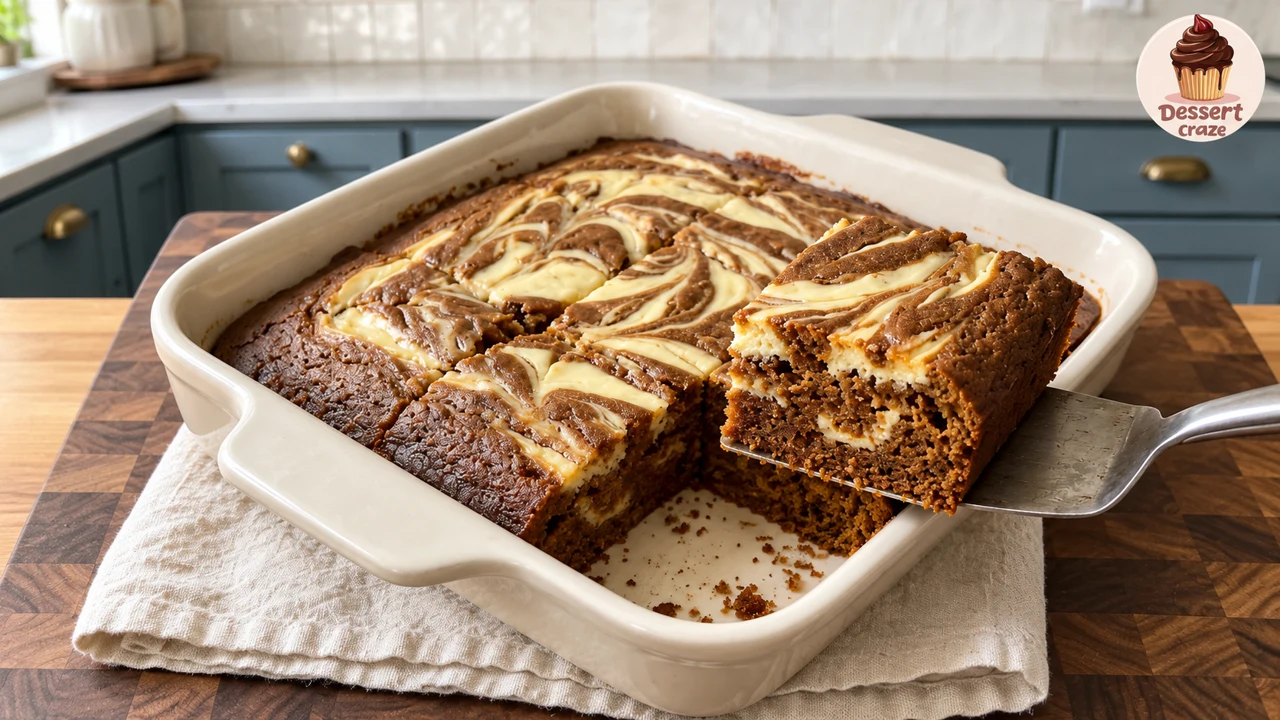
Gingerbread cream cheese swirl cake pairs a soft molasses cake with creamy vanilla ribbons baked through the top. Ginger, cinnamon, cloves, and nutmeg give the brown batter its warm flavor, while the cream cheese brings a mild tang. Cut a generous square and you get both textures in one piece, without a separate frosting step.
This version follows the Dessert Craze presentation: brown batter goes into a square cream baking dish, ivory cream cheese is added in dollops, and a few shallow passes make the marbling before baking. The short Reel skips measurements, mixing details, and the cooling pause. The directions below fill in those practical steps so you can plan the bake and slice it neatly.
The supplied visual is inspiration for an original editorial recipe; the process photos are AI-assisted illustrations, not documentation of a kitchen test. The useful goals are a baked center, visible cream cheese ribbons, and a tender crumb. Your swirl will have its own pattern.
| Prep | 25 minutes, plus ingredient softening |
|---|---|
| Bake | 40–50 minutes, checking the center |
| Cool | About 1 hour on a rack |
| Chill | At least 2 hours |
| Total | About 4 hours 5 minutes–4 hours 15 minutes |
| Yield | 9 large squares or 12 smaller pieces |
| Pan | 9-by-9 inches, at least 2 inches deep |
In This Recipe
- Ingredients and Pan Size
- How to Make Gingerbread Cream Cheese Swirl Cake
- Tips for Distinct Cream Cheese Ribbons
- Helpful Baking Tools
- Common Problems and Fixes
- Storage and Make-Ahead Tips
- Frequently Asked Questions
- Printable Recipe Card
Ingredients for Gingerbread Cream Cheese Swirl Cake
For the molasses gingerbread
- 2 cups (250 g) all-purpose flour
- 1 teaspoon baking soda
- 1/2 teaspoon baking powder
- 1/2 teaspoon fine salt
- 2 teaspoons ground ginger
- 1 1/2 teaspoons ground cinnamon
- 1/4 teaspoon ground cloves
- 1/4 teaspoon ground nutmeg
- 1/2 cup (113 g) unsalted butter, melted and cooled slightly
- 1/2 cup (100 g) packed light brown sugar
- 1/2 cup (170 g) unsulphured molasses, not blackstrap
- 1 large egg, room temperature
- 1 teaspoon alcohol-free vanilla flavoring
- 3/4 cup (180 ml) hot water, cooled until warm before mixing
For the vanilla cream cheese swirl
- 8 ounces (226 g) full-fat block cream cheese, softened
- 1/4 cup (50 g) granulated sugar
- 1 large egg, room temperature
- 1 teaspoon alcohol-free vanilla flavoring
Choose regular unsulphured baking molasses with a flavor you enjoy. Blackstrap is more bitter and is not an equal flavor swap for this cake. Brown sugar adds sweetness and a little moisture, but it does not replace the molasses. Maple syrup and honey also behave differently, so keep the written molasses amount for this version.
Use full-fat block cream cheese and let it soften enough to blend smoothly. A spreadable tub product may have a different moisture level and can loosen the swirl. There are two eggs in total: one belongs to the cake and one to the cream cheese. Keep the portions separate as you set out the ingredients.
Measure flour by weight, or spoon it into a dry measuring cup and level the top without packing. The water is measured separately from the butter and molasses. It may start hot, but it should cool to warm before it reaches the egg. There is no need to add boiling liquid to a raw egg mixture.
Use a 9-by-9-inch pan with an interior depth of at least 2 inches. Measure the cooking area rather than the handles. An 8-inch square pan has less area and makes a deeper cake, so it is not the pan specified here. A 9-by-13-inch dish spreads this amount too thinly. Ceramic, glass, and metal can bake at different rates; follow the visual checks and your bakeware maker’s instructions.
How to Make Gingerbread Cream Cheese Swirl Cake
1. Prepare the oven and pan
Heat the oven to 350°F (175°C), with a rack near the center. Grease the pan thoroughly, including the corners. Use a heatproof rack for cooling later. The cake is served from its original dish, so you do not need to invert it or transfer a warm cake to a platter.
Soften the cream cheese and bring the eggs toward room temperature before you begin. Melt the butter and let it cool slightly. Measure the spices and leaveners before combining the wet ingredients so the finished batter does not sit around while you search for supplies.
2. Make the gingerbread batter
Whisk the flour, baking soda, baking powder, salt, ginger, cinnamon, cloves, and nutmeg together in a large bowl. Break up any visible spice lumps so one bite does not get an uneven concentration of ginger or clove.
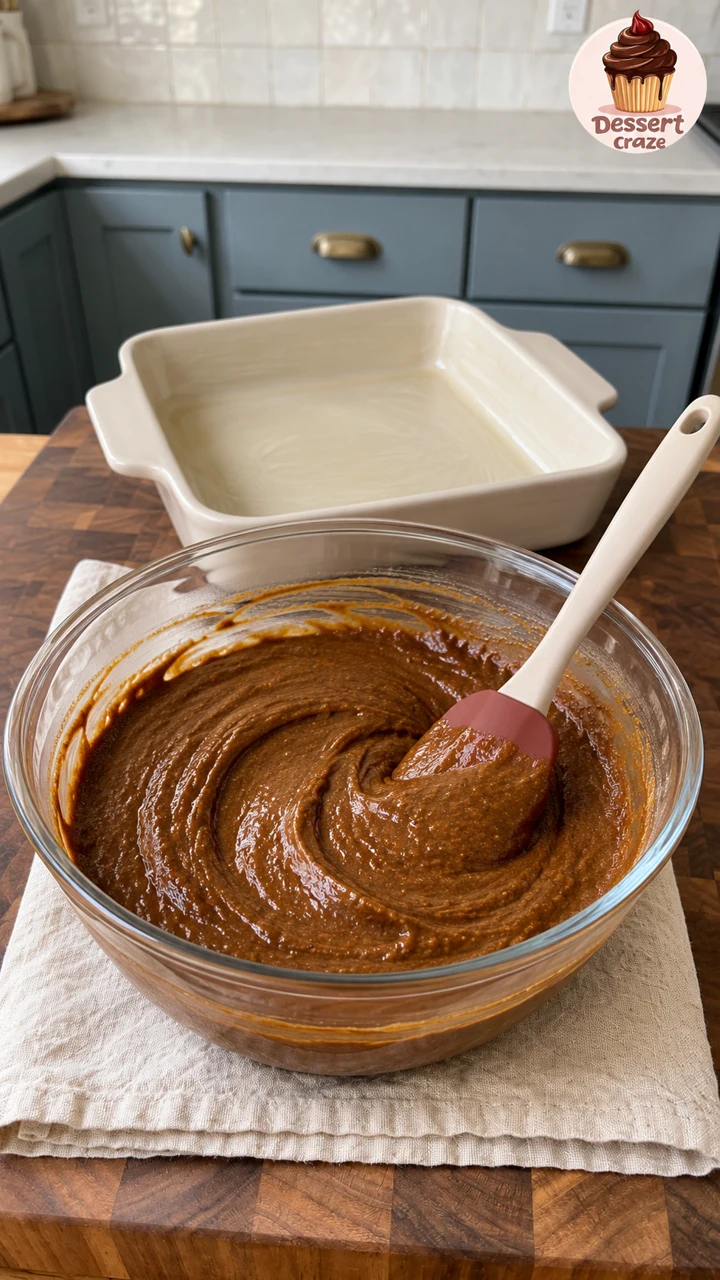
In another bowl, whisk the melted, slightly cooled butter, brown sugar, and molasses. Add the cake egg and vanilla, then gradually whisk in the water after it has cooled to warm. Add the wet mixture to the flour mixture and stir gently until the dry flour disappears, scraping the bottom and sides.
Stop when the batter is combined. It should be moist and spoonable; repeated beating after adding flour can make the finished cake less tender. Do not add extra flour simply to make the batter resemble cookie dough.
3. Mix a smooth cream cheese swirl
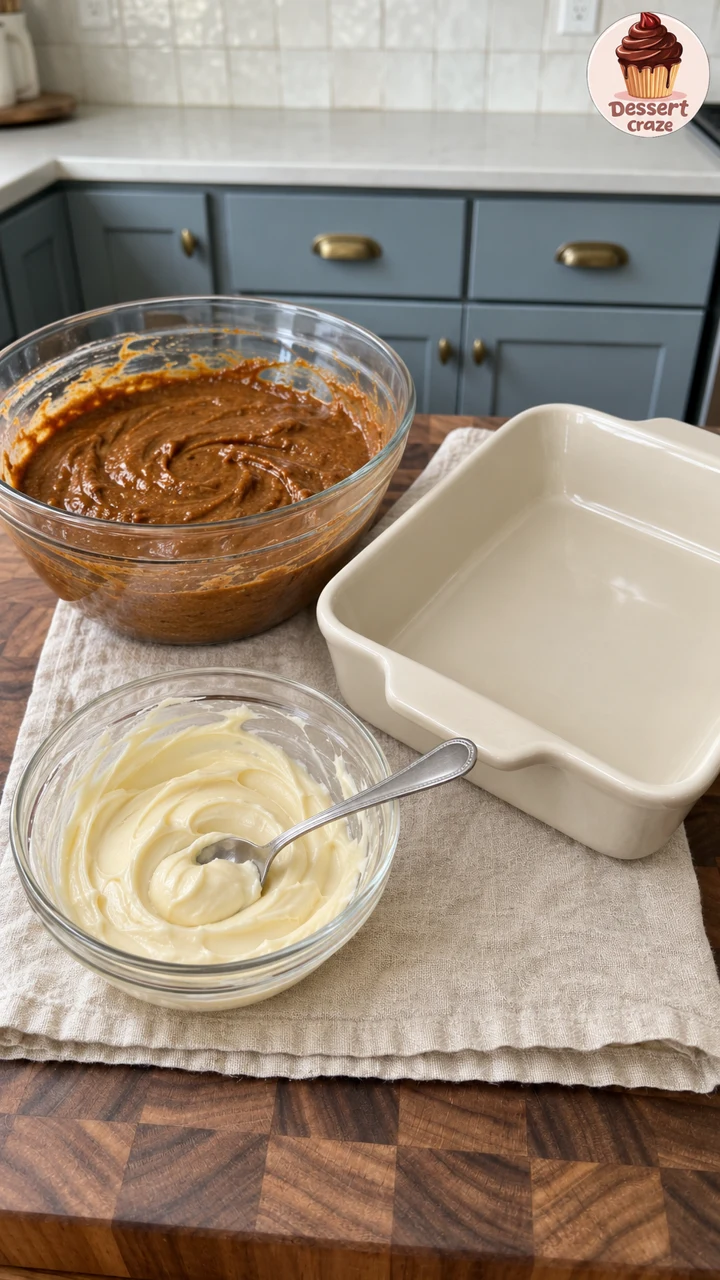
Beat the cream cheese with the granulated sugar until smooth, scraping down the bowl. Mix in the swirl egg and its teaspoon of vanilla on low speed, stopping when combined. You want a spoonable mixture without obvious cream cheese lumps, rather than a highly aerated foam.
Mix this promptly after the cake batter so both preparations are ready for assembly. Keeping the two mixtures in separate bowls prevents the white ribbons from turning brown before they reach the pan.
4. Spread the cake batter and add the dollops
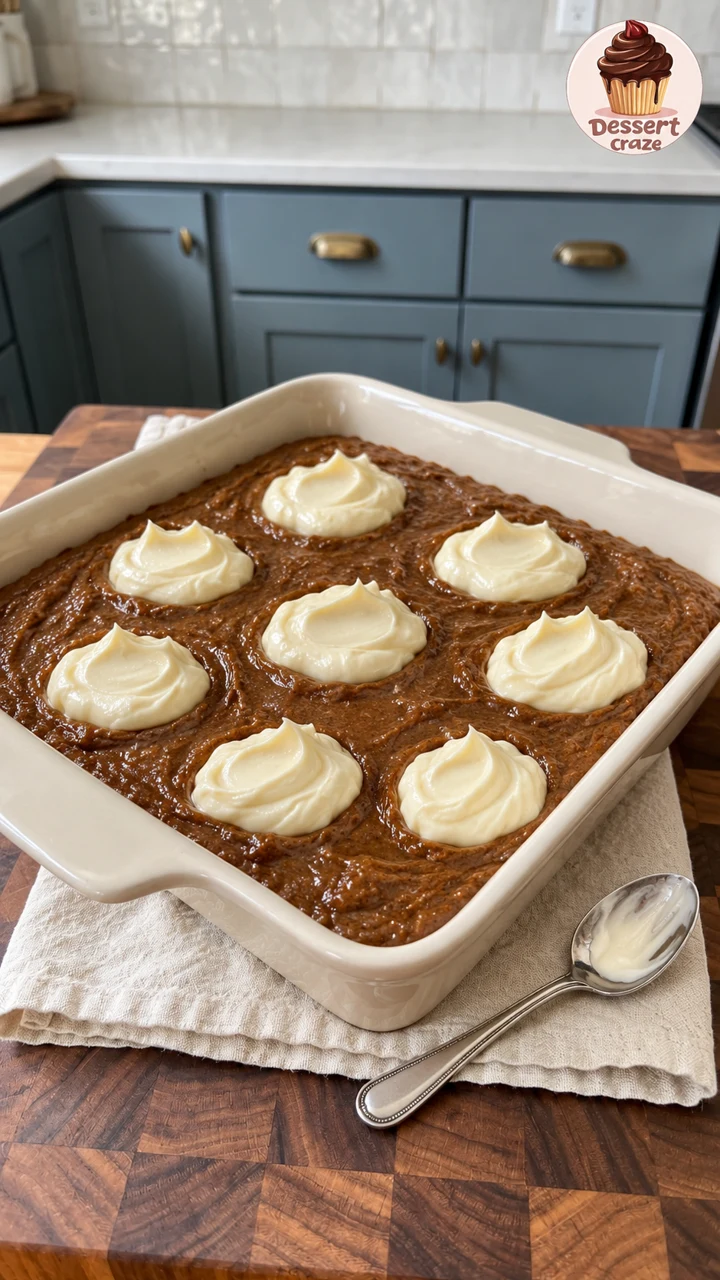
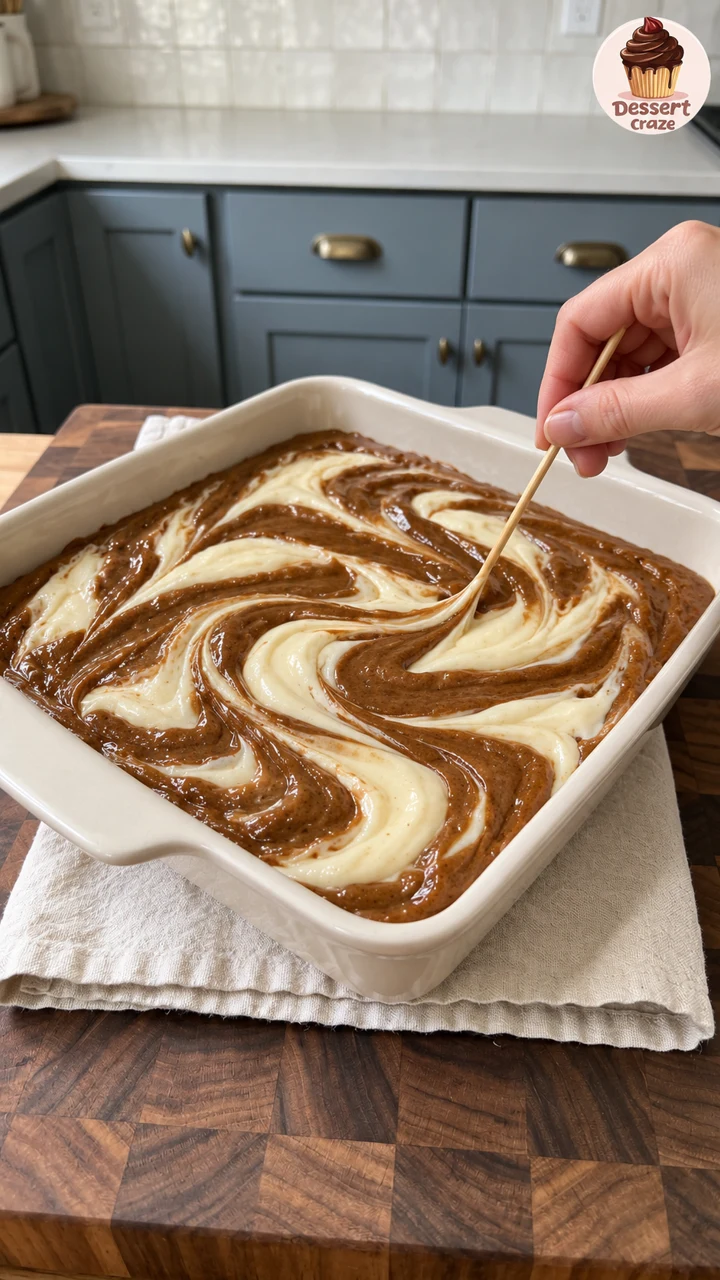
Spread all the gingerbread batter into the prepared pan, guiding it into the corners and leveling gently. Spoon all the cream cheese mixture over it in nine roughly equal dollops, spaced across the surface. The white mixture belongs on the raw cake; it is not added as frosting after baking.
Keep the pan level while working. Spacing the dollops gives you cream cheese in different parts of the cake rather than one heavy mound in the middle. Scrape both bowls so the measured ingredients all reach the baking dish.
5. Make a few broad swirls
Draw a wooden skewer or thin knife through the upper half of the batter in a few broad S-shaped strokes. Pass through the dollops and nearby brown batter without scraping along the bottom. Stop while the ivory and brown areas are still clearly separate.
You do not need to copy every line in the photo. Extra stirring gradually blends the colors and distributes the cream cheese too evenly. A simple, irregular pattern leaves more visible ribbons when the cake is cut.
6. Bake until both mixtures are set
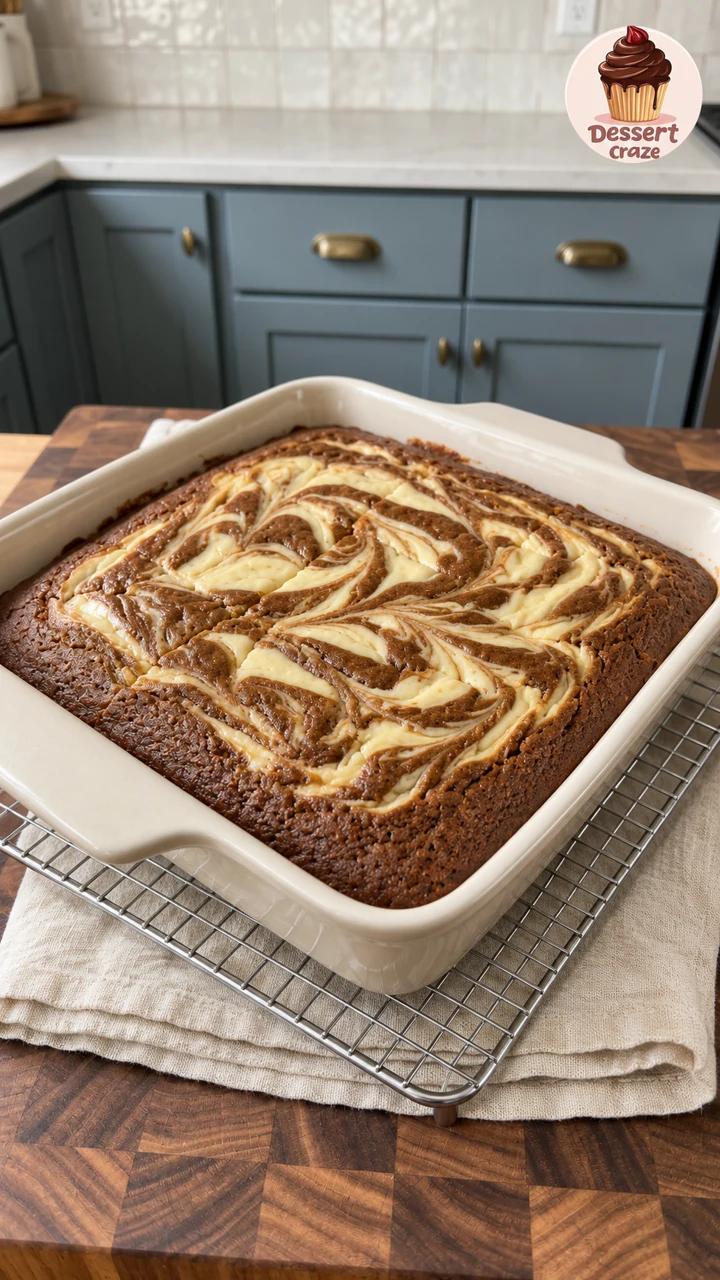
Bake for about 40–50 minutes, starting your checks at 40 minutes. A toothpick inserted into a brown cake area near the center should have a few moist crumbs rather than wet batter. Test more than one brown spot because a toothpick drawn only through cream cheese cannot tell you whether the gingerbread is done.
The center cake should spring back gently, and the cream cheese should look set without a liquid middle. If the surface is getting too brown before the center is ready, cover loosely with foil and keep baking. Give a slower ceramic dish more time if needed; the timer is a reminder to check, not proof of doneness.
For general gingerbread technique, King Arthur Baking’s gingerbread recipe explains the moist-crumb toothpick check. This cake includes a baked cream cheese swirl, so its formula, bake window, and cooling directions differ.
7. Cool, chill, and cut
Cool the dish on a heatproof rack for about 1 hour, then refrigerate. Do not wait on the counter for several hours for a heavy ceramic dish to become completely cold. Refrigerate within 2 hours after baking, even if the cake is still slightly warm. Chill for at least 2 hours before cutting for the neatest squares.
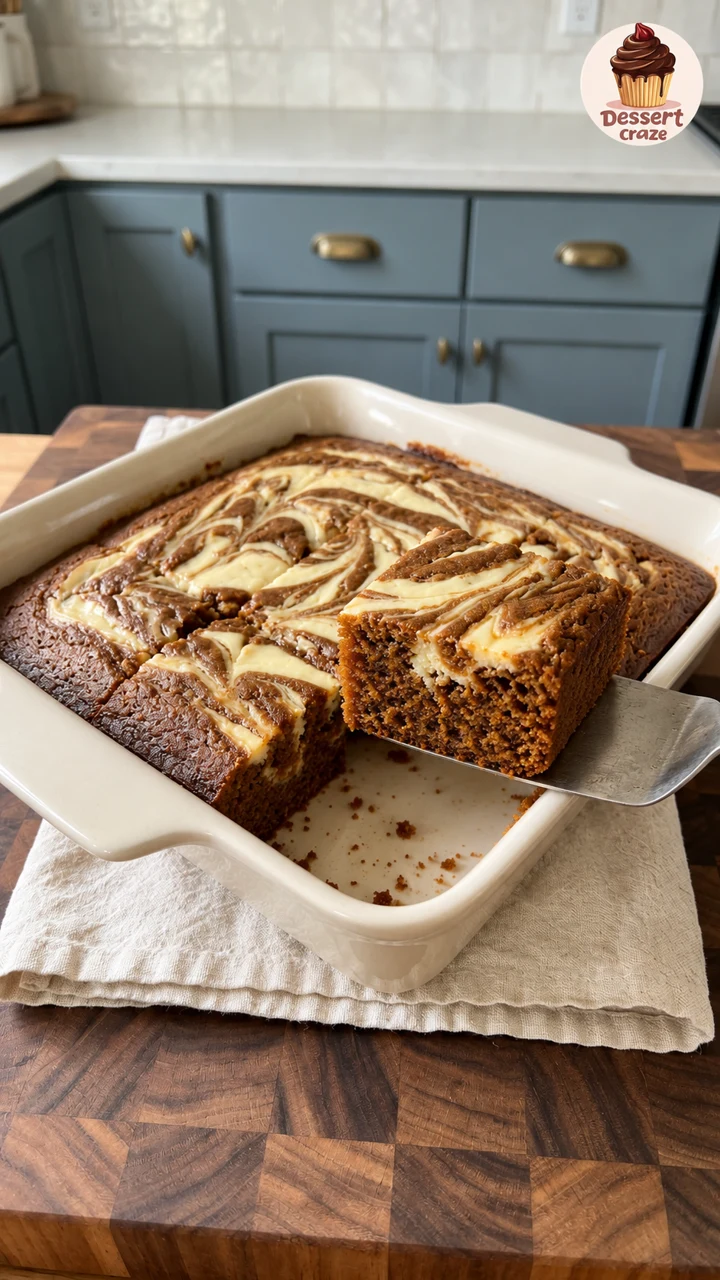
Run a knife through the chilled cake in three rows and three columns for nine large pieces. Wipe the blade between cuts and slide a broad server underneath. For smaller portions, cut twelve pieces instead. A chilled slice can stand briefly before eating if you prefer a softer texture, while the rest stays refrigerated.
Tips for Distinct Cream Cheese Ribbons
Start with softened block cream cheese so the mixture spreads without large lumps. Scrape the bowl before adding the egg, and mix the egg only until incorporated. Trying to smooth a cold, lumpy mixture by beating it for a long time is less useful than starting with the right texture.
Keep the batters separate until assembly. Add the dollops across the whole pan, then make broad strokes with a light hand. The skewer should move through the upper portion rather than churning the entire depth. Leave some ivory patches intact; those become the visible cream cheese areas after baking.
Cooling matters as much as drawing the pattern. A hot cake can crumble and a warm cream cheese ribbon can smear when a heavy square is lifted. Chilling gives a cleaner cut and lets the server support the piece more easily. A little natural cracking or a less symmetrical pattern is fine.
Helpful Baking Tools
As an Amazon Associate I earn from qualifying purchases. Product links may earn a commission at no additional cost to you.
A large bowl, a smaller bowl, a 9-inch square pan, and basic mixing tools are enough. A hand mixer helps smooth the cream cheese, but you can mix it with a sturdy spoon if it is properly softened. Use tools you already have when they do the same job.
- OXO digital kitchen scale — useful to weigh flour, butter, and molasses without packing a measuring cup.
- OXO 11-inch balloon whisk — useful to combine the spices with flour and blend the wet cake ingredients.
- OXO 2-cup angled measuring cup — useful to measure the water separately before cooling it to warm.
- OXO silicone everyday spatula — useful to scrape both bowls and spread the cake batter into the corners.
- Rubbermaid oven-monitoring thermometer — useful to check the oven’s air temperature if cakes regularly brown before their centers bake.
An oven-monitoring thermometer measures the oven air; do not insert it into the cake. For doneness, use the center cake and cream cheese cues described above. Also keep a skewer, dry oven mitts, a cooling rack, and a broad serving spatula nearby.
Common Problems and Fixes
| Problem | Likely cause | What helps |
|---|---|---|
| White swirl disappeared | Too many passes through the batter | Stop with distinct ivory and brown ribbons. |
| Lumpy cream cheese | Cold cream cheese or inadequate scraping | Soften the block and mix it with sugar before adding its egg. |
| Wet center under a brown top | Center needs longer or oven is running hot | Tent with foil and continue baking; check several central cake spots. |
| Dry gingerbread | Packed flour or excessive baking | Weigh the flour and start checking at the beginning of the bake window. |
| Slice collapses on the server | Cake cut too warm | Cool, chill, and lift with a broad server. |
Storage and Make-Ahead Tips
This cake is convenient to bake the day before serving because the cream cheese swirl slices neatly after chilling. Once chilled, cover the dish to protect the surface from drying out and absorbing refrigerator odors. Keep it refrigerated at 40°F (4°C) or colder and use within 4 days.
For longer storage, wrap individual chilled pieces, place them in a freezer container, and freeze for up to 2 months for best quality. Thaw in the refrigerator. Freeze once and portion first so you do not repeatedly thaw and refreeze the whole cake.
Follow the FDA’s food-storage guidance for perishables: keep room-temperature holding within 2 hours, or 1 hour above 90°F. Put extra cake back into the refrigerator instead of leaving the entire dish out through a long gathering. Do not put a refrigerator-cold ceramic pan into a hot oven; follow the maker’s thermal-shock guidance.
Frequently Asked Questions
Is the cream cheese swirl a frosting?
No. It contains an egg and is baked into the raw gingerbread batter. Do not add the raw swirl mixture to a finished cake.
Can I use blackstrap molasses?
Regular unsulphured baking molasses is specified. Blackstrap changes the flavor significantly and can taste too bitter in this version.
Can I skip the chilling time?
The written method includes chilling for a clean cut and a firmer cream cheese ribbon. The photograph’s tidy lifted square is easier to achieve after chilling than while the cake is hot.
Do I need a water bath?
No. This is a cake with a cream cheese swirl, not a full cheesecake. Bake the prepared pan directly on the middle oven rack.
Can I replace block cream cheese with a tub spread?
Block cream cheese is the closer match for the stated texture. Tub spreads and low-fat alternatives may change the moisture and thickness, so they are not direct substitutions for this recipe.
How do I tell cream cheese from raw cake batter on a toothpick?
Choose a brown gingerbread area near the center and check more than one location. Wet brown batter means more baking is needed. Also check that the cream cheese itself is set rather than liquid.
More Cozy Dessert Ideas
If you enjoy cream cheese with warm spices, try these brown butter pumpkin cheesecake crumb bars. For a sweet brunch idea with a fruity center, try these raspberry stuffed French toast bites.
Printable Gingerbread Cream Cheese Swirl Cake Recipe
Print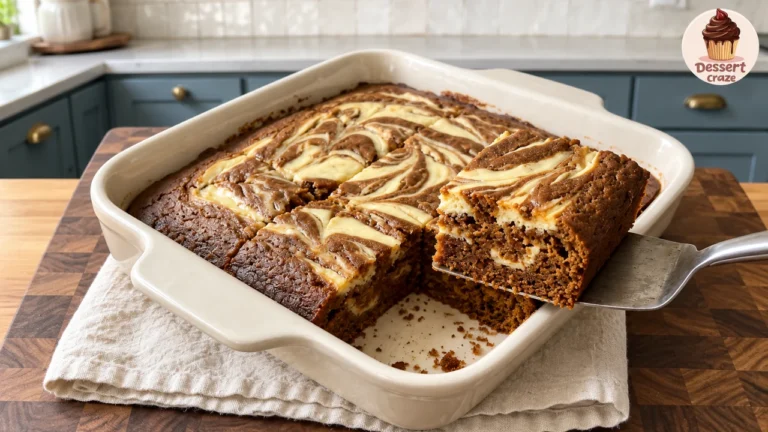
Gingerbread Cream Cheese Swirl Cake
Soft molasses gingerbread cake with a baked vanilla cream cheese swirl. This 9-inch square cake has warm ginger and cinnamon flavor and slices best after chilling. Makes 9 generous squares.
- Total Time: 4 hours 15 minutes
- Yield: 9 large squares
Ingredients
GINGERBREAD CAKE
2 cups (250 g) all-purpose flour
1 teaspoon baking soda
1/2 teaspoon baking powder
1/2 teaspoon fine salt
2 teaspoons ground ginger
1 1/2 teaspoons ground cinnamon
1/4 teaspoon ground cloves
1/4 teaspoon ground nutmeg
1/2 cup (113 g) unsalted butter, melted and cooled slightly
1/2 cup (100 g) packed light brown sugar
1/2 cup (170 g) unsulphured molasses, not blackstrap
1 large egg, room temperature
1 teaspoon alcohol-free vanilla flavoring
3/4 cup (180 ml) hot water, cooled until warm before mixing
CREAM CHEESE SWIRL
8 ounces (226 g) full-fat block cream cheese, softened
1/4 cup (50 g) granulated sugar
1 large egg, room temperature
1 teaspoon alcohol-free vanilla flavoring
Instructions
1. Preheat the oven to 350°F (175°C), with a rack in the middle. Grease a 9-by-9-inch baking pan or oven-safe ceramic dish at least 2 inches deep. Do not substitute an 8-inch pan without adjusting the recipe.
2. Whisk flour, baking soda, baking powder, salt, ginger, cinnamon, cloves, and nutmeg in a large bowl until evenly mixed.
3. In a separate bowl, whisk melted slightly cooled butter, brown sugar, and molasses. Whisk in the cake egg and vanilla, then slowly whisk in the measured water after it has cooled to warm. Do not add boiling liquid directly to the egg.
4. Add the wet mixture to the dry ingredients. Stir gently just until no dry flour remains, scraping the bottom and sides. Do not beat until fluffy or keep mixing after the batter is combined.
5. Make the swirl promptly: beat the softened cream cheese and granulated sugar until smooth, scraping the bowl. Mix in its egg and vanilla on low speed just until combined. Proceed directly to assembly.
6. Spread all the gingerbread batter evenly in the prepared pan. Spoon all the cream cheese mixture over it in 9 evenly spaced dollops. Draw a skewer or thin knife through the upper half of the batter in a few broad S-shaped strokes. Leave distinct brown and ivory ribbons; do not scrape the base or stir the two mixtures together.
7. Bake for about 40–50 minutes, starting to check at 40 minutes. The gingerbread center should spring back gently and a toothpick in a brown cake area near the center should show moist crumbs, not wet batter. Check more than one cake spot; the cream cheese should be set without a liquid center. Tent loosely with foil if browning before the middle is done, and bake longer if needed.
8. Cool in the pan on a heatproof rack for about 1 hour, then refrigerate. Chill for at least 2 hours before cutting for the neatest squares; refrigerate within 2 hours after baking even if slightly warm. Use a knife wiped clean between cuts and lift with a broad server. Cut into 9 large squares or 12 smaller pieces.
9. Cover leftovers and refrigerate at 40°F (4°C) or colder for up to 4 days. Freeze individually wrapped portions for up to 2 months for best quality; thaw in the refrigerator.
Notes
Timing: 25 minutes preparation + 40–50 minutes baking + about 1 hour rack cooling + at least 2 hours chilling = about 4 hours 5 minutes–4 hours 15 minutes. The card uses the upper bake estimate. Active preparation does not include softening cold ingredients.
Use ordinary unsulphured baking molasses rather than blackstrap. Full-fat block cream cheese gives a thicker, more reliable swirl than spreadable tub products. Measure the pan inside the rim, not across its handles.
The swirl is baked into the cake; it is not frosting added afterward. A few broad passes preserve the pattern. Do not repeatedly stir until the colors blend.
Pan material and oven accuracy can change baking time. Use the doneness cues rather than taking the cake out just because the timer rang. Protect ceramic bakeware from sudden temperature changes; never place a refrigerator-cold dish in a hot oven.
Contains wheat, milk, and eggs. No nuts or alcohol are included in the written recipe. AI-assisted photos illustrate the process; this editorial recipe is inspired by the supplied Dessert Craze visual, and no kitchen-testing claim is made.
- Prep Time: 25 minutes
- Cooling + Chilling Time: 3 hours
- Cook Time: 50 minutes
- Category: Dessert
- Method: Baking
- Cuisine: American