
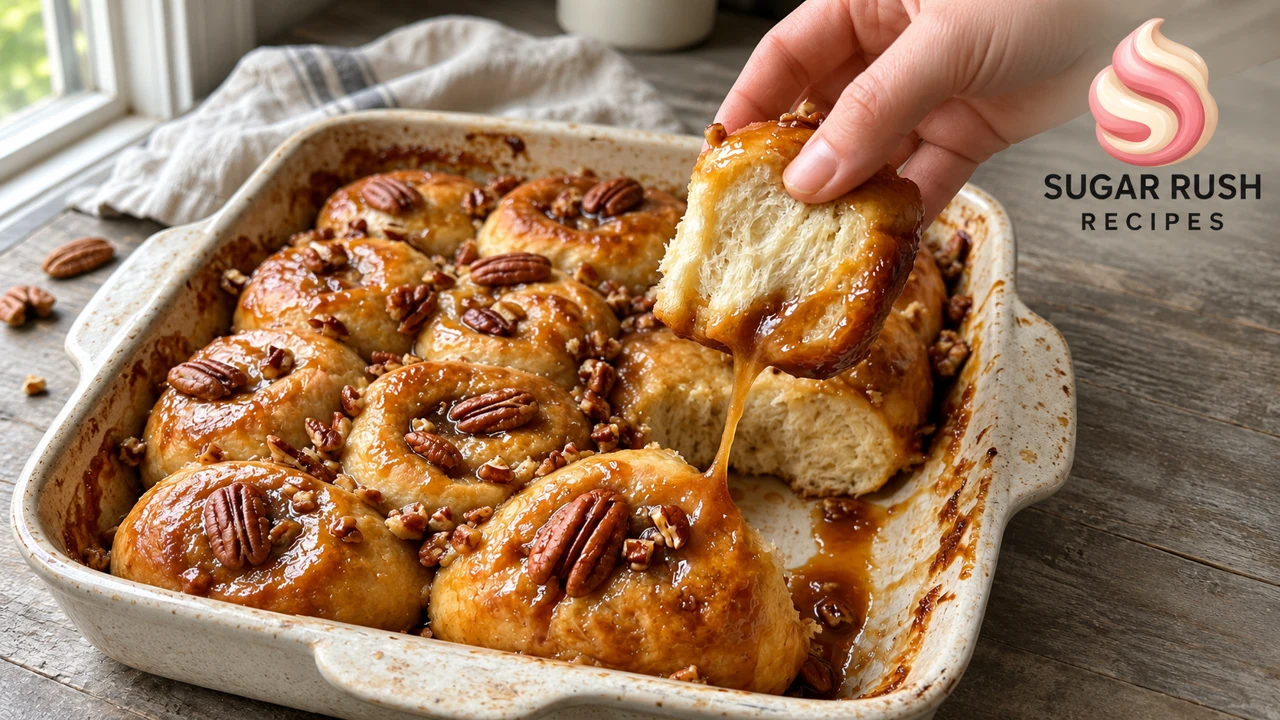
Caramel pecan pull-apart rolls combine soft homemade yeast bread, buttery cinnamon sugar, glossy brown sugar caramel, and toasted pecans. The rolls bake close together, so their sides stay tender while the tops turn golden. Spoon the warm caramel over them, then pull off a fluffy portion once the sauce has cooled enough to eat.
This version follows the rounded dough portions shown in the Sugar Rush Recipes Reel. Each portion is shaped into a ball and coated with cinnamon sugar, then placed over a caramel-pecan base. The short video skips the dough-making and rising times, so those steps are included here. The Reel finishes on a platter; the supplied photo serves from the original baking dish. Both finishing methods are explained below.
The goal is a soft, sticky topping, not a hard toffee. Caramel thickness and stretch depend on cooking time and temperature; the dramatic strands in an AI-assisted video are not a reliable measure of success. The photos are AI-assisted recipe illustrations, and these written proportions are an original editorial version rather than a claim of kitchen testing.
| Active preparation | About 35 minutes |
|---|---|
| First rise | 60–90 minutes, until doubled |
| Second rise | 30–45 minutes, or until puffy |
| Bake | About 30–35 minutes |
| Cooling before eating | At least 15 minutes |
| Total | About 2 hours 50 minutes–3 hours 40 minutes |
| Yield | 12 rolls in a 9-by-13-inch dish, at least 2 inches deep |
In This Recipe
- Ingredients and Pan Size
- Helpful Baking Tools
- How to Make Caramel Pecan Pull-Apart Rolls
- Common Problems and Fixes
- Make-Ahead, Storage, and Reheating
- Frequently Asked Questions
- Printable Recipe Card
Ingredients for Caramel Pecan Pull-Apart Rolls
Soft enriched dough
- 3½ cups (420 g) all-purpose flour, plus 2–4 tablespoons (15–30 g) only if needed
- 2¼ teaspoons (7 g) instant yeast
- ¼ cup (50 g) granulated sugar
- ¾ teaspoon fine salt
- 1 cup (240 ml) whole milk, lukewarm, about 100–110°F
- 1 large egg, at room temperature
- ¼ cup (57 g) unsalted butter, melted and cooled to lukewarm
All-purpose flour keeps the rolls tender. Weigh it if possible, or spoon it into the cup and level without packing. Start with the stated amount and add extra only if the dough remains persistently wet after kneading. A slightly tacky dough is useful here; a dry, flour-heavy dough makes firm rolls.
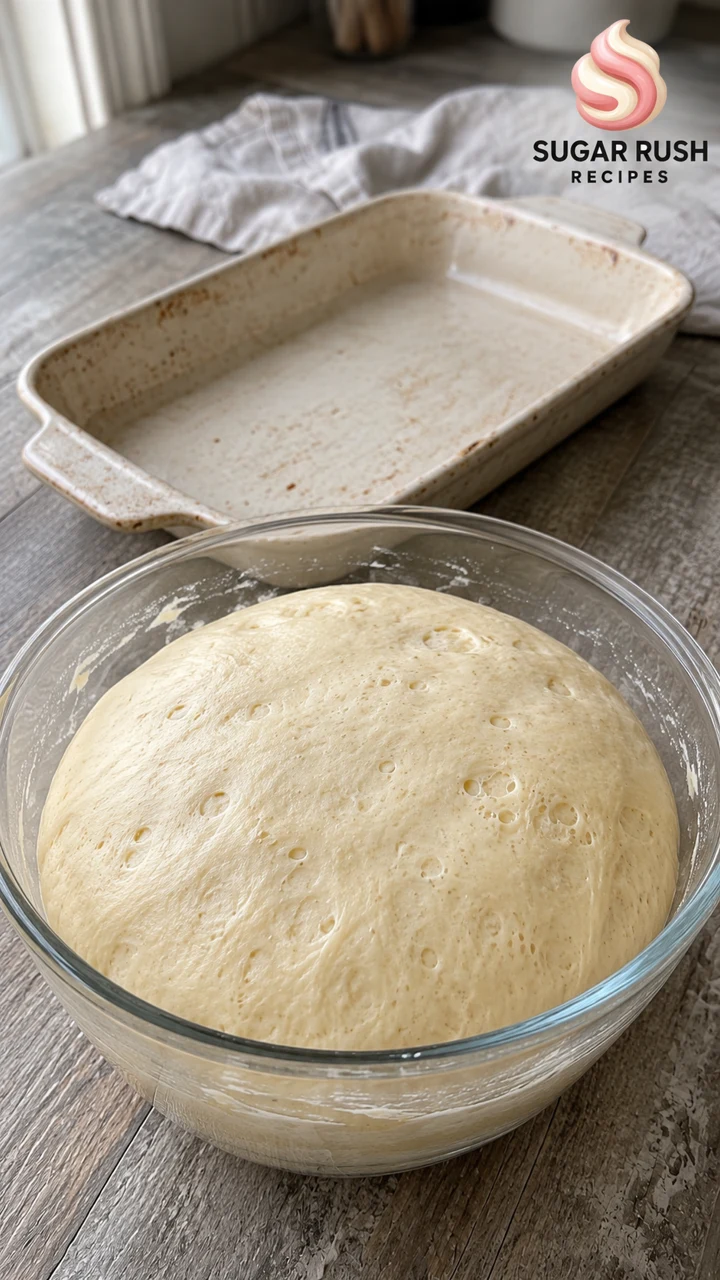
The milk and butter should feel lukewarm, not hot. Instant yeast can be mixed with the flour, so there is no separate blooming step in this method. Check that the yeast is within date and has been stored as directed. Rise times change with room temperature; give the dough time to reach the visual cues.
Cinnamon-sugar coating
- 3 tablespoons (42 g) unsalted butter, melted and cooled slightly
- ⅓ cup (67 g) granulated sugar
- 1½ teaspoons ground cinnamon
This coating gives the round rolls their buttery cinnamon flavor. The recipe does not ask you to roll out a rectangle or slice a spiral log. Keep the dough portions equal so they rise and bake at a similar rate.
Brown sugar caramel and pecans
- 6 tablespoons (85 g) unsalted butter
- ¾ cup (150 g) packed light brown sugar
- ⅓ cup (80 ml) heavy cream
- ¼ teaspoon fine salt
- 1 teaspoon alcohol-free vanilla flavoring
- 1 cup (110 g) toasted pecans, divided: ¾ cup for the base and ¼ cup for finishing
Use a mixture of chopped pecans and halves if you like the look in the photo. Keep the finishing portion separate so it stays crisp. If starting with raw nuts, toast them at 350°F for about 6–8 minutes during the first rise, stirring and watching closely; let them cool. This work overlaps the dough’s rise rather than adding another waiting period at the end.
Use a greased 9-by-13-inch baking dish at least 2 inches deep. Measure the interior rather than the handles. The ceramic dish in the reference has room for twelve rolls arranged in three rows of four. Follow your dish maker’s heating instructions and protect ceramic from sudden temperature changes.
Helpful Baking Tools
As an Amazon Associate I earn from qualifying purchases. Product links may earn a commission at no additional cost to you.
A bowl, spoon, baking dish, and a suitable saucepan are enough to start. A stand mixer is optional because the dough can be kneaded by hand. These tools help with measuring, portioning, and checking the bake; use comparable tools you already own.
- OXO digital kitchen scale — useful for weighing flour and dividing the dough into twelve equal portions.
- OXO bench scraper and chopper — useful for dividing and lifting soft dough without repeatedly adding flour.
- Cuisinart 1.5-quart stainless saucepan — useful for holding the small caramel batch with space above it as it bubbles.
- OXO silicone everyday spatula — useful for scraping the bowl and stirring the caramel with a heat-resistant tool.
- TP19H instant-read food thermometer — useful for checking the center bread crumb rather than judging doneness from brown tops alone.
Also set out dry oven mitts, a heatproof cooling rack, and a long-handled spoon. For the platter finish, use a large heatproof platter with a raised rim that can safely contain the rolls and hot sauce. A flat plate or a small serving board is a poor choice for catching flowing caramel.
How to Make Caramel Pecan Pull-Apart Rolls
1. Mix and knead the dough
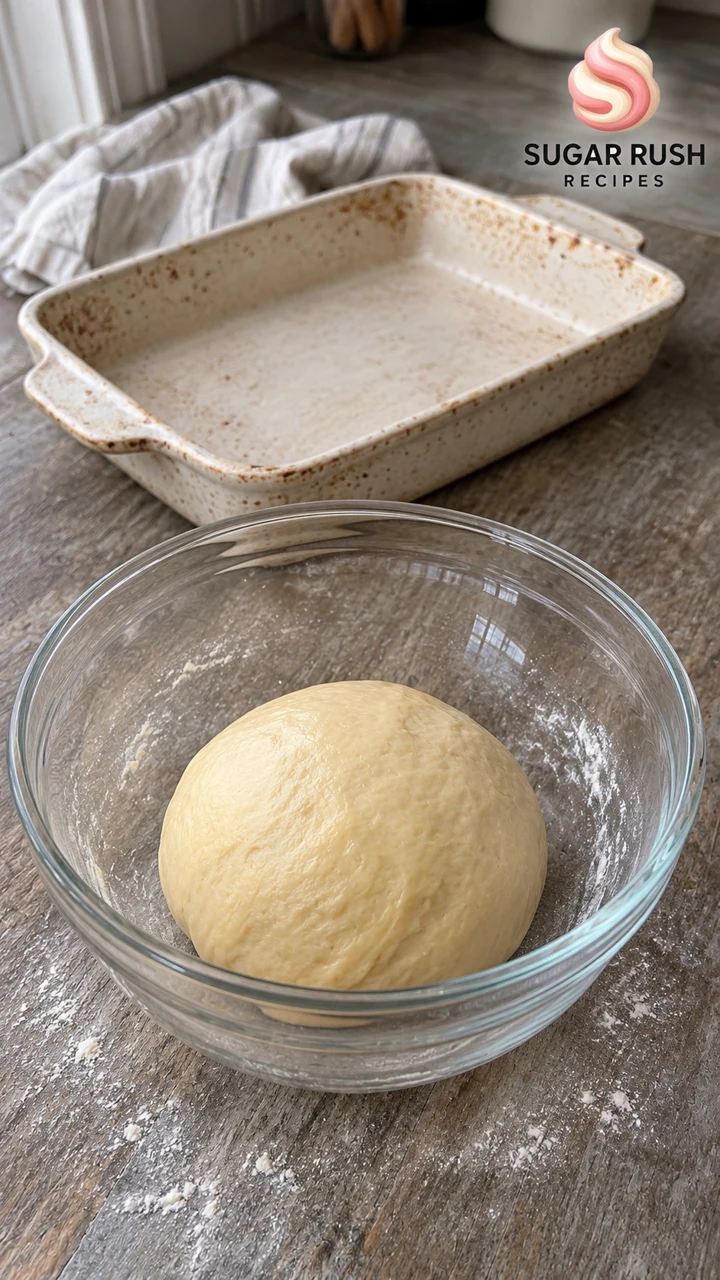
Whisk the flour, instant yeast, sugar, and salt in a large bowl. Add the lukewarm milk, egg, and cooled melted dough butter. Stir until a soft dough comes together. Knead for about 8–10 minutes by hand or 5–7 minutes with a dough hook on low speed, until smooth and elastic.
If the dough stays wet and smears heavily, add flour one tablespoon at a time. Pause between additions. It should still feel soft and slightly tacky, and it does not need to become dry enough to leave the bowl perfectly clean.
2. Let the dough rise
Place in a lightly greased bowl, cover, and leave in a comfortably warm spot for about 60–90 minutes, until roughly doubled. Keep it away from direct heat or a hot oven. A cool kitchen may need more time. The dough should look expanded and airy before you shape it.
3. Prepare the caramel-pecan base
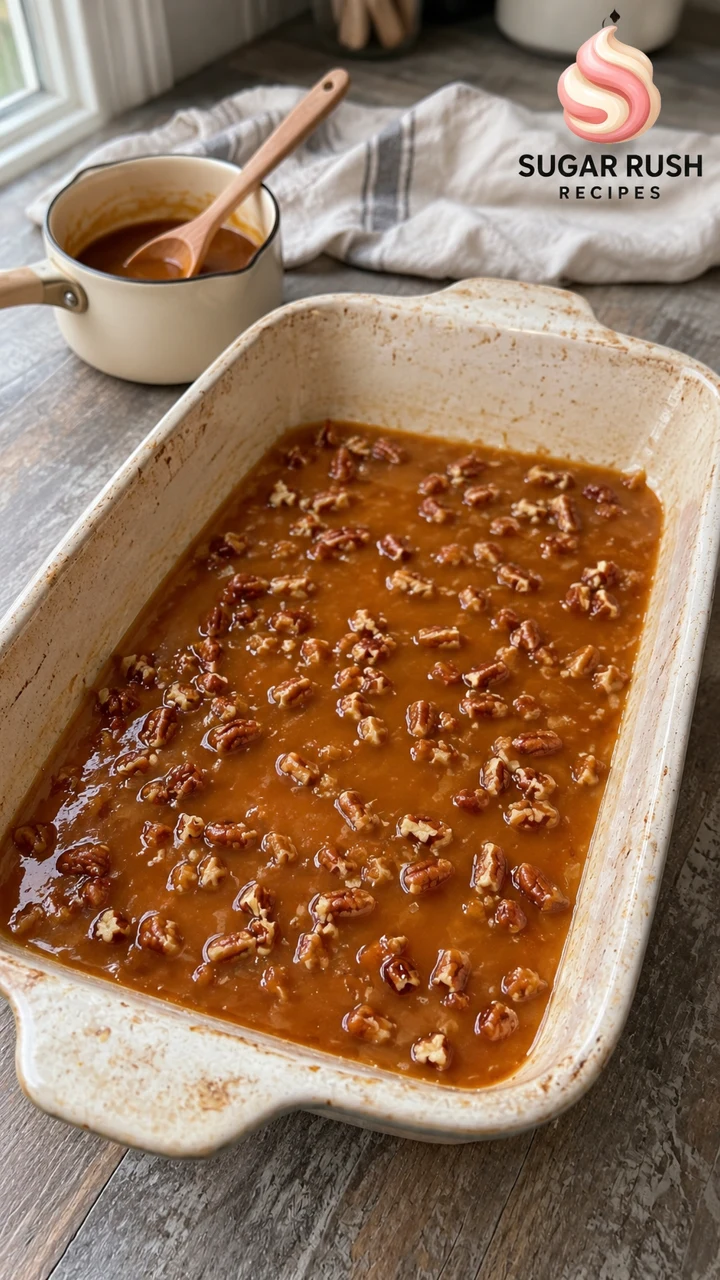
While the dough rises, grease the baking dish. Melt the caramel butter in a deep saucepan over medium-low heat. Stir in brown sugar, cream, and salt. Bring to a gentle bubbling simmer and stir for 2–3 minutes, just until smooth and slightly thickened. Remove from the heat and stir in the vanilla.
Pour the sauce into the dish and scatter ¾ cup toasted pecans over it. Let the base cool to warm before adding the dough. Do not boil the sauce down into candy: it will continue cooking in the oven. Never touch or taste bubbling caramel; hot sugar sticks to skin.
4. Shape twelve balls and coat them
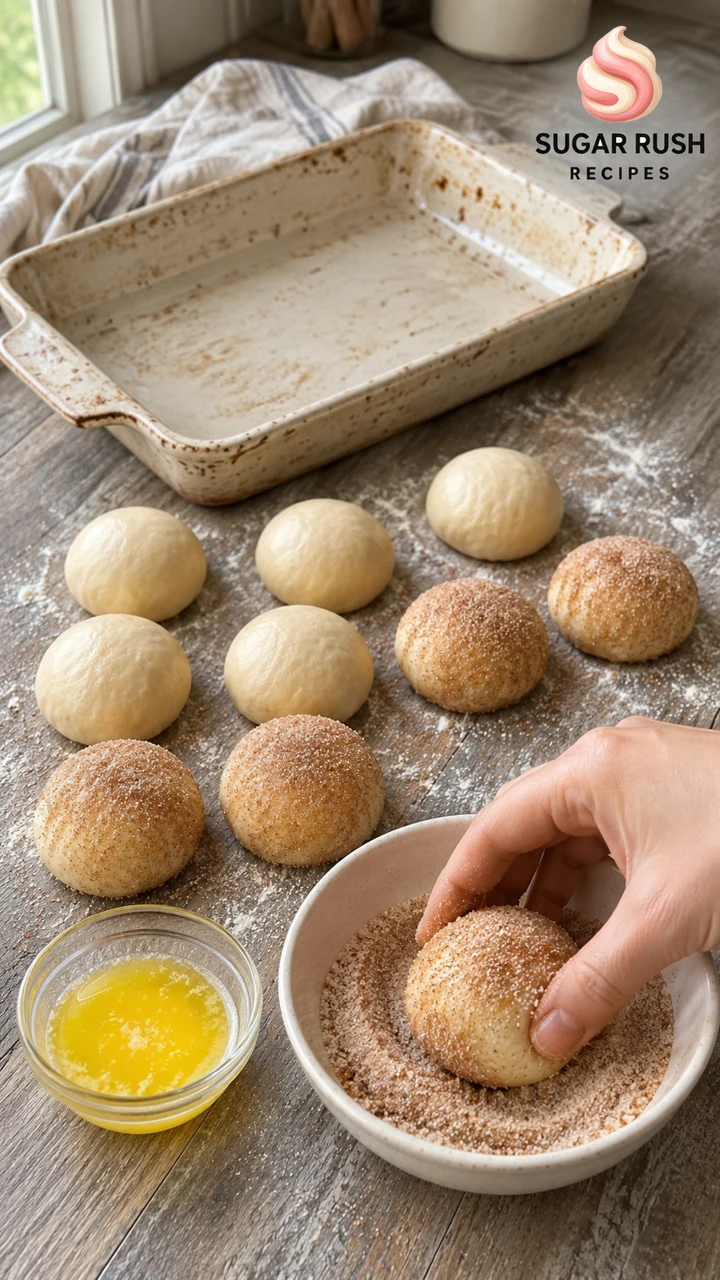
Mix the coating sugar and cinnamon in a shallow bowl. Gently deflate the risen dough and divide into twelve equal portions. Tuck each portion’s edges underneath, pinch the seam, and roll lightly into a smooth ball. Brush or lightly dip in the melted coating butter, then turn in the cinnamon sugar.
5. Arrange and give the rolls a second rise
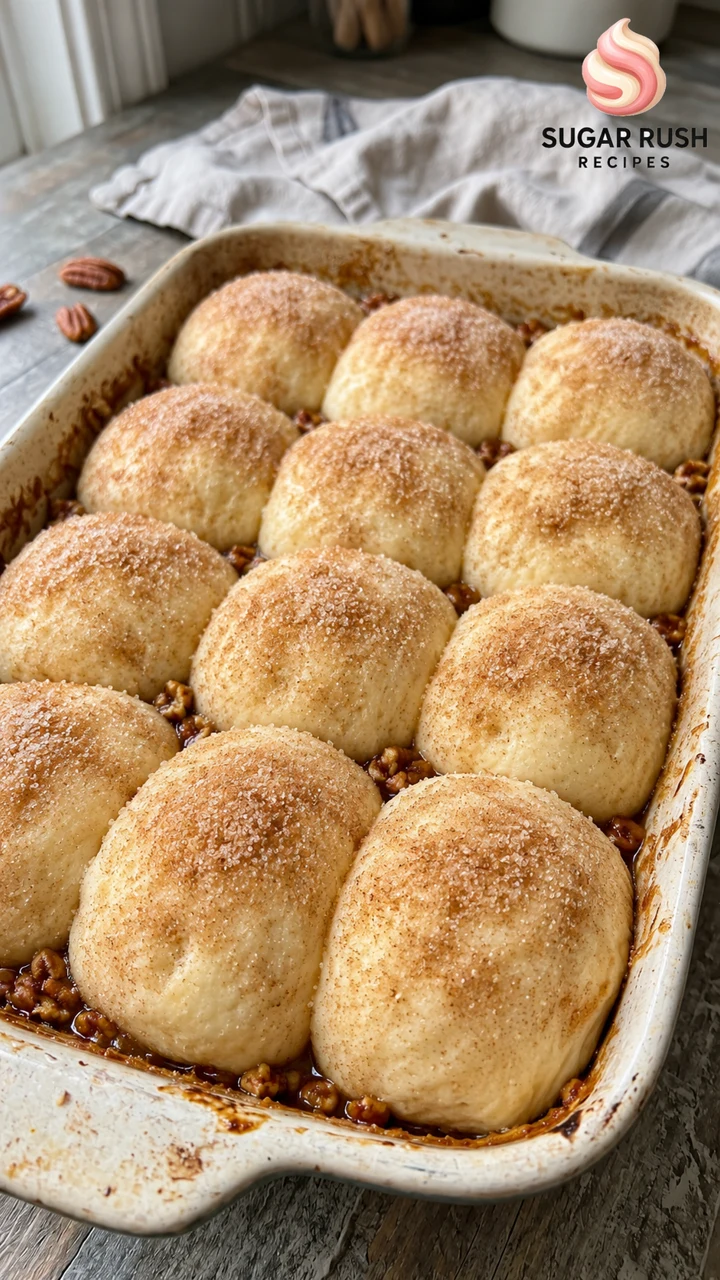
Place the balls seam-side down over the warm caramel and nuts, in three rows of four with space between them. Cover loosely and let rise for about 30–45 minutes, until visibly puffy and nearly touching. If they remain small and tight, wait longer. Toward the end of this rise, heat the oven to 350°F (175°C), with a rack in the middle.
6. Bake until the center roll is done
Uncover and bake for about 30–35 minutes. The tops should be golden, the rolls should look set, and the center bread crumb should reach at least 190°F. Insert the thermometer into a middle roll, avoiding the caramel and the baking dish. Brown tops alone do not confirm that the middle is cooked.
If the tops darken early, tent loosely with foil and continue baking. A ceramic dish, a cooler oven, or slower-rising dough may require more time. King Arthur Baking’s sticky bun guide also recommends checking the center and explains why caramel should stay soft rather than be overcooked.
7. Finish in the dish or on a platter
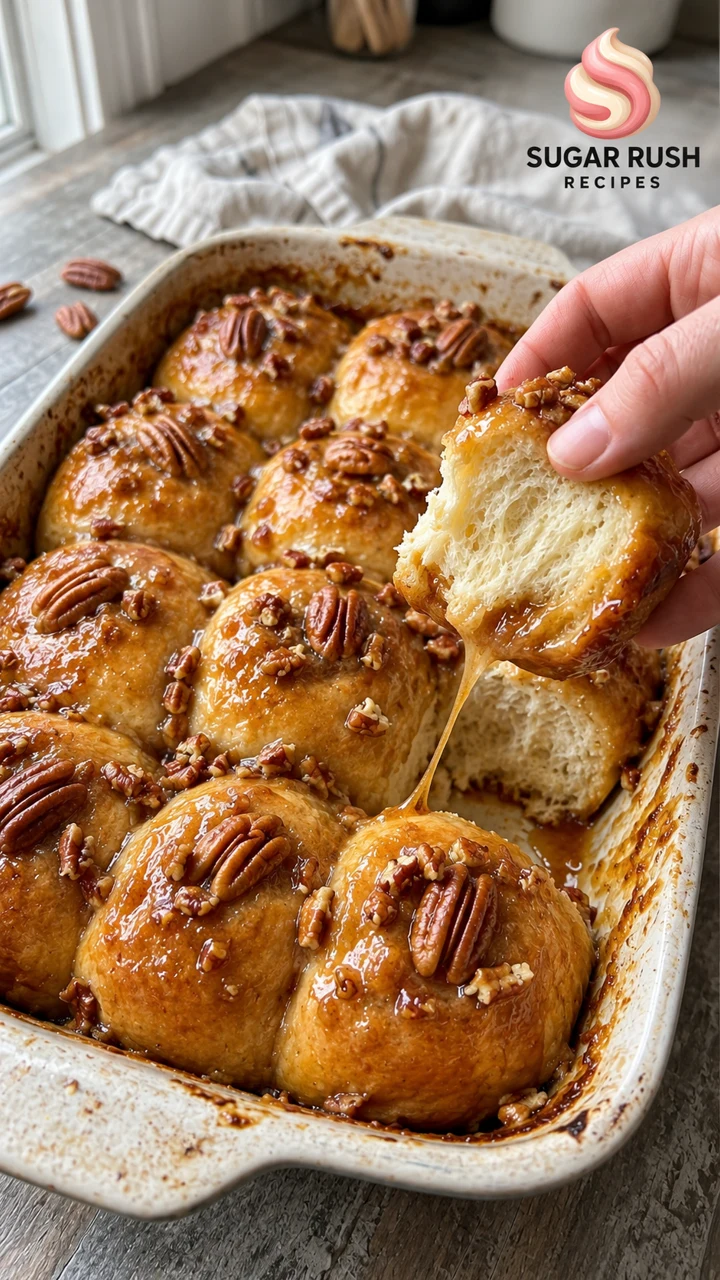
Set the hot dish on a heatproof rack and rest for 5 minutes. To serve in the original dish, carefully spoon caramel and pecans from around the edges and underside over the tops with a long-handled spoon. Add the reserved ¼ cup toasted pecans. Let cool for about 10 more minutes before pulling apart, and check that the sticky sauce is comfortable to eat.
For the platter finish shown in the Reel, loosen the edges after the first 5-minute rest. Using dry oven mitts, hold a large heatproof rimmed platter securely over the pan and invert carefully on a stable surface. Lift away the dish, scrape remaining caramel and nuts over the rolls, add the reserved pecans, and cool for about 10 more minutes. If you cannot handle the hot dish securely, keep the rolls in it and use the spooning method.
Common Problems and Fixes
| Problem | Likely cause | Better approach |
|---|---|---|
| Dense rolls | Too much flour or insufficient rising | Keep the dough soft and wait for visible expansion during both rises. |
| Brown tops and doughy middle | The surface cooked first | Tent loosely with foil and check a center roll’s crumb temperature. |
| Hard caramel after cooling | Sauce reduced too far before baking | Use a brief gentle simmer; do not cook it to a candy stage. |
| Uneven sizes | Dough divided by eye into very different portions | Weigh or compare twelve portions before shaping. |
| Rolls stick during inversion | Pan poorly greased or caramel cooled too long | Grease thoroughly, loosen the edges, and invert after the short initial rest. |
Make-Ahead, Storage, and Reheating
The simplest make-ahead option is to bake the rolls earlier the same day and rewarm portions gently before serving. Do not shorten either rise to meet a clock deadline. For a first attempt, the same-day method avoids the extra variables of refrigerating shaped dough in a caramel base.
Let leftovers cool, cover, and refrigerate within 2 hours. Use within 4 days. Freeze individual wrapped portions for up to 2 months for best quality, then thaw in the refrigerator. Label the container so the date is easy to track.
Reheat an individual roll on a microwave-safe plate in short intervals, checking after 10–15 seconds. The caramel can become hotter than the bread, so test carefully. Do not move a cold ceramic baking dish directly into a hot oven unless its maker specifically permits that use.
Frequently Asked Questions
Are these spiral cinnamon rolls?
No. This recipe keeps the round dough-ball preparation shown in the Reel. Cinnamon sugar coats the dough portions; you do not roll up and slice a filled log.
Do I have to invert the baking dish?
No. The Reel does, but the supplied photo serves from the original dish. Spoon the warm caramel and pecans over the baked rolls to serve that way. Use the detailed platter option only if you can manage the hot dish safely.
Why are there two rises?
The first expands the kneaded dough. The second gives the shaped rolls time to become airy before baking. Skipping the second can produce tighter, heavier rolls.
Can I use active dry yeast?
The written method uses instant yeast. To use active dry yeast, follow its package directions for activation and temperature, using milk from the recipe rather than adding extra liquid. Allow the dough’s appearance to guide the rising time.
Can I leave out the pecans?
You can omit them for a nut-free variation only if all ingredients and preparation surfaces are suitable for the person eating it. The pictured caramel pecan version includes nuts in the base and on top.
Will the caramel stretch like the video?
Some warm caramel may form short threads, but temperature, moisture, and cooking time change its behavior. Do not overcook it trying to reproduce exaggerated strands. Soft rolls and a spoonable sticky topping are the useful goals.
More Sweet Baking Ideas
For another fruit-filled brunch option, save these raspberry stuffed French toast bites. If you enjoy rich butter flavor in a chilled dessert, try brown butter pumpkin cheesecake crumb bars.
Method reference: King Arthur Baking’s cinnamon pull-apart bread demonstrates the coated dough-ball method and the two rising stages. This recipe adds its own enriched dough proportions and caramel-pecan base to match the Sugar Rush Recipes presentation.
Printable Caramel Pecan Pull-Apart Rolls Recipe
Print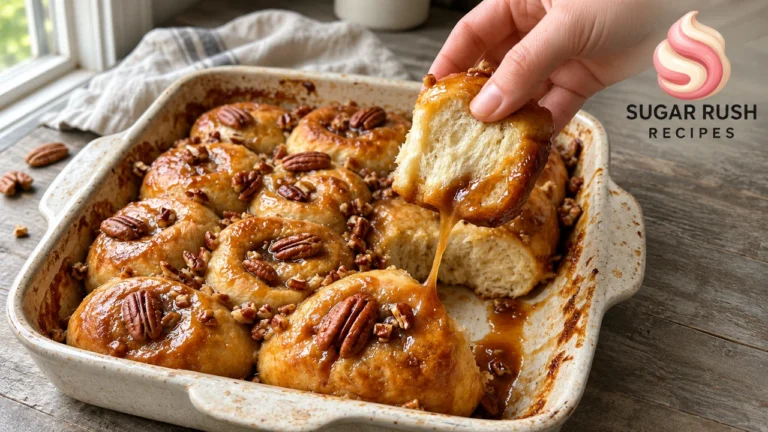
Caramel Pecan Pull-Apart Rolls
Soft homemade cinnamon-sugar-coated round rolls baked over brown sugar caramel and toasted pecans. Serve from the baking dish or carefully invert onto a rimmed heatproof platter. Makes 12 pull-apart rolls.
- Total Time: 3 hours 40 minutes
- Yield: 12 rolls
Ingredients
DOUGH
3 1/2 cups (420 g) all-purpose flour, plus 2–4 tablespoons (15–30 g) only if needed
2 1/4 teaspoons (7 g) instant yeast
1/4 cup (50 g) granulated sugar
3/4 teaspoon fine salt
1 cup (240 ml) whole milk, lukewarm, about 100–110°F
1 large egg, room temperature
1/4 cup (57 g) unsalted butter, melted and cooled to lukewarm
CINNAMON-SUGAR COATING
3 tablespoons (42 g) unsalted butter, melted and cooled slightly
1/3 cup (67 g) granulated sugar
1 1/2 teaspoons ground cinnamon
CARAMEL AND PECANS
6 tablespoons (85 g) unsalted butter
3/4 cup (150 g) packed light brown sugar
1/3 cup (80 ml) heavy cream
1/4 teaspoon fine salt
1 teaspoon alcohol-free vanilla flavoring
1 cup (110 g) toasted pecans, divided: 3/4 cup for the base and 1/4 cup for finishing
Instructions
1. Whisk 3 1/2 cups flour, instant yeast, 1/4 cup sugar, and 3/4 teaspoon salt. Add lukewarm milk, egg, and the 1/4 cup melted cooled butter. Mix to form a soft dough.
2. Knead 8–10 minutes by hand or 5–7 minutes with a dough hook on low, until smooth and slightly tacky. Add extra flour only 1 tablespoon at a time if persistently wet; avoid a stiff dough.
3. Place in a lightly greased bowl, cover, and let rise in a comfortably warm spot for about 60–90 minutes, until approximately doubled.
4. During the first rise, grease a 9-by-13-inch baking dish at least 2 inches deep. Melt the 6 tablespoons butter in a deep saucepan. Stir in brown sugar, cream, and 1/4 teaspoon salt. Bring to a gentle bubbling simmer and stir for 2–3 minutes, just until smooth and slightly thickened. Remove from heat and stir in vanilla. Do not cook into a firm candy.
5. Pour the caramel into the greased dish and scatter 3/4 cup toasted pecans over it. Let cool to warm, not hot, before adding dough. Reserve 1/4 cup pecans for finishing.
6. Mix the coating sugar and cinnamon in a shallow bowl. Gently deflate the risen dough and divide into 12 equal portions. Shape smooth balls by tucking the edges underneath and pinching the seam. Brush or lightly dip in the 3 tablespoons melted butter, then turn in cinnamon sugar.
7. Arrange the 12 balls seam-side down in the warm caramel base, in 3 rows of 4 with space between them. Cover loosely and let rise 30–45 minutes, or until noticeably puffy and nearly touching. Allow longer if needed.
8. Toward the end of the second rise, preheat the oven to 350°F (175°C). Bake uncovered on the middle rack for about 30–35 minutes, until golden and the center roll reaches at least 190°F in the bread crumb, away from caramel and the dish. Tent loosely with foil if browning early and continue until baked.
9. Rest the dish on a heatproof rack for 5 minutes. For serving in the dish, use a long-handled spoon to carefully bring caramel and pecans from the edges and underside over the tops. Add the reserved 1/4 cup toasted pecans. Allow about 10 more minutes before pulling apart, and check the caramel is comfortable to eat.
10. Optional platter finish, as shown in the Reel: after the initial 5-minute rest, loosen edges and invert carefully onto a large heatproof RIMMED platter using dry oven mitts. The platter must comfortably contain the rolls and hot sauce. Scrape remaining caramel and pecans over them, add reserved nuts, and cool about 10 minutes more. If you cannot manage the hot dish securely, serve directly from it instead.
Notes
Planning time: 35 minutes active prep + 60–90 minutes first rise + 30–45 minutes second rise + 30–35 minutes baking + 15 minutes cooling = about 2 hours 50 minutes–3 hours 40 minutes. The card uses the upper estimates. Rise times are estimates; follow the dough’s appearance.
Use toasted pecans ready to measure. If starting with raw pecans, toast at 350°F for about 6–8 minutes, stirring and watching closely, during the first rise; cool before using. That work overlaps the rise.
This is a rounded dough-ball pull-apart version, not a rolled-and-sliced spiral. Caramel starts under the dough; spoon it over after baking or use the optional inversion method. No second caramel batch is required.
Hot sugar can cause severe burns. Use dry oven mitts and a stable heatproof surface; never touch or taste bubbling caramel. Follow ceramic dish thermal-shock precautions.
Cool and refrigerate covered within 2 hours; use within 4 days. Freeze well-wrapped portions up to 2 months for best quality. Rewarm individual portions gently.
Contains wheat, milk, eggs, and pecans. Use alcohol-free vanilla. Caramel thickness and stretch vary; exaggerated video-like strings are not guaranteed. AI-assisted illustrations support this original editorial recipe; no kitchen-testing claim is made.
- Prep Time: 35 minutes
- Rising + Cooling Time: 2 hours 30 minutes
- Cook Time: 35 minutes
- Category: Breakfast
- Method: Baking
- Cuisine: American