
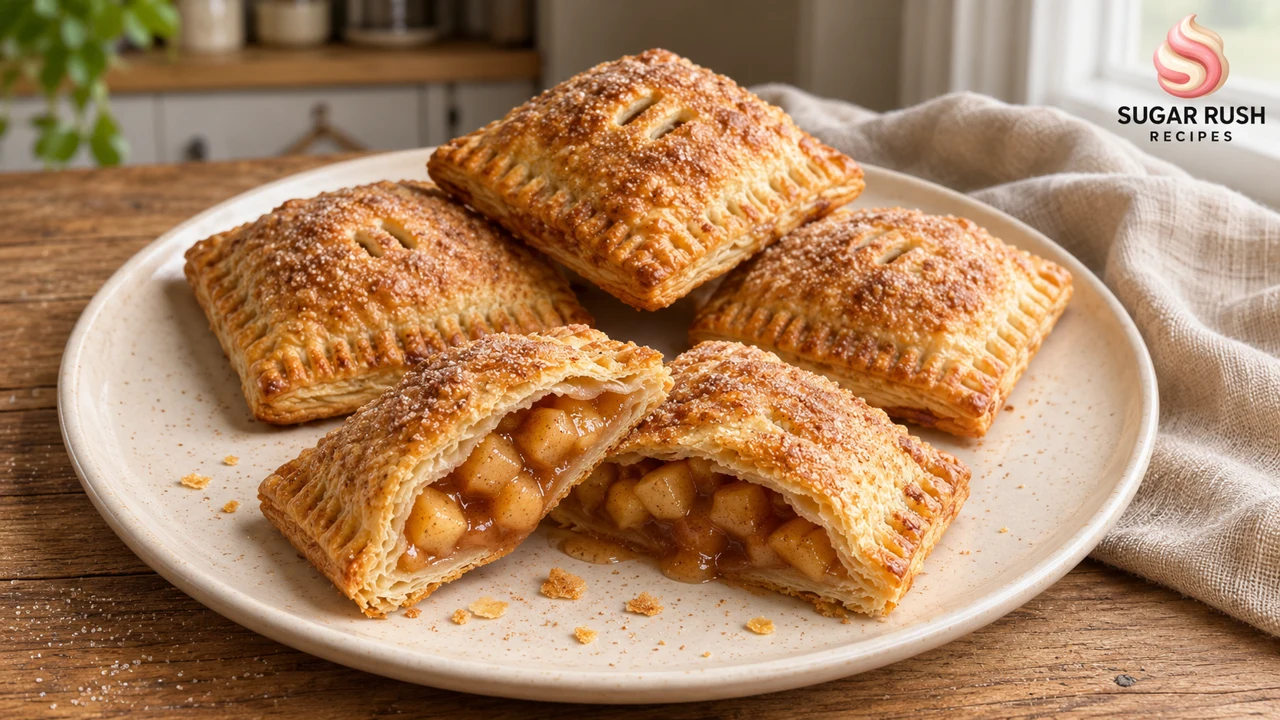
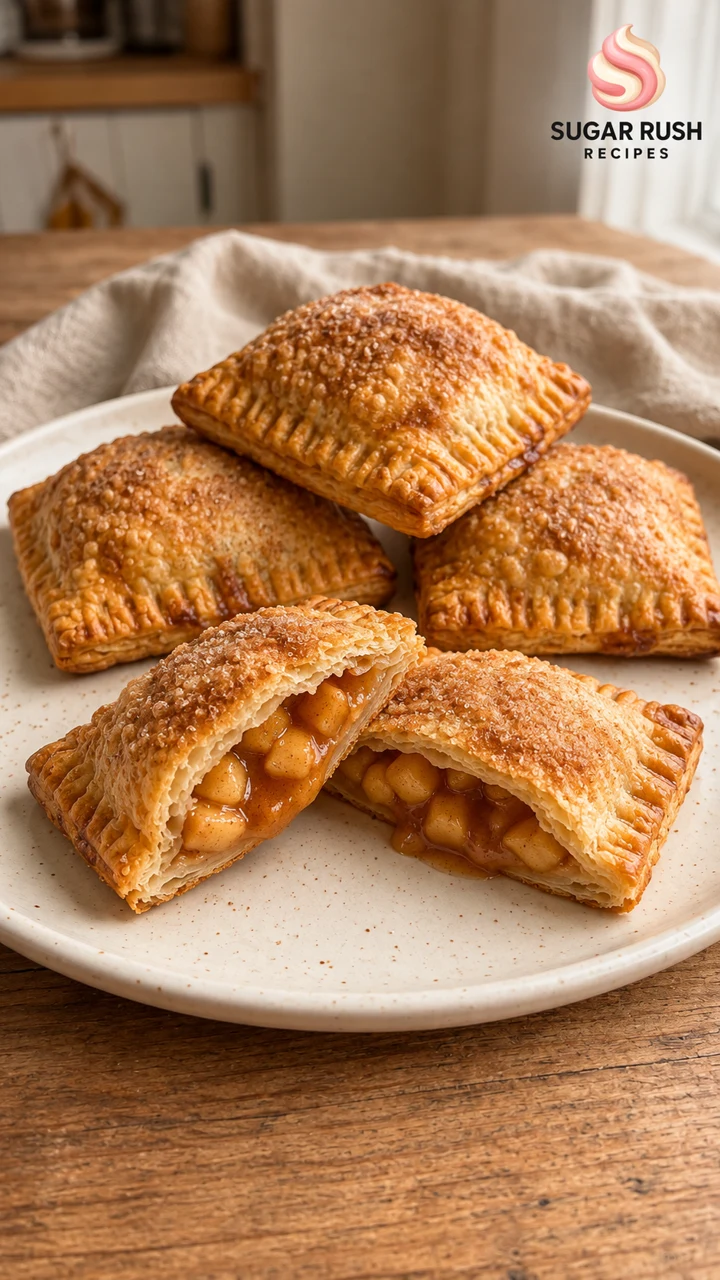
Cinnamon apple pie pockets tuck tender diced apples, brown sugar, and butter inside golden layers of puff pastry. The edges are pressed with a fork, the tops get a light cinnamon-sugar finish, and each pocket opens to a chunky apple center. They have the familiar flavor of apple pie in an individual pastry you can serve on a small plate.
This version keeps the square shape and flaky layers in the Sugar Rush Recipes photo. It uses a cooked apple filling between two matching pastry squares, followed by oven baking. The filling is cooled before assembly, and the shaped pockets get a short refrigerator rest so the pastry stays cold when it reaches the oven.
The supplied image is inspiration for an original editorial recipe, and the process photos are AI-assisted illustrations rather than a kitchen-testing record. The directions below give a specific pastry weight, square size, filling amount, and doneness cues. Expect natural differences in the puff and apple texture rather than an identical copy of every crumb in the photo.
| Active prep | About 30 minutes |
|---|---|
| Filling cooking | About 10 minutes |
| Filling cooling | About 30 minutes, until completely cool |
| Shaped pastry chill | 15 minutes |
| Baking | 25–30 minutes |
| Cooling before eating | At least 15 minutes |
| Total | About 2 hours 5 minutes–2 hours 10 minutes, plus pastry thawing if needed |
| Yield | 9 square pockets |
In This Recipe
- Ingredients and Pastry Size
- How to Make Cinnamon Apple Pie Pockets
- How to Keep the Filling Inside
- Helpful Baking Tools
- Common Problems and Fixes
- Make-Ahead and Storage
- Frequently Asked Questions
- Printable Recipe Card
Ingredients for Cinnamon Apple Pie Pockets
Cinnamon apple filling
- 2 cups (300 g) peeled, cored apples, diced about 1/4 inch
- 2 tablespoons (28 g) unsalted butter
- 1/4 cup (50 g) packed light brown sugar
- 1 teaspoon ground cinnamon
- 2 teaspoons lemon juice
- Pinch of fine salt
- 2 teaspoons cornstarch
- 1 tablespoon (15 ml) cold water
Pastry and finishing
- 2 sheets puff pastry, about 17.3 ounces (490 g) total, thawed but cold
- All-purpose flour, only as needed for dusting
- 1 large egg
- 1 tablespoon (15 ml) water, for egg wash
- 1 tablespoon granulated sugar
- 1/4 teaspoon ground cinnamon
Choose firm apples that hold their shape, such as Granny Smith or Honeycrisp, or use a mixture for a balance of tart and sweet. Measure the peeled and cored fruit rather than counting apples alone, because their sizes vary. Two cups of small dice is the target, not two large apples with their cores included.
The filling cinnamon and the topping cinnamon are separate amounts. Brown sugar belongs in the cooked apples; granulated sugar gives the top a light crunch. The two tablespoons of butter stay in the filling. This recipe does not need another layer of butter brushed over the baked pastry.
Use two puff pastry sheets totaling about 17.3 ounces, or 490 grams. Check the package: some brands sell thicker, larger, or differently weighted sheets. Thaw according to the maker’s directions until the folds can open without cracking, but keep the dough cold. Pie crust, crescent dough, and paper-thin phyllo do not produce the same layers with these directions.
There are two separate tablespoons of water: one makes the cornstarch slurry and one thins the egg wash. Keep them separate when measuring. A little additional water is used only to moisten the pastry borders; the edges should feel lightly damp, not soaked. The filling needs to be thick enough to mound in the center.
How to Make Cinnamon Apple Pie Pockets
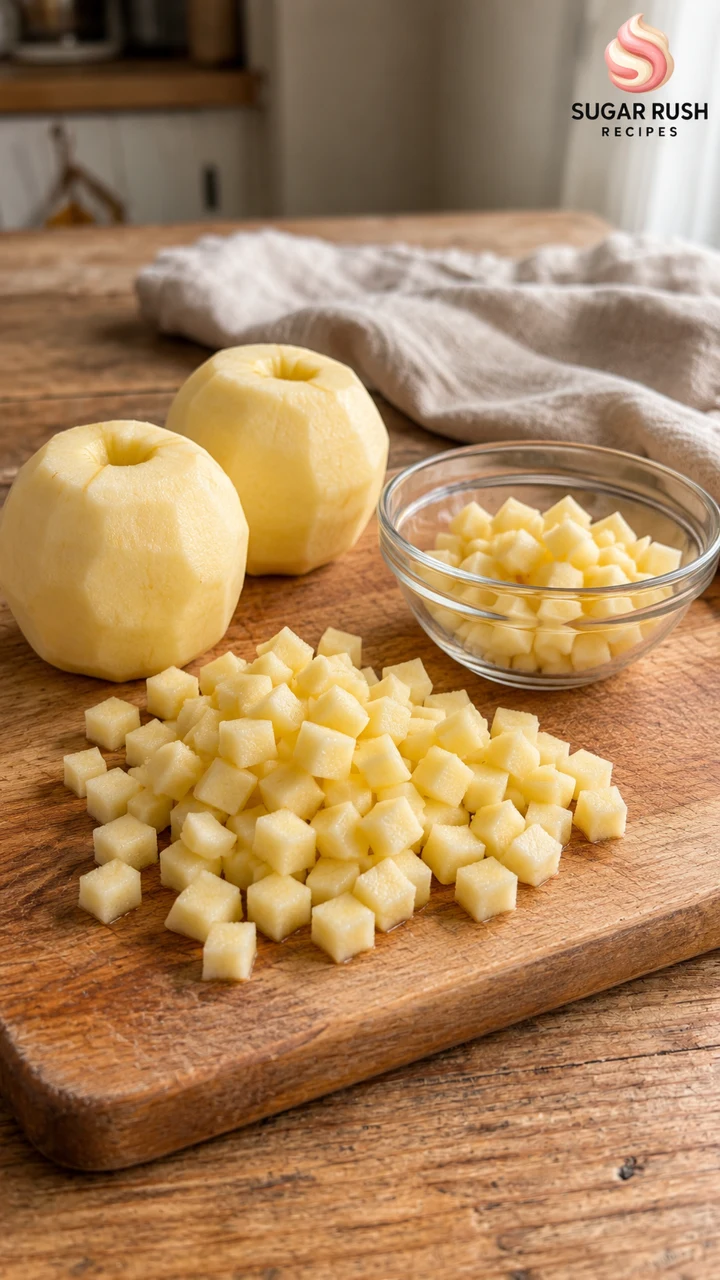
1. Peel and dice the apples
Peel, core, and cut the apples into pieces about one-quarter inch across. Small, similar pieces soften at a similar rate and fit neatly into a modest spoonful of filling. Large wedges create pressure points under the top pastry and make sealing harder.
Measure two cups, about 300 grams, after preparing the fruit. Set out the butter, brown sugar, filling cinnamon, lemon juice, salt, cornstarch, and cold slurry water before turning on the burner. This keeps the thickening step easy to manage.
2. Cook a thick, chunky filling
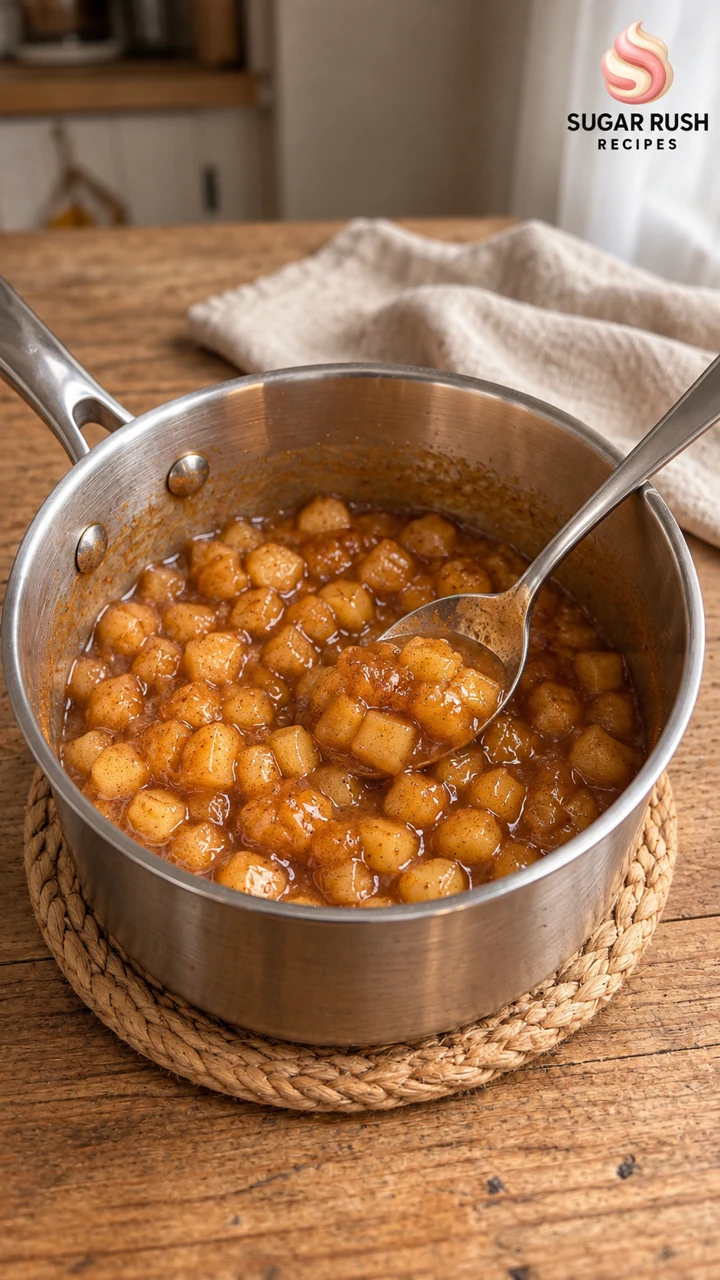
Melt the butter in a medium saucepan over medium heat. Add the apples, brown sugar, cinnamon, lemon juice, and a pinch of salt. Stir frequently for about 8–9 minutes, until the apples are just tender and still hold their shape. If the pan begins to catch before the apples soften, lower the heat rather than letting the sugar burn.
Stir the cornstarch and its tablespoon of cold water until smooth. Add to the apples and simmer gently for about 1 minute, stirring, until the sauce looks glossy and thickened. It should coat the fruit rather than leave a puddle of thin juice. Allow about 10 minutes total stovetop time; a firmer apple may need longer.
Spread the filling into a shallow heatproof dish and cool completely, about 30 minutes. A shallow layer releases heat more readily than a deep saucepan. Warm filling softens the fat in puff pastry and can make the seams difficult to handle. Do not assemble until the apples are cool to the touch.
3. Roll and cut eighteen matching squares
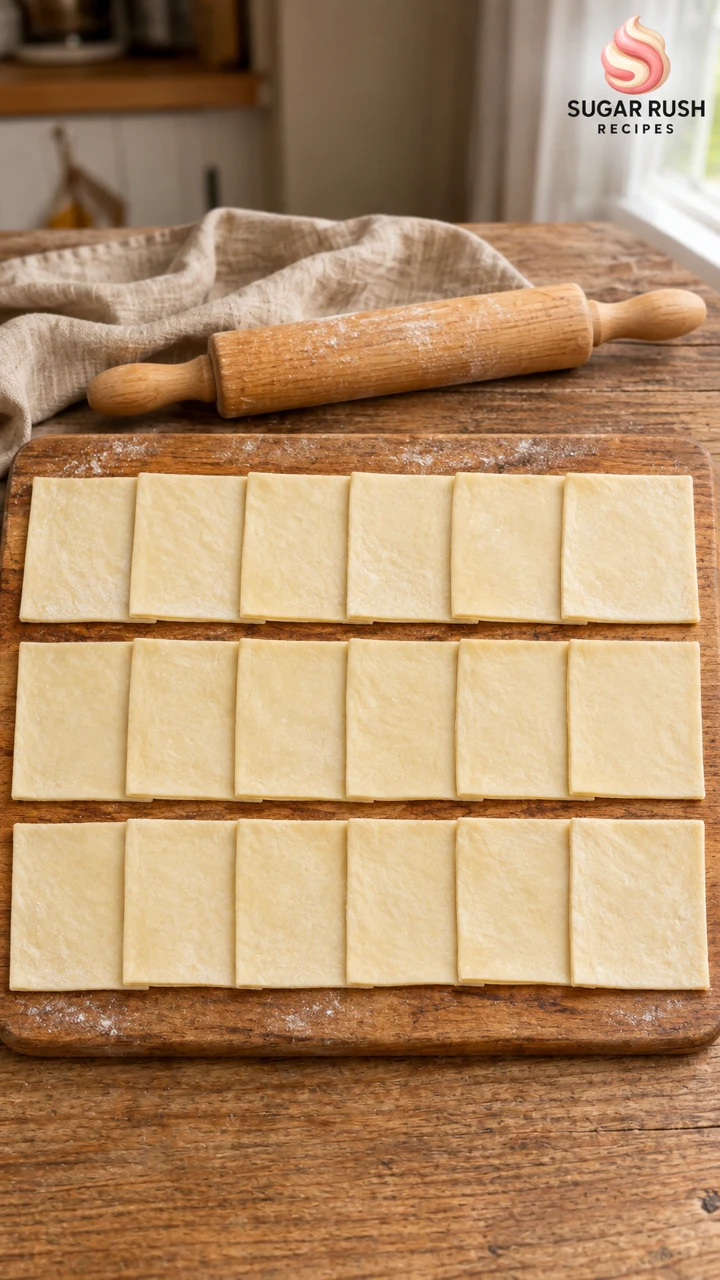
Line two baking sheets with parchment rated for 400°F (200°C). Lightly dust the work surface and rolling pin with flour. Roll each cold pastry sheet into a twelve-inch square, keeping the edges reasonably straight and the thickness even, about one-eighth inch.
Cut each sheet into a three-by-three grid of four-inch squares. The two sheets give eighteen pieces: nine bottoms and nine tops. A ruler helps here because matching edges seal more easily than pieces of different sizes. Brush away loose flour before filling.
If the pastry becomes sticky, floppy, or difficult to lift, place it on a tray and refrigerate briefly until manageable. Work with one sheet while the other stays cold. Do not knead scraps into the main sheets, which can compress their layers.
4. Add a modest mound of cool apples
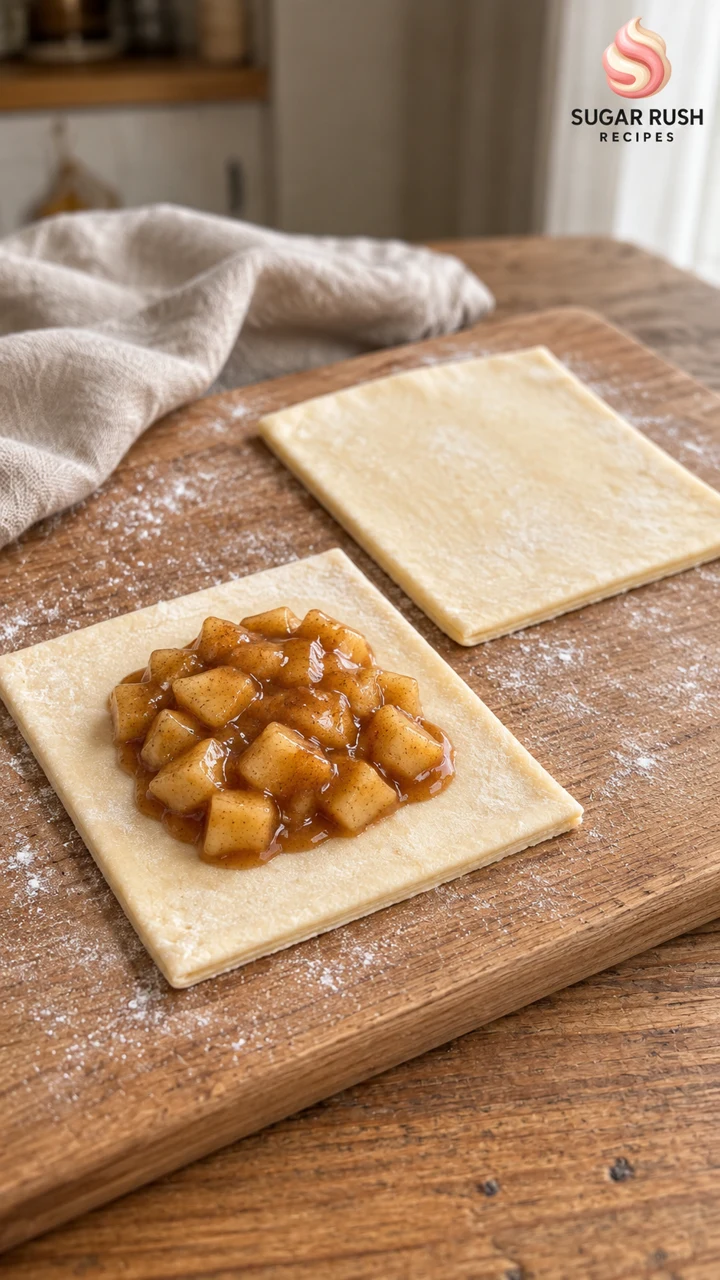
Arrange nine bottom squares on the lined trays. Put about two tablespoons of cooled filling in each center, leaving a clean half-inch border on all four sides. Spoon up fruit with its thick glaze rather than a pool of loose syrup. Keep any extra filling in a separate container.
Use less filling if the top pastry cannot meet the bottom without stretching. The pocket needs room for the fruit and for steam during baking. Wipe away any sauce that touches the sealing border before you add the top square.
5. Seal all four sides, vent, and chill
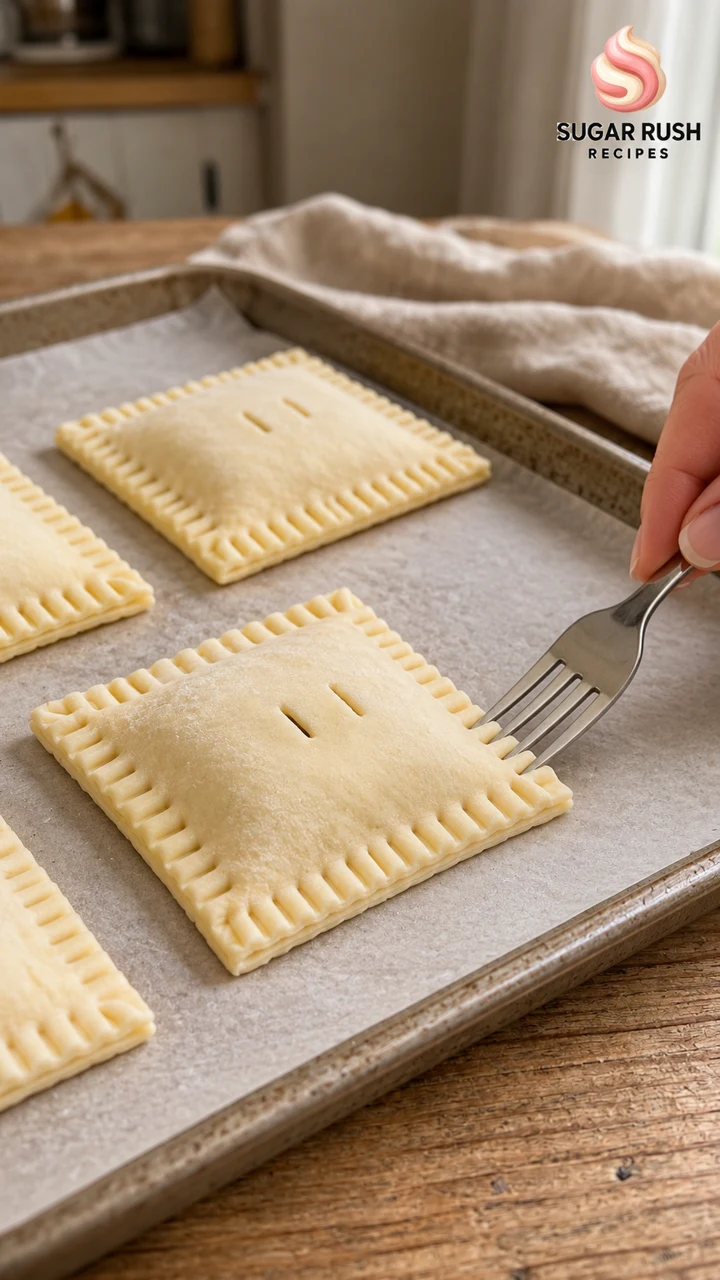
Lightly moisten the clean borders with water. Set a matching pastry square over each apple mound, gently easing out trapped air around the filling. Align the edges and press them together before using a fork to crimp all four sides. Avoid pressing the fork into the filled middle.
Cut two small slits through the top of each pocket to let steam escape. The vents belong in the top layer only. Refrigerate the shaped pockets for 15 minutes while heating the oven to 400°F (200°C). This pause firms the pastry after handling.
For more on keeping pastry cold and finishing hand pies before baking, see King Arthur Baking’s hand pie technique guide. The key idea for this version is simple: cool filling, cold pastry, clean borders, and a complete seal.
6. Brush, sprinkle, and bake
Beat the egg with its separate tablespoon of water. Stir the topping sugar and quarter-teaspoon cinnamon together. Brush a thin coat of egg wash on the tops, avoiding heavy drips onto the cut pastry edges, then sprinkle with the cinnamon sugar.
Leave about two inches between pockets. Bake for roughly 25–30 minutes, until deeply golden, puffed, and set along the sides and underside. If both sheets go in together, use the upper and lower thirds and swap their positions halfway through. A pastry package may specify another baking temperature or time; follow its guidance and check the actual pastry rather than relying only on the clock.
Pale dough at the sides or a damp-looking base means the pockets need more time. If the tops color early, tent loosely with foil while the remaining pastry cooks. A little escaped syrup can darken on the parchment, so judge the pastry itself rather than the color of a spill.
7. Cool before opening the pockets
Transfer to a rack and wait at least 15 minutes before eating. The outside can feel comfortable while the apple filling is still very hot. Open a pocket carefully and check the center before serving it to a child or anyone likely to take a large first bite.
Serve as they are, or put a scoop of vanilla ice cream beside a warm pocket at the table. Add ice cream only to the portions being eaten. Keep the rest separate so leftovers can be stored and reheated without a dairy topping.
How to Keep the Apple Filling Inside
Start with a thick filling and cool it completely. More cornstarch is not the first answer to every leak: warm pastry, dirty borders, excess filling, and trapped steam can also open a seam. The apples should sit in the middle with enough bare pastry around them to press together.
Press with your fingers before crimping with a fork. Crimping marks alone do not guarantee a seal if the two layers never met. Keep the top square relaxed rather than stretching it tightly over a tall mound. If the borders will not align, remove a little filling.
Finally, make small vents and chill the assembled pockets before baking. These steps support the shape, but an occasional small leak is normal with fruit pastry. Let spilled sugar cool before moving it; the cooled pocket can still be served if the pastry has baked through.
Helpful Baking Tools
As an Amazon Associate I earn from qualifying purchases. Product links may earn a commission at no additional cost to you.
A knife, fork, rolling pin, saucepan, parchment-lined baking sheets, and a cooling rack cover the basics. The tools below can help with neat portions and handling; comparable tools you already own are fine.
- OXO bench scraper and chopper — cuts straight pastry edges and lifts squares from the work surface.
- OXO silicone pastry brush — applies a thin coat of egg wash to the tops.
- Cuisinart 1.5-quart saucepan — holds the small batch of diced apple filling.
- OXO silicone everyday spatula — stirs the apples and transfers the thickened filling to a cooling dish.
- Rubbermaid oven-monitoring thermometer — helps check oven air temperature if pastry repeatedly browns before its base cooks.
Common Problems and Fixes
| Problem | Likely cause | What helps |
|---|---|---|
| Filling leaks heavily | Overfilled pocket, sauce on borders, or weak seam | Reduce the mound, clean the borders, press, and crimp fully. |
| Pastry does not puff well | Dough became too warm during assembly | Work cold and chill the shaped pockets. |
| Apples remain firm | Pieces too large or filling undercooked | Dice small and cook just until tender before cooling. |
| Brown top but damp base | Pastry needs longer or oven runs hot | Tent loosely if needed and continue baking until set underneath. |
| Soft leftovers | Moisture collected during storage | Rewarm in the oven on a baking sheet rather than microwaving. |
Make-Ahead, Storage, and Reheating
The filling can be made a day ahead, cooled, covered, and refrigerated. Keep the pastry separate until assembly. Stir the cold filling before measuring it into the pockets; if there is loose liquid, leave that behind rather than pouring it onto the pastry.
For leftovers, cool, cover, and refrigerate within 2 hours. Use within 3 days for best quality. Puff pastry is crispest on the day it is baked, but a short oven reheat helps restore the outside. Place on a baking sheet in a 325°F (165°C) oven for about 8–12 minutes, checking that the center warms through without the top becoming too dark.
Freeze cooled baked pockets individually, then place in a freezer container for up to 2 months for best quality. Thaw in the refrigerator before reheating. Do not freeze them with ice cream on the plate. The FDA’s food-storage guidance explains prompt refrigeration and keeping the refrigerator at 40°F (4°C) or below.
Frequently Asked Questions
Are these baked or fried?
This version is baked. The puff pastry layers brown in the oven; the written directions do not cover frying.
Can I use raw apples inside?
Use the cooked filling specified here. Small precooked pieces fit the pockets and let you confirm tenderness before sealing.
Can I use pie crust instead of puff pastry?
Pie crust makes a different hand pie. It needs its own dough thickness and baking checks, so it is not a direct swap for these quantities and directions.
Why do I need eighteen squares for nine pockets?
Each pocket uses one bottom and one matching top. Both pastry sheets are cut into nine squares, giving eighteen in total.
Should I use every bit of filling?
Only if it fits without straining the seams. About two tablespoons per pocket is a guide; reserve excess filling rather than forcing it inside.
Can I skip the steam vents?
Keep the small top slits. They give steam a route out while the pastry expands and help avoid pressure building at the seams.
More Cozy Baking Ideas
For another buttery cinnamon bake, save these caramel pecan pull-apart rolls. For a warmly spiced cake with a creamy ribbon, try the gingerbread cream cheese swirl cake.
Printable Cinnamon Apple Pie Pockets Recipe
Print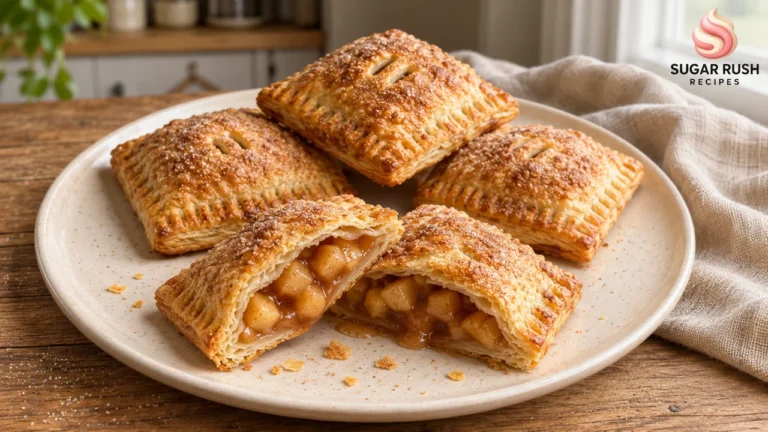
Cinnamon Apple Pie Pockets
Golden square puff-pastry pockets filled with cooked cinnamon apples, brown sugar, and butter, with fork-crimped edges and a cinnamon-sugar finish. Makes 9 baked apple hand pies.
- Total Time: 2 hours 10 minutes
- Yield: 9 pockets
Ingredients
CINNAMON APPLE FILLING
2 cups (300 g) peeled, cored apples, diced about 1/4 inch
2 tablespoons (28 g) unsalted butter
1/4 cup (50 g) packed light brown sugar
1 teaspoon ground cinnamon
2 teaspoons lemon juice
Pinch of fine salt
2 teaspoons cornstarch
1 tablespoon (15 ml) cold water
PASTRY AND FINISHING
2 sheets puff pastry, about 17.3 ounces (490 g) total, thawed but cold
All-purpose flour, only as needed for dusting
1 large egg
1 tablespoon (15 ml) water, for egg wash
1 tablespoon granulated sugar
1/4 teaspoon ground cinnamon
Instructions
1. Thaw the puff pastry according to its package directions, keeping it cold. Peel, core, and dice the apples into roughly 1/4-inch pieces; measure 2 cups (300 g) after preparing them.
2. Melt the butter in a medium saucepan over medium heat. Add apples, brown sugar, filling cinnamon, lemon juice, and salt. Cook, stirring, for about 8–9 minutes, until the apples are just tender but retain their shape.
3. Stir cornstarch with its separate tablespoon of cold water until smooth. Stir into the apples and simmer about 1 minute until glossy and thickened; allow about 10 minutes total stovetop cooking. Transfer to a shallow heatproof dish and cool completely, about 30 minutes. Do not fill pastry with warm apples.
4. Line two baking sheets with parchment rated for 400°F (200°C). On a lightly floured surface, roll each cold pastry sheet into a 12-inch square, about 1/8 inch thick. Cut each into nine equal 4-inch squares, giving 18 squares total. Keep nine for bottoms and nine for tops. Refrigerate pastry whenever it becomes soft or sticky.
5. Place the nine bottom squares on the prepared sheets. Spoon about 2 tablespoons cooled apple filling in the center of each, leaving a clean 1/2-inch border. Reserve extra filling rather than overfilling. Lightly moisten the borders with water.
6. Lay a matching top square over each filled bottom. Gently press out trapped air around the mound, align the edges, and press all four sides together. Crimp with a fork without piercing the filled middle. Cut two small vent slits through each top. Refrigerate the shaped pockets for 15 minutes while preheating the oven to 400°F (200°C).
7. Beat the egg with its separate tablespoon of water. Mix the finishing sugar and 1/4 teaspoon cinnamon. Brush the pocket tops lightly with egg wash, avoiding excess dripping onto the cut edges, then sprinkle with cinnamon sugar. Leave about 2 inches between pockets.
8. Bake for about 25–30 minutes, until the pastry is well puffed, deep golden, and dry and set along the sides and underside. If baking two sheets together, place in upper and lower thirds and swap positions halfway through. Follow the pastry package if it specifies a different baking temperature or timing, and continue until cooked through.
9. Cool on a rack for at least 15 minutes before serving. The fruit filling stays hotter than the crust; check before eating. Serve as they are or with vanilla ice cream added only when serving.
Notes
Makes 9 square hand pies using 18 matching 4-inch pastry squares. This version uses two sheets totaling about 490 g; package weights and sheet dimensions vary, so check before starting. Pie crust, crescent dough, and phyllo are not direct swaps for the stated puff pastry method.
Planning time: 30 minutes active preparation + about 10 minutes stovetop cooking + about 30 minutes filling cooling + 15 minutes shaped-pastry chilling + 25–30 minutes baking + at least 15 minutes cooling before eating. Total about 2 hours 5 minutes–2 hours 10 minutes, plus pastry thawing if needed. Some preparation can overlap filling cooling. The card uses 40 minutes total cooking and the upper bake estimate.
Use firm baking apples such as Granny Smith, Honeycrisp, or a mixture. Cook just until tender; do not mash. Keep the cooled filling thick and the pastry borders clean. Two tablespoons per pocket is a guide: reduce if necessary so the borders meet without stretching or leakage. Save extra filling separately.
Use cold pastry, press all four seams, crimp, vent, then chill before baking. These are oven-baked pockets; do not fry them using these directions. If a little filling escapes, let it cool before removing it from the tray.
Cool leftovers, cover, and refrigerate within 2 hours; use within 3 days for best quality. Rewarm on a baking sheet in a 325°F (165°C) oven about 8–12 minutes, checking that the middle is warm and the pastry crisp. Avoid microwaving if crispness matters. Freeze cooled baked pockets individually for up to 2 months for best quality; thaw in the refrigerator before reheating.
Contains wheat and egg, plus milk when using butter-based puff pastry. Check pastry ingredients for other allergens and choose an option without animal shortening if needed. No alcohol or pork is included in the written recipe. Images are AI-assisted illustrations inspired by the Sugar Rush Recipes reference, with no claim of kitchen testing.
- Prep Time: 30 minutes
- Cooling + Chilling Time: 1 hour
- Cook Time: 40 minutes
- Category: Dessert
- Method: Baking
- Cuisine: American