
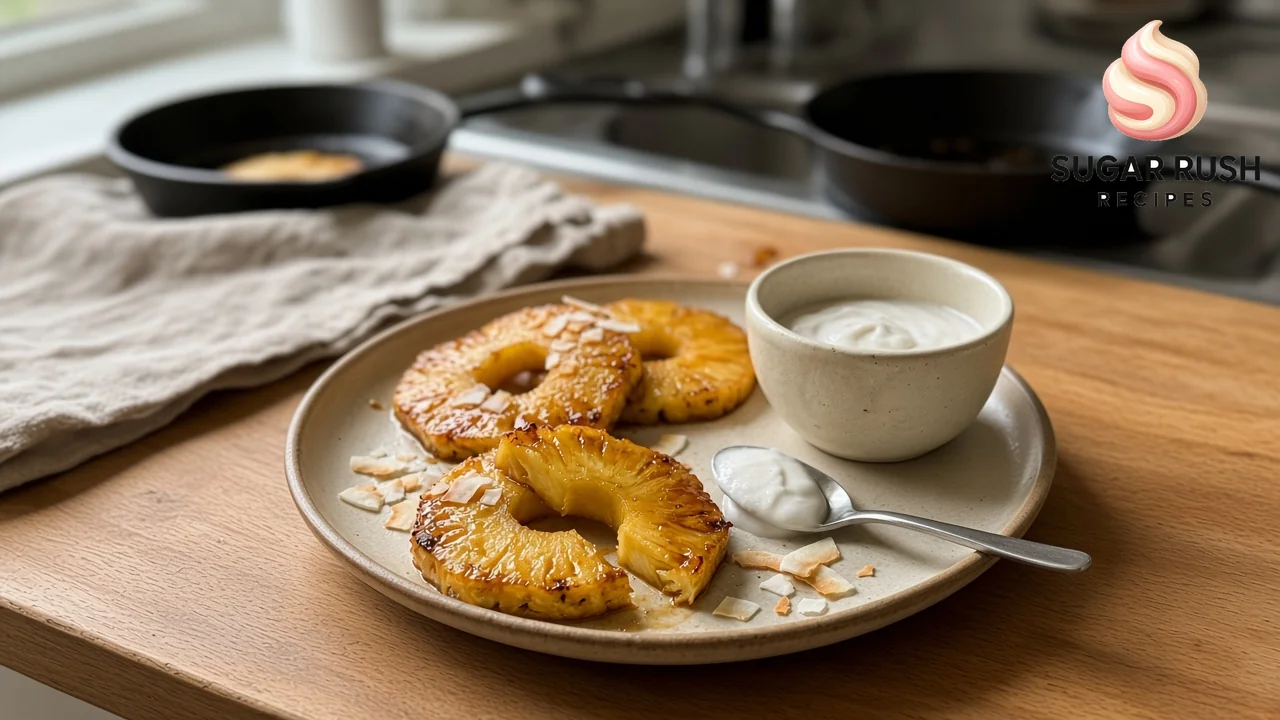
Caramelized pineapple rings are a fast skillet dessert: fresh rings coated in brown sugar and cinnamon, cooked in butter until the edges turn glossy and golden, and the center stays juicy. A small bowl of silky coconut cream dip, plus a scatter of toasted coconut flakes, turns them into a warm tropical plate you can make on a weeknight.
The method follows the Sugar Rush Recipes post: pat the fresh rings dry, coat them in a dry mix of brown sugar and cinnamon, and cook them in a pat of bubbling butter, flipping once, until the outside is caramelized. The dip is chilled unsweetened coconut cream stirred with powdered sugar. Lime zest, which appears in the video but not on the still photo, is optional. If you would rather skip the dip, vanilla ice cream is the other serving the original post suggests, in the same family as the caramelized fruit topping on our old-fashioned caramel apple upside-down cake.
Affiliate Disclosure: As an Amazon Associate I earn from qualifying purchases. Product links in this article may earn a commission at no additional cost to you.
What’s in This Post
- Why These Caramelized Pineapple Rings Work
- Ingredients You’ll Need
- Helpful Tools
- How to Make Caramelized Pineapple Rings
- Tips for Golden Edges and a Juicy Center
- Easy Variations
- What to Serve With Them
- Storage and Make-Ahead
- FAQ
Why These Caramelized Pineapple Rings Work
Fresh pineapple already has enough natural sugar to brown, but a dry coat of brown sugar and cinnamon gives you a quicker, more even crust. The sugar melts into the butter and clings to the fruit instead of washing off into a thin syrup. That is why the rings are patted dry first: surface moisture steams the fruit and dissolves the coating before it can caramelize.
Medium heat is the other half of the method. High heat burns the sugar before the pineapple warms through, and you end up with a bitter, dark crust around a cool center. At a steady medium, the butter foams, the sugar melts, and each side takes 2 to 3 minutes to turn deep golden. You get the contrast the post promises: a caramelized outside and a juicy pineapple center.
The coconut cream dip stays simple. Unsweetened coconut cream, chilled until the thick solid separates from the liquid, stirs into a silky spoonable dip with a little powdered sugar. It is cooler and richer than the hot fruit, and toasted coconut flakes on the plate echo that flavor. Lime zest is a bright optional finish, not a requirement.
Ingredients You’ll Need
Fresh pineapple, 1 medium, cut into 6 rings about 1/2 inch thick. The original post does not give amounts. Six half-inch rings is a practical yield from the center of one pineapple: two rings as a lighter serving, or three as a more generous one. Thicker rings, around 3/4 inch, stay juicier in the middle but need a little longer in the pan.
Unsalted butter, 3 tablespoons, divided. The video starts with a rectangular pat of butter melting in the middle of the skillet, then cooks three rings at a time. A generous 1 1/2 tablespoons per batch is enough to foam around the fruit without deep-frying it. Salted butter works; skip the optional pinch of salt in the sugar mix.
Packed light brown sugar, 1/4 cup, and ground cinnamon, 3/4 teaspoon. Stir them together in a shallow bowl and dip both sides of each ring, shaking off the excess. Light brown sugar caramelizes cleanly; dark brown sugar is fine if you want a deeper molasses note. A pinch of kosher salt is optional and is not in the original post; it just keeps the coating from tasting flat.
Unsweetened coconut cream, 1/2 cup (120 g) of the thick, chilled solid. Refrigerate a can of unsweetened coconut cream, or a can of full-fat coconut milk, overnight without shaking it. Scoop only the firm white layer and leave the clear liquid behind (save that liquid for a smoothie). This is unsweetened coconut cream, not sweetened cream of coconut, which is a syrupy mixer and would make the dip cloying. If a 13.5- to 14-ounce can gives you more than 1/2 cup of solid cream, measure 1/2 cup and keep the rest for another batch.
Powdered sugar, 2 tablespoons, and optional lime zest, 1/2 to 1 teaspoon. The video tips a mound of powdered sugar and green lime zest into the cream and stirs them with a fork. The still photo of the finished plate shows a plain white dip with no visible zest, so the zest is treated here as optional. Start with 2 tablespoons of sugar and taste; add a little more if you want it sweeter. Toasted unsweetened coconut flakes, about 3 tablespoons, go on the plate as a garnish. If your flakes are raw, toast them in a dry skillet for 2 to 3 minutes over medium heat, stirring, until the edges turn golden.
Helpful Tools
A 10- or 12-inch skillet is the cooking pan. Cast iron holds heat evenly and gives you a deeper golden crust, which is why a Lodge pre-seasoned 12-inch cast-iron skillet (this model includes a silicone handle holder) is a useful size: you can cook the six rings in two batches of three, as the original video does, or fit four in a single layer. A 10-inch skillet works the same way with batches of three. A heavy nonstick skillet also works if that is what you have.
A sharp chef’s knife is enough to peel the pineapple, cut 1/2-inch rounds, and punch out the core. An OXO Good Grips stainless steel pineapple corer and slicer (this ratcheting model cores and cuts measured rings from a whole peeled pineapple in one motion) is a useful shortcut. A thin slotted spatula or fish turner slides under a fragile ring and lets the extra butter drain back into the pan.
How to Make Caramelized Pineapple Rings
If you have not already chilled the coconut cream, do that first, ideally overnight. When you are ready to cook, peel and core the pineapple and cut it into 6 rings about 1/2 inch thick. Spread the rings on a board or a plate and pat both sides dry with a paper towel.
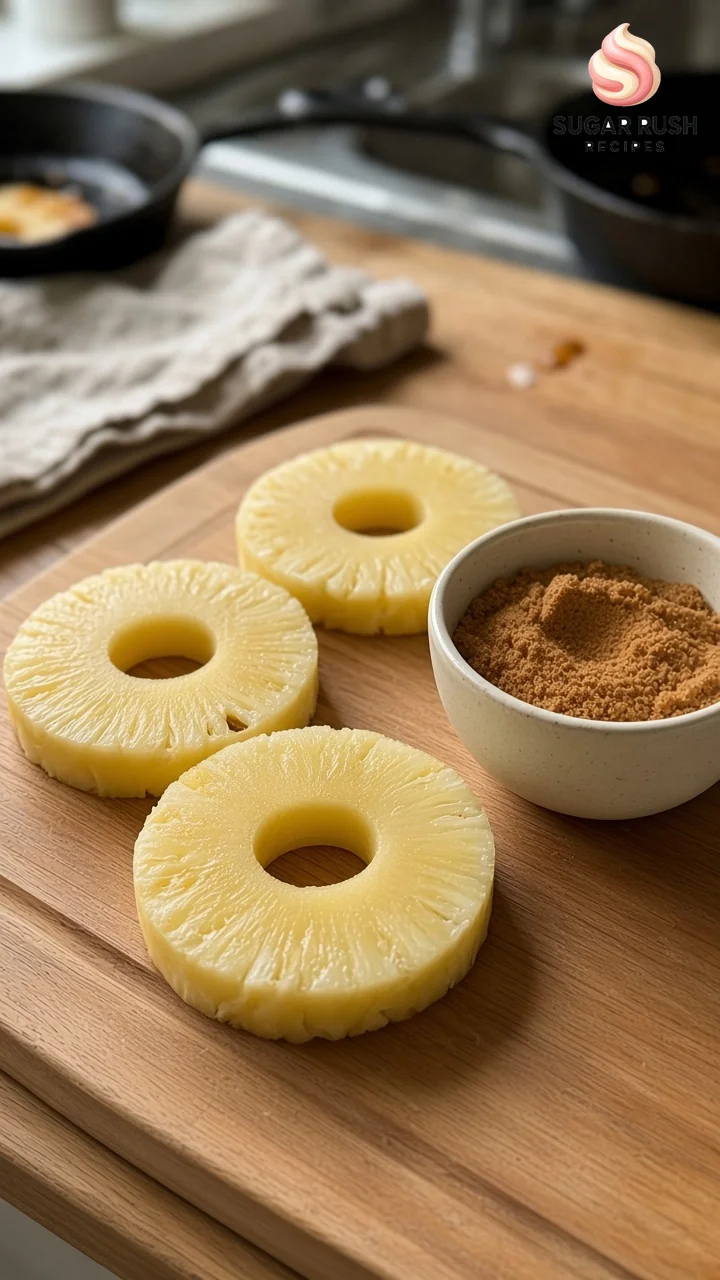
Stir the brown sugar and cinnamon together in a shallow bowl. Dip each ring in the mixture, coating both sides, and shake off any thick clumps so you have an even, thin layer. You may not use every bit of the sugar; keep what is left to sprinkle into the pan if a ring looks bare.
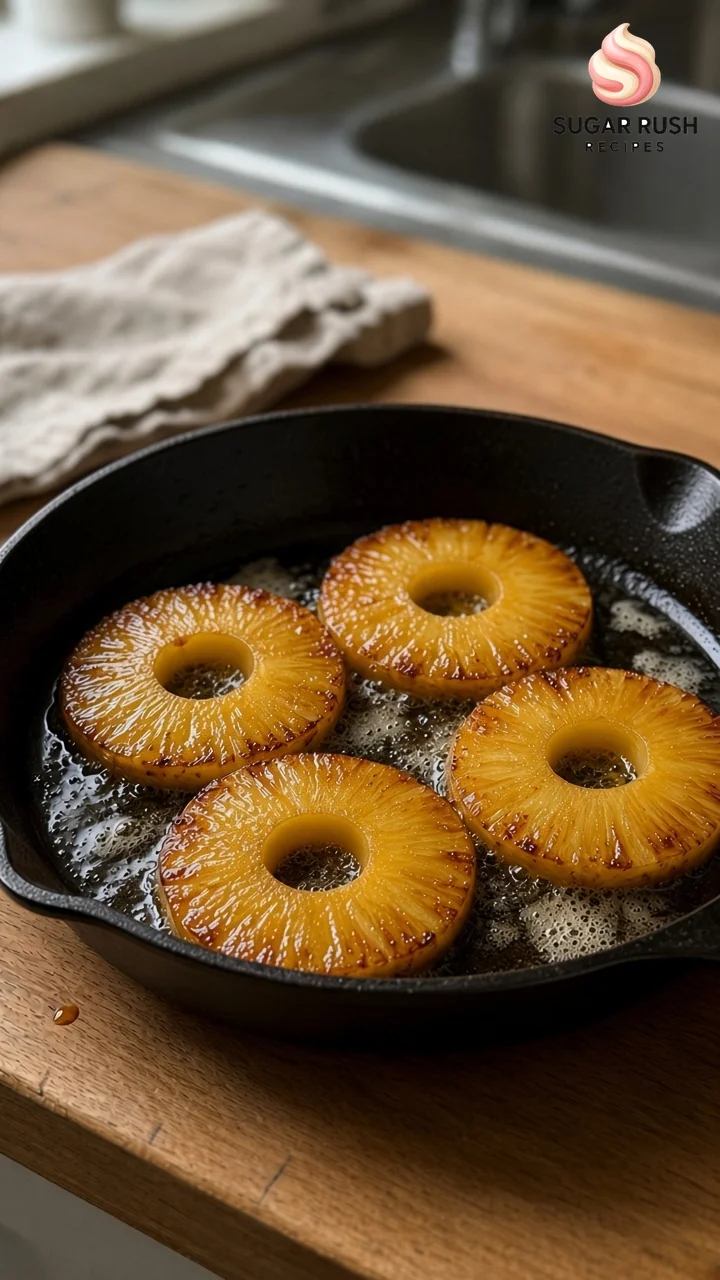
Set a 10- or 12-inch skillet over medium heat and add 1 1/2 tablespoons of the butter. When it has melted and just started to foam, lay in as many rings as will fit in a single layer without overlapping, usually three in a 10-inch pan. Cook undisturbed until the undersides are deep golden and the sugar has melted into a glossy coat, 2 to 3 minutes. If the sugar darkens in spots before the fruit colors, turn the heat down slightly. Flip with a slotted spatula and cook the second side the same way, another 2 to 3 minutes. Transfer the finished rings to a warm plate and repeat with the remaining butter and rings.
While the second batch cooks, or just before you start the pan, make the dip. Open the chilled can without shaking it, scoop 1/2 cup of the thick coconut cream into a bowl, and leave the liquid behind. Stir in the powdered sugar, and the lime zest if you are using it, with a fork until the dip is smooth and silky. You can also beat it briefly with a whisk or a hand mixer for a slightly fluffier texture; Minimalist Baker’s coconut whipped cream method is a useful reference if you want soft peaks instead of a spoonable dip. Taste and add a pinch more sugar if you like.
Plate the warm rings with a small bowl of the coconut cream dip and a scatter of toasted coconut flakes. Serve right away, while the edges are still glossy and the centers are hot and juicy.
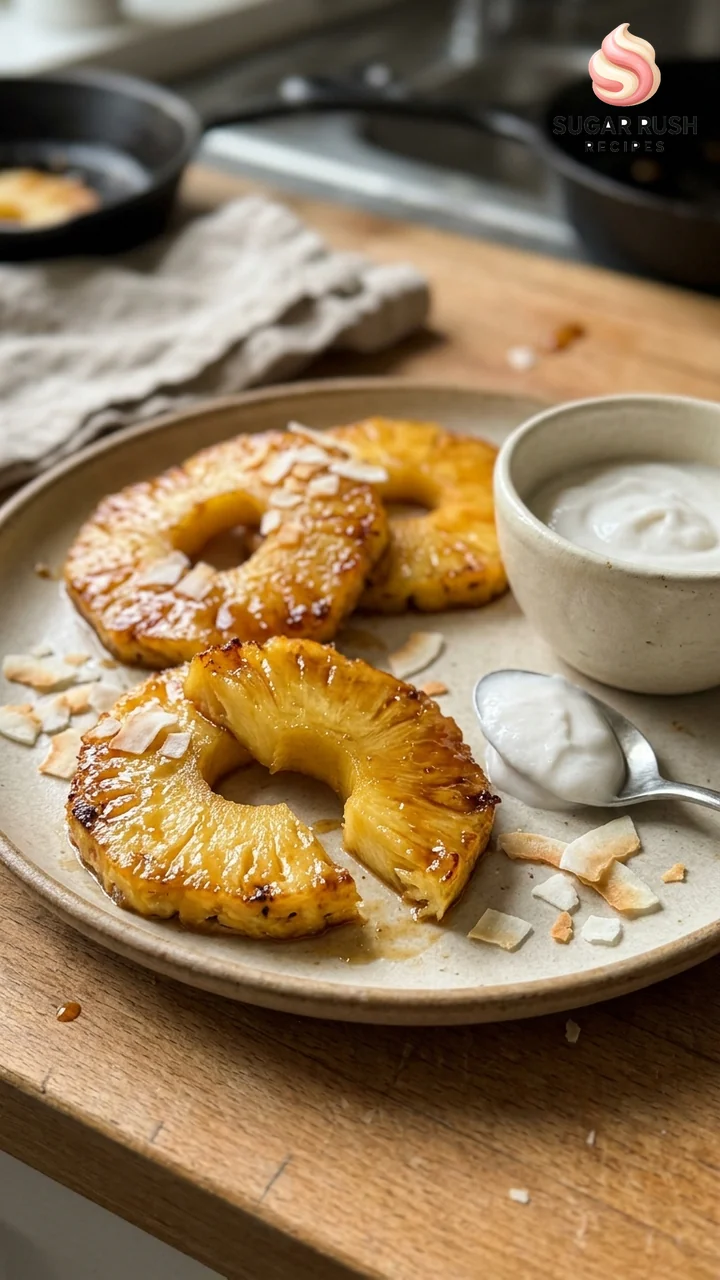
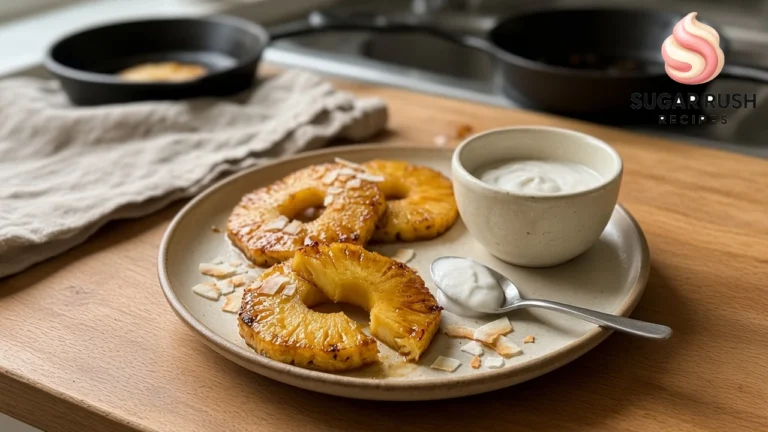
Caramelized Pineapple Rings with Coconut Cream Dip
Fresh pineapple rings coated in brown sugar and cinnamon, cooked in butter until golden and juicy, and served with a silky coconut cream dip and toasted coconut flakes.
- Total Time: 30 minutes
- Yield: 6 rings (2 to 3 servings)
Ingredients
For the caramelized pineapple rings:
1 medium fresh pineapple, peeled, cored, and cut into 6 rings about 1/2 inch thick
3 tablespoons unsalted butter, divided
1/4 cup packed light brown sugar
3/4 teaspoon ground cinnamon
Pinch of kosher salt (optional)
For the coconut cream dip:
1/2 cup (120 g) chilled unsweetened coconut cream (the thick solid from 1 refrigerated can)
2 tablespoons powdered sugar
1/2 to 1 teaspoon finely grated lime zest (optional)
3 tablespoons toasted unsweetened coconut flakes, for garnish
Instructions
Refrigerate a can of unsweetened coconut cream or full-fat coconut milk overnight, unopened and unshaken. Peel, core, and slice the pineapple into 6 rings about 1/2 inch thick, and pat both sides dry with a paper towel.
Stir the brown sugar, cinnamon, and optional salt in a shallow bowl. Dip both sides of each ring in the mixture and shake off the excess.
Melt 1 1/2 tablespoons of the butter in a 10- or 12-inch skillet over medium heat. When it foams, add as many rings as will fit in a single layer (usually 3 in a 10-inch pan). Cook undisturbed until deep golden, 2 to 3 minutes per side. Transfer to a warm plate and repeat with the remaining butter and rings.
Open the chilled can without shaking it and scoop 1/2 cup of the thick coconut cream into a bowl, leaving the liquid behind. Stir in the powdered sugar, and the lime zest if using, until the dip is smooth and silky.
Plate the warm rings with the coconut cream dip and a scatter of toasted coconut flakes. Serve right away.
Notes
Timing: 20 minutes active prep + 10 minutes cooking = 30 minutes, once the coconut cream can has been chilled. The overnight chill is not included in the total time; start the can the day before.
The original post and reel give no quantities. The amounts, 6-ring yield, and 2- to 3-minute cook per side are researched estimates. A 10-inch skillet usually holds 3 rings at a time (two batches); a 12-inch skillet can hold 4 in a single layer.
Lime zest appears in the video but not on the still photo of the finished plate; it is optional. A pinch of salt in the coating is also optional and is not in the original post.
Use unsweetened coconut cream, not sweetened cream of coconut. If the scooped cream is very stiff, stir in a teaspoon or two of the reserved coconut liquid.
If your coconut flakes are raw, toast them in a dry skillet over medium heat for 2 to 3 minutes, stirring, until the edges are golden, and add that time to the cook time.
Nutrition is an estimate for 1 of 3 servings (2 rings with a share of the dip and toasted coconut). The original plate shows 3 rings, which would be 1 of 2 more generous servings.
- Prep Time: 20 minutes
- Cook Time: 10 minutes
- Category: Dessert
- Method: Skillet
- Cuisine: American
- Diet: Vegetarian
Tips for Golden Edges and a Juicy Center
Dry fruit is the difference between a seared ring and a stewed one. After you slice the pineapple, press both sides with a paper towel. A wet ring dilutes the sugar coating and can make the butter spit.
Stay at medium heat, and give the first side time to set before you peek. If you move the rings too soon, the coating tears and sticks to the pan. A thin, flexible spatula helps you lift an edge to check the color. If the butter and sugar start to look dark and bitter rather than amber, lower the heat and, if needed, slide the finished rings out and wipe the skillet before the next batch.
Do not crowd the pan. Rings that overlap will steam on the edges and will not brown evenly. Two batches are faster than they sound, and the first rings can wait on a warm plate for a few minutes. Spoon a little of the pan juices over them if you want extra gloss.
For the dip, keep the can cold and scoop only the solid cream. If the cream seems stiff or slightly grainy, stir in a teaspoon or two of the reserved coconut liquid until it turns silky. If it seems loose, chill the bowl for 10 minutes. Do not use cream of coconut (the sweetened mixer) in place of unsweetened coconut cream.
Easy Variations
The original post asks whether you would eat these with coconut cream or vanilla ice cream, and ice cream is the most direct swap. Skip the dip, or serve both, and add a spoonful of the warm pan juices over the ice cream. A small scoop of coconut sorbet is another cold option if you want to stay dairy-free on the plate as well as in the dip.
A splash of dark rum or a few drops of vanilla in the pan during the last 30 seconds of cooking is a classic addition, though it is not in the original post. Ground ginger or a little freshly grated nutmeg can stand in for part of the cinnamon. If you want a dairy-free skillet too, use a plant butter that browns reasonably well, and keep the heat at medium so the sugar does not scorch.
Leftover rings are good the next morning over yogurt or pancakes, or next to our pineapple right side up cheesecake. The dip also sits nicely with other coconut sweets, including our two-ingredient no-bake coconut bars.
What to Serve With Them
These are at their best as soon as they come out of the skillet, with the coconut cream dip and toasted flakes, or with a scoop of vanilla ice cream. Two rings make a light dessert for three people; three rings, as on the original plate, is a more generous serving for two. A little extra lime zest over the dip is a nice finish if you used zest in the cream.
They also work as a warm topping for pound cake or waffles. If you want a make-ahead coconut sweet or a baked caramelized-fruit dessert on the same table, the no-bake coconut bars and the caramel apple upside-down cake are good companions.
Storage and Make-Ahead
The coconut cream can must be chilled ahead, preferably overnight, so that is the one true make-ahead step. You can also mix the dip up to a day in advance, cover it, and keep it in the refrigerator; stir it again before serving. The brown sugar and cinnamon can be mixed and held in a small covered bowl for a day or two.
The pineapple is best cooked just before you eat it. Leftover rings can be cooled, covered, and refrigerated for up to 2 days, then rewarmed gently in a skillet over low heat. The coating will be a little softer the second time. Store leftover dip, covered, in the refrigerator for up to 2 days.
This is a dairy dessert because of the butter, even though the dip itself is dairy-free. Do not leave leftover rings or dip at room temperature for more than 2 hours, or 1 hour if the room is above 90°F.
FAQ
Can I use canned pineapple rings?
Yes, if they are well drained and patted very dry. Canned rings are already softer and often sweeter than fresh, so they brown faster and will not have the same juicy, firm center. Watch the heat closely and start checking at 1 1/2 to 2 minutes per side. Fresh pineapple is still the better match for this recipe.
What is the difference between coconut cream and cream of coconut?
Unsweetened coconut cream (or the thick solid from a chilled can of full-fat coconut milk) is what you want for this dip. Cream of coconut is a sweetened, syrupy product used in drinks, and it will make the dip much sweeter and looser. If your can is labeled only “coconut milk,” choose a full-fat one, chill it overnight, and scoop the solid cream from the top.
Do I have to add lime zest?
No. The video mixes lime zest and powdered sugar into the coconut cream, but the still photo of the finished plate shows a plain white dip with no visible zest. The recipe treats the zest as optional. If you like a little brightness against the caramelized fruit, start with 1/2 teaspoon and add more to taste.
How do I keep the brown sugar from burning?
Use medium heat, not high, and pat the pineapple dry so the coating can brown instead of steaming off and then scorching in a wet pan. Let the first side sit for a full 2 to 3 minutes before you flip. If the butter and sugar start to look very dark, lower the heat and move the rings to a plate. Wipe the skillet before you start the next batch if any burnt bits remain.
Can I make these ahead?
You can chill the coconut cream and mix the dip a day ahead, and you can cut and dry the pineapple rings a few hours ahead, covered in the refrigerator. Cook the rings just before serving so the edges stay glossy and the centers stay juicy. Leftovers reheat gently, but they are at their best from the skillet.