
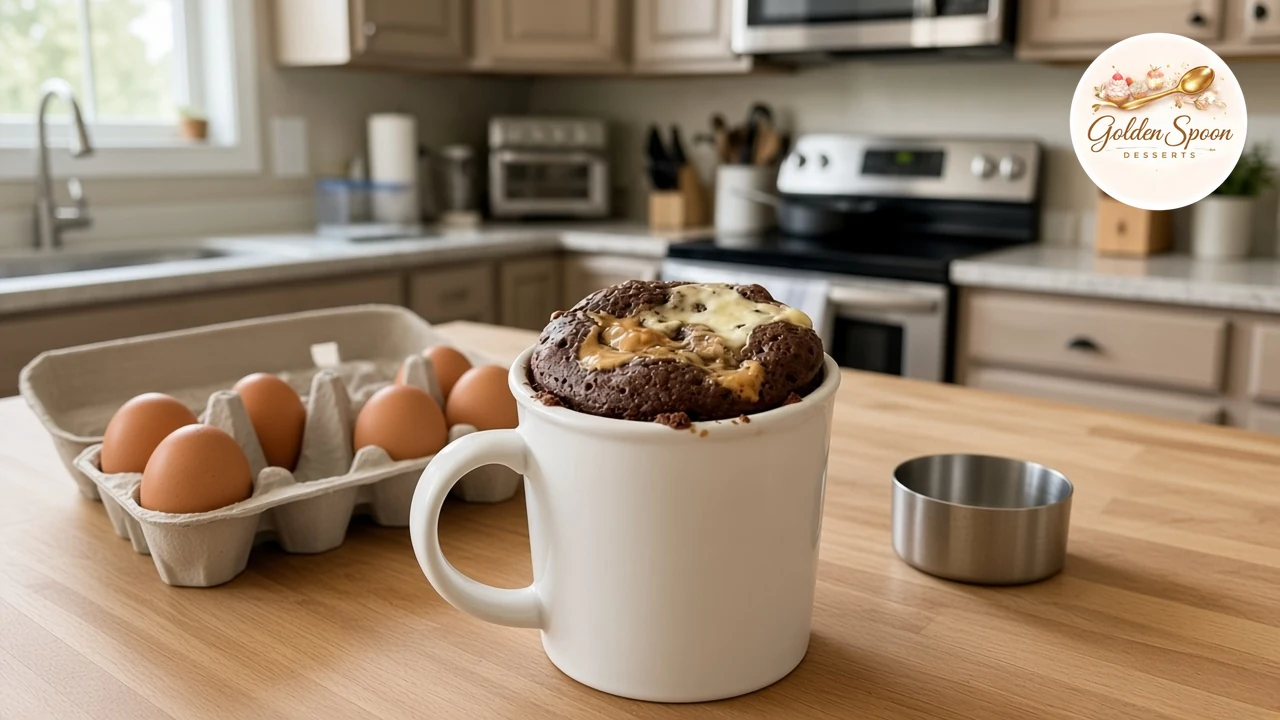
This chocolate peanut butter cheesecake mug cake is the answer to that late-evening craving when you want something rich and chocolatey but do not want a whole pan of brownies sitting on the counter. Blended cottage cheese gives it a soft, cheesecake-like crumb, a ribbon of peanut butter runs through the middle, and a little cream cheese topping finishes it off. It bakes in the microwave in about two minutes and is sweetened with allulose instead of granulated sugar.
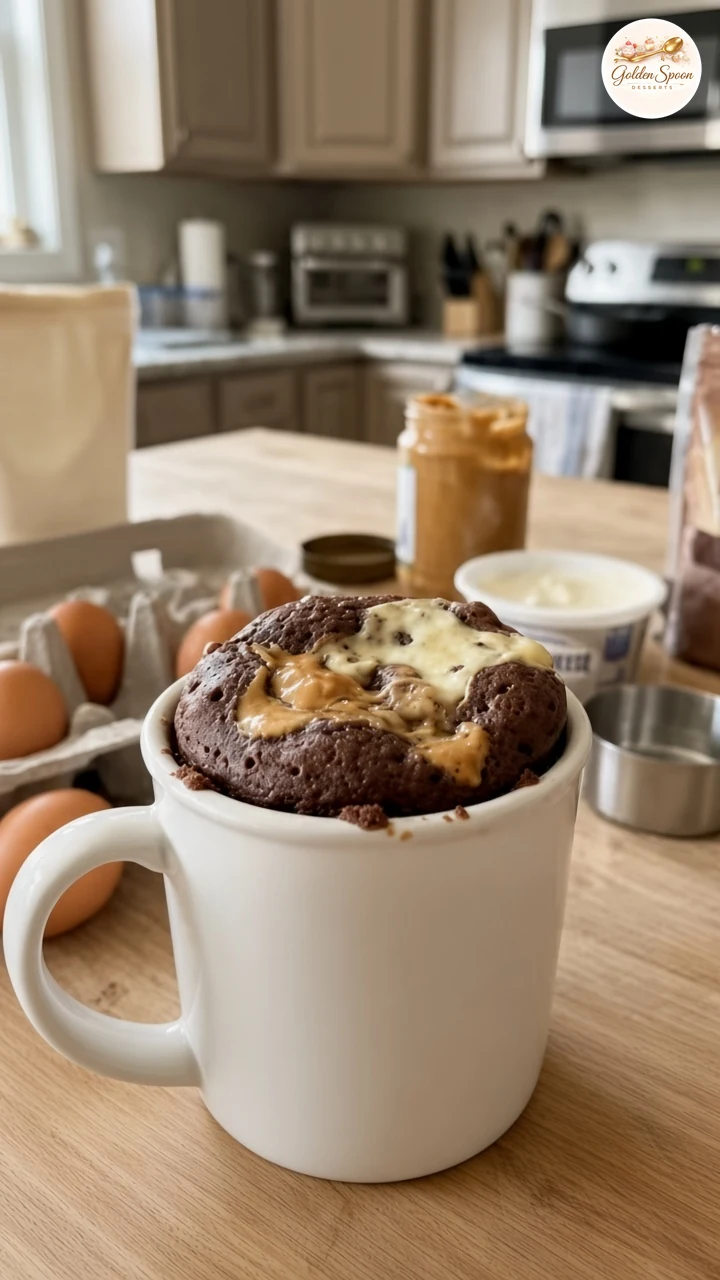
This recipe is adapted from a post shared by Golden Spoon Desserts on Facebook. RecipesMind rewrote the method, enlarged the mug size so the batter cannot overflow, added microwave-wattage timing and food-safety doneness checks, and clarified the sugar-free wording. It has not been kitchen-tested by RecipesMind, so rely on the visual cues and a thermometer as well as the clock. Images are AI-generated recipe illustrations based on the post, not photographs of a kitchen test.
In this article
Why This Chocolate Peanut Butter Cheesecake Mug Cake Works
Most mug cakes are just a scaled-down cake batter, and they can turn rubbery fast. This one leans on cottage cheese and an egg instead. Blended until completely smooth, cottage cheese behaves a lot like the cream cheese in a baked cheesecake: it keeps the crumb tender and moist, and it adds protein without any flour.
Almond flour gives the cake body, cocoa powder brings deep chocolate flavor, and a spoonful of protein powder helps it hold its dome. Baking powder adds a little lift so the texture lands somewhere between a fudgy brownie and a soft cheesecake. The peanut butter swirl, layered in the middle and on top, stays creamy and makes every spoonful taste like a peanut butter cup.
What “Sugar-Free” Means Here
“Sugar-free” in this recipe means no added granulated sugar. The cake is sweetened with allulose, a rare sugar that tastes like table sugar but is about 70 percent as sweet. The U.S. Food and Drug Administration allows allulose to be left out of “Total Sugars” and “Added Sugars” on Nutrition Facts labels and counted at about 0.4 calories per gram.
That does not make the dessert carb-free or calorie-free. Allulose still counts toward total carbohydrates on a label, and the cottage cheese, peanut butter, almond flour, and cream cheese bring natural sugars, fat, and calories of their own. Large amounts of allulose can also upset some stomachs. If you follow a medical diet or manage blood sugar, check with your health care provider about whether this treat fits your plan.
Allulose also browns faster than sugar and keeps baked goods very moist. In the microwave that mostly means the top can look slightly damp even when the cake is done, so judge doneness by the checks in Step 3 rather than by how dry the surface looks.
Ingredients for the Mug Cake
Cottage cheese: Full-fat or 2 percent small-curd cottage cheese gives the creamiest result. It must be blended completely smooth, or you will see little white curds in the finished cake.
Egg: One large egg sets the cake. Because it is an egg-based batter, it has to be cooked all the way through (more on that below).
Almond flour: Use blanched, finely ground almond flour, not coarse almond meal.
Unsweetened cocoa and vanilla protein powder: Natural or Dutch-process cocoa both work. An unsweetened whey or plant-based vanilla protein powder is fine; if you skip it, add another tablespoon of almond flour.
Natural creamy peanut butter: The kind made with peanuts and salt stirs smoothly into the swirl. Stir the jar well first so the oil is mixed back in.
Allulose: Granulated allulose goes into the batter and swirl; powdered allulose dissolves smoothly in the topping. A monk fruit and allulose blend also works, though the sweetness may differ slightly.
Cream cheese and almond milk: Softened brick cream cheese and a splash of unsweetened almond milk (or any milk) make the topping.
Allergy note: This recipe contains peanuts, tree nuts (almond flour and almond milk), milk, and egg, all among the major food allergens identified by the FDA. Sunflower seed butter can replace the peanut butter, but almond flour is harder to swap in a nut-free kitchen.
Helpful Tools for Microwave Mug Cakes
As an Amazon Associate, RecipesMind earns from qualifying purchases. The links below are affiliate links; buying through them costs you nothing extra. Equipment you already own works fine if it does the same job.
Size matters more than anything here. The batter plus swirl fills about 1¼ cups, so choose a microwave-safe mug that holds at least 14 ounces, ideally 16, like these 16-ounce white porcelain mugs. Avoid mugs with metallic glaze or trim.
A Magic Bullet personal blender turns the cottage cheese silky in about 30 seconds and its short cup is the right size for one serving. Exact OXO magnetic measuring spoons keep the small amounts of baking powder and cocoa accurate, which matters a lot in a single-serving cake.
An instant-read thermometer like the TempPro TP19H is the easiest way to confirm the egg-based center reached 160°F. For the topping, an OXO Good Grips mini whisk fits a small bowl, and an Ateco 4.5-inch offset spatula spreads it neatly inside the rim of a mug. If you want a smoother topping, Wholesome Yum powdered allulose dissolves without any grit.
Step 1: Blend the Batter
Lightly grease the inside of your mug with butter or a quick spray of oil. In a personal blender cup or a tall container for an immersion blender, combine the cottage cheese, egg, 2 tablespoons granulated allulose, almond flour, protein powder, cocoa powder, 1 tablespoon peanut butter, baking powder, vanilla, and a pinch of salt.
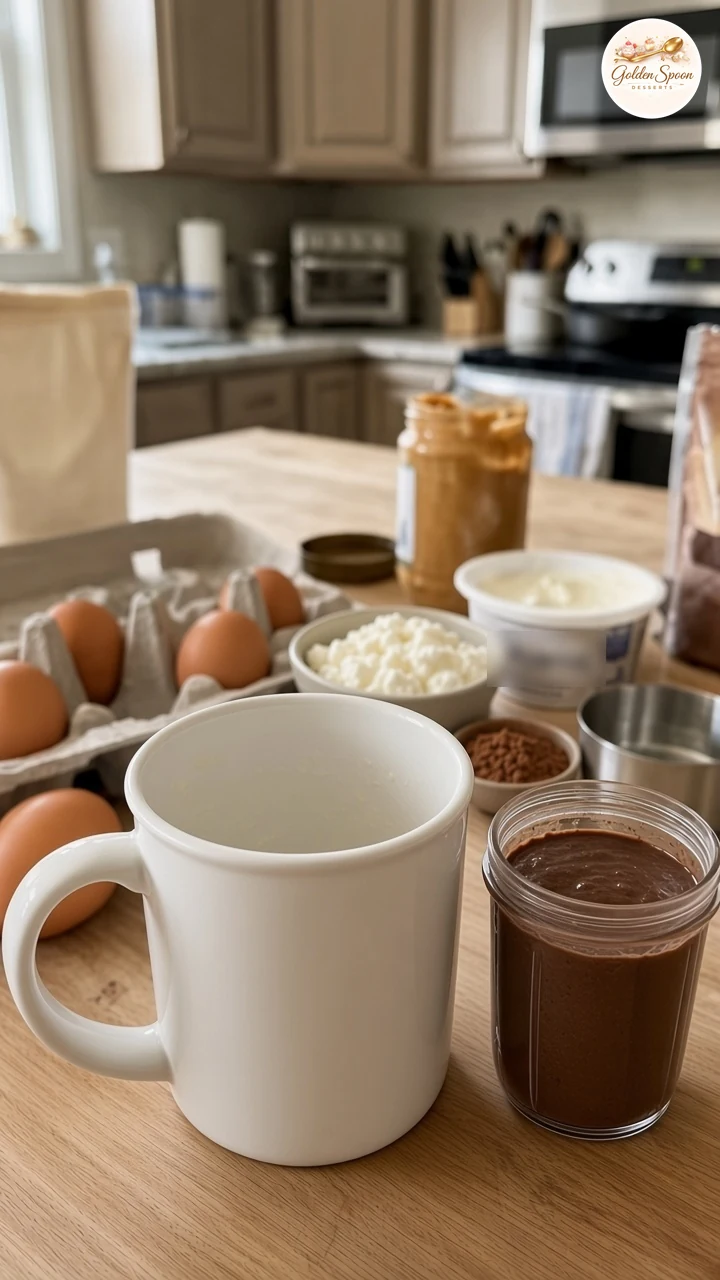
Blend for 20 to 30 seconds, scraping down once, until the batter is completely smooth and glossy with no visible curds. It will be thick but pourable, like brownie batter.
Step 2: Layer the Peanut Butter Swirl
In a small bowl, stir the remaining 1 tablespoon peanut butter, 1 tablespoon allulose, and 1 teaspoon almond milk until smooth and spoonable. If the peanut butter is stiff, warm it for 5 seconds in the microwave first.
- Pour about half the batter into the greased mug.
- Dot half of the peanut butter mixture over it.
- Add the rest of the batter, then dot the remaining peanut butter on top.
- Drag a toothpick through the top in a few loose figure eights. Do not overmix, or the swirl disappears into the batter.
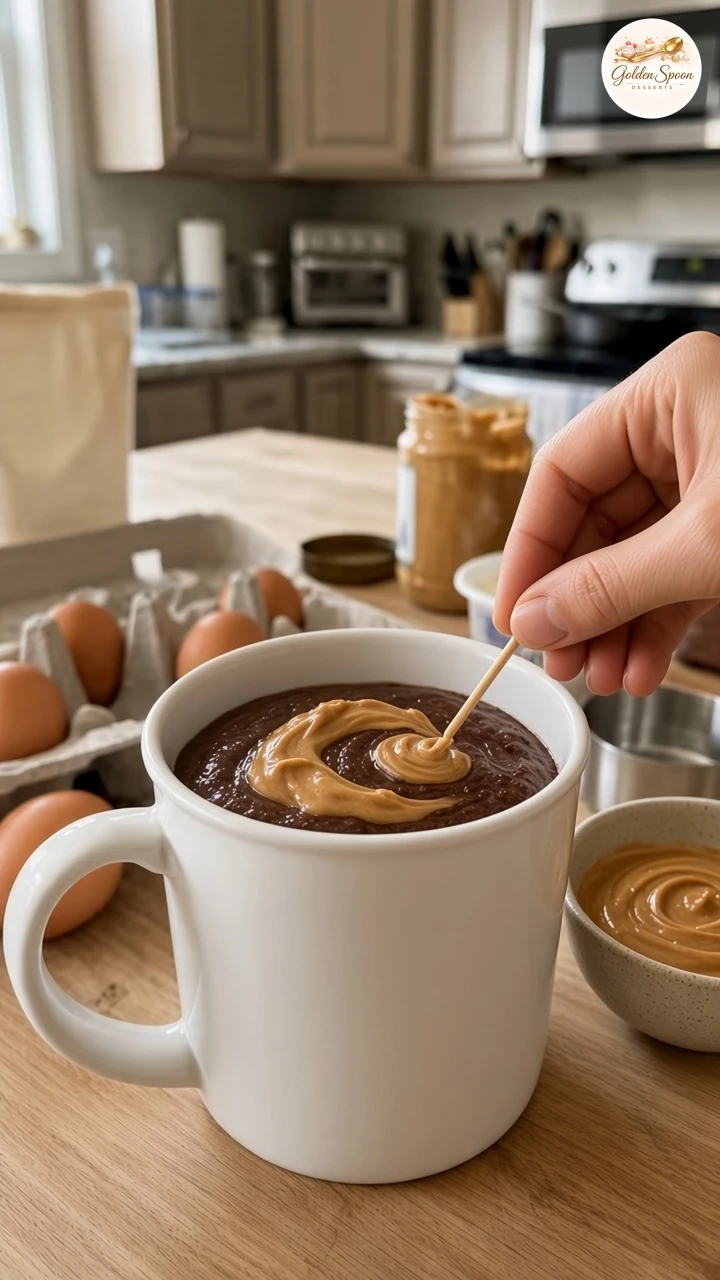
The mug should be no more than about two-thirds full. The cake puffs up well above that level while it cooks and settles back as it cools.
Step 3: Microwave and Check Doneness
Microwave on high for 90 seconds; that starting time is for a 1,000 to 1,100-watt microwave. Then check the cake and continue in 10 to 15-second bursts until it is done. Most microwaves in that range need 1½ to 2½ minutes in total; a 700 to 900-watt oven can take up to about 3 minutes. Your wattage is usually printed inside the door.
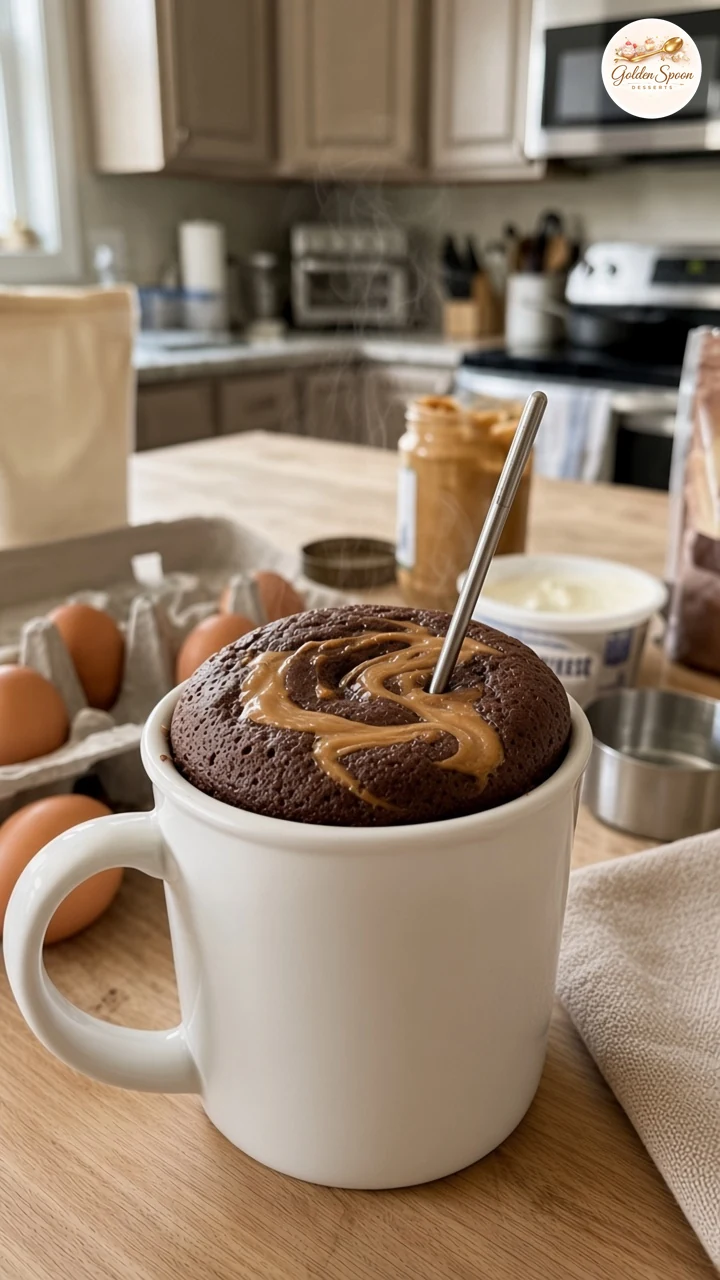
The cake is done when the dome has risen and set, the center springs back when you press it lightly, and a toothpick inserted in the cake (not in a peanut butter pocket) comes out with moist crumbs but no wet batter. For a sure check, an instant-read thermometer in the center should read at least 160°F, the safe temperature FoodSafety.gov lists for egg dishes. A moist, fudgy crumb is fine; liquid batter is not.
Use an oven mitt to take the mug out, since the handle and the steam can be very hot.
Step 4: Cool and Add the Cream Cheese Topping
Let the cake stand for 5 minutes. The standing time lets the center finish setting and keeps the topping from melting straight off. While it cools, whisk the softened cream cheese, powdered allulose, vanilla, and almond milk in a small bowl until smooth.
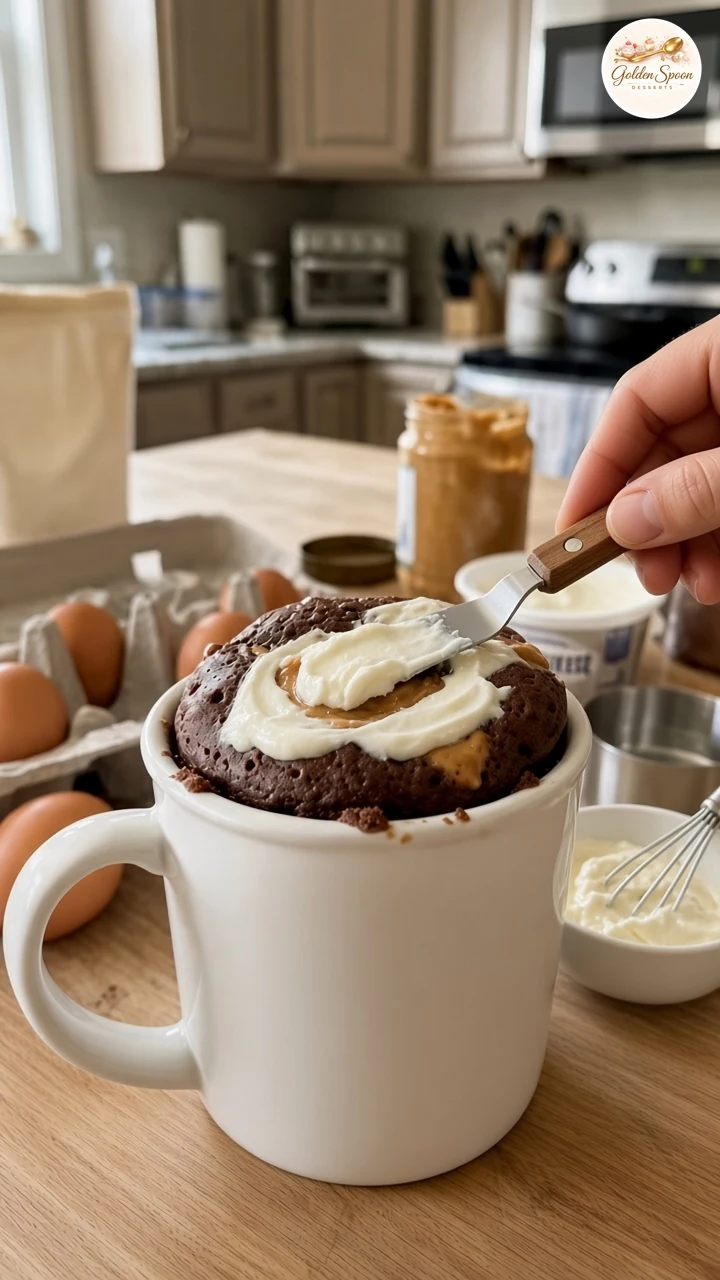
Spread or swirl the topping over the warm cake. A few loose swirls through the peanut butter on top give you that marbled finish from the original post. Serve right away while the center is still soft and the peanut butter is creamy.
Baked-in swirl variation: For the look in the Golden Spoon Desserts video, dot the cream cheese topping over the batter with the last of the peanut butter in Step 2, swirl them together, and microwave as directed. The cream cheese turns soft and slightly golden, and the same 160°F doneness check applies.
How Long This Mug Cake Really Takes
- Active prep: about 8 minutes for measuring, blending, layering, and mixing the topping.
- Microwave cooking: about 2 minutes, depending on wattage.
- Standing and cooling: 5 minutes, while you mix the topping.
- Ready to eat: about 15 minutes from start to first spoonful.
Chocolate Peanut Butter Cheesecake Mug Cake Recipe
Print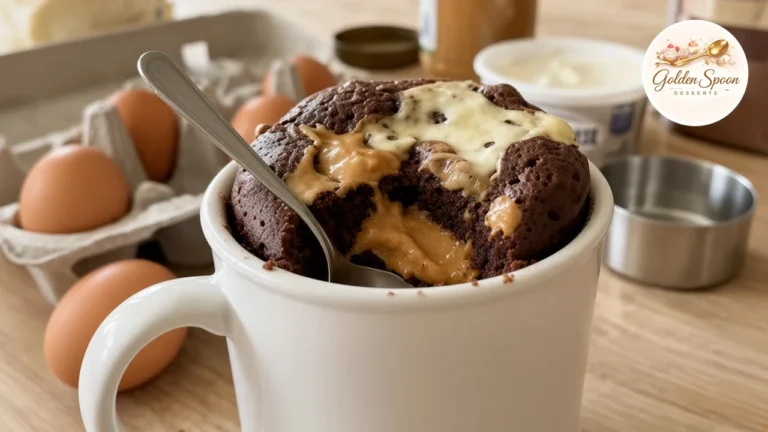
Sugar-Free Chocolate Peanut Butter Cheesecake Mug Cake
A fudgy single-serving chocolate mug cake made with blended cottage cheese, almond flour, cocoa and an egg, layered with a creamy peanut butter swirl and finished with a cream cheese topping. Sweetened with allulose (no added granulated sugar) and microwaved in about 2 minutes; ready in about 15 minutes. Not kitchen-tested by RecipesMind; times are estimates.
- Total Time: 15 minutes
- Yield: 1 mug cake (1 large serving; can be shared by 2)
Ingredients
For the mug cake
- 1/2 cup (113 g) small-curd cottage cheese, full-fat or 2%
- 1 large egg
- 2 tbsp granulated allulose
- 1/4 cup (28 g) blanched almond flour
- 1 tbsp unsweetened vanilla protein powder (or 1 more tbsp almond flour)
- 1 tbsp unsweetened cocoa powder
- 1 tbsp natural creamy peanut butter
- 1/2 tsp baking powder
- 1/2 tsp vanilla extract
- Pinch of salt
- Butter or oil spray, for the mug
For the peanut butter swirl
- 1 tbsp natural creamy peanut butter
- 1 tbsp granulated allulose
- 1 tsp unsweetened almond milk
For the cream cheese topping
- 1 tbsp (15 g) brick cream cheese, softened
- 1 tbsp powdered allulose
- 1/2 tsp vanilla extract
- 1 tsp unsweetened almond milk
Instructions
- Prep the mug: Lightly grease a microwave-safe mug that holds at least 14 oz (16 oz is ideal), with no metallic trim. Or use two 8-oz ramekins.
- Blend the batter: In a personal blender cup (or with an immersion blender in a tall container), blend the cottage cheese, egg, 2 tbsp allulose, almond flour, protein powder, cocoa, 1 tbsp peanut butter, baking powder, 1/2 tsp vanilla and salt for 20–30 seconds, scraping once, until completely smooth with no curds.
- Make the swirl: Stir 1 tbsp peanut butter, 1 tbsp allulose and 1 tsp almond milk until smooth (warm 5 seconds if stiff).
- Layer: Pour half the batter into the mug, dot with half the peanut butter mixture, add the remaining batter and dot the rest of the peanut butter on top. Swirl lightly with a toothpick. The mug should be no more than about two-thirds full.
- Microwave: Cook on high 90 seconds (1,000–1,100 W), then in 10–15-second bursts until the dome is set, the center springs back, a toothpick in the cake (not a peanut butter pocket) shows moist crumbs but no wet batter, and the center reads at least 160°F. Usually 1 1/2–2 1/2 minutes total; 700–900 W ovens may need up to about 3 minutes. Two 8-oz ramekins: start checking at about 60 seconds.
- Rest: Remove with an oven mitt and let stand 5 minutes.
- Topping: While it rests, whisk the cream cheese, powdered allulose, 1/2 tsp vanilla and 1 tsp almond milk until smooth. Spread or swirl over the warm cake and serve right away.
Notes
- Times: Active prep about 8 minutes. Microwave about 2 minutes (wattage-dependent). Additional time: 5 minutes standing/cooling (topping is mixed meanwhile). Ready to eat in about 15 minutes.
- Mug size: Batter plus swirl is about 1 1/4 cups and rises well above its starting level, so a 10–12-oz mug can overflow. Use 14–16 oz or two 8-oz ramekins.
- Wattage: Times are for 1,000–1,100 W. Lower-wattage microwaves need longer; add time in 10–15-second bursts to avoid a rubbery cake.
- Food safety: This is an egg-based batter; cook until the center reaches at least 160°F (FoodSafety.gov guidance for egg dishes). Do not leave it at room temperature more than 2 hours.
- “Sugar-free”: No added granulated sugar; sweetened with allulose (about 70% as sweet as sugar). The FDA lets allulose be excluded from Total and Added Sugars on labels (0.4 kcal/g), but it still counts toward total carbohydrates, and dairy and nuts contribute natural sugars. Large amounts of allulose may cause stomach upset in some people. No medical or diet claim is made.
- Allulose browns faster than sugar and keeps the top moist-looking; judge doneness by spring-back, toothpick and temperature, not a dry surface.
- Baked-in swirl variation (as in the original video): Dot the topping over the batter with the last of the peanut butter, swirl, then microwave; same 160°F check.
- Oven option: Oven-safe ramekin, 350°F for about 15–20 minutes, center 160°F; tent with foil if the top browns early.
- Swaps: Regular sugar instead of allulose (about 1 1/2 tbsp in batter, 2 tsp in swirl, powdered sugar in topping) — no longer no-added-sugar. Any milk for almond milk. Sunflower seed butter for peanut butter.
- Allergens: Contains peanuts, tree nuts (almond), milk and egg.
- Storage: Best warm. Leftovers covered in the refrigerator up to 2 days; rewarm 10–15 seconds, then add topping. Blended batter keeps covered in the refrigerator up to 1 day (add 10–15 seconds cooking).
- Not kitchen-tested by RecipesMind. Nutrition values are estimates.
- Prep Time: 8 minutes
- Cook Time: 2 minutes
- Category: Dessert
- Method: Microwave
- Cuisine: American
Common Mistakes to Avoid
- Using a small mug. A 10 or 12-ounce mug is likely to overflow. Use 14 to 16 ounces, or split the batter between two 8-ounce ramekins and start checking at about 60 seconds.
- Leaving curds in the batter. Hand-stirred cottage cheese stays lumpy. Blend until perfectly smooth.
- Cooking it all at once. Microwaves vary widely. Start at 90 seconds and add short bursts so the cake does not turn tough.
- Judging by the shiny top. Allulose keeps the surface moist. Use the spring-back, toothpick, and 160°F checks instead.
- Topping it straight from the microwave. The topping will melt and slide off. Give the cake its 5 minutes first.
Serving Ideas and Variations
Finish the mug with a few chopped roasted peanuts, a sprinkle of flaky salt, or a spoonful of plain Greek yogurt for extra tang. For a mocha twist, add ½ teaspoon instant espresso powder to the batter.
If you enjoy single-serving treats, try the sugar-free blueberry cheesecake mug cake, the sugar-free pumpkin spice cheesecake mug cake, or the sugar-free blueberry mug cake. Baking for a crowd? The chocolate peanut butter crunch cheesecake and the no-bake chocolate peanut butter cream pie bring the same flavor pairing to a whole dessert.
Storage and Food Safety
This chocolate peanut butter cheesecake mug cake is best eaten warm, within a few minutes of cooking. Because it contains egg and dairy, do not leave it at room temperature for more than 2 hours. Leftovers keep covered in the refrigerator for up to 2 days; the texture firms up as it chills. Rewarm in the microwave for 10 to 15 seconds and add the topping after rewarming.
Make ahead: You can blend the batter and refrigerate it, covered, for up to 1 day. Stir it, layer it into the mug, and add 10 to 15 seconds to the cooking time because the batter starts cold.
Frequently Asked Questions
Is this chocolate peanut butter cheesecake mug cake really sugar-free?
It contains no added granulated sugar; allulose provides the sweetness. The cottage cheese, peanut butter, almond flour, and cream cheese still contain small amounts of natural sugar, so “no added sugar” is the most accurate description.
Can I bake it in the oven instead?
Yes. Use an oven-safe ramekin, bake at 350°F for about 15 to 20 minutes, and check for the same 160°F center. Allulose browns quickly, so tent it loosely with foil if the top darkens early.
Why did my mug cake turn rubbery?
It was cooked too long or in too high a burst. Start at 90 seconds, add 10 to 15 seconds at a time, and stop as soon as the doneness checks are met.
Can I use regular sugar instead of allulose?
Yes. Use about 1½ tablespoons sugar in the batter and 2 teaspoons in the swirl, plus powdered sugar in the topping. It will no longer be a no-added-sugar dessert.
Can I skip the protein powder?
Yes. Replace it with another tablespoon of almond flour. The cake will be slightly less domed but just as tasty.
Warm, chocolatey, and swirled with creamy peanut butter, this little cake proves a satisfying dessert can be ready in about 15 minutes. Grab a spoon and enjoy it while it is warm.