
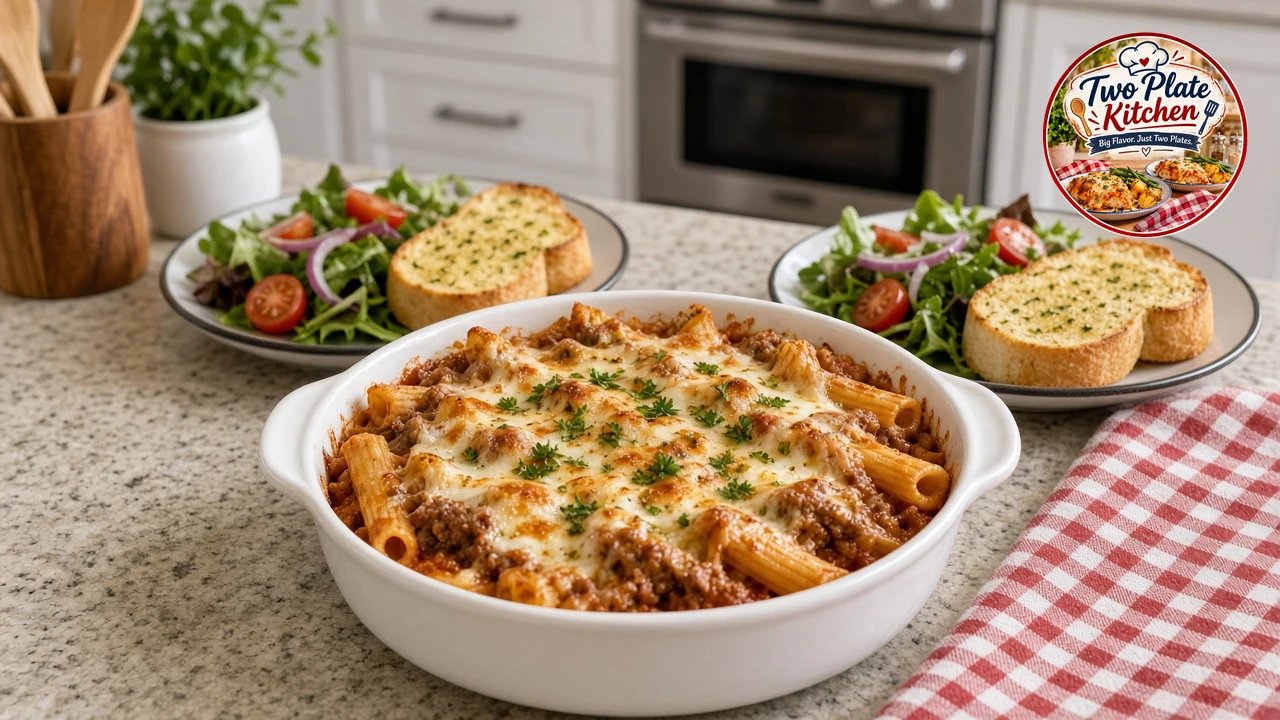
Cheesy beef baked ziti for two brings all the good things about pasta night into one little baking dish: tender pasta tubes, savory beef, rich tomato sauce, and a golden, stretchy cheese topping. Add a crisp salad and a slice of garlic bread, and dinner feels generous without leaving a giant casserole in the refrigerator.
This small-batch recipe was developed for RecipesMind from the dinner idea shared by Two Plate Kitchen. The social post did not include measured ingredients. The recipe below is an original formulation informed by established baked-pasta methods, not a transcription of the video or a kitchen-tested recipe. Yield and cooking times are estimates; use the texture and temperature checks alongside the clock.
The reference shows short, ridged, straight-cut tubes. Ziti rigati works, and small rigatoni is a practical substitute with that same hearty look. There is no need to hunt for one exact pasta shape before enjoying a cozy dinner.
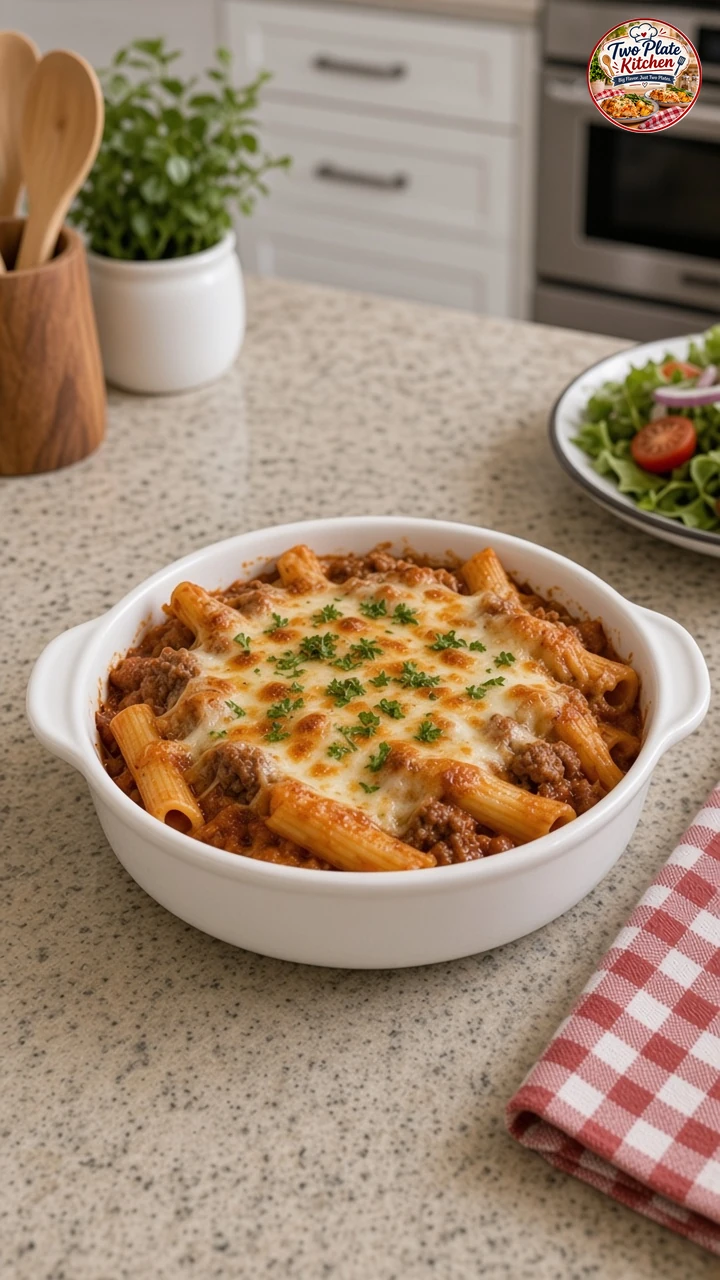
Images are AI-generated recipe illustrations, not photographs of a kitchen test. Follow the recipe card for measurements and food-safety checks.
In this article
Why This Small Batch Makes Sense
A smaller pasta bake is about more than dividing a family recipe by four. The sauce needs to coat the pasta without pooling, the cheese should cover the surface without burying dinner, and the pan should leave room for bubbling. This version is planned as two moderate main-course portions, especially with vegetables on the side. Appetites vary, so treat that serving count as an estimate rather than a promise.
The beef is cooked before assembly, so the oven stage is there to heat everything together and melt the cheese. A little ricotta adds creaminess without requiring an egg or a separate filling. That keeps the ingredient list manageable when you are cooking for a small household.
Ingredient Choices That Matter
Pasta: Use a kitchen scale for the dry pasta if possible. Cups of short pasta vary with the tube size and how loosely they settle. Ziti rigati and small rigatoni both catch little pieces of beef and sauce; penne also works if that is what is in the pantry. Follow the package timing as a starting point, then stop just short of al dente.
Beef and aromatics: Lean ground beef gives the sauce a savory backbone without much grease. Finely diced onion softens quickly and fits between the pasta tubes. Fresh garlic goes in near the end of browning so it becomes fragrant rather than scorched. Drain excess fat carefully before adding sauce; never pour it down the sink.
Tomato sauce: Choose a marinara you enjoy on its own. A very thin sauce can make the bake watery, while an extremely reduced sauce may need a splash of reserved pasta water. Taste only after the beef is safely cooked. Jarred sauces and cheeses differ in saltiness, so the extra salt in the card is optional.
Cheese: Low-moisture mozzarella provides the topping, Parmesan adds a savory edge, and a modest amount of ricotta softens the sauce. Drain visible liquid from ricotta before measuring. Fresh mozzarella contains more moisture and is not the default here. Pre-shredded low-moisture mozzarella is perfectly usable if that makes dinner easier.
Choose a Genuinely Small Baking Dish
Use an oven-safe round ceramic dish holding about 1¼ quarts (5 cups), roughly 7 inches across inside and about 2 inches deep, with two opposing tab handles if you want the reference look. Capacity matters more than the outside dimensions. A 1½-quart dish also works, with a slightly shallower layer. A 9-by-13-inch pan is far too large for this amount.
Leave at least ½ inch of headspace, and never force the mixture into a smaller dish. If your dish is labeled 1 quart, check its usable capacity before cooking; a brim-full measurement does not leave room for bubbling. The estimated mixture volume is around 3½–4 cups, but pasta shape changes that. Use the slightly larger dish if needed. Follow the bakeware maker’s temperature limits and avoid sudden hot-to-cold changes.
How to Build Flavor and Texture
Think of the process as three jobs: cook the pasta slightly underdone, make a fully cooked beef sauce, and give everything a short oven finish. Keep the sauce moist enough that each tube looks glossy. Dry-looking pasta before baking usually means dry-looking pasta afterward, because it continues to absorb liquid in the oven.
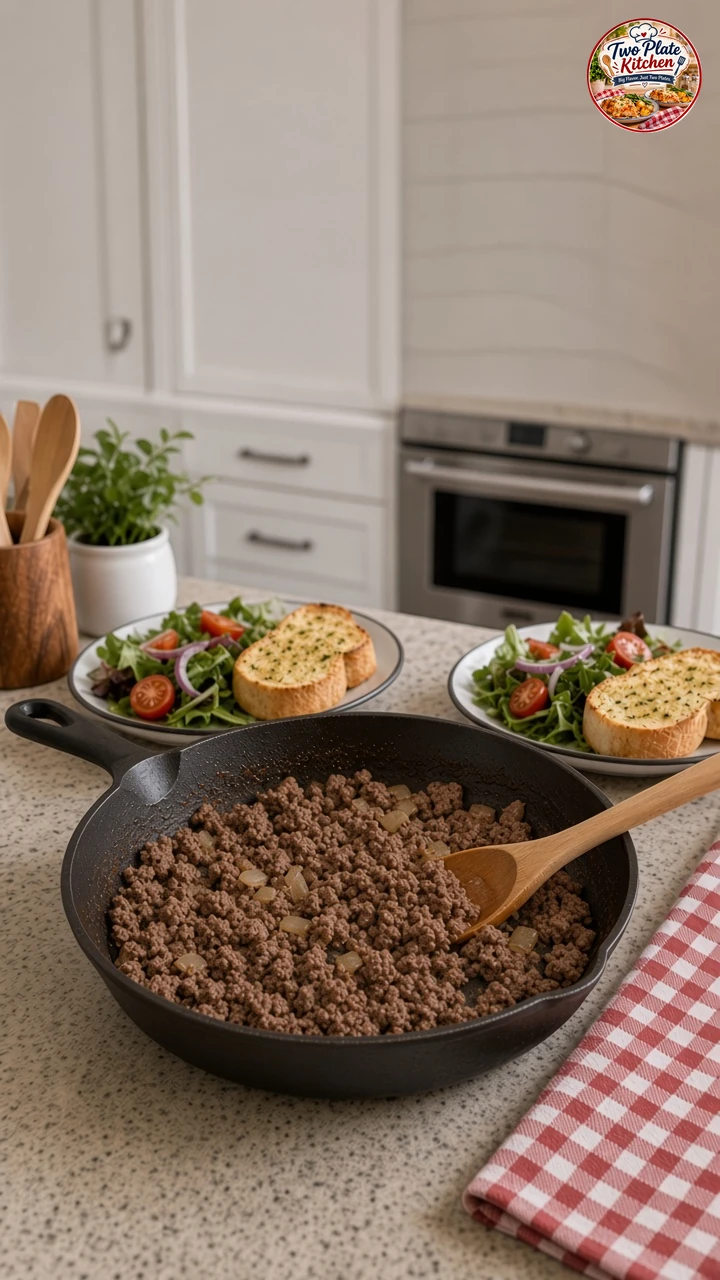
Break the beef into small crumbles while it cooks. Browning adds flavor, but brown color alone does not confirm safety. USDA guidance calls for ground beef to reach 160°F. Gather the crumbles into a mound deep enough to cover the thermometer’s sensing area, check several spots without touching the skillet, and clean the probe afterward. Keep raw-meat utensils away from the cooked pasta.
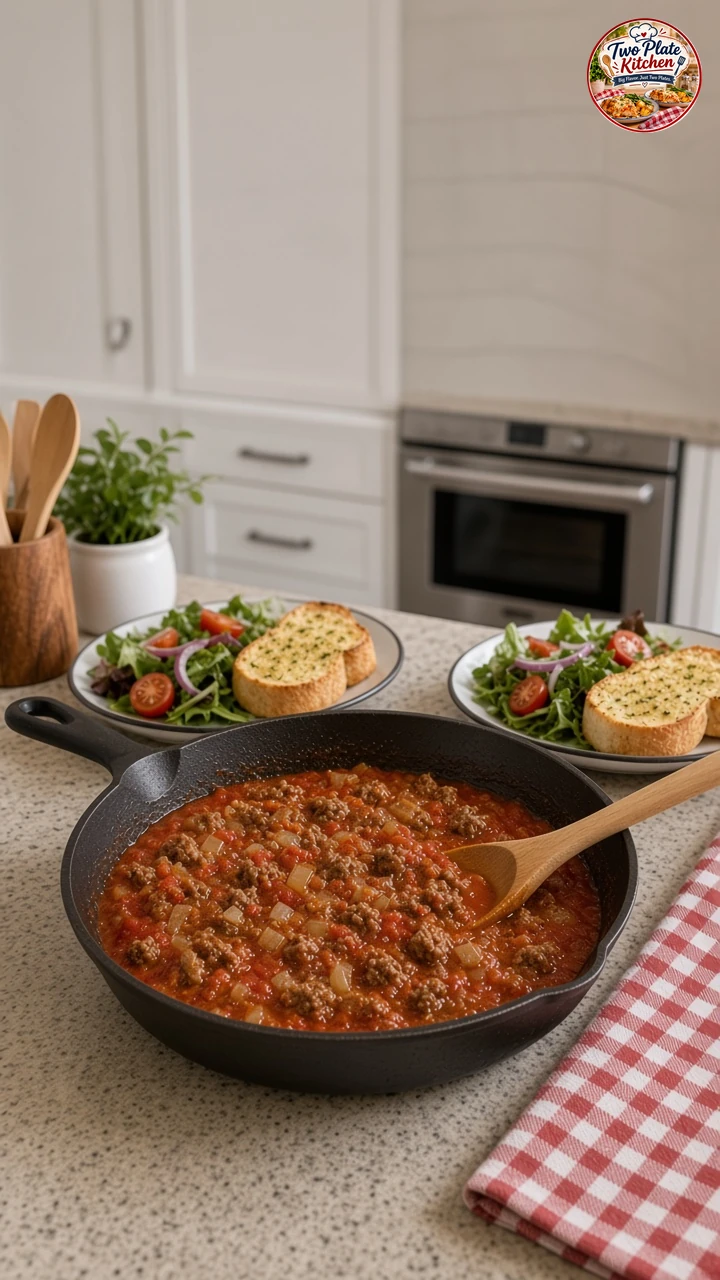
A stainless mixing bowl makes it easy to fold the pasta and sauce together without crushing the tubes. Add the ricotta gently rather than beating it into a completely uniform sauce. A few creamy streaks are welcome. Reserve the mozzarella for the top so the small dish still has a recognizable cheese blanket.
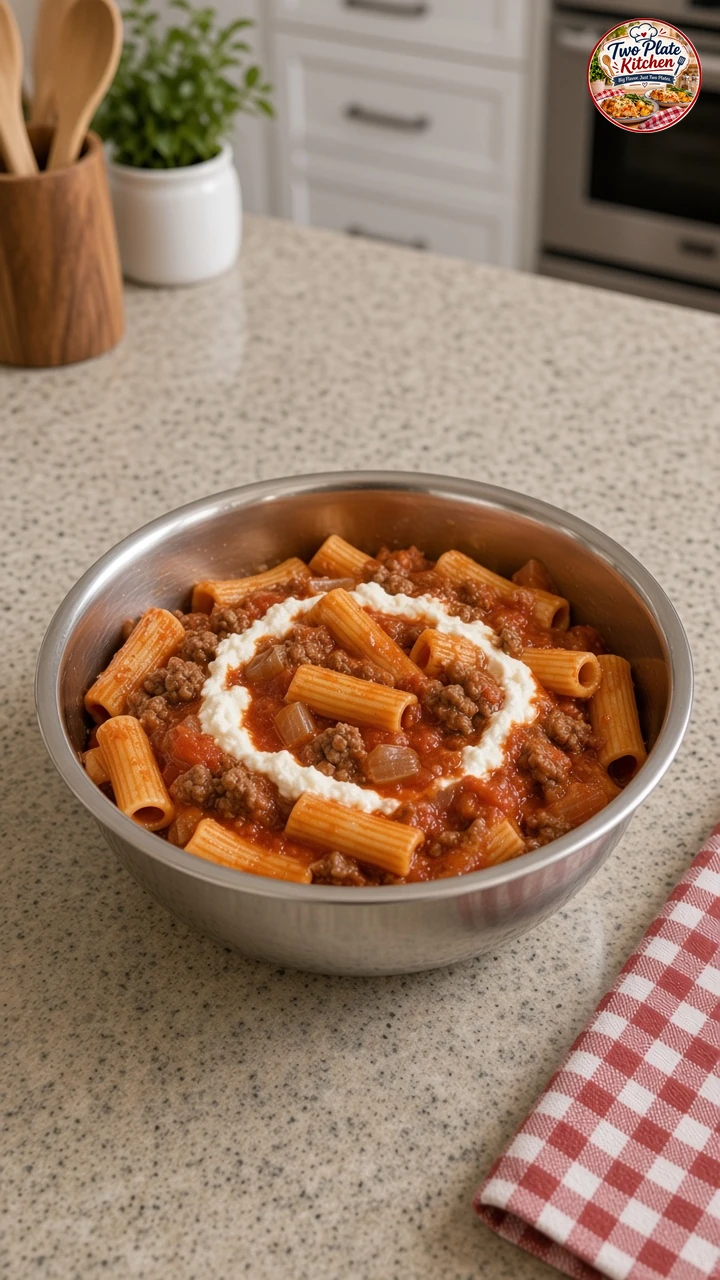
Bake covered first to limit drying, then uncover for the final melt and light browning. The goal is bubbling sauce and melted cheese, not a deeply crusted surface. If the top is already golden before the center is hot, loosely cover it again. This recipe does not require a broiler, which also avoids an unnecessary risk with ceramic or glass bakeware.
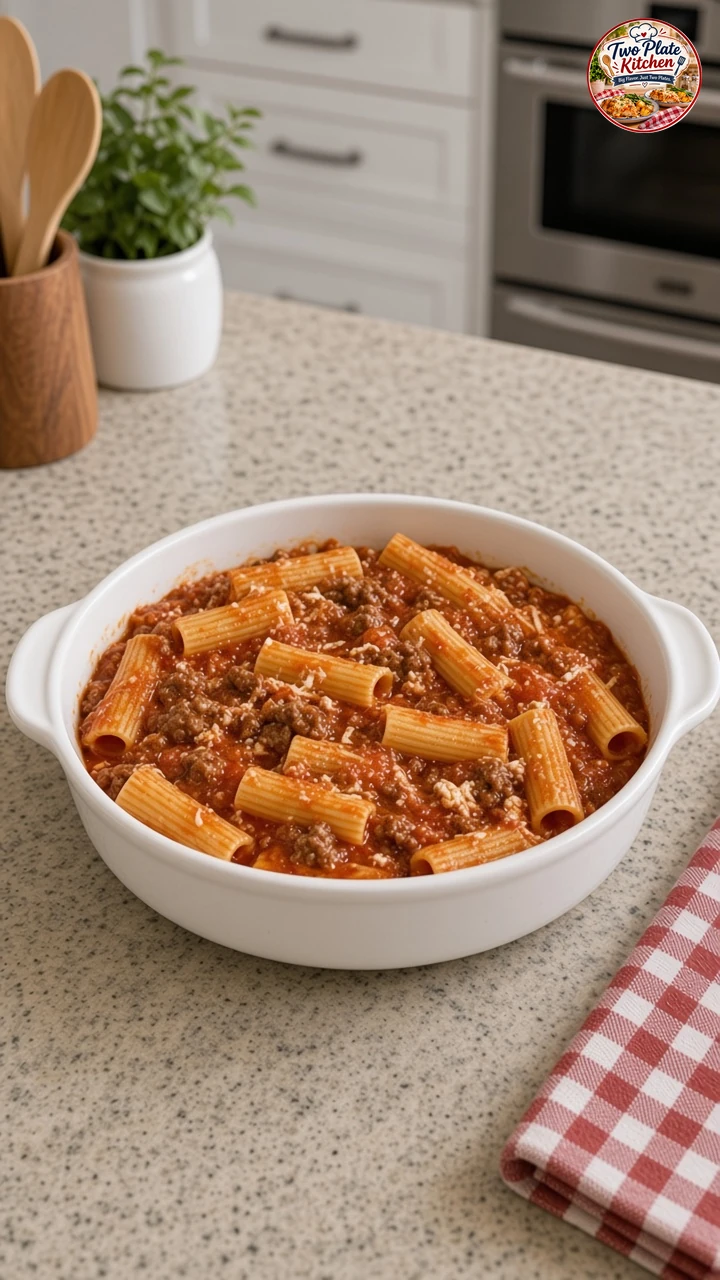
Timing and Dinner Planning
Allow approximately 60 minutes from start to serving: 15 minutes for preparation, 15 minutes for stovetop cooking and assembly with the pasta and beef cooking in parallel, 25 minutes in the oven, and 5 minutes of resting. The bake itself may take 20–30 minutes, making the practical total about 55–65 minutes. Oven preheating and heating the pasta water begin during preparation.
Set out the salad ingredients while the pasta bakes. Warm garlic bread separately according to its recipe or package directions, since it may need a different oven temperature. Neither the sides nor their preparation time is included in the pasta recipe’s timing. Let the finished casserole rest briefly before scooping; the handles and center will still be hot.
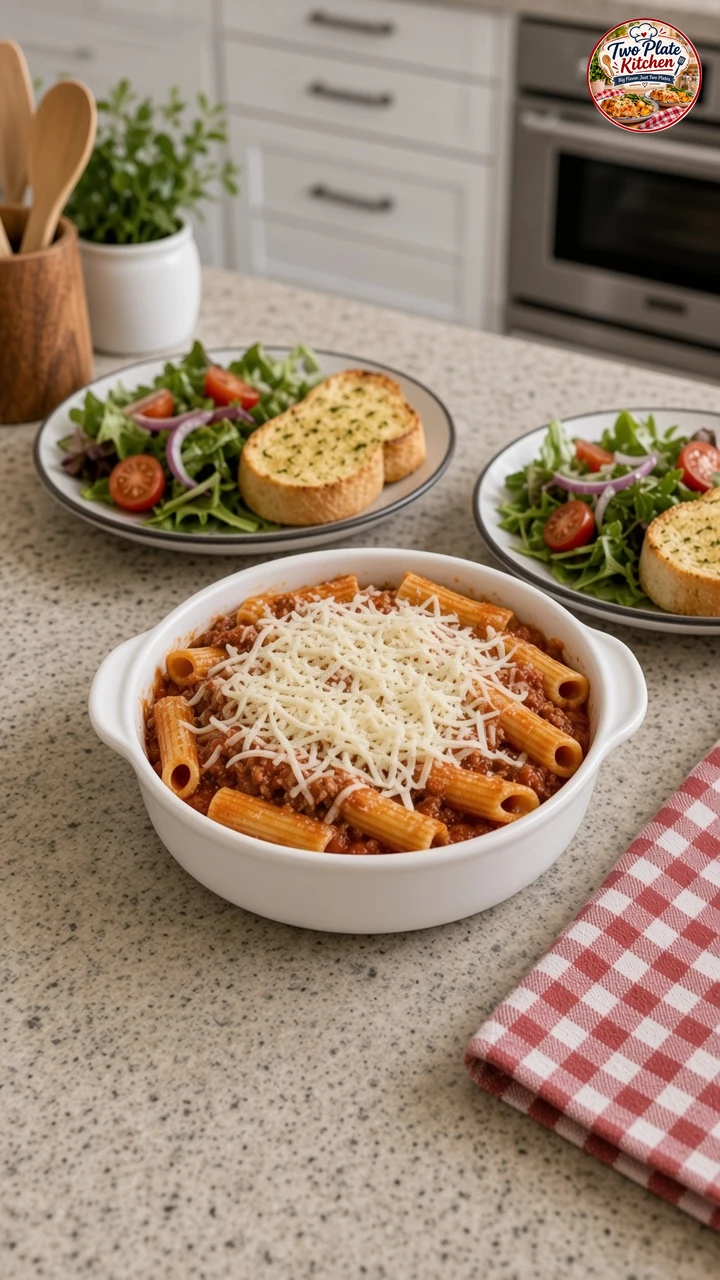
Cheesy Beef Baked Ziti for Two Recipe
PrintCheesy Beef Baked Ziti for Two
A small round pasta bake with beef, tomato sauce, ricotta, and a golden mozzarella topping. Original recipe inspired by Two Plate Kitchen; not kitchen-tested. Times and two-serving yield are estimates.
- Total Time: 60 minutes
- Yield: 2 servings (estimated)
Ingredients
- 4 ounces (113 g) dry ziti rigati or small rigatoni
- 1 teaspoon olive oil, plus a little for greasing the dish
- 1/4 cup (about 40 g) finely diced yellow onion
- 6 ounces (170 g) lean ground beef, preferably 90% lean
- 1 garlic clove, minced
- 1/2 teaspoon dried Italian seasoning
- 1/8 teaspoon black pepper
- Pinch of crushed red pepper flakes, optional
- 1 cup (240 ml) marinara sauce
- 1/4 cup (60 g) whole-milk ricotta, drained of excess liquid
- 3/4 cup (3 ounces/85 g) shredded low-moisture mozzarella
- 2 tablespoons (10 g) finely grated Parmesan
- Up to 2 tablespoons reserved pasta cooking water, only if needed
- Salt for pasta water; additional salt to taste, optional
- 1 teaspoon chopped fresh parsley, optional garnish
Instructions
- Prepare: Preheat oven to 375°F (190°C), rack in the center. Bring a pot of water to a boil. Lightly grease a round 1 1/4-quart oven-safe dish (about 7 inches inside, two tab handles if available). A 1 1/2-quart dish is suitable too. Set aside foil. Dice onion, mince garlic, measure ingredients and shred cheese. Allow about 15 minutes for this preparation, including starting the oven and water.
- Cook pasta and beef in parallel: Salt the boiling water and cook pasta about 1–2 minutes less than the package’s al dente timing, typically 8–10 minutes; it should still have a firm center. Reserve a little cooking water, then drain. Meanwhile, heat oil in a skillet over medium heat. Add onion and beef; cook 7–9 minutes, stirring and breaking beef into small crumbles. Check beef reaches 160°F in several places with a food thermometer; gather it into a mound deep enough for the probe’s sensing area and avoid touching the pan. Drain excess fat safely.
- Make sauce: Add garlic, Italian seasoning, pepper and optional pepper flakes to the cooked beef; stir about 30 seconds. Add marinara and simmer gently 2 minutes. Taste and add salt only if needed. Remove from heat. Cook longer if necessary to finish safely; times are estimates.
- Assemble: In a stainless bowl or the drained pasta pot, fold pasta and sauce together. Gently fold in ricotta. If the mixture looks dry, add reserved pasta water 1 tablespoon at a time, up to 2 tablespoons. Spoon into prepared dish, leaving at least 1/2 inch headspace. Top evenly with mozzarella and Parmesan. The parallel stovetop cooking and assembly stage takes about 15 minutes total.
- Bake: Cover loosely with foil, tented above the cheese. Bake 15 minutes. Uncover and bake another 5–15 minutes until sauce bubbles, cheese melts with golden spots, and the center reaches 165°F. Total estimated bake: 20–30 minutes (25-minute planning value). No broiling required. If browning too quickly, loosely cover again.
- Rest and serve: Set on a dry heat-safe trivet and rest 5 minutes. Add optional parsley. Divide into two portions; handles and center remain hot.
Notes
- Not kitchen-tested. Estimated yield: two moderate main-course portions. Sauce thickness, pasta shape, dish depth and oven affect results.
- Estimated timing: 15 minutes prep + 15 minutes parallel stovetop cooking/assembly + 25 minutes oven + 5 minutes rest = 60 minutes. Practical range 55–65 minutes. Preheating/water heating overlap preparation. If these take longer, allow additional time. Side dishes excluded.
- Equipment: about 1 1/4-quart round oven-safe dish (5-cup capacity), or 1 1/2-quart alternative, skillet, saucepan, colander, thermometer. A 1-quart dish may be too small; do not fill to the rim. Estimated mixed volume 3 1/2–4 cups is not a measured test result.
- Store promptly in shallow containers within 2 hours, or 1 hour above 90°F; refrigerate at 40°F or below for 3–4 days. Freeze airtight portions for about 2–3 months for quality. Thaw in refrigerator. Reheat covered to 165°F throughout; check several spots. Do not cool completely on the counter.
- Contains wheat and milk. No dietary claim.
- Make-ahead variation: cool components promptly, refrigerate up to 24 hours, then assemble and bake to 165°F. Extra chilling and heating time are not in the standard total. Avoid thermal shock to bakeware.
- Prep Time: 15 minutes
- Rest Time: 5 minutes
- Cook Time: 40 minutes
- Category: Dinner
- Method: Stovetop and Oven
- Cuisine: Italian-American
Easy Variations Without Losing the Small-Batch Balance
For a little heat, add the optional red pepper flakes to the sauce. For a meatless variation, replace the beef with a similar volume of chopped mushrooms cooked until their released liquid evaporates. That changes the flavor and nutrition, and the timing may change too. Avoid adding raw watery vegetables directly to the casserole.
If ricotta is not your favorite, use well-drained small-curd cottage cheese in the same measured amount. The texture will be a little different. Keep the same pasta and sauce amounts on your first attempt rather than adding extra noodles to use up a box; that quickly turns a two-person dinner into a dry or overfilled bake.
What to Serve Alongside
A simple salad keeps the plate fresh: mixed greens, halved cherry tomatoes, and thin red onion with a light vinaigrette. Garlic bread adds crunch and gives you something to swipe through the tomato sauce. For a lighter plate, choose steamed green beans or roasted broccoli instead of bread.
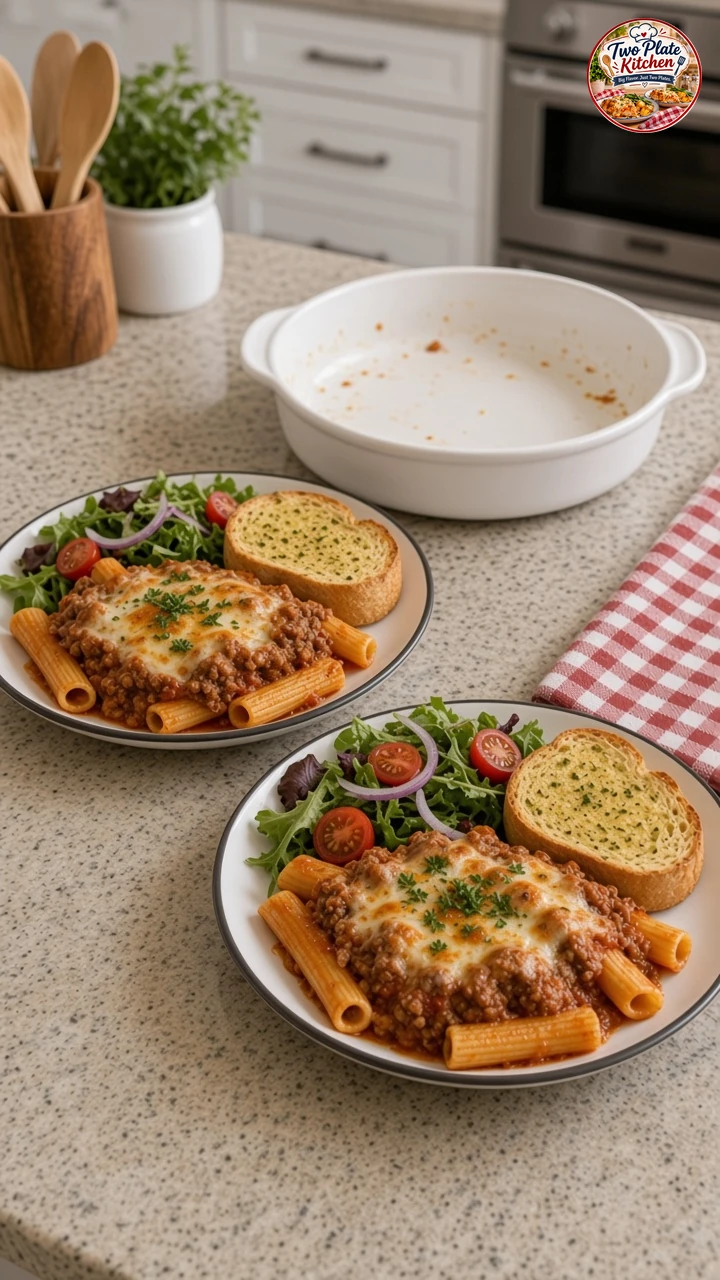
If you are planning another pasta night, browse our Marry Me Chicken Pasta. For ideas that use the remaining beef from a larger package, our easy ground beef meals collection offers more dinner inspiration. Refrigerate or freeze unused raw beef promptly rather than leaving it out while this meal bakes.
Storage and Reheating
Follow USDA leftover guidance: refrigerate within 2 hours, or within 1 hour when the temperature is above 90°F. Divide leftovers into shallow containers and refrigerate promptly at 40°F or below. Do not wait for the casserole to cool completely on the counter. Use refrigerated leftovers within 3–4 days.
For a future meal, freeze cooled, promptly handled portions in airtight freezer-safe containers. About 2–3 months is a practical quality target for this pasta dish; continuous freezing at 0°F keeps food safe longer, though texture declines. Thaw in the refrigerator. Use containers rated for the task, and do not move cold glass or ceramic straight into a hot oven unless the manufacturer specifically permits it.
Reheat covered, with a small splash of water or sauce if needed, until the center reaches 165°F. In the microwave, stir or rearrange the pasta, allow the standing time recommended by the appliance, and check several spots because cold pockets can remain. A bubbling edge is not proof that the middle is ready. Reheat only the amount you plan to eat.
Useful Equipment: Essentials and Optional Helpers
This post contains affiliate links. As an Amazon Associate I earn from qualifying purchases.
Essentials: A small oven-safe baking dish, a saucepan, a skillet, a colander, and a spoon are enough. A food thermometer is important for checking both the beef and leftovers; the TempPro TempSwift TP19H instant-read thermometer is one suitable option. Use any reliable thermometer you already own rather than buying a duplicate.
Optional equipment: The OXO Good Grips box grater is useful for shredding mozzarella and grating Parmesan. It is a convenience, not a requirement; pre-shredded cheese is fine. A stainless bowl is handy for mixing, but the drained pasta pot can do that job too. No specialty appliance or oversized bakeware set is needed.
Frequently Asked Questions
Can I use rigatoni instead of ziti?
Yes. Use the same dry weight of small rigatoni. Its ridged, straight-cut tubes match the reference look well. Larger tubes may change the filled volume and package cooking time.
Does this baked ziti need an egg?
No. A little ricotta supplies creaminess without an egg-bound filling. The pasta is meant to be scooped, not sliced into firm lasagna-like squares.
Can I prepare it ahead?
You can cook the components, cool them promptly in shallow containers, and refrigerate covered for up to 24 hours before assembling and baking. A cold assembly needs extra oven time; heat its center to 165°F and follow the dish manufacturer’s thermal-shock guidance. This additional chilling and reheating time is not included in the standard recipe total.
Why is my pasta bake dry?
Common causes include too little sauce, an oversized pan, and baking uncovered for too long. Use the correct dry pasta weight and keep the mixture saucy before assembly. Do not extend baking just to get a darker top.
Is this exactly the recipe in the Facebook video?
No measured recipe was supplied with the post. This is an original, untested small-batch recipe inspired by Two Plate Kitchen’s dinner idea. The video guides the illustrations only; the written card supplies the cooking method and safety checks.
For further technique context, One Dish Kitchen’s small-batch baked ziti guide discusses undercooking pasta and choosing a small baking dish. For this version, keep the recipe card’s amounts together and use the temperature checks as your final guide. A little casserole can still bring plenty of comfort to the table.