
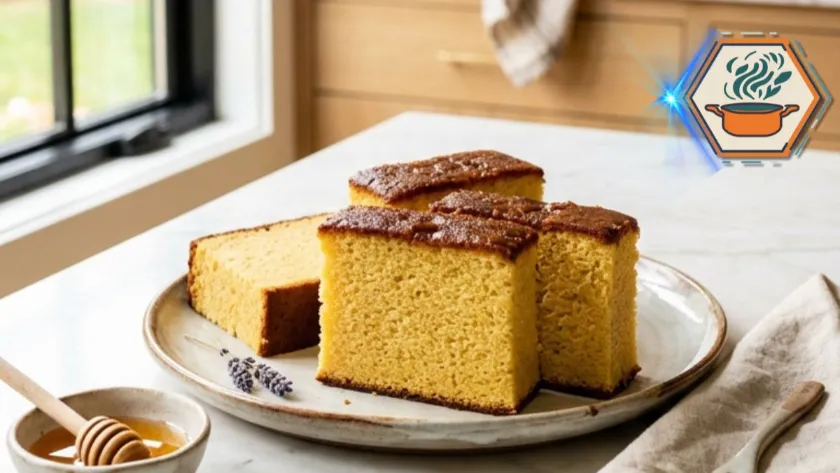
There is something unforgettable about walking into a small Japanese bakery early in the morning. The sweet aroma of freshly baked sponge cake fills the air, while rows of perfectly golden loaves wait patiently behind the glass. One bite reveals an incredibly soft texture, a delicate honey flavor, and a moist crumb that almost melts in your mouth. That experience inspired this Japanese Castella Cake Recipe, allowing you to recreate one of Japan’s most beloved cakes right at home.
Unlike many Western sponge cakes that rely on butter or oil for richness, traditional Castella, also known as Kasutera, achieves its famous texture using simple ingredients and precise baking techniques. Every step matters. The way you whip the eggs, fold the batter, prepare the pan, and cool the cake will determine whether you end up with an authentic bakery-quality loaf or a dense sponge.
If you enjoy discovering traditional baking methods from around the world, you’ll also love exploring the baking resources available from trusted organizations such as King Arthur Baking and the educational guides from the American Egg Board, which explain the science behind whipping eggs and building stable cake structure.
This guide goes far beyond a basic recipe. You’ll learn every small detail that many online recipes skip, helping you achieve the same beautiful golden crust and soft honey-scented crumb shown in professional bakery photos.
Print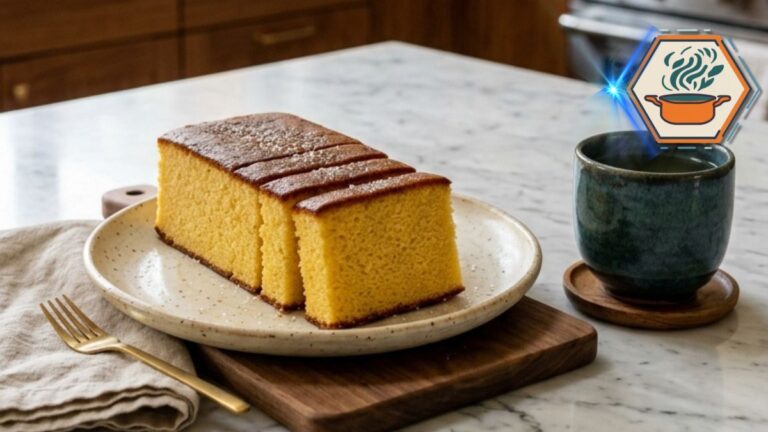
Japanese Castella Cake Recipe
Learn how to make an authentic Japanese Castella Cake with a soft, moist crumb and delicate honey flavor. This traditional sponge cake uses simple pantry ingredients and expert techniques to achieve the light yet slightly chewy texture found in Japanese bakeries. Perfect for breakfast, tea time, or dessert.
- Total Time: 1 Hour 10 Minutes
- Yield: 9 Servings (One 8×8-inch cake)
Ingredients
- 6 large eggs, room temperature
- 1 cup (200 g) granulated sugar
- ¼ cup (60 ml) mild honey
- 2 tablespoons warm water
- 1 cup (125 g) bread flour, sifted three times
- ¼ teaspoon fine salt
Optional (Highly Recommended)
- 1 teaspoon light corn syrup or glucose syrup (helps produce a beautiful glossy golden crust)
- Butter or neutral oil for lightly greasing the parchment paper
Instructions
1. Prepare the Oven
Preheat the oven to 325°F (160°C).
Line an 8×8-inch square pan with parchment paper, allowing it to extend above the edges for easy removal.
Lightly grease the parchment.
2. Prepare the Honey Mixture
Mix together
- honey
- warm water
until completely smooth.
3. Beat the Egg Yolks
Whisk together
- egg yolks
- sugar
- honey mixture
for 3–5 minutes until pale, thick and ribbon-like.
4. Whip the Egg Whites
Beat the egg whites with salt until stiff glossy peaks form.
Avoid overbeating.
5. Fold Carefully
Fold one-third of the egg whites into the yolk mixture.
Sift in half of the bread flour.
Repeat with the remaining whites and flour.
Fold gently using a spatula.
Do not stir.
6. Remove Air Bubbles
Pour the batter into the prepared pan.
Tap the pan firmly on the counter 3–4 times.
Run a skewer through the batter to eliminate large air pockets.
7. Bake
Bake for 40–45 minutes until
- golden brown
- springy
- toothpick comes out clean
Avoid opening the oven during the first 35 minutes.
8. Cool
Cool inside the pan for 15 minutes.
Lift out using the parchment.
Cool completely on a rack.
9. Traditional Japanese Method
Wrap the slightly warm cake tightly in plastic wrap.
Allow it to rest overnight.
This creates the signature moist Castella texture.
Notes
✔ Always use room-temperature eggs.
✔ Sift the flour three times.
✔ Bread flour produces the authentic chewy crumb.
✔ Never overmix after adding the flour.
✔ Tap the pan before baking.
✔ Use an oven thermometer whenever possible.
✔ Resting overnight improves texture dramatically.
✔ Slice using a long serrated knife.
✔ Store tightly wrapped to preserve moisture.
- Prep Time: 25 Minutes
- Cook Time: 45 Minutes
- Category: Breakfast
- Method: Baking
- Cuisine: Japanese
- Diet: Vegetarian
JUMP TO
What Is Japanese Castella Cake?
Japanese Castella Cake is a famous sponge cake that originated from Portuguese traders who introduced their sponge cakes to Japan during the 16th century. Japanese bakers gradually refined the recipe into something unique.
Today’s Castella features:
- Soft and moist texture
- Delicate honey sweetness
- Fine, even crumb
- Light yet satisfying bite
- Beautiful golden brown top
- Minimal ingredients
Unlike chiffon cake or genoise, Castella has a tighter, silkier crumb that stays moist for several days.
Why This Japanese Castella Cake Recipe Works
Many recipes promise fluffy Castella but leave out important details. This version includes every professional technique needed for consistent success.
You’ll learn how to:
- Build stable egg foam
- Prevent the batter from collapsing
- Eliminate large air bubbles
- Achieve a smooth golden surface
- Create the signature moist interior
- Keep the cake soft for several days
Ingredients
- 6 large eggs (room temperature)
- 1 cup (200 g) granulated sugar
- ¼ cup (60 ml) high-quality honey
- 2 tablespoons warm water
- 1 cup (125 g) bread flour, sifted three times
- ¼ teaspoon fine salt
Optional for an Even Better Golden Crust
Although traditional Castella uses only the ingredients above, professional bakeries often improve browning by adding one of the following:
- 1 teaspoon light corn syrup
- or 1 teaspoon glucose syrup
These ingredients are optional but help create a glossy honey-colored top similar to bakery versions.
Equipment
- 8×8-inch square pan
- Parchment paper
- Electric mixer
- Fine mesh sieve
- Rubber spatula
- Kitchen scale
- Cooling rack
Ingredient Tips
Eggs
Room-temperature eggs whip much better than cold eggs.
Leave them out for about 30 minutes before baking.
Honey
Choose a mild honey such as:
- Clover honey
- Wildflower honey
- Acacia honey
Avoid strongly flavored honey because it can overpower the delicate taste.
Bread Flour
Bread flour contains more protein than cake flour.
This gives Castella its unique chewy yet tender texture.
Step 1: Prepare the Pan
Preheat your oven to 325°F (160°C).
Line the entire pan with parchment paper.
Allow the parchment to extend about 2 inches above the sides.
This makes removal much easier after baking.
Step 2: Prepare the Honey
Mix:
- Honey
- Warm water
Stir until completely smooth.
Set aside.
Step 3: Beat the Yolks
Whisk together:
- Egg yolks
- Sugar
- Honey mixture
Beat for 3–5 minutes until:
- Pale yellow
- Thick
- Ribbon consistency
Do not rush this step.
Step 4: Beat the Egg Whites
In a clean bowl add:
- Egg whites
- Salt
Beat until stiff peaks form.
The peaks should stand upright but still look glossy.
Avoid overbeating.
Dry meringue makes folding difficult.
Step 5: Fold Carefully
Add one-third of the egg whites.
Fold gently.
Sift in half the flour.
Fold again.
Repeat until everything is incorporated.
Use slow sweeping motions.
Never stir vigorously.
Step 6: Remove Air Pockets
Pour into the prepared pan.
Tap the pan firmly on the counter 3–4 times.
Use a skewer to swirl through the batter.
This removes hidden air bubbles and creates the signature fine crumb.
Step 7: Bake
Bake for 40–45 minutes.
The cake is done when:
- Golden brown
- Center springs back
- Toothpick comes out clean
Do not open the oven during the first 35 minutes.
Sudden temperature changes may cause the cake to collapse.
Step 8: Cool Properly
Allow the cake to cool inside the pan for about 15 minutes.
Lift it out using the parchment.
Cool completely on a rack.
Traditional Japanese Secret
Professional bakeries often wrap the warm cake tightly in plastic wrap after it has cooled slightly.
Then they refrigerate it overnight.
This redistributes moisture throughout the cake, making the crumb even softer the next day.
Many home recipes skip this important step.
Professional Tips for Bakery Results
Sift the Flour Three Times
Extra sifting creates an exceptionally light batter.
Fold Slowly
Fast mixing destroys the air bubbles.
Use an Oven Thermometer
Many ovens bake hotter than their settings.
An inexpensive thermometer improves consistency.
Bake on the Middle Rack
This promotes even heat circulation.
Slice with a Serrated Knife
Use gentle sawing motions.
Never press downward.
Common Mistakes
The Cake Collapsed
Possible causes:
- Oven opened too early
- Underbaked center
- Overmixed batter
Large Holes
Usually caused by:
- Poor folding
- Untapped batter
- Flour not sifted
Dry Texture
Possible reasons:
- Overbaking
- Low-quality honey
- Incorrect flour measurement
Dense Cake
Likely caused by:
- Underwhipped eggs
- Deflated meringue
- Aggressive folding
Delicious Variations
Try adding:
- Matcha powder
- Lemon zest
- Vanilla bean
- Black sesame
- Brown sugar
- Yuzu zest
Each creates a unique flavor while preserving the traditional texture.
Serving Suggestions
Japanese Castella pairs beautifully with:
- Green tea
- Coffee
- Earl Grey tea
- Fresh berries
- Whipped cream
- Vanilla ice cream
It also makes an elegant afternoon snack.
Storage
Room Temperature
Wrap tightly.
Store for up to 3 days.
Refrigerator
Keeps for 5 days.
Bring to room temperature before serving.
Freezer
Wrap twice.
Freeze for up to 2 months.
Thaw overnight in the refrigerator.
Frequently Asked Questions
Why is bread flour used instead of cake flour?
Bread flour gives Castella its signature elastic yet soft texture.
Can I use all-purpose flour?
Yes, but the crumb will be less chewy and slightly lighter.
Why did my Castella shrink?
It was likely underbaked or cooled too quickly.
Can I reduce the sugar?
You can reduce it slightly, but sugar also stabilizes the egg foam and keeps the cake moist.
Why wrap Castella overnight?
Resting the cake allows moisture to spread evenly, producing the classic tender texture found in Japanese bakeries.
Can I add vanilla?
Yes. Use about one teaspoon of pure vanilla extract for a subtle flavor.
Final Thoughts
Making an authentic Japanese Castella Cake Recipe is less about complicated ingredients and more about patience, technique, and attention to detail. Every gentle fold, every carefully whipped egg, and every minute in the oven contributes to the cake’s signature texture. Once you master these simple techniques, you’ll discover why this humble honey sponge has remained a treasured Japanese favorite for centuries.
Whether you’re baking it for breakfast, afternoon tea, or a special gathering, this homemade Castella delivers the same soft crumb, delicate sweetness, and beautiful golden crust that make it a timeless classic. With the additional tips included in this guide, you’ll have everything you need to bake it successfully on your very first try.