

This chicken fried steak for two is the kind of dinner that makes a Tuesday feel like Sunday supper: a tenderized beef steak with a craggy, golden crust, a blanket of creamy pepper gravy, a scoop of buttery mashed potatoes, and sweet corn with a little parsley. Everything is scaled for two plates, with no mountain of leftovers.
The method follows the Two Plate Kitchen post: season the steaks, dredge them twice, shallow-fry in about half an inch of oil, drain on a wire rack, and make the gravy right in the same skillet. The reel shows the method without measurements, so the quantities, oil temperature, timing, and gravy ratio here are scaled down for two from established Southern and test-kitchen recipes. If you like a skillet gravy dinner, you may also enjoy our country-style hamburger steak with mushroom onion gravy and our meatballs and gravy for two.
Affiliate Disclosure: As an Amazon Associate I earn from qualifying purchases. Product links in this article may earn a commission at no additional cost to you.
What’s in This Post
- What Is Chicken Fried Steak?
- Ingredients You’ll Need
- Helpful Tools
- How to Make Chicken Fried Steak for Two
- Tips for a Crust That Stays Put
- Pepper Gravy Troubleshooting
- Doneness and Food Safety
- What to Serve With It
- Storage and Reheating
- FAQ
What Is Chicken Fried Steak?
Chicken fried steak is a cube steak, which is usually a cut of beef round that has been run through a tenderizing machine, coated like fried chicken, and fried until crisp. The name has nothing to do with poultry. It comes from the breading and the frying method, which are the same ones used for Southern fried chicken. It is served with a creamy white gravy made from the same pan.
It is often confused with country fried steak. According to chefs quoted by Southern Living, chicken fried steak is known for its pronounced, irregular, crispy crust and its creamy white pepper gravy, while country fried steak tends to have a lighter coating and a brown gravy built from the pan juices. The two get blurred in plenty of kitchens, but this recipe is the crunchy, white-gravy kind.
Ingredients You’ll Need
This makes 2 generous servings and takes about 1 hour from first step to plate: 20 minutes of prep, 30 minutes of cooking, and a 10-minute rest for the coating that overlaps with the simmering potatoes. All of the amounts are also in the recipe card.
Steaks: 2 beef cube steaks (about 5 ounces each, roughly 3/8 inch thick), 1/4 teaspoon kosher salt, and 1/4 teaspoon freshly ground black pepper.
Dredge: 1 cup all-purpose flour, 1/2 teaspoon kosher salt, 1/2 teaspoon black pepper, 1/2 teaspoon garlic powder, 1/2 teaspoon paprika, and a pinch of cayenne if you like a little heat. For the wash, 1 large egg and 1/3 cup buttermilk (or whole milk). For frying, 1 1/2 to 2 cups neutral oil such as canola, vegetable, or peanut oil.
Creamy pepper gravy: 2 tablespoons unsalted butter, 1 tablespoon of the hot frying oil or pan drippings, 3 tablespoons all-purpose flour, 1 1/2 cups whole milk, 1 1/2 teaspoons coarsely ground black pepper, and about 1/4 teaspoon kosher salt, to taste. If you would rather not use the drippings, use 3 tablespoons of butter in all.
Mashed potatoes and corn: 1 pound Yukon Gold potatoes, 2 tablespoons butter, 1/4 cup warm whole milk, 1/2 teaspoon kosher salt for the mash plus a little for the cooking water, 1 1/2 cups sweet corn kernels (frozen and thawed, or drained canned), 1 tablespoon butter, and 1 tablespoon chopped fresh parsley.
A note on the steaks and the gravy fat. Pick cube steaks that are even in thickness, and pat them very dry, since a dry surface is what holds the flour. Southern cooks traditionally make the gravy with fat from frying. The video shows butter going into the skillet, so this recipe uses both: a spoonful of frying oil for browned-meat flavor, plus butter for richness.
Helpful Tools
You do not need much equipment, but a few tools make this dinner calmer. A heavy skillet that holds heat well matters most, and a Lodge 12-inch pre-seasoned cast iron skillet fits two steaks side by side with room to turn them.
A TempPro TempSwift TP19H instant-read thermometer lets you check the oil at 350 degrees F and confirm the steak is cooked to a safe temperature, which is much more reliable than guessing by color. The coated steaks and the fried steaks both do best on a wire rack, and a Nordic Ware half sheet pan with an oven-safe cooling rack gives you a place to rest the breaded steaks and then keep the fried ones warm and crisp in a 200 degree oven.
For the gravy, an OXO Good Grips 11-inch balloon whisk smooths out lumps quickly as the milk goes in. And if your cube steaks are uneven, an OXO Good Grips die-cast meat tenderizer has a flat side for evening them out to a uniform thickness.
How to Make Chicken Fried Steak for Two
1. Season the steaks. Pat the cube steaks completely dry with paper towels, then sprinkle both sides with 1/4 teaspoon each of kosher salt and black pepper, divided between the two steaks. If one is thicker in places, pound it lightly to an even thickness. Set a wire rack over a sheet pan for the breaded steaks.

2. Set up the double dredge. Use two shallow dishes. In the first, whisk the flour with 1/2 teaspoon salt, 1/2 teaspoon pepper, 1/2 teaspoon garlic powder, 1/2 teaspoon paprika, and the cayenne, if using. In the second, whisk the egg with the buttermilk until smooth.
3. Dredge, dip, dredge. Press one steak into the seasoned flour, flip it, and shake off the extra. Lift it, let the excess flour fall, and dip it into the egg mixture, turning it so every surface is wet, then let the extra drip off. Press it back into the flour, packing the coating on with your palm, and shake lightly. Place it on the rack and repeat with the second steak. Using one hand for the flour and the other for the egg keeps your fingers from turning into paste.
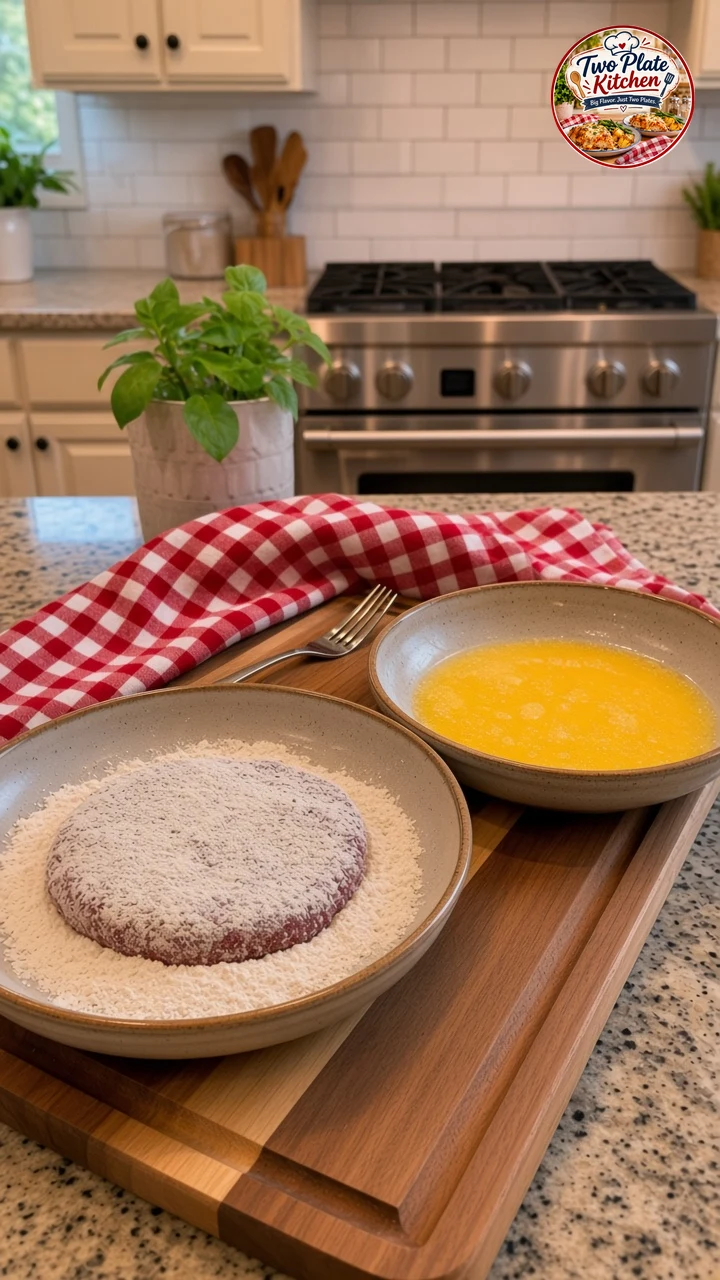
4. Start the potatoes. The breaded steaks can rest on the rack for at least 10 minutes while the potatoes cook, which lets the flour hydrate and cling so the crust is less likely to slide off in the pan. Peel 1 pound of Yukon Gold potatoes and cut them into 1 1/2-inch chunks. Cover them with cold water by 1 inch, add 1 teaspoon of salt, bring to a boil, then lower to a simmer for 15 to 20 minutes, until a fork slides in with no resistance. Drain them and keep them in the warm pot.
5. Heat the oil. Pour 1 1/2 to 2 cups of oil into a 12-inch skillet, which should come about 3/8 to 1/2 inch up the side of the pan. Heat over medium to medium-high until the oil reaches 350 degrees F. No thermometer? A pinch of flour should sizzle immediately without burning. Set the oven to 200 degrees F with a second wire rack on a sheet pan inside.
6. Fry the steaks. Lower the steaks into the oil one at a time, laying each one away from you so the oil does not splash. Fry for about 3 to 4 minutes per side, turning once with tongs, until the crust is deep golden brown and crisp. The oil temperature will drop when the steaks go in, so adjust the heat to keep it near 325 to 350 degrees F. Do not crowd the pan. If your skillet is small, fry one steak at a time.

7. Drain and keep warm. Move the fried steaks to the wire rack in the oven. A rack lets air reach the bottom of the steak, so the crust stays crisp rather than steaming. Sprinkle a tiny pinch of salt on the hot steaks if needed. Check that the center of each steak has reached at least 145 degrees F (more on that below).
8. Make the creamy pepper gravy. Carefully pour the frying oil from the skillet into a heatproof container, leaving about 1 tablespoon and the browned bits behind. Scrape out any bits that are dark or burnt and discard them. Return the skillet to medium heat, add 2 tablespoons of butter, and let it melt into the oil. Sprinkle in 3 tablespoons of flour and whisk constantly for 1 to 2 minutes, until the roux smells nutty and looks pale golden. Pour in the milk in 3 additions, whisking smooth after each one, then stir in the coarse black pepper. Simmer, whisking often, for 4 to 5 minutes, until it coats the back of a spoon. Season with salt.

9. Finish the sides. Mash the drained potatoes with 2 tablespoons of butter, 1/4 cup of warm milk, and 1/2 teaspoon of salt, just until smooth. In a small saucepan over medium heat, warm the corn with 1 tablespoon of butter and a pinch of salt for 4 to 5 minutes, then stir in the parsley.
10. Plate and spoon on the gravy. Put a steak on each plate with a scoop of mashed potatoes and a portion of corn. Spoon the gravy generously over the steak, letting a little spill onto the potatoes. Finish with a sprinkle of parsley and a bit more black pepper. Serve right away, while the crust still crackles.


Chicken-Fried Steak with Creamy Pepper Gravy for Two
Two thin beef cube steaks with a double-dredged, craggy golden crust, shallow-fried and smothered in a creamy black pepper gravy, served with buttery mashed potatoes and sweet corn. A Southern comfort dinner sized for two plates.
- Total Time: 1 hour
- Yield: 2 servings
Ingredients
For the steaks
- 2 beef cube steaks (about 5 ounces / 140 g each, about 3/8 inch thick)
- 1/4 teaspoon kosher salt
- 1/4 teaspoon freshly ground black pepper
For the dredge
- 1 cup all-purpose flour
- 1/2 teaspoon kosher salt
- 1/2 teaspoon black pepper
- 1/2 teaspoon garlic powder
- 1/2 teaspoon paprika
- Pinch of cayenne pepper (optional)
- 1 large egg
- 1/3 cup buttermilk (or whole milk)
- 1 1/2 to 2 cups canola, vegetable, or peanut oil, for shallow frying
For the creamy pepper gravy
- 2 tablespoons unsalted butter
- 1 tablespoon hot frying oil or pan drippings (or use 3 tablespoons butter in all)
- 3 tablespoons all-purpose flour
- 1 1/2 cups whole milk
- 1 1/2 teaspoons coarsely ground black pepper
- About 1/4 teaspoon kosher salt, to taste
For serving
- 1 pound Yukon Gold potatoes, peeled and cut into 1 1/2-inch chunks
- 2 tablespoons unsalted butter, for the potatoes
- 1/4 cup warm whole milk
- 1/2 teaspoon kosher salt, plus 1 teaspoon for the cooking water
- 1 1/2 cups sweet corn kernels (frozen and thawed, or drained canned)
- 1 tablespoon unsalted butter, for the corn
- 1 tablespoon chopped fresh parsley
Instructions
- Pat the cube steaks completely dry. Sprinkle both sides with 1/4 teaspoon each of salt and pepper, divided between the two steaks. Pound any thick spots to an even thickness. Set a wire rack over a sheet pan.
- Whisk the flour, 1/2 teaspoon salt, 1/2 teaspoon pepper, garlic powder, paprika, and cayenne (if using) in a shallow dish. Whisk the egg and buttermilk in a second shallow dish.
- Press one steak into the seasoned flour and shake off the excess. Dip it in the egg mixture, let the extra drip off, then press it back into the flour, packing the coating on. Place on the rack and repeat with the second steak. Let the coated steaks rest on the rack for at least 10 minutes.
- While the steaks rest, cover the potatoes with cold water by 1 inch, add 1 teaspoon of salt, bring to a boil, then simmer for 15 to 20 minutes, until fork-tender. Drain and keep them in the warm pot.
- Heat the oven to 200 degrees F and put a second wire rack on a sheet pan inside. Pour 1 1/2 to 2 cups of oil into a 12-inch skillet (about 3/8 to 1/2 inch deep) and heat over medium to medium-high to 350 degrees F.
- Fry the steaks, without crowding, for about 3 to 4 minutes per side, turning once, until deep golden brown and crisp. Keep the oil between about 325 and 350 degrees F. Move the steaks to the rack in the oven. Check that the thickest part reads at least 145 degrees F on an instant-read thermometer.
- Pour the frying oil into a heatproof container, leaving about 1 tablespoon and the browned bits (discard any burnt bits). Over medium heat, melt 2 tablespoons butter in the skillet, whisk in 3 tablespoons flour, and cook, whisking, for 1 to 2 minutes, until pale golden.
- Whisk in the milk in 3 additions, smoothing each before adding the next. Stir in the coarse black pepper and simmer for 4 to 5 minutes, whisking often, until the gravy coats the back of a spoon. Season with salt.
- Mash the potatoes with 2 tablespoons butter, 1/4 cup warm milk, and 1/2 teaspoon salt until smooth. Warm the corn with 1 tablespoon butter and a pinch of salt in a small saucepan for 4 to 5 minutes, then stir in the parsley.
- Serve each steak with mashed potatoes and corn, spoon the gravy over the steak, and finish with parsley and a little more pepper. Serve right away.
Notes
Timing: 20 minutes prep (seasoning, dredging, peeling and cutting potatoes), 30 minutes cook (potatoes simmer while the oil heats, about 7 minutes of frying, about 8 minutes for the gravy), and 10 minutes for the breaded steaks to rest on the rack, which overlaps with the potatoes simmering. Plan on about 1 hour from first step to plate, or a little less if you work the overlaps.
Recipe basis: the Two Plate Kitchen reel shows the method but not the amounts. Quantities, oil temperature (350 degrees F), frying time (3 to 4 minutes per side), and the gravy ratio (about 2 tablespoons flour and 2 tablespoons fat per cup of milk) are scaled down for two from published recipes by Serious Eats, The Kitchn, Paula Deen, The Pioneer Woman, and America’s Test Kitchen. See the article for details.
Doneness: the USDA lists beef steaks at 145 degrees F with a 3-minute rest. Insert an instant-read thermometer sideways into the thickest part. Cube steaks are often cooked well done, which is fine.
Oil: use a skillet with sides and lower the steaks in slowly. Oil will drop to about 325 degrees F when the steaks go in, so adjust the heat. If your skillet is small, fry one steak at a time and keep the first on a rack in the oven.
Gravy: add the milk in 3 additions to avoid lumps. If it gets too thick, whisk in a splash of milk. If you skip the frying oil, use 3 tablespoons butter in all. Buttermilk or whole milk both work in the egg wash.
Make ahead and storage: bread the steaks up to 30 minutes ahead and keep them on a rack in the refrigerator. Refrigerate leftovers within 2 hours in covered containers (gravy separate) and eat within 3 to 4 days. Reheat the steak on a rack in a 400 degree F oven for about 10 minutes, and rewarm the gravy with a splash of milk.
To serve 4, double everything and fry in batches, keeping the finished steaks on a rack in a 200 degree F oven.
Nutrition is an estimate for 1 serving (1 steak with gravy, mashed potatoes, and corn), not a measured value.
- Prep Time: 20 minutes
- Resting: 10 minutes
- Cook Time: 30 minutes
- Category: Dinner
- Method: Pan-fried
- Cuisine: American (Southern)
Tips for a Crust That Stays Put
- Dry the meat first. Moisture on the steak keeps the flour from sticking. Paper towels before seasoning make a real difference.
- Press the final coat on. The second trip through the flour is what builds the craggy texture. Press firmly, then gently shake off the extra.
- Rest before frying. Ten minutes on the rack helps the coating set.
- Keep the oil near 350 degrees F. If it is too cool, the crust soaks up oil and turns greasy. If it is too hot, the outside darkens before the beef is done.
- Rack, not a plate. Setting the steaks on a plate of paper towels traps steam. A wire rack keeps the underside crisp.
Pepper Gravy Troubleshooting
The gravy uses roughly 2 tablespoons of flour per cup of milk, with about the same amount of fat as flour, in line with several well-known recipes. It pours, but it also clings.
- Lumpy gravy. Add the milk in 3 additions and whisk each one smooth before the next. If lumps appear, whisk hard, or pour the gravy through a fine-mesh strainer.
- Too thick. Gravy thickens quickly as it stands. Whisk in a splash of milk, a tablespoon at a time.
- Too thin. Simmer another minute or two. If it is still loose, mash 1 teaspoon each of soft butter and flour into a paste and whisk it in.
- Tastes floury. Cook the roux a full minute or two before adding the milk, and simmer the gravy for a few minutes after.
If you like this style, our sausage gravy uses the same idea of a creamy milk-based gravy, and our Sunday pot roast for two is a great pick when you want a brown-gravy Sunday dinner.
Doneness and Food Safety
Cube steaks are thin, so they cook through quickly, but it is still smart to check. The USDA safe minimum internal temperature chart lists beef steaks at 145 degrees F with a rest time of at least 3 minutes. Insert an instant-read thermometer sideways into the thickest part of the steak, since the steak is thin.
Hot oil also deserves respect: lower the steaks in slowly, keep the handle turned in, and never leave the pan unattended. If a steak looks done outside but reads under 145 degrees F, move it to the 200 degree oven for a few minutes and check again.
What to Serve With It
Mashed potatoes are the classic partner, since they catch the gravy, and the buttery sweet corn adds color and a little sweetness against the pepper. Our garlic butter steak bites and mashed potatoes for two is another good meat-and-mash dinner, if you want to switch things up on another night.
Spoon the gravy over the steak just before you eat so the crust stays crisp, and set any extra in a small bowl for the table.
Storage and Reheating
Chicken fried steak is best straight from the pan. Refrigerate leftovers within 2 hours in a shallow, covered container, and eat them within 3 to 4 days. Keep the gravy in a separate container.
To reheat, put the steak on a rack over a sheet pan in a 400 degree F oven for about 10 minutes, or until hot throughout, so the crust can crisp again. A microwave will soften the coating. Warm the gravy in a small pan over low heat with a splash of milk, whisking until smooth. Mashed potatoes reheat well with a spoonful of milk.
FAQ
Can I use buttermilk instead of milk in the wash?
Yes, and many cooks do. Buttermilk gives a slight tang and the same sticky coating. Whole milk works as well. Just whisk it with the egg until smooth.
Why did my breading fall off?
The most common reasons are a wet steak, a coating that did not rest, an oil temperature that was too low, or flipping the steak too often. Pat the meat dry, press on the flour, rest for 10 minutes, and turn only once.
Can I make the gravy without drippings?
Yes. Use 3 tablespoons of butter in all. You will lose a little of the browned-meat flavor, but the gravy will still be creamy and peppery.
How do I make this for 4 people?
Double the steaks, flour, egg, and buttermilk, the gravy, and the sides. Fry the steaks in batches, and keep each finished batch on the rack in the 200 degree oven while you cook the rest. A second skillet speeds things up.
What is the difference between chicken fried steak and country fried steak?
Both begin with a breaded cube steak, but chicken fried steak has a crunchier, more irregular crust and a creamy white pepper gravy, while country fried steak often has a lighter coating and a brown gravy.