
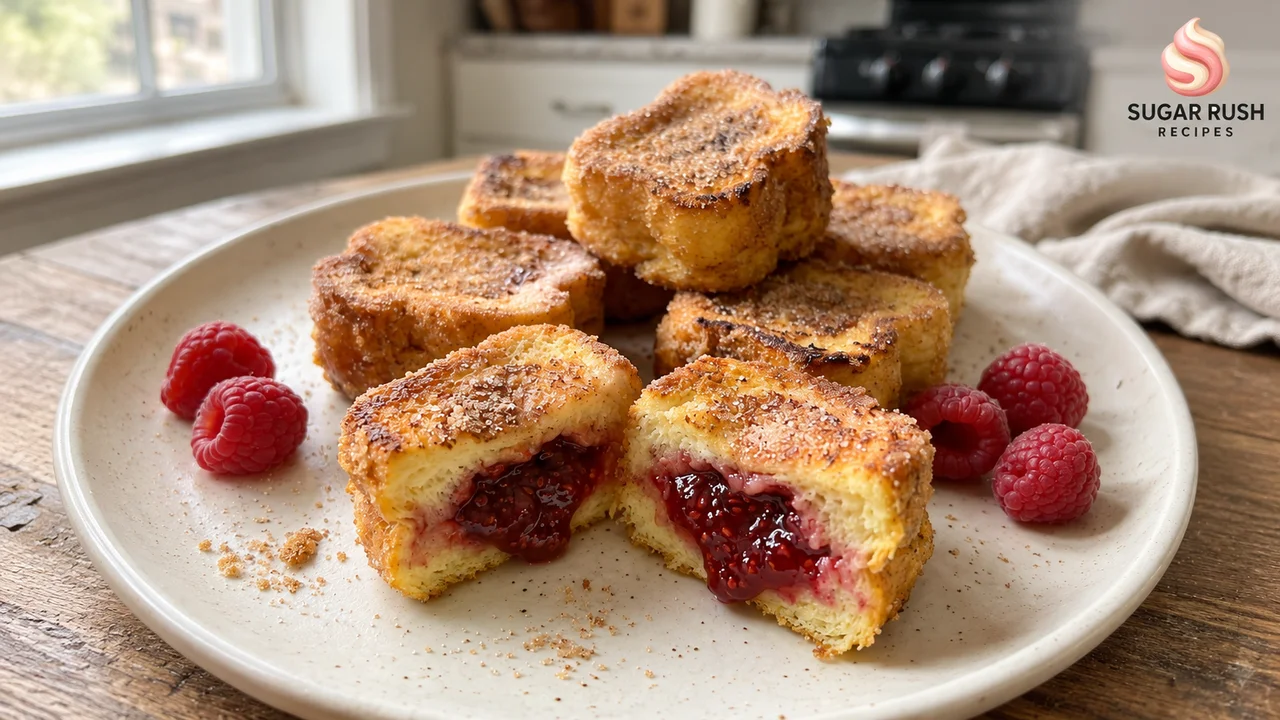
Raspberry stuffed French toast bites bring together buttery brioche, a warm jam center, and a light cinnamon-sugar coating. The outside turns golden in a skillet while the bread inside stays soft. They are small enough for a brunch plate, but substantial enough to feel like a special weekend breakfast.
The method follows the preparation shown in the Reel: flatten each whole brioche slice, add raspberry jam to one half, fold it into a triangle, press the two open edges, dip briefly in vanilla egg mixture, pan-fry, then coat in cinnamon sugar. Keep the slice whole during preparation; cut a cooked pocket only when serving if you want smaller bites.
Because this recipe uses an egg-and-milk coating, browning is only part of the doneness check. The FDA’s egg-safety guidance recommends cooking egg dishes to 160°F. Check the bread near the filling, rather than relying on the hot jam alone.
This is an original editorial recipe inspired by the Sugar Rush Recipes post. The supplied images and Reel do not establish quantities or validated cooking times, and this version has not been independently kitchen-tested. Process images are AI recipe illustrations.
In This Recipe
- Bread, jam, and custard choices
- Useful kitchen tools
- How to make the bites
- Crisp edges and common fixes
- Serving, make-ahead, and storage
- Frequently asked questions
What You Need for Raspberry Stuffed French Toast Bites
The printable card below makes eight folded brioche pockets, or four servings of two. Each pocket uses one whole flattened slice. The batch uses eight slices of brioche, ¼ cup raspberry jam, two eggs, and ⅓ cup whole milk, plus vanilla, salt, cooking fat, and cinnamon sugar. Cutting each cooked pocket in half gives 16 smaller serving pieces; it does not change the yield into 16 separately filled pockets.
Choose brioche that can hold a filling
Choose soft, fresh, flexible brioche about ½ inch thick. Remove the crusts so the slice can fold without a hard edge. Do not use brittle, dried-out bread for this method: flattening and folding require a supple crumb. Discard any bread with mold.
Roll each whole crustless slice gently to about ⅛–¼ inch thick. Keep the slice intact and roughly square. It should bend diagonally without splitting. Do not cut it into quarters, pair separate pieces, or add a second slice on top. One slice becomes one folded pocket.
Use thick jam, not a loose fruit sauce
A thick raspberry jam or preserve is easier to contain than a runny sauce. Seedless jam gives a smoother center, while seeded preserves bring the familiar raspberry texture. Either works. Stir the jam before measuring, especially if liquid has separated in the jar. If it pours like syrup, choose a thicker product rather than trying to seal it inside soft bread.
Use about 1½ teaspoons thick raspberry jam per whole slice. Place it on one triangular half, leaving a clean border about ½ inch wide along the edges that will meet. The opposite half folds over the jam. Keep the amount modest so you can close the pocket without squeezing out the filling.
Keep the custard simple
Two large eggs and ⅓ cup milk make a light coating for these small pieces. Whisk thoroughly so strands of egg white do not cling to the bread. A little alcohol-free vanilla flavoring adds a warm aroma, and a pinch of salt balances the sweet bread and jam. There is no need to sweeten the custard when the outside will receive cinnamon sugar.
Use granulated sugar for the coating. Powdered sugar dissolves differently and will not give the same fine crunch. Mix the sugar and cinnamon in a clean shallow dish before handling raw egg. Keep that dish separate from the custard bowl and the utensils used for dipping.
Useful Tools for a Small-Batch Breakfast
Affiliate Disclosure: As an Amazon Associate I earn from qualifying purchases. Product links in this article may earn a commission at no additional cost to you. Use comparable tools you already own; these are practical options, not requirements.
- Lodge 10.25-inch cast iron skillet: a heavy pan holds steady heat for small batches. Its weight and hot handle require care; a suitable skillet you already own is fine.
- OXO stainless steel fish turner: the thin edge slides under tender pockets. Use it with cast iron or other metal-utensil-safe cookware, not a delicate nonstick coating.
- OXO 11-inch balloon whisk: breaks up the egg whites for a smooth coating. A fork can also do the job if you whisk patiently.
- Pyrex 2-cup glass measuring cup: measures the milk and holds it while you set up the dipping station. Use a separate wide dish for dipping the bread.
- TP19H instant-read food thermometer: helps check the egg-coated bread in a thick bite, especially when the surface colors quickly.
You will also need a bread knife, board, teaspoon, shallow custard bowl, clean plate, and a rack or platter for finished pieces. Keep the cooked-food plate separate from anything that held raw custard. A simple fork is enough to press the bread edges; no special sandwich cutter is necessary.
How to Make Raspberry Stuffed French Toast Bites
1. Set up before dipping
Combine ¼ cup granulated sugar and 1 teaspoon cinnamon in a clean shallow dish. In another shallow dish, whisk two eggs, ⅓ cup milk, ½ teaspoon alcohol-free vanilla flavoring, and a small pinch of salt. Remove crusts from eight brioche slices and flatten each whole slice with a rolling pin.
Plan on about 20 minutes of preparation, 30 minutes for preheating and four skillet batches, and five minutes of cooling before serving. Approximately 55 minutes is a planning estimate for a 10.25-inch pan, not a promise. A larger cooking surface may reduce batch time; extra heating needed for doneness will extend it.
2. Fill, fold diagonally, and seal
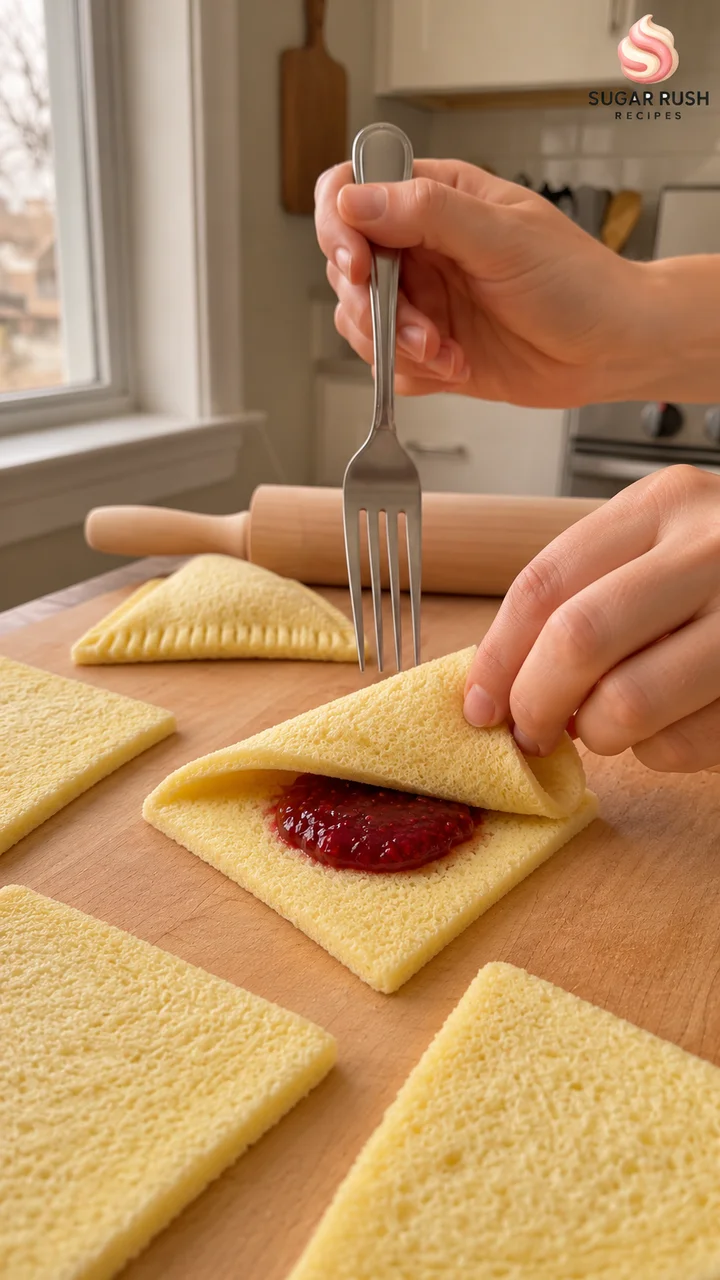
Place 1½ teaspoons jam on one triangular half of a whole flattened slice, leaving a clean ½-inch border. Fold the empty half diagonally over the filling, bringing opposite corners together. Press the two free edges and crimp gently with a fork. Repeat to make eight triangular pockets. Do not quarter the slices or make two-slice sandwiches.
Press the two open edges together with your fingers, then crimp lightly with a fork. The third edge is the continuous bread fold. If the edges will not stick, brush them very lightly with a little of the egg mixture before pressing again; avoid wetting the board. Handle the sealed pocket gently and repair a split with another freshly flattened slice rather than stacking bread over the tear.
3. Give each batch a brief dip
Heat the skillet over medium-low heat. Plan for four batches of two pockets in a 10.25-inch pan, or fewer batches in a larger suitable pan. Divide the 2 tablespoons butter and 2 teaspoons oil between batches. For four batches, use about 1½ teaspoons butter and ½ teaspoon oil each time. Dip two sealed triangles briefly in the egg mixture, about one to two seconds per side, then let excess drip off.
Do not leave the pockets soaking in the egg mixture. Dip only what will go straight into the pan. Keep the remaining pockets dry and the custard chilled during any lengthy pause. Use separate clean utensils and a clean plate for cooked food, and discard unused raw-egg mixture after cooking.
4. Cook gently on both sides
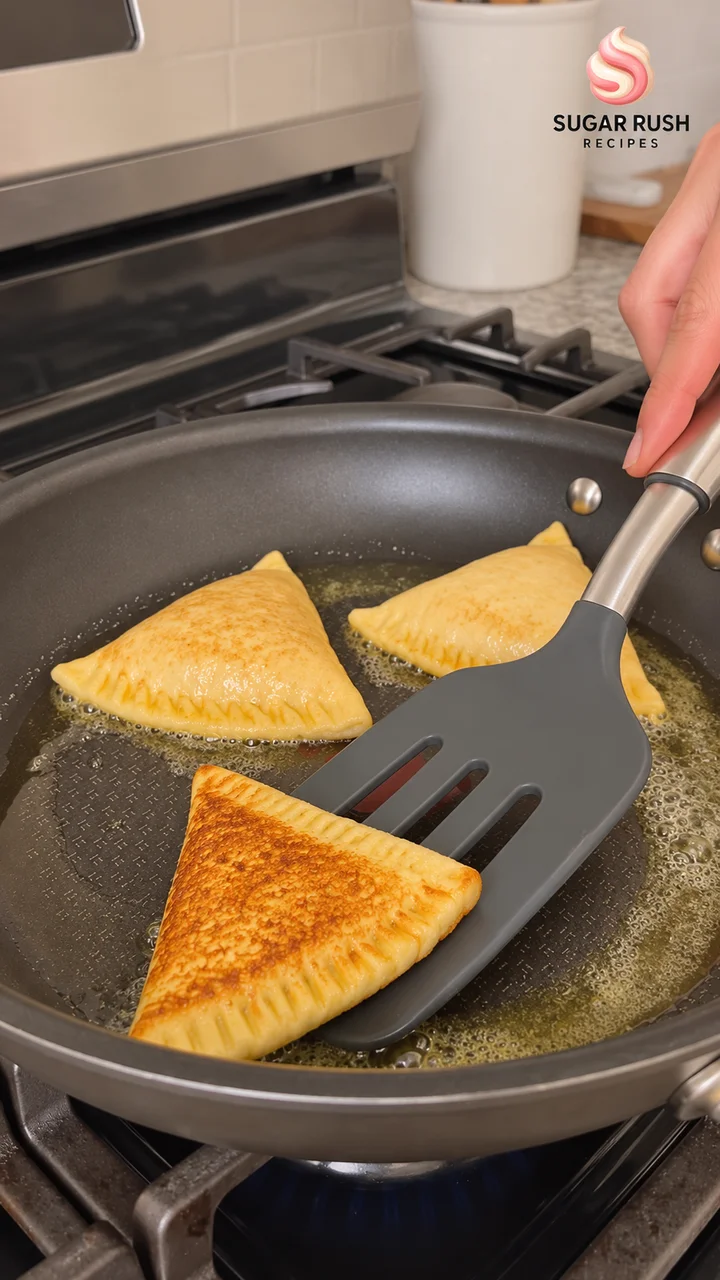
Place the dipped triangular pockets in one layer with space between them. Cook over medium-low heat for about 2½–3 minutes per broad side, turning with a suitable spatula, and briefly toast the folded edge if needed. These times are estimates. The bread should become golden while the egg coating cooks through. Lower the heat if the outside browns before the middle is done.
Check a thick bite with a thin thermometer probe inserted horizontally into the egg-coated bread near the center. Aim for at least 160°F, with no wet, uncooked egg coating. The jam can be hotter than the bread, so a reading taken only in the filling is not enough. If the outside is darkening too fast, lower the heat and continue cooking gently until the bread is done.
Repeat with fresh portions of butter and oil. If the pan develops dark crumbs or sticky leaked jam, take it off the heat and carefully wipe it with a folded paper towel held in tongs before continuing. Do not touch the hot surface. Let an overheated pan settle before adding the next batch.
5. Add cinnamon sugar and let the filling cool
Lift the fully cooked bites onto a clean plate. While still warm, turn them lightly in the cinnamon sugar, then place in a single layer. Do not put sugar-coated bites back in the skillet: the sugar can burn and become sticky. Allow about five minutes for cooling before serving, and check that the jam is comfortable to eat.
For the crispest finish, serve each batch after that short cooling period. If you need one family platter, place the cooked bites in a single layer on a rack while finishing the rest. The first batch will soften a little as it waits. Avoid covering tightly or stacking them into a deep pile that traps steam.
Crisp Edges and Common Fixes
- Jam leaks: use about 1½ teaspoons per whole slice, keep the border dry, and crimp the two open edges.
- Bread splits: use soft flexible slices, roll gently, and replace a torn slice rather than stacking a patch over it.
- Soggy outside: dip briefly, let excess custard drip off, and give pockets space in the skillet.
- Dark outside, underdone middle: lower the heat and continue cooking until the egg-coated bread reaches 160°F.
- Sticky coating: coat only after cooking and never return cinnamon-sugar-coated pockets to the hot pan.
A little surface crispness comes from the cooked bread and a little from the sugar. These are soft-centered French toast pockets, not deep-fried doughnuts. They taste best fresh, and their coating will naturally soften as moisture moves out of the bread.
Serving, Variations, and Make-Ahead
Serve two folded pockets per person with fresh raspberries or sliced fruit. Once the jam has cooled enough to eat, cut each pocket into two smaller pieces if desired. The bread, jam, and coating already provide sweetness, so syrup is optional. For another fruit center, use the same amount of thick strawberry or blackberry jam.
Do not replace the jam with raw berries one-for-one. Fresh berries release juice and do not bind the layers in the same way. Likewise, adding cream cheese changes the thickness, handling, and filling quantities. Start with the written jam-only recipe before experimenting with a second filling.
For less work in the morning, measure the cinnamon sugar in advance and keep it dry. Whisk the custard and refrigerate it covered at 40°F or below for up to 24 hours. Trim and flatten the bread shortly before filling so it stays flexible. Fill, fold, seal, and dip close to cooking time; do not leave filled or egg-soaked pockets sitting overnight.
Storage and reheating
Refrigerate leftovers within two hours of cooking, or within one hour if the room or outdoor temperature is above 90°F. Use a shallow covered container at 40°F or below. Plan to eat them within two days for the best texture; this is a quality recommendation shorter than the FDA’s general three-to-four-day guidance for cooked egg dishes.
Reheat in a single layer on a baking sheet in a 325°F oven until the middle reaches 165°F. Begin checking after about eight minutes; actual time depends on thickness and refrigerator temperature. Do not judge safety from a warm exterior alone. The sugar may melt as it heats, and the result will be softer than the first serving.
If freezing is more convenient, freeze the cooked bites without their sugar coating in one layer, then transfer to an airtight freezer container. Use within one month for best quality. Thaw in the refrigerator and reheat to 165°F before applying a fresh light coating. This freezer option has not been separately tested for texture.
For another cinnamon-sugar treat, try these cinnamon sugar apple pie roll-ups. A leisurely brunch also suits brown butter pecan cinnamon rolls, while lemon blueberry crumble bars offer a bake-ahead fruit option.
Frequently Asked Questions
Can I use regular sandwich bread?
Yes, use soft, flexible sandwich bread that can flatten and fold without tearing. Remove the crusts and keep each slice whole. The taste will be less buttery than brioche, but the same modest filling, sealing, and doneness guidance applies.
Do I have to remove every crust?
For this folded method, remove the crusts. A soft crust-free edge is easier to press closed, and the flattened slice bends more neatly.
Should I cut the bread before filling?
Do not cut the raw bread into small pieces for this version. Flatten and fill the whole slice, fold it diagonally, and cook the sealed triangle. You can cut the finished pocket after cooking, coating, and a brief cooling period.
Can these be baked or air-fried instead?
The quantities here are designed for skillet cooking. Oven and air-fryer methods need their own timing and coating adjustments, so no untested direct conversion is provided. Use the skillet method for this version.
Can I leave out the egg?
Omitting egg changes the way the coating sets. A milk-only dip is not a direct replacement, and an egg-free version would need a separately developed formula.
Are they suitable for a breakfast buffet?
They are best served in small fresh batches. Let the jam cool briefly, use clean serving utensils, and follow the time and temperature guidance above. Do not leave one large platter out all morning.
Print
Raspberry Stuffed French Toast Bites
Whole brioche slices flattened, filled with raspberry jam, folded into triangular pockets, dipped in vanilla egg mixture, pan-fried, and finished with cinnamon sugar.
- Total Time: 55 minutes
- Yield: 8 folded pockets (4 servings of 2); optionally 16 cut halves
Ingredients
8 slices soft plain brioche, about 1/2 inch thick (approximately 240–280 g before trimming)
1/4 cup (80 g) thick raspberry jam, about 1 1/2 teaspoons per pocket
2 large eggs
1/3 cup (80 ml) whole milk
1/2 teaspoon alcohol-free vanilla flavoring
Small pinch fine salt
2 tablespoons (28 g) unsalted butter, divided
2 teaspoons (10 ml) neutral oil, divided
1/4 cup (50 g) granulated sugar
1 teaspoon ground cinnamon
Optional: fresh raspberries for serving
Instructions
1. Mix cinnamon sugar in a clean shallow dish. Whisk eggs, milk, vanilla, and salt in a separate shallow dish.
2. Remove crusts. Gently flatten each whole brioche slice with a rolling pin to about 1/8–1/4 inch thick, keeping it intact and flexible. Do not quarter or pair slices.
3. Place 1 1/2 teaspoons jam on one triangular half of each slice, leaving a clean 1/2-inch border. Fold diagonally corner-to-corner to make a triangular pocket. Press the two free edges, then crimp with a fork. If needed, moisten those edges very lightly with a little egg mixture before pressing. Make eight pockets.
4. Heat a 10.25-inch skillet over medium-low heat. Plan for four batches of two pockets. For each batch use 1 1/2 teaspoons butter and 1/2 teaspoon oil. Butter should foam gently, not smoke.
5. Dip only the two pockets for the current batch in egg mixture, about 1–2 seconds per side. Let excess drip back into the bowl. Place in the pan spaced apart.
6. Cook about 2 1/2–3 minutes per broad side, briefly browning the folded edge if needed. Check egg-coated bread near the center for at least 160°F (71°C), not just the hot jam. No raw liquid egg coating should remain. Lower the heat and cook longer if needed.
7. Repeat with remaining pockets and cooking fat. Carefully remove burned crumbs or leaked jam between batches. Keep clean cooked-food utensils separate from the raw custard station; discard unused custard.
8. Turn cooked pockets lightly in cinnamon sugar while warm. Never return coated pockets to the pan. Rest about 5 minutes, until the jam is comfortable to eat. Serve two pockets per person; cut cooked pockets in half only after cooling if smaller bites are wanted.
Notes
Method follows the visible Reel sequence; quantities and times are editorial estimates, not measurements from the video or kitchen-tested results. Prep 20 minutes, cook approximately 30 minutes for preheating and four batches, cool 5 minutes: approximately 55 minutes. Extra cooking extends this.
Use soft, flexible whole slices and thick jam. A clean border and modest filling limit leaks. Strawberry jam can replace raspberry in the same amount.
Refrigerate cooked leftovers within 2 hours, or 1 hour above 90°F, at 40°F or colder. Use within 2 days for best texture. Reheat to 165°F. The coating will soften.
Contains wheat, egg, and milk. Nutrition omitted because it has not been calculated. Process images are AI illustrations.
- Prep Time: 20 minutes
- Cooling Time: 5 minutes
- Cook Time: 30 minutes
- Category: Breakfast
- Method: Stovetop
- Cuisine: American
- Diet: Vegetarian