
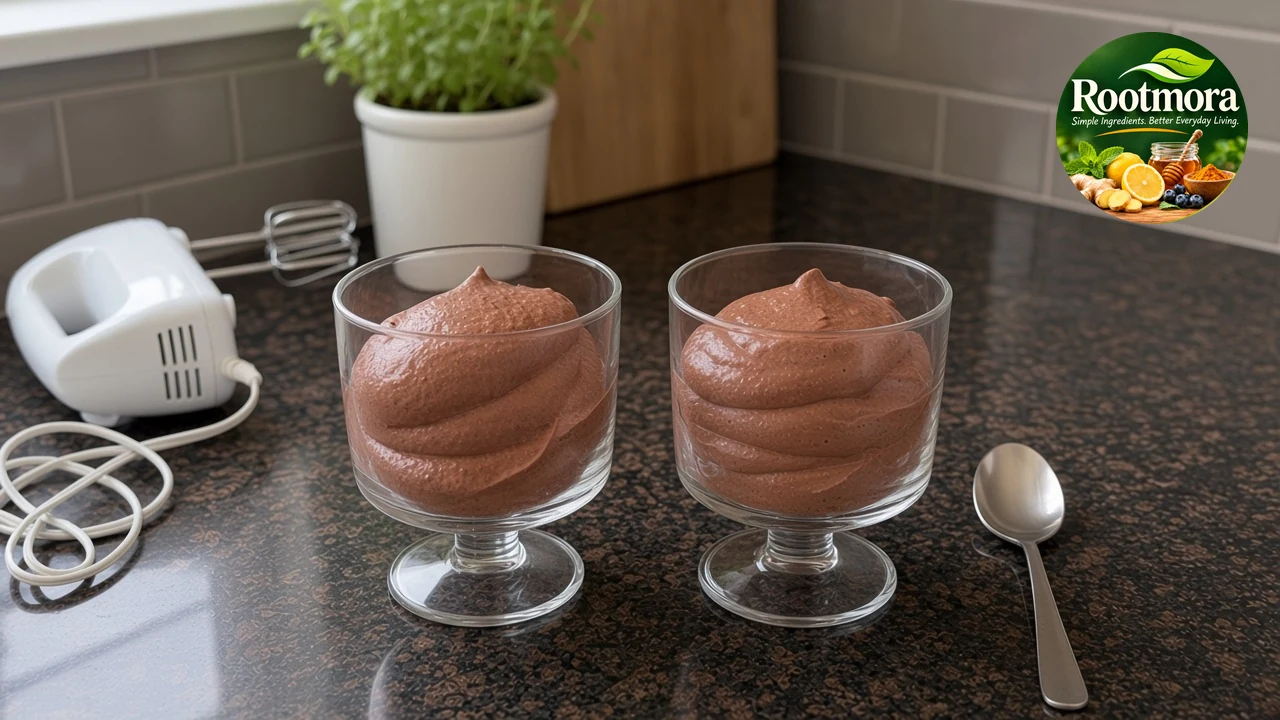
Aquafaba chocolate mousse starts with something most of us pour straight down the drain: the liquid in a can of chickpeas. Whip it with a pinch of cream of tartar and a little sugar, and that cloudy liquid turns into a glossy white foam that behaves a lot like whipped egg whites. Fold in melted dark chocolate, chill it, and you have a light, airy, deeply chocolatey mousse with no eggs at all.
It sounds like a kitchen myth, but it is real food science and an easy egg-free dessert for vegan guests, friends with egg allergies, or anyone curious. You need five ingredients, a hand mixer, and a little patience while it sets. Ready to see what a can of chickpeas can do?
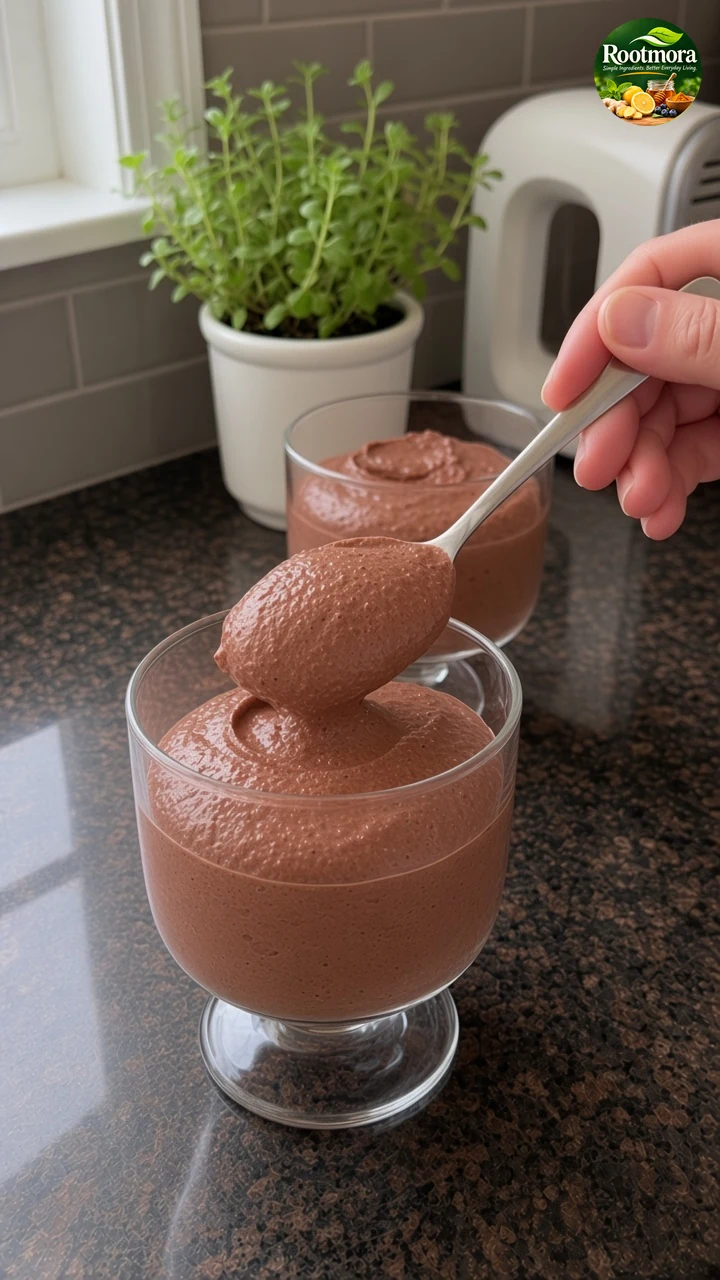
This recipe was inspired by a post shared by Rootmora on Facebook. Its video is AI-generated and gets a few details wrong, so RecipesMind wrote the quantities, method, timing, food-safety and storage notes below from established aquafaba technique and U.S. food-safety guidance. It has not been kitchen-tested by RecipesMind, so use the texture cues as your guide. The draining photo is a still from the Rootmora video; the other images are AI-generated recipe illustrations based on the post, not photographs of a kitchen test.
In this article
Why Aquafaba Chocolate Mousse Works
Aquafaba (Latin for “bean water”) is the starchy liquid chickpeas are cooked and canned in. Small amounts of protein, starch, and natural sugars move from the beans into that liquid, and they trap air much like egg-white proteins do. Whip it hard enough and it holds a foam, which is what makes aquafaba chocolate mousse possible.
- Cream of tartar makes the foam stronger. A little acid helps it whip faster and stay stable under the weight of the chocolate.
- Sugar adds structure and shine. Added slowly, it makes the foam glossy and firmer.
- Chocolate sets the mousse. As it chills, the cocoa butter firms up and locks the bubbles in place, so the chill time is not optional.
- No raw eggs. Classic mousse often uses raw eggs, and the FDA advises using pasteurized eggs in dishes served raw. Canned chickpea liquid is already cooked during canning, so that concern disappears.
Ingredients and Smart Swaps
Exact quantities are in the printable recipe card below.
Aquafaba (3/4 cup): A 15- to 15.5-ounce can usually gives 1/2 to 3/4 cup of liquid, depending on the brand; top up from a second can if needed. No-salt-added chickpeas taste most neutral. Good aquafaba looks like a loose egg white, and room-temperature liquid whips more easily than cold.
Cream of tartar (1/4 teaspoon): The stabilizer. In a pinch, use 1/2 teaspoon fresh lemon juice.
Granulated sugar (1/4 cup): Superfine dissolves fastest, but regular sugar is fine if added slowly. Strict vegans may prefer sugar labeled vegan, since some cane sugar is filtered with bone char.
Dark chocolate (5 ounces): Use chopped bars or chips with 50 to 70 percent cacao. Around 50 percent gives a softer, sweeter mousse; 70 percent a firmer, more bittersweet one. Many dark chocolates contain milk or share equipment with milk chocolate, so for a dairy-free mousse choose a brand labeled dairy-free.
Vanilla and salt: One teaspoon of vanilla rounds out the flavor. Add a pinch of salt only if your chickpeas were unsalted.
Tools That Make Aquafaba Mousse Easier
As an Amazon Associate, RecipesMind earns from qualifying purchases. The links below are affiliate links; buying through them costs you nothing extra. Equipment you already own works fine if it does the same job.
| Tool or ingredient | Why it helps |
|---|---|
| OXO Good Grips 8-inch fine mesh strainer | Catches every chickpea and rests securely on the bowl. |
| FineDine stainless steel mixing bowls (6-piece) | Metal is easy to get grease-free, and deep bowls limit splatter. |
| Cuisinart HM-50 5-speed hand mixer | Aquafaba needs minutes of high-speed whipping; a whisk won’t cut it. |
| McCormick cream of tartar | Helps the foam whip up and hold its peaks. |
| Enjoy Life dark chocolate morsels | Dairy-free, vegan dark chocolate that melts smoothly. |
| TempPro TP19H instant-read thermometer | Confirms the chocolate has cooled to lukewarm. |
| GIR Ultimate silicone spatula | Folds gently and scrapes the bowl clean. |
| Crystalia 9-ounce footed glass dessert cups (set of 4) | Show off the airy texture; one serving each. |
Step 1: Drain the Chickpeas and Check the Aquafaba
Set a fine-mesh strainer over a clean bowl and pour in the whole can. The chickpeas stay in the strainer and the aquafaba collects below. Measure out 3/4 cup. Skip cans that are bulging, leaking, or badly dented.
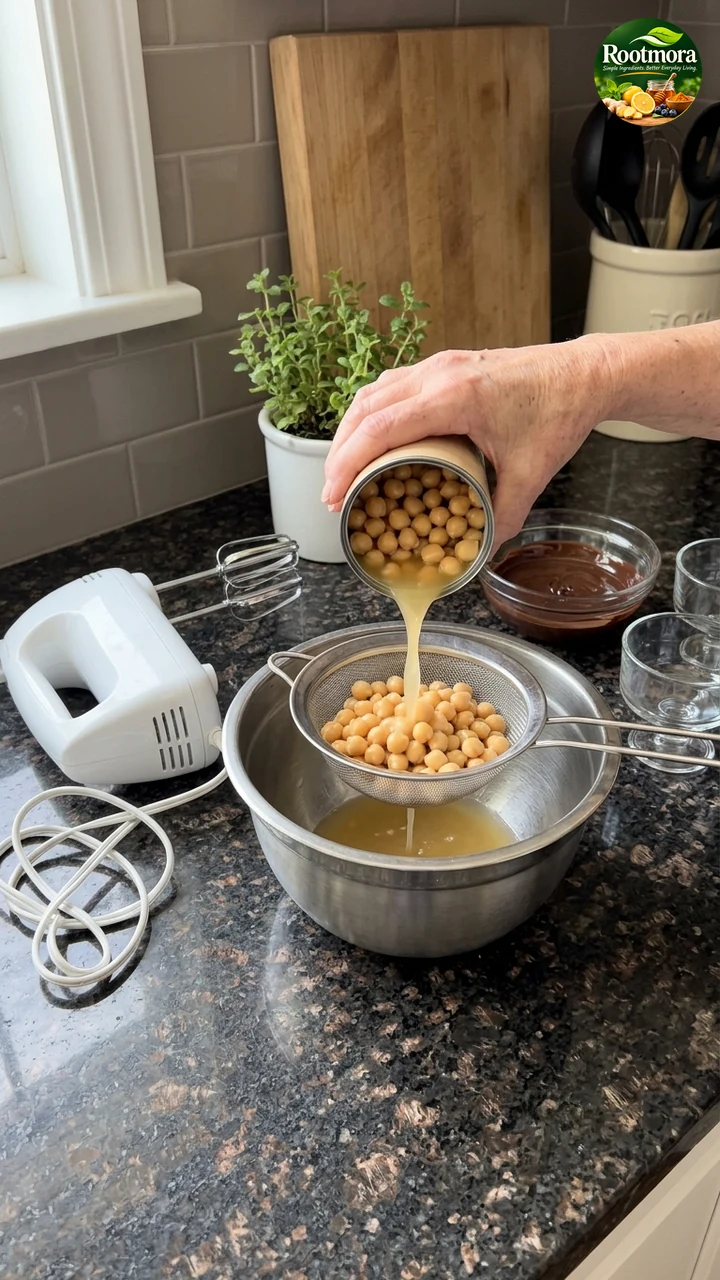
If the liquid is slightly thick, you are ready. If it is thin and watery, simmer it in a small saucepan for about 10 to 15 minutes, until reduced by roughly a quarter to a third, so it coats a spoon. Start with extra liquid if you plan to reduce it, and cool it completely before whipping.
Step 2: Melt and Cool the Chocolate
Melt the chopped chocolate in the microwave at 50 percent power in 30-second bursts, stirring after each, or in a heatproof bowl over barely simmering water. Keep water and steam out of the bowl, or the chocolate can seize.
Let it cool for 15 to 20 minutes while you whip. You want it lukewarm, about 85°F to 90°F: still pourable but no longer warm to the touch. Hot chocolate melts the foam; chocolate that is too cool sets into hard flecks.
Step 3: Whip the Aquafaba to Stiff Peaks
Use a large, spotless metal or glass bowl. Any trace of fat stops aquafaba from foaming, so wipe the bowl and beaters with a paper towel dampened with lemon juice or vinegar. Skip plastic bowls, which can hold a film of grease.
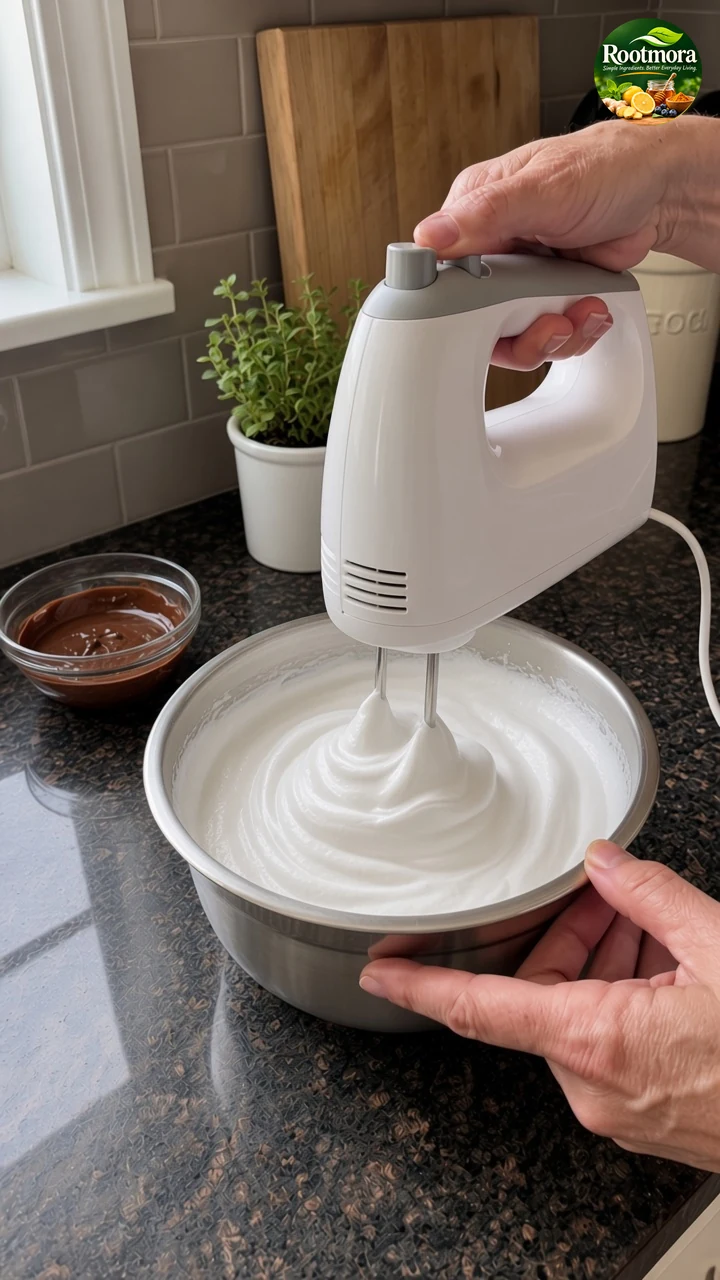
Whip the aquafaba on medium until frothy, about 1 minute. Add the cream of tartar and switch to high. Within a few minutes it turns white and holds soft, droopy peaks.
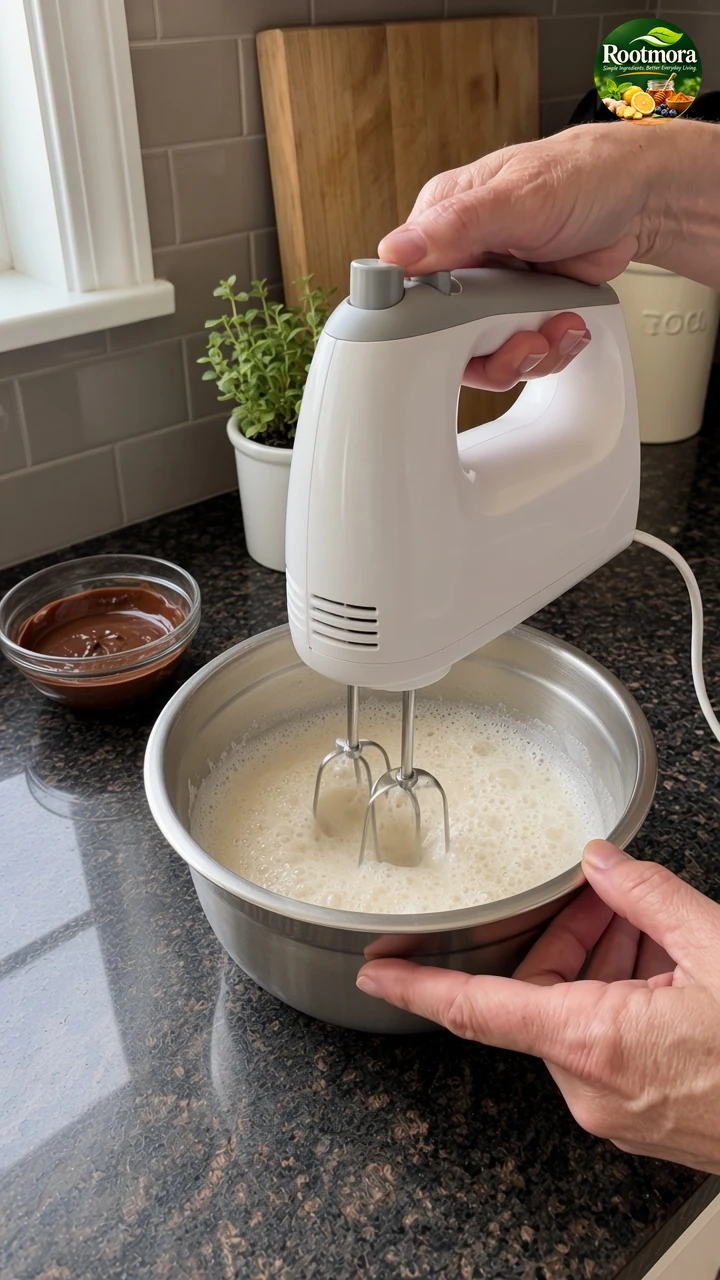
Now add the sugar one tablespoon at a time, about 30 seconds apart, then the vanilla, and keep whipping on high. With a hand mixer this takes 8 to 12 minutes in total (a stand mixer, often 3 to 5). Aquafaba is slower than egg whites, so do not quit early.
How to tell it is ready: the foam is thick, bright white, and glossy, and a peak on the lifted beaters stands straight up. Tilt the bowl and the foam should not slide. Then stop; more whipping will not make it firmer.
Step 4: Fold in the Chocolate
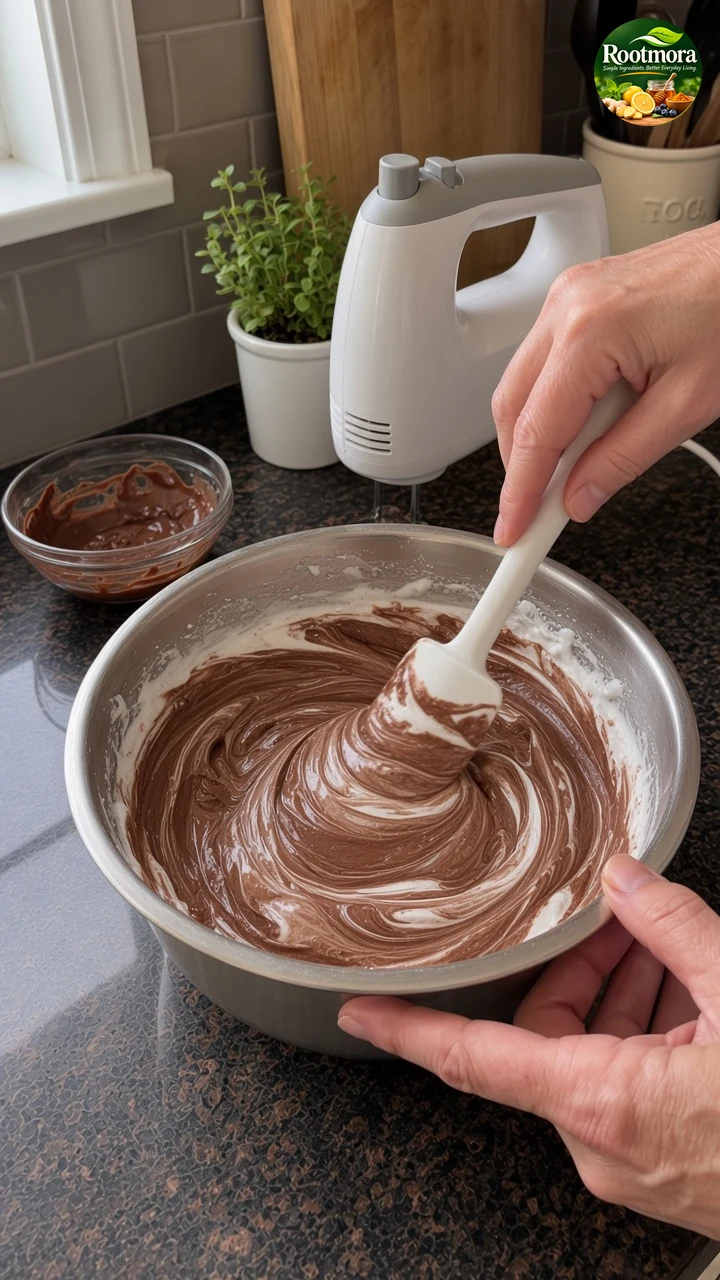
Stir about 1 cup of the foam into the lukewarm chocolate first. That portion will deflate, which is fine: it loosens the chocolate so it blends in more easily.
Pour it over the remaining foam. With a silicone spatula, cut down through the middle, sweep along the bottom, and lift up the side, turning the bowl a quarter turn each time. Stop as soon as no white streaks remain. Some volume loss is normal; the aquafaba chocolate mousse should still look thick and airy, not soupy.
Step 5: Portion and Chill
Spoon the mousse into four small glasses, about 1/2 cup each; spooning keeps more air in than pouring. Cover and refrigerate for at least 4 hours, or overnight for the firmest set.
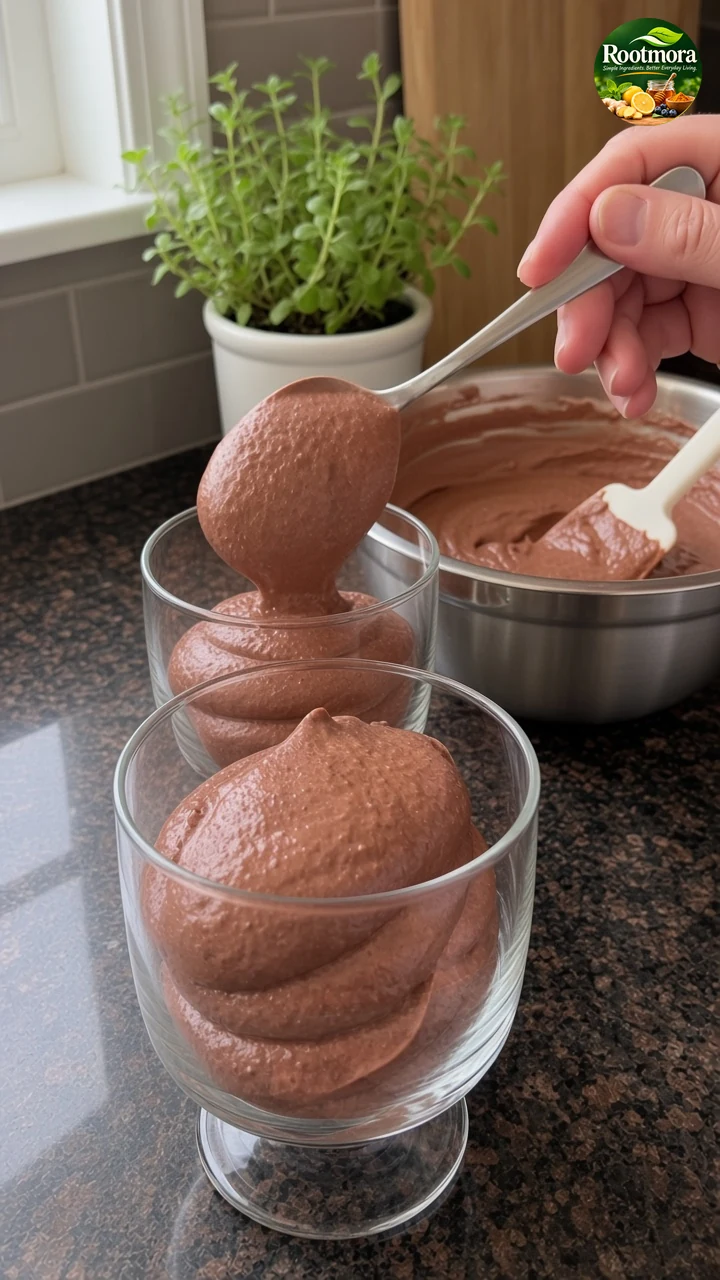
Serve it cold. It is lovely plain, or add a few raspberries, shaved chocolate, or coconut whipped cream.
How Long Aquafaba Mousse Really Takes
- Active prep: about 25 minutes for draining, measuring, whipping, folding, and portioning.
- Melting the chocolate: about 5 minutes, then about 15 to 20 minutes of cooling that happens while you whip.
- Chilling: at least 4 hours, or overnight.
- Ready to serve: about 4 hours 30 minutes, mostly hands-off. Make it the night before.
Aquafaba Chocolate Mousse Recipe
Print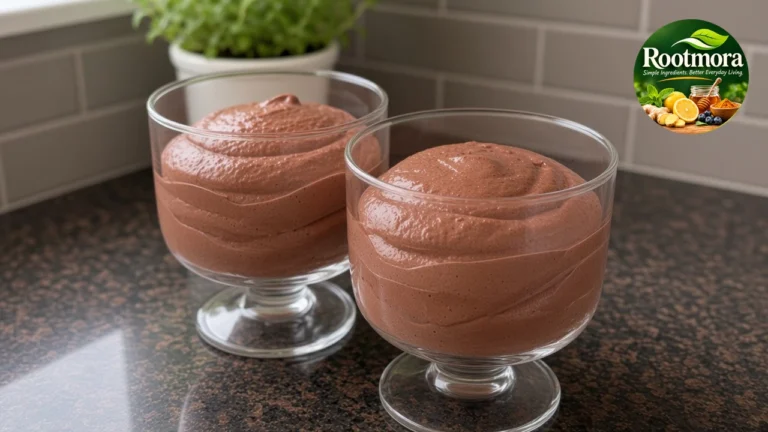
Aquafaba Chocolate Mousse
A light, airy, egg-free chocolate mousse made by whipping the liquid from a can of chickpeas (aquafaba) with cream of tartar and sugar, then folding in cooled melted dark chocolate. Five ingredients, no raw eggs, and fully vegan when made with dairy-free chocolate. Plan for at least 4 hours of chilling. Inspired by Rootmora. Not kitchen-tested by RecipesMind; times are estimates.
- Total Time: 4 hours 30 minutes
- Yield: 4 servings (about 1/2 cup each)
Ingredients
3/4 cup (180 ml) aquafaba (the liquid from one 15- to 15.5-oz can of chickpeas, preferably no-salt-added), at room temperature
1/4 tsp cream of tartar
1/4 cup (50 g) granulated or superfine sugar
1 tsp pure vanilla extract
5 oz (140 g) dark chocolate, 50–70% cacao, chopped (choose dairy-free chocolate for a vegan / milk-free mousse)
Pinch of fine salt (optional; only if your chickpeas were unsalted)
Instructions
Drain: Set a fine-mesh strainer over a clean bowl and pour in the can of chickpeas. Measure 3/4 cup of the liquid (top up from a second can if short). Refrigerate the chickpeas in a covered container for another use. If the liquid is thin and watery, simmer it for 10–15 minutes until reduced by about a quarter to a third, then cool completely.
Melt the chocolate: Melt the chopped chocolate in the microwave at 50% power in 30-second bursts, stirring after each, or in a heatproof bowl over barely simmering water. Keep water and steam out. Cool for 15–20 minutes, until lukewarm (about 85–90°F) but still fluid.
Start whipping: In a large, spotless, grease-free metal or glass bowl, beat the aquafaba with a hand mixer on medium until frothy, about 1 minute. Add the cream of tartar and beat on high until it is white and holds soft peaks.
Add sugar: With the mixer on high, add the sugar 1 tablespoon at a time, about 30 seconds apart, then add the vanilla (and salt, if using).
Whip to stiff peaks: Keep beating on high until the foam is thick, glossy, and holds a stiff peak that stands straight up on the beaters, 8–12 minutes total with a hand mixer (about 3–5 with a stand mixer). The foam should not slide when the bowl is tilted.
Lighten the chocolate: Stir about 1 cup of the whipped aquafaba into the lukewarm chocolate until smooth.
Fold: Pour the chocolate mixture over the remaining foam and fold gently with a silicone spatula just until no white streaks remain.
Portion: Spoon into 4 small glasses or ramekins (about 1/2 cup each).
Chill: Cover and refrigerate at least 4 hours, or overnight, until set. Serve cold.
Notes
Times: 25 minutes active prep + 5 minutes melting the chocolate (it cools while you whip) = 30 minutes hands-on, PLUS at least 4 hours of chilling. Real ready-to-serve time: about 4 hours 30 minutes (or make it the day before).
Aquafaba: A 15-oz can usually yields 1/2–3/4 cup. Good aquafaba is slightly thick, like a loose egg white. A trace of grease in the bowl or beaters stops it from whipping; wipe them with lemon juice or vinegar first and avoid plastic bowls.
Chocolate temperature: Hot chocolate melts the foam (dense, grainy mousse); chocolate that is too cool sets into flecks. Lukewarm, about 85–90°F, is the target.
Substitutes: 1/2 tsp lemon juice can replace the cream of tartar. 50% cacao gives a softer, sweeter mousse; 70% a firmer, more bittersweet one.
Storage: Keep covered in the refrigerator (40°F or below) and eat within 2–3 days. Don’t leave it at room temperature more than 2 hours (1 hour above 90°F). Can be frozen about 1 month; texture becomes denser, so serve nearly frozen.
Leftover chickpeas: Refrigerate in a covered container (not the open can) and use within 3–4 days, or freeze.
Allergens: Egg-free. Contains chickpea (legume). Dairy-free and vegan only if the chocolate is labeled dairy-free; dark chocolate can contain milk from shared equipment, so read labels. Strict vegans: some cane sugar is processed with bone char.
Not kitchen-tested by RecipesMind. Nutrition values are estimates.
- Prep Time: 25 minutes
- Chilling Time: 4 hours
- Cook Time: 5 minutes (melting the chocolate)
- Category: Dessert
- Method: No-Bake (Whipped)
- Cuisine: French-Inspired
- Diet: Vegan
Common Mistakes to Avoid
- A greasy bowl or beaters. Even a trace of fat keeps the foam from forming.
- Thin aquafaba. If it never gets past a bubbly froth, reduce it next time.
- Stopping at soft peaks. Soft foam collapses under the chocolate.
- Adding hot chocolate. It melts the foam into a dense, grainy pudding.
- Over-folding. Every extra stroke knocks out air.
- Serving too soon. Without several hours of chilling, it stays loose.
What to Do with the Leftover Chickpeas
Rinse the drained chickpeas, refrigerate them in a covered container (not the open can), and use them within 3 to 4 days. They are perfect for hummus, salads, roasted chickpeas, or our creamy marry me chickpeas. They also freeze well.
Extra aquafaba keeps covered in the fridge for a couple of days, or freeze it in an ice cube tray.
For more no-bake desserts, try our raspberry white chocolate mousse cups or the two-ingredient chocolate ice cream. The Knox gelatin trick is another clever kitchen shortcut.
Storage and Food Safety
Keep aquafaba chocolate mousse covered in the refrigerator at 40°F or below and enjoy it within 2 to 3 days; it slowly becomes denser and may weep a little. Do not leave it out for more than 2 hours, or 1 hour above 90°F, per the FoodSafety.gov 4 Steps to Food Safety. It can be frozen for about a month, but it thaws denser, so eat it nearly frozen.
Allergens: It is egg-free, and dairy-free only if the chocolate is. Chickpeas are legumes, so skip it with a chickpea or legume allergy. The FDA has found milk in some dark chocolate, even in a few bars labeled dairy-free, so read labels closely if you have a milk allergy.
Frequently Asked Questions
Does aquafaba chocolate mousse taste like chickpeas?
No. Raw aquafaba smells mildly of beans, but after whipping with sugar and vanilla and folding into chocolate, it is not noticeable.
Why won’t my aquafaba whip?
Usually it is grease in the bowl, liquid that is too thin, or not enough time. Clean the bowl with lemon juice, reduce thin liquid, and whip on high for the full 8 to 12 minutes.
Why did my mousse turn grainy or deflate?
Grainy mousse means the chocolate was too warm or too cool. Runny mousse means under-whipped foam or too much folding.
Can I make it ahead?
Yes. It is best made the day before, since it needs at least 4 hours to set.
Is this a healthy dessert?
It is lighter than cream-based mousse, with no cream or yolks, but it is still a dessert with sugar and fat.
Next time you open a can of chickpeas, save the liquid. With a mixer, good dark chocolate, and a little patience, it becomes an aquafaba chocolate mousse nobody would guess started in the pantry.