
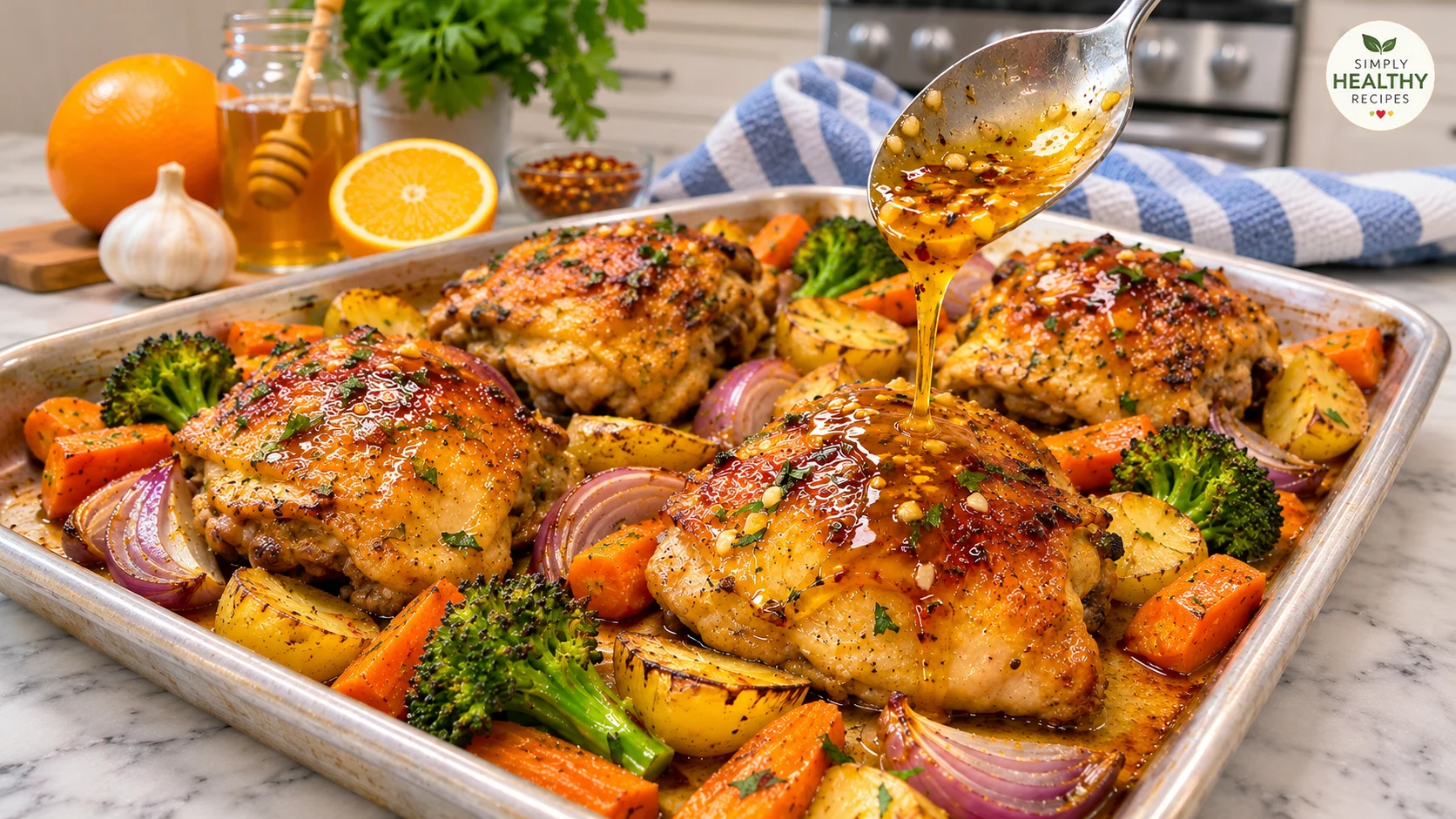
Orange honey garlic chicken thighs bring golden roasted chicken, tender potatoes, carrots, broccoli, and red onion together with a glossy citrus glaze. This sheet pan dinner serves four and uses staggered roasting so each vegetable gets the cooking time it needs.
The orange brings brightness, honey adds sweetness, and garlic keeps the sauce savory. A little cornstarch helps the glaze cling without a long reduction. The main ingredients roast on a sheet pan while the sauce cooks in a small saucepan.
Use a thermometer rather than color to check the chicken. The CDC recommends a minimum internal temperature of 165°F for poultry. Measure in the thickest part of each thigh, without touching bone.
Recipe note: This original recipe was developed to match the supplied dish description and images. It has not been kitchen-tested. Cooking times are estimates; temperature and tenderness determine when the food is ready. Any generated process image is an illustration rather than documentation of a kitchen test.
On this page
- Recipe overview
- Ingredients
- Equipment
- Step-by-step method
- Tips and substitutions
- Make-ahead and storage
- Frequently asked questions
Recipe at a glance
| Detail | Estimate |
|---|---|
| Yield | 4 servings |
| Preparation | 20 minutes |
| Roasting | 58–65 minutes, or longer as needed |
| Resting | 5 minutes |
| Total | About 1 hour 30 minutes |
| Oven | 425°F / 220°C |
Allow space around the food. This quantity is intended for a large, rimmed half-sheet pan, but particularly large thighs may require a second pan. A deep pile of vegetables will steam and change the cooking time.
Ingredients for orange honey garlic chicken thighs
Chicken and vegetables
- 4 bone-in, skin-on chicken thighs, about 2 pounds total
- 1 pound baby yellow potatoes, cut into pieces no larger than 1 inch
- 2 medium carrots, about 6 ounces total, cut into ½-inch-thick diagonal pieces
- 8 ounces broccoli, cut into medium florets and dried well
- ½ medium red onion, cut into thick wedges
- 2 tablespoons olive oil, divided
- 1 teaspoon fine salt, divided, plus more to taste
- ½ teaspoon black pepper, divided
- ½ teaspoon paprika
- 1 tablespoon chopped fresh parsley, for serving
Orange honey garlic glaze
- ½ cup fresh orange juice
- 1 teaspoon finely grated orange zest
- 3 tablespoons honey
- 4 garlic cloves, finely minced
- 1 tablespoon lemon juice
- ¼ teaspoon crushed red pepper flakes, optional
- A small pinch of salt
- 1 teaspoon cornstarch mixed with 1 tablespoon cold water
Zest the orange before juicing it. Use the colored outer peel and leave behind the bitter white pith. Plain orange juice without added sweetener is a useful substitute when fresh oranges are unavailable.
The salt quantity assumes fine salt. Coarse salt does not measure the same by volume, so start conservatively if changing the type. Taste the cooked vegetables and the clean glaze before adding extra seasoning.
The honey is part of the flavor and texture, not a reason to describe the dish as sugar-free. Skin-on thighs contribute to the browned appearance shown in the reference. No low-calorie or special-diet claim has been established for this recipe.
Equipment
Use a large, rimmed metal half-sheet pan, approximately 18 by 13 inches, a small saucepan, mixing bowls, a pastry brush, and an instant-read thermometer. Keep a clean serving utensil and plate available.
A shallow rim contains the cooking juices while leaving the food exposed to the oven heat. A deep roasting dish can produce a different result. If using a second sheet pan, give both pans room for air to circulate and check each one separately.
Disclosure: As an Amazon Associate, I earn from qualifying purchases. Use suitable tools you already own; these links are optional.
| Useful tool | How it helps |
|---|---|
| Rimmed half-sheet pans | Give the chicken and vegetables room to roast; a second pan helps if crowded. |
| Instant-read food thermometer | Check each thigh at its thickest part without touching bone. Do not leave a handheld probe in the oven. |
| Silicone basting brush | Apply a thin layer of glaze late in cooking. |
| Fine citrus zester | Remove the orange outer peel while leaving the bitter white pith behind. |
| Graduated liquid measuring cup | Measure the orange juice before adding it to the saucepan. |
How to make orange honey garlic chicken thighs
1. Heat the oven and prepare the ingredients
Heat the oven to 425°F / 220°C with a rack near the middle. Cut the potatoes into evenly sized pieces no larger than 1 inch. Slice the carrots about ½ inch thick. Leave the broccoli in medium florets rather than tiny pieces.
Pat the chicken dry with paper towels. Do not rinse it. Washing raw chicken can spread bacteria around the sink. Wash your hands after handling the chicken and keep its juices away from food that will be eaten without further cooking.
Prepare the vegetables on a clean board. Use a separate board for raw chicken, and wash tools and surfaces before using them again. Do not put cooked chicken on the plate that held it raw.
2. Give the potatoes and carrots a head start
Toss the potatoes and carrots with 1 tablespoon olive oil, ¼ teaspoon salt, and ¼ teaspoon pepper. Spread them in a single layer on the pan. Where practical, set a cut side of each potato against the metal.
Roast for 15 minutes. The roots will only be partly cooked at this point. Do not add the broccoli yet; it needs less time than the potatoes and carrots.
3. Add the chicken
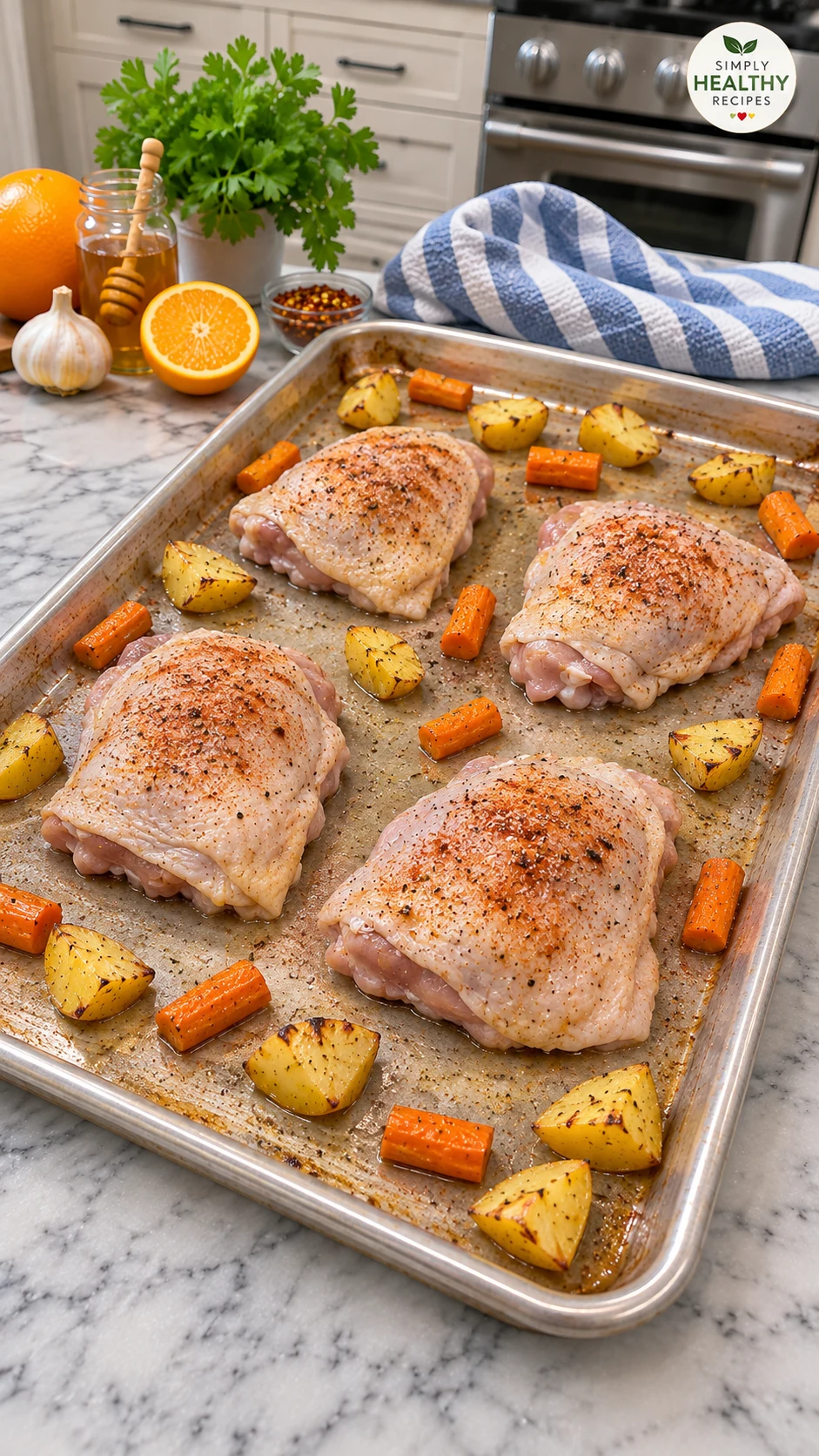
Season the chicken with 1 teaspoon olive oil, ½ teaspoon salt, the remaining ¼ teaspoon pepper, and the paprika. Carefully turn the partially roasted vegetables and make four spaces for the thighs.
Place the chicken directly on the pan, skin side up, with the vegetables around it. Keep the skin exposed rather than covering it with vegetables. Return the pan to the oven and roast for 25 minutes. Do not apply the honey glaze yet.
4. Prepare the glaze while the chicken roasts
Combine the orange juice, zest, honey, garlic, lemon juice, optional red pepper flakes, and a pinch of salt in a small saucepan. Bring to a gentle simmer over medium heat. Simmer for about 5 minutes, stirring as needed.
Stir the cornstarch and cold water again, then whisk the slurry into the simmering sauce. Cook for approximately 1 minute, until lightly thickened. Remove from the heat. The glaze should coat a spoon but remain easy to brush. If needed, loosen it with a teaspoon of water at a time.
Before using a brush near the chicken, transfer 2 tablespoons of glaze to a separate clean bowl for serving. Keep this portion away from utensils that touch raw or undercooked poultry.
5. Add the broccoli and onion
Toss the broccoli and red onion with the remaining 2 teaspoons olive oil and ¼ teaspoon salt. Carefully add them to spaces around the chicken. Turn the potatoes and carrots again if needed.
Use a second pan if the additions would cover the chicken or crowd the vegetables. Roast for 10 minutes before applying the glaze. Use dry oven mitts and set the hot pan on a heat-safe surface whenever adding ingredients.
6. Glaze near the end of cooking
Brush a thin layer of the remaining glaze over the chicken. Avoid pouring a thick pool onto the pan, where the sugars can darken quickly. Roast for another 8–15 minutes, checking earlier if the skin is already deeply browned.
Check every thigh with a thermometer in its thickest part, avoiding the bone. Each piece must reach at least 165°F. The potatoes and carrots should be fork-tender; the broccoli should be cooked through with browned edges.
The chicken will have roasted for about 43–50 minutes at this stage. Size, starting temperature, pan material, and oven performance can extend that time. If the glaze darkens before the meat is ready, loosely shield the chicken with foil and keep cooking.
Remove fully cooked vegetables with clean utensils if they finish before the chicken. Keep cooking any undercooked chicken. Discard glaze left in a brushing bowl that has been contacted by a brush used on undercooked poultry; it is not a finishing sauce.
7. Rest and serve
Let the chicken rest for about 5 minutes. Drizzle with the reserved clean glaze, sprinkle with parsley, and serve each thigh with one-quarter of the vegetables. Check for bones when serving.
The finished skin should be glossy and browned. A honey glaze adds moisture, so the surface will not stay as dry and crisp as unglazed roasted skin.
Why staggered roasting matters
Potatoes and carrots generally need longer than broccoli. Starting everything together can leave the broccoli overdone before the roots become tender. The initial 15 minutes give the dense vegetables a head start.
The chicken then gets time to roast before the delicate vegetables arrive. The glaze goes on last because a sweet coating can scorch during a long roast at a high temperature.
This order leaves room to respond to the food. A small thigh can finish sooner than a large one. A thick potato piece can take longer than its neighbors. The thermometer and a fork matter more than an exact promise about the clock.
Tips for a better result
- Dry the broccoli. Surface water encourages steaming and dilutes the pan juices.
- Cut the roots evenly. Large chunks can stay firm while small pieces are tender.
- Keep the skin exposed. Covering it with vegetables or sauce throughout cooking reduces browning.
- Brush lightly. Add the reserved clean glaze at serving instead of exposing all the sauce to the oven.
- Watch the edges. Sauce may darken first near the rim; that does not tell you whether the chicken is done.
- Check each thigh. Thickness and oven hot spots can cause uneven cooking.
Substitutions and adjustments
Boneless chicken thighs
Boneless thighs need a shorter cooking time and are not a direct timed swap. Keep the vegetable head start, add the chicken later, and check for 165°F. Finish vegetables separately if needed. For the most predictable first attempt, use the bone-in, skin-on thighs specified here.
Chicken breasts
Breasts vary greatly in thickness and can dry out before the vegetables finish. Add them according to their size and remove them when they reach 165°F. Continue roasting the vegetables if they need longer.
Different vegetables
Cauliflower can replace broccoli, although floret size changes its cooking time. Sweet potato can replace yellow potato when cut evenly, but it may soften and brown differently. Green beans are another possible late addition. Check their tenderness rather than assuming an identical schedule.
Milder glaze
Leave out the crushed red pepper flakes for a milder version. They are optional and do not thicken the sauce. Avoid adding extra honey before tasting the clean, cooked glaze; orange juice already contributes sweetness.
Serving ideas
The potatoes and vegetables make this a complete plated dinner for four. A green salad adds a fresh side without another oven dish. Bread or another cooked vegetable can round out larger portions.
For another comforting dinner, try our Salisbury steak with onion and mushroom gravy for two. Our garlic butter steak with mushroom gravy is another option for a smaller meal.
Make-ahead preparation
Cut carrots and broccoli a day ahead and refrigerate in covered containers. Keep cut onion separate if you want to prevent its aroma transferring to other ingredients.
Cut potatoes can discolor. For a short advance preparation period, keep them submerged in cold water in the refrigerator. Drain and dry them thoroughly before roasting.
Make the glaze up to three days ahead, refrigerate promptly in a covered container, and warm gently before using. Separate the clean finishing portion before brushing the chicken.
Use or freeze refrigerated raw chicken within 1–2 days, following USDA chicken storage guidance. Keep it in a leakproof container on a lower shelf. Do not partly cook chicken for later finishing; prepare the components ahead or fully cook the meal.
Storing and reheating leftovers
Refrigerate leftovers promptly in shallow containers. Do not leave perishable food out for more than two hours, or one hour when the surrounding temperature exceeds 90°F.
Keep the refrigerator at 40°F or below. Use cooked chicken leftovers within 3–4 days and reheat to 165°F. The FDA safe food handling guide explains refrigeration, cross-contamination, and reheating temperatures.
To reheat in the oven, put a portion in an oven-safe dish, add a small splash of water, and cover loosely. Warm at 350°F, checking the temperature rather than relying on a fixed number of minutes. Uncover briefly at the end if desired, watching the sweet glaze.
For microwave reheating, use a microwave-safe container, rotate the portion, and stir the vegetables as needed. Check several spots for even heating. For freezing, label freezer-safe containers and use within about two months for preferred quality. Potatoes and broccoli may soften after thawing. Thaw in the refrigerator and reheat thoroughly.
Frequently asked questions
Is this a one-pan recipe?
The chicken and vegetables roast on one large sheet pan when they fit comfortably. The sauce is made in a small saucepan. Use a second roasting pan if needed for space.
Do I need to marinate the chicken?
No marinade is required. Season before roasting and apply the glaze toward the end of cooking.
Why is my glaze watery?
The sauce needs to simmer after the cornstarch slurry is added. Stir the slurry immediately before adding because cornstarch settles. Water clinging to the vegetables can also dilute sauce on the pan.
Why did the glaze burn?
An early application, a thick layer, a hot spot, or a dark pan can cause rapid browning. Brush on a thin layer late in cooking. Watch closely and shield the top if needed while the meat finishes cooking.
Can I use the brushing sauce for serving?
Only use the separate clean portion reserved before the brush touches the chicken. Discard sauce contaminated by a brush used on undercooked poultry.
How do I know the chicken is done?
Check every thigh in its thickest part without touching bone. The minimum safe internal temperature is 165°F. Brown skin and clear-looking juices are not substitutes for a thermometer.
Can I double the recipe?
Use additional pans rather than piling twice the food onto one pan. Ovens vary when loaded with multiple pans, so check temperatures and tenderness separately and allow extra time if needed.
Is there a nutrition estimate?
No nutrition calculation is provided. Values depend on thigh size, edible meat and skin, actual ingredient weights, and how much glaze is served. Calculate with your specific ingredients if you need an estimate.
Print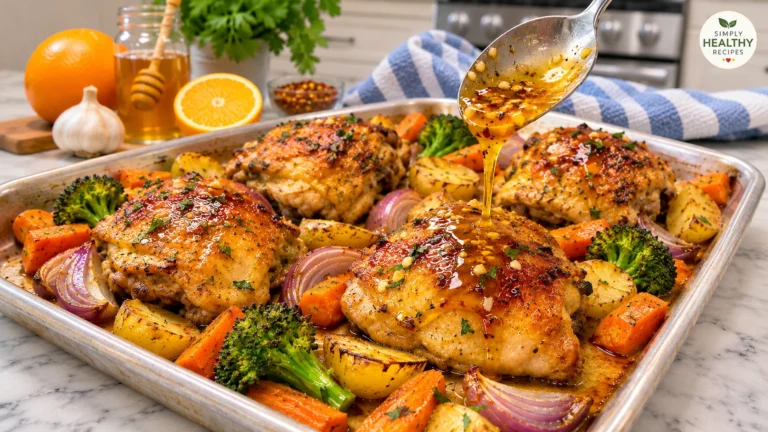
Sticky Orange Honey Garlic Chicken Thighs & Roasted Veggies
Bone-in chicken thighs with potatoes, carrots, broccoli, red onion, and a glossy orange honey garlic glaze. Staggered roasting helps the vegetables cook evenly.
- Total Time: 90 minutes (includes 5 minutes resting)
- Yield: 4 servings
Ingredients
- 4 bone-in, skin-on chicken thighs (about 2 lb total)
- 1 lb baby yellow potatoes, cut into pieces no larger than 1 inch
- 2 medium carrots (about 6 oz), cut into ½-inch pieces
- 8 oz broccoli florets, dried well
- ½ medium red onion, cut into thick wedges
- 2 tbsp olive oil, divided
- 1 tsp fine salt, divided, plus more to taste
- ½ tsp black pepper, divided
- ½ tsp paprika
- 1 tbsp chopped parsley
- ½ cup fresh orange juice
- 1 tsp orange zest
- 3 tbsp honey
- 4 garlic cloves, minced
- 1 tbsp lemon juice
- ¼ tsp crushed red pepper flakes, optional
- Small pinch of salt for glaze
- 1 tsp cornstarch mixed with 1 tbsp cold water
Instructions
1. Heat oven to 425°F (220°C). Cut potatoes no larger than 1 inch and carrots ½ inch thick. Pat chicken dry; do not rinse. Keep raw poultry separate from ready-to-eat food.
2. Toss potatoes and carrots with 1 tbsp oil, ¼ tsp salt, and ¼ tsp pepper. Spread on a large rimmed sheet pan and roast 15 minutes.
3. Season chicken with 1 tsp oil, ½ tsp salt, remaining ¼ tsp pepper, and paprika. Turn vegetables, make four spaces, and add chicken skin side up. Roast 25 minutes.
4. Meanwhile, simmer orange juice, zest, honey, garlic, lemon juice, optional flakes, and a pinch of salt for 5 minutes. Stir slurry, whisk it in, and simmer 1 minute until thickened. Reserve 2 tbsp in a clean bowl before using a brush near chicken.
5. Toss broccoli and onion with remaining 2 tsp oil and ¼ tsp salt. Add around chicken. Use another pan if crowded. Roast 10 minutes.
6. Brush lightly with unreserved glaze and roast 8–15 minutes more, or as needed until every thigh reaches at least 165°F away from bone and roots are tender. Shield with foil if browning too quickly. Remove fully cooked vegetables with clean utensils if needed. Discard glaze contaminated by a brush used on undercooked poultry.
7. Rest 5 minutes, drizzle with clean reserved glaze, and add parsley. Serve one thigh and one-quarter of the vegetables per portion.
Notes
Original recipe developed from the supplied dish reference; not kitchen-tested. Estimated roasting time: 58–65 minutes (glaze preparation overlaps roasting), plus 5 minutes resting; total about 90 minutes including preparation. Use a thermometer, not the clock, to establish doneness. Use two pans if food is crowded. Boneless thighs or breasts require a different schedule. Refrigerate leftovers within 2 hours, or 1 hour above 90°F; keep at 40°F or below for 3–4 days. Reheat to 165°F. Nutrition is not calculated.
- Prep Time: 20 minutes
- Cook Time: 65 minutes
- Category: Dinner
- Method: Oven roasting
- Cuisine: American