
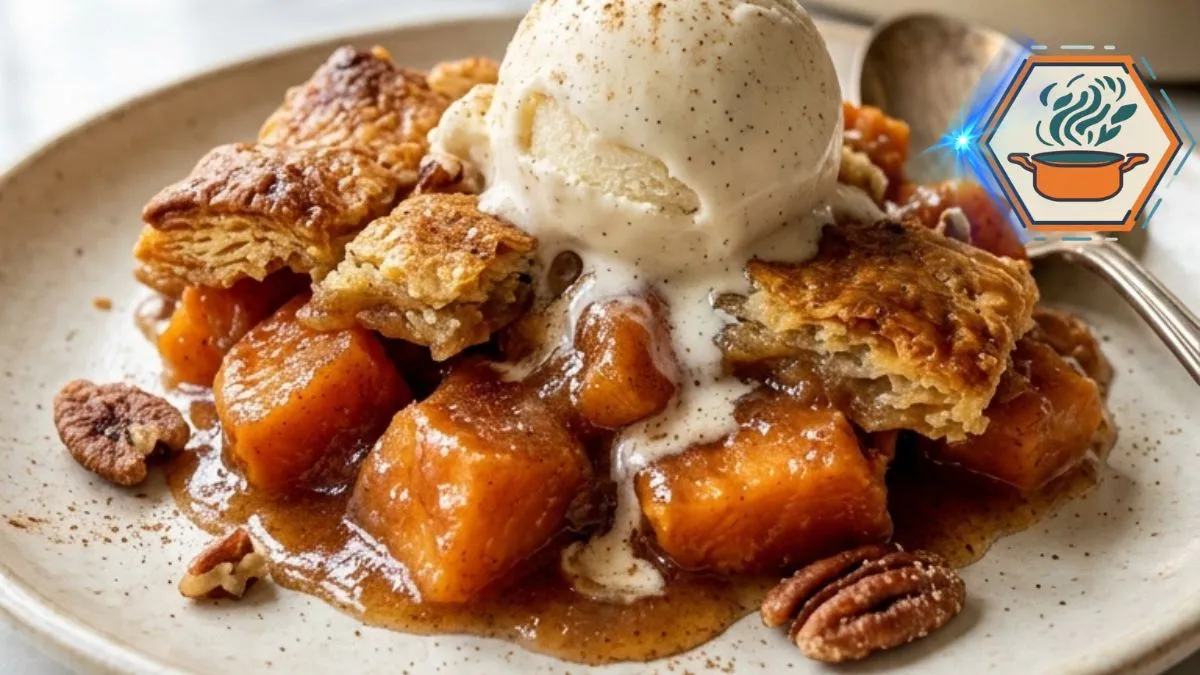
There is something special about pulling a bubbling cobbler from the oven. The crust is deeply golden. Cinnamon and brown sugar fill the kitchen with a warm aroma. Under that crisp pastry sits a layer of tender sweet potatoes surrounded by buttery caramel-like sauce. That is exactly what makes Grandma’s Southern Sweet Potato Cobbler such a memorable Southern dessert.
This recipe takes inspiration from old-fashioned sweet potato cobblers while making the method clear enough for a first attempt. Sweet potato cobbler is commonly associated with Southern cooking, although recipes vary widely. Some use pastry, while others use biscuit or cake-style toppings. Food Network, for example, describes sweet potato cobbler as a Southern dessert made with sweet potatoes, syrup, and a biscuit- or batter-style topping. You can also read the USDA SNAP-Ed guide to sweet potatoes for basic information about this versatile root vegetable.
The version below goes in a different direction. It uses refrigerated pie crust for a flaky, rustic finish and a brown sugar syrup that thickens beneath it while baking. Sweet potatoes have long been associated with fall and Thanksgiving menus in the United States. USDA Economic Research Service data also shows how much their availability increased over the decades. If sweet potato desserts are already part of your holiday menu, our guide to sweet potato pie ingredients is another useful place to start.
More importantly, this recipe fills in the small details that can decide whether a cobbler turns out crisp and saucy or soggy and watery. You will learn how thick to slice the potatoes, how to work with the crust, where to pour the syrup, when the potatoes are done, and why the resting period matters.
JUMP TO
What Is Southern Sweet Potato Cobbler?
Sweet potato cobbler is a baked dessert built around sweet potatoes, sugar, warm spices, butter, and some form of dough or pastry.
Unlike sweet potato pie, the potatoes do not have to be mashed into a smooth filling. They can remain sliced or cubed. This gives the finished dessert a more rustic texture.
Traditional interpretations are not identical. One recipe may use a pastry crust. Another may have biscuit dough. Others use a pourable batter. Food Network’s version, for instance, uses a cake-like topping, while other Southern-style versions use pastry.
Our version belongs firmly in the pastry-crust family.
The goal is contrast:
- Soft, tender sweet potatoes
- Thick brown sugar sauce
- Flaky pastry
- Crisp cinnamon-sugar top
- Buttery edges
- Warm cinnamon, nutmeg, ginger, and clove
Serve it warm and add vanilla ice cream. The cold ice cream slowly melts into the hot sauce, which gives each spoonful both creamy and crisp textures.
Why This Grandma’s Southern Sweet Potato Cobbler Works
The best part of this recipe is not one ingredient. It is how the layers work together.
Sweet potatoes provide body and natural sweetness. Brown sugar creates deeper caramel notes. Butter adds richness. Cinnamon gives the dominant spice flavor, while nutmeg, ginger, and cloves stay in the background.
Then there is the syrup.
A mixture of hot water, brown sugar, butter, and vanilla goes around the pastry rather than directly across its surface. During baking, some of that liquid cooks with the sweet potato juices and flour.
The result should be a glossy sauce rather than a dry filling.
The pastry has another job. It gives the dessert the crisp, flaky top that contrasts with the soft filling.
That contrast is important.
A cobbler in which everything has the same soft texture is far less interesting.
Ingredients You’ll Need
For best results, measure all ingredients before beginning.
Sweet Potato Filling
- 3 large orange-fleshed sweet potatoes, about 2½ to 3 pounds total before peeling
- ¾ cup packed light brown sugar
- ¼ cup granulated sugar
- 1 teaspoon ground cinnamon
- ½ teaspoon ground nutmeg
- ¼ teaspoon ground ginger
- ¼ teaspoon ground cloves
- 1 teaspoon pure vanilla extract
- ¼ cup unsalted butter, melted
- 2 tablespoons all-purpose flour
- ¼ teaspoon fine salt
That final pinch of salt is a small but useful addition. The original ingredient list does not include it, but a little salt balances the large amount of sugar and butter.
Cobbler Crust
- 2 refrigerated pie crusts
- ¼ cup unsalted butter, melted
- 2 tablespoons cinnamon sugar
- 1 tablespoon coarse sugar, optional
The coarse sugar is optional, but it gives the top more visible crunch.
For an even more polished crust, you can replace part of the final butter wash with a simple egg wash made from 1 egg beaten with 1 tablespoon of water.
Do not pour egg wash between the two pastry layers. Use it only on the exposed top crust.
Brown Sugar Syrup
- 2 cups hot water
- ¾ cup packed light brown sugar
- ¼ cup unsalted butter
- 1 teaspoon pure vanilla extract
- Small pinch of salt
For Serving
- Vanilla ice cream
- Ground cinnamon
- Caramel sauce, optional
- Candied pecans, optional
- Fresh mint, optional
Why Each Ingredient Matters
Sweet Potatoes
Use fresh, firm sweet potatoes without soft spots.
Orange-fleshed varieties are especially good here because their color and soft texture suit this style of dessert.
Do not confuse true yams with sweet potatoes. In everyday U.S. grocery terminology, orange sweet potatoes are sometimes labeled “yams,” but botanically they are different foods.
The USDA notes that a medium sweet potato provides dietary fiber and vitamin A, among other nutrients. Of course, this cobbler also contains substantial added sugar and butter, so it should still be viewed as dessert.
Brown Sugar
Brown sugar provides both sweetness and a deeper molasses-like flavor.
It is used twice: first on the potatoes and again in the syrup.
That repetition creates a more unified flavor.
Granulated Sugar
Granulated sugar gives clean sweetness without adding more molasses flavor. Combining it with brown sugar keeps the filling from tasting too heavy.
Cinnamon
Cinnamon should be the leading spice.
Sweet potato and cinnamon naturally work well together because the spice complements the potato’s earthy sweetness.
Nutmeg, Ginger, and Cloves
These spices should remain supporting flavors.
Be careful with cloves in particular. A small quantity is enough.
Vanilla
Vanilla softens the sharper edges of the spices and works beautifully with brown sugar and butter.
Flour
Two tablespoons may not look important, but flour helps bind some of the liquid released by the potatoes.
Without a thickening ingredient, the sauce can remain too thin.
Butter
Butter appears in several parts of the recipe.
It coats the potatoes, enriches the syrup, and helps brown the pastry.
For another dessert where sugar texture matters just as much, see our guide to caramelizing sugar.
The Most Important Step: Slice the Potatoes Evenly
This is one of the details that deserves more attention than it usually gets.
Aim for slices about ¼ inch thick.
Do not cut some paper-thin and others half an inch thick. Thin pieces can become mushy before thick pieces are tender.
A mandoline can produce uniform rounds, but a sharp kitchen knife works perfectly well. Younger cooks should have an adult handle sharp cutting tools and hot cookware.
If the sweet potatoes are very wide, cut the rounds into half-moons. They will fit into the baking dish more easily.
Once peeled, place the slices directly into the mixing bowl.
Should You Boil Sweet Potatoes Before Making Cobbler?
Not necessarily.
Some recipes parcook the potatoes before assembling the cobbler. For example, one published sweet potato cobbler method briefly boils sliced potatoes before baking.
This recipe is designed to bake thin raw slices directly in the syrup.
That works best when three conditions are met:
- The slices are genuinely around ¼ inch thick.
- There is enough liquid in the pan.
- The cobbler bakes until the potatoes are fork-tender.
If your slices are substantially thicker, the pastry can brown before the potatoes become tender.
Uniform slicing solves much of that problem.
How to Make Grandma’s Southern Sweet Potato Cobbler
1. Prepare the Oven and Baking Dish
Preheat your oven to 350°F (175°C).
Give the oven enough time to reach temperature before the cobbler goes inside.
Butter the bottom and sides of a 9 × 13-inch baking dish.
A ceramic or glass baking dish works well. Remember that different baking dishes can heat differently, so use appearance and tenderness as your final guides rather than relying only on the clock.
Place the dish on a rimmed sheet pan before filling it.
This simple step is worth doing because the syrup can bubble vigorously near the end of baking. A sheet pan catches possible drips.
2. Prepare the Sweet Potatoes
Peel the sweet potatoes.
Slice them into uniform ¼-inch rounds or half-moons.
Place them in a large bowl.
3. Season the Filling
Add:
- Brown sugar
- Granulated sugar
- Cinnamon
- Nutmeg
- Ginger
- Cloves
- Salt
- Vanilla
- Melted butter
- Flour
Toss thoroughly.
Pay attention to the flour. You do not want visible dry pockets remaining between the slices.
Every piece should have a light coating of the sugar-and-spice mixture.
4. Arrange the Potatoes
Transfer the seasoned sweet potatoes to the buttered baking dish.
Spread them into an even layer.
Avoid piling all the thick pieces in one corner.
Leveling the filling helps it cook at a similar rate from edge to center.
5. Prepare the First Pastry Layer
Remove the refrigerated pie crust from the refrigerator according to its package directions. It should be flexible enough to unroll without cracking, but it should still feel cool.
Cold pastry matters.
If refrigerated dough becomes very warm before baking, its fat softens and the crust can lose some of its flaky character.
Lay the first crust over the potatoes.
Depending on the shape of your pie crust and baking dish, it may not cover every corner perfectly. That is fine. This is a rustic cobbler, not a sealed pie.
Brush lightly with melted butter.
Sprinkle with a little cinnamon sugar.
6. Add the Second Crust
Place the second crust over the first.
Keep the edges relatively loose rather than pressing everything into a tight seal.
Cut several small vents through the top.
The openings give steam a path out during baking.
For the crispest-looking finish, brush the exposed top with the egg-and-water wash described above. If you prefer to stay closer to the original recipe, use melted butter.
Finish with cinnamon sugar and, if desired, a small amount of coarse sugar.
How to Make the Brown Sugar Syrup
Now prepare the part that transforms the cobbler.
Put the hot water, brown sugar, butter, vanilla, and pinch of salt into a heat-safe bowl or saucepan.
Whisk until the sugar has mostly dissolved and the butter has melted.
The liquid should look smooth.
It does not need to become a thick caramel before entering the oven.
That happens as the cobbler cooks.
How to Add Syrup Without Ruining the Crust
This is an easy place to make a mistake.
Do not dump the syrup over the center of the top crust.
Pour it slowly around the exposed edges of the baking dish.
The goal is to get the liquid underneath and around the pastry while keeping most of the top relatively dry.
Work slowly because you are handling hot liquid.
Once assembled, put the cobbler into the oven immediately.
Baking Time and Temperature
Bake at 350°F (175°C) for approximately 60 to 65 minutes.
Start checking near the 55-minute mark.
You are looking for several signs rather than only one.
The pastry should be deeply golden.
The filling should bubble around the edges.
Most importantly, test a sweet potato through one of the vents with a thin knife or skewer. It should pass through without meeting a hard center.
If the crust becomes dark before the potatoes are ready, loosely cover the darkest areas with foil and continue baking.
Do not tightly wrap the entire dish. Trapped steam can soften the crust.
How to Get That Golden, Flaky Cobbler Crust
The photograph-worthy crust is not simply a matter of adding more butter.
Temperature and moisture matter.
Keep the pie crust refrigerated until you need it. Work efficiently once it comes out.
Avoid soaking the top with syrup.
Vent the upper crust.
Bake until the surface is properly browned rather than pale beige.
A light egg wash can give the upper pastry a more even golden finish. Coarse sugar adds tiny crisp points across the surface.
If you use only butter, the result will look more rustic and slightly less glossy.
Both options work.
Five Rules for Better Cobbler Crust
- Keep refrigerated pastry cool.
- Do not stretch the dough aggressively.
- Keep syrup mostly off the top.
- Cut steam vents.
- Let the crust become properly golden before removing it from the oven.
These details make a much larger difference than simply adding another spoonful of butter.
Why You Need to Rest the Cobbler
You have waited an hour. The kitchen smells like cinnamon and caramel. Taking a spoon to the dish immediately is tempting.
Wait 20 minutes.
This resting period is part of the recipe.
Straight from the oven, the filling and syrup are extremely hot and more fluid. As the cobbler rests, the bubbling settles and the sauce gains more body.
The crust also gets a chance to set.
Twenty minutes gives you a better serving texture while still keeping the dessert pleasantly warm.
What the Finished Cobbler Should Look Like
A successful Grandma’s Southern Sweet Potato Cobbler should have clear layers and contrasting textures.
On top, expect deeply golden pastry with darker cinnamon-speckled areas.
Break through the crust and you should find tender orange sweet potatoes surrounded by glossy brown sauce.
The potatoes should hold enough shape to remain identifiable. They should not be crunchy, but they should not disappear into purée either.
The syrup should coat a spoon.
It may remain slightly loose while hot and continue thickening as the dessert cools.
Common Sweet Potato Cobbler Mistakes
The Sweet Potatoes Are Still Hard
The most likely cause is slices that are too thick or uneven.
Cut them to about ¼ inch and test tenderness before removing the cobbler from the oven.
The Filling Is Too Watery
First, give the cobbler its full resting time.
Hot syrup is naturally thinner.
Also measure the flour correctly and make sure it is distributed through the potatoes.
The Crust Is Soggy
Pouring syrup directly over the pastry can cause this.
Keep most of the syrup around the sides.
The vents also allow moisture to escape.
The Crust Burns Before the Filling Is Ready
Cover the browned area loosely with foil.
Then continue baking until the potatoes are tender.
The Crust Looks Pale
Give it more time if the filling is not overcooked.
An egg wash also produces stronger surface browning than melted butter alone.
The Filling Is Too Sweet
Remember that this dessert contains sugar in both the filling and syrup.
Serve it without caramel drizzle if you prefer a less sweet finish.
A pinch of salt in both filling and syrup also keeps the flavor balanced.
How to Serve Sweet Potato Cobbler
Serve it warm rather than scorching hot.
Spoon down through the crisp crust so every portion receives pastry, sweet potato, and sauce.
Add one scoop of vanilla ice cream.
The contrast is wonderful: hot cobbler, cold ice cream, crisp pastry, and soft potato.
For presentation, add:
- A very light dusting of cinnamon
- Chopped candied pecans
- A thin caramel drizzle
- A small mint leaf
Do not overload the plate. The golden pastry and orange filling already provide plenty of visual appeal.
Perfect Occasions for This Cobbler
This dessert fits naturally into fall and winter menus.
It is particularly suited to:
- Thanksgiving
- Christmas
- Sunday dinner
- Family reunions
- Church suppers
- Potlucks
- Fall gatherings
- Holiday dessert tables
Sweet potatoes have a particularly strong connection with Thanksgiving meals in the United States. USDA data has documented their place as a popular Thanksgiving staple.
If you are building a holiday dessert table, you may also enjoy our sweet potato pie benefits guide or this kefir sheet cake recipe.
Sweet Potato Cobbler vs. Sweet Potato Pie
These desserts share ingredients but produce very different results.
Sweet potato pie usually begins with cooked sweet potatoes that are mashed into a smooth custard-like filling. It is baked inside a pie shell and sliced into neat wedges.
Sweet potato cobbler is more rustic.
The potatoes can remain sliced. The filling is saucier. Portions are spooned rather than cut into perfect slices.
The pastry-to-filling relationship is different too.
With this cobbler, pieces of flaky crust break into the syrup as you serve it. That is part of its appeal.
If you want to learn more about the pie version, read what goes into sweet potato pie.
Can You Make Sweet Potato Cobbler Ahead?
Yes, but the crust is at its best relatively close to baking.
You can save time by measuring the dry spices and sugars in advance.
You can also prepare your serving toppings beforehand.
For the best pastry texture, I prefer assembling the cobbler shortly before baking rather than leaving raw pastry sitting over a wet filling for many hours.
If you need the entire dessert ahead of time, bake it, cool it, refrigerate it, and reheat it before serving.
How to Store Leftover Sweet Potato Cobbler
Allow leftovers to cool, then cover and refrigerate them promptly.
For general food-safety guidance, USDA recommends refrigerating perishable leftovers within two hours and using most cooked leftovers within about three to four days. USDA leftovers and food-safety information
For this cobbler, an airtight container or tightly covered baking dish works well.
The pastry will soften somewhat in the refrigerator because it absorbs moisture from the filling. That is normal.
The Best Way to Reheat Cobbler
An oven or toaster oven is preferable when restoring some crispness to the crust.
Place an individual serving in an oven-safe dish and warm it gently until heated through.
A microwave is faster, but it tends to make pastry softer.
If texture matters most, choose the oven.
Add the ice cream only after reheating.
Can You Freeze Sweet Potato Cobbler?
You can freeze baked cobbler, although the pastry may not return to exactly the same texture after thawing.
Cool the cobbler first.
Wrap portions well or place them in freezer-safe containers. Thaw in the refrigerator before reheating.
For a holiday meal, I would choose freshly baked cobbler whenever practical because the contrast between flaky pastry and syrupy filling is one of this recipe’s best features.
Easy Flavor Variations
Once you know the basic recipe, small changes can create different results without changing its identity.
Pecan Sweet Potato Cobbler
Scatter chopped toasted pecans over each serving.
They add crunch and complement the brown sugar.
Orange-Spiced Cobbler
Add a small amount of finely grated orange zest to the sweet potato mixture.
Orange works especially well with cinnamon and clove.
Extra-Vanilla Cobbler
Use vanilla bean paste in place of vanilla extract in the syrup.
Start with an equal amount and adjust to taste.
Less-Spiced Version
If you prefer cinnamon to dominate, omit the cloves and reduce the ginger.
Caramel-Pecan Serving Style
Top the warm cobbler with vanilla ice cream, a thin ribbon of caramel, and chopped candied pecans.
Keep the drizzle light. The filling already contains a rich brown sugar sauce.
Kitchen Notes That Make a Real Difference
A few details are worth remembering.
Do not judge doneness from the crust alone. A beautiful golden top does not automatically mean thick sweet potato slices underneath are cooked.
Test a potato.
Do not skip the rest. Twenty minutes changes the texture of the sauce.
Keep your crust cool. Warm refrigerated pastry becomes softer and harder to handle.
Do not drown the top crust in syrup. The liquid belongs mainly underneath and around it.
Use uniform sweet potato slices. This may be the single most important preparation detail.
And finally, do not chase an exact minute on the clock. Ovens, pans, and potato thickness vary. Use the baking time as a guide and the visual and texture cues as the final test.
Print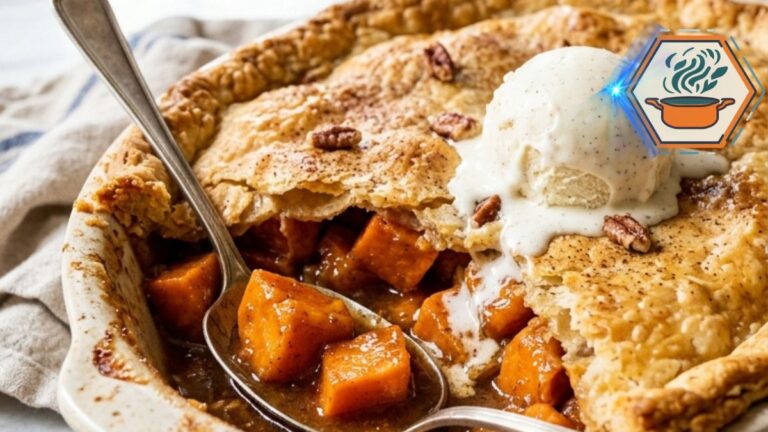
Grandma’s Southern Sweet Potato Cobbler
An old-fashioned Southern sweet potato cobbler with tender cinnamon-spiced sweet potatoes, a flaky golden pie crust, and a buttery brown sugar sauce. Serve it warm with vanilla ice cream for a comforting holiday dessert.
- Total Time: 1 hour 50 minutes
- Yield: 10–12 servings
Ingredients
Sweet Potato Filling
- 3 large sweet potatoes (about 2½–3 lb total), peeled and sliced into ¼-inch rounds
- ¾ cup packed light brown sugar
- ¼ cup granulated sugar
- 1 teaspoon ground cinnamon
- ½ teaspoon ground nutmeg
- ¼ teaspoon ground ginger
- ¼ teaspoon ground cloves
- 1 teaspoon vanilla extract
- ¼ cup unsalted butter, melted
- 2 tablespoons all-purpose flour
- ¼ teaspoon fine salt
Cobbler Crust
- 2 refrigerated pie crusts
- ¼ cup unsalted butter, melted
- 2 tablespoons cinnamon sugar
- 1 tablespoon coarse sugar, optional
- 1 large egg + 1 tablespoon water, optional, for egg wash
Brown Sugar Syrup
- 2 cups hot water
- ¾ cup packed light brown sugar
- ¼ cup unsalted butter
- 1 teaspoon vanilla extract
- Pinch of fine salt
For Serving — Optional
- Vanilla ice cream
- Ground cinnamon
- Caramel sauce
- Candied pecans
- Fresh mint
Instructions
- Preheat the oven to 350°F (175°C). Butter a 9 × 13-inch baking dish. Set it on a rimmed baking sheet to catch possible bubbling syrup.
- Peel the sweet potatoes. Cut them into even ¼-inch rounds or half-moons. Keeping the slices uniform helps them cook at the same rate.
- Place the sliced sweet potatoes in a large bowl. Add the brown sugar, granulated sugar, cinnamon, nutmeg, ginger, cloves, vanilla, melted butter, flour, and salt.
- Toss well until every slice is coated and no dry pockets of flour remain.
- Arrange the seasoned sweet potatoes evenly in the prepared baking dish.
- Keep the refrigerated pie crust cool until needed. Lay the first crust over the sweet potatoes. Brush it lightly with melted butter and sprinkle with a little cinnamon sugar.
- Place the second crust on top. Do not tightly seal the entire edge. Cut several small vents in the top to let steam escape.
- For a more golden finish, whisk the egg with 1 tablespoon water and lightly brush it over the exposed top crust. Otherwise, brush the crust with melted butter. Sprinkle with cinnamon sugar and optional coarse sugar.
- In a heat-safe bowl, whisk the hot water, brown sugar, butter, vanilla, and salt until the sugar has mostly dissolved and the butter has melted.
- Slowly pour the warm syrup around the edges of the baking dish, allowing it to reach the filling without soaking the center of the top crust.
- Bake for 60–65 minutes. Begin checking at about 55 minutes.
- The cobbler is ready when the crust is deeply golden, the sauce is bubbling around the edges, and a thin knife inserted through a vent passes easily through a sweet potato slice.
- If the crust becomes too dark before the potatoes are tender, loosely cover the browned areas with foil and continue baking.
- Remove from the oven and rest for 20 minutes. This allows the hot brown sugar sauce to gain body.
- Serve warm. Add vanilla ice cream, cinnamon, candied pecans, or a light caramel drizzle if desired.
Notes
- Slice thickness matters: Keep the sweet potatoes close to ¼ inch thick. Thick pieces may remain firm after the crust has browned.
- Keep the pastry cold: Refrigerated crust should remain cool until assembly for better texture.
- Do not pour syrup over the center: Pour it slowly around the edges to avoid unnecessarily soaking the upper crust.
- Test the potatoes: A golden crust alone does not prove the filling is cooked.
- Protect a fast-browning crust: Loosely tent dark areas with foil.
- Rest before serving: Give the cobbler about 20 minutes so the sauce is less fluid.
- Optional egg wash: Egg wash produces a glossier, more evenly browned crust. Melted butter gives a more rustic finish.
- Ice cream and caramel are serving garnishes: They are not included in the estimated nutrition below.
- Prep Time: 25 minutes
- Cook Time: 1 hour 5 minutes
- Category: Dessert
- Method: Baking
- Cuisine: Southern American
Frequently Asked Questions
What is sweet potato cobbler made of?
Sweet potato cobbler typically combines sweet potatoes, sugar, butter, spices, and a pastry, biscuit, or batter topping. This version adds a brown sugar syrup and two layers of refrigerated pie crust for a particularly rich, flaky result.
Do you have to boil sweet potatoes before making cobbler?
No. Thin ¼-inch slices can cook directly in this recipe’s syrup during baking. Other recipes parcook sweet potatoes first, so the correct method depends on the recipe and thickness of the potatoes.
Should sweet potatoes be peeled for cobbler?
For this recipe, yes. Peeling creates a softer, more consistent dessert texture and allows the syrup and spices to coat the flesh directly.
How thin should I slice sweet potatoes for cobbler?
Aim for approximately ¼ inch. Uniform thickness is more important than making every slice visually perfect.
Why is my sweet potato cobbler runny?
It may simply be too hot. Let it rest for at least 20 minutes. The sauce gains body as it cools. Incorrect flour measurement or substantially different potato quantities can also affect consistency.
How do I know when sweet potato cobbler is done?
Look for a deeply golden crust and bubbling filling. Then test a sweet potato through a vent. A knife should pass through easily without encountering a firm center.
Can I use canned sweet potatoes?
Fresh sweet potatoes are preferable for this particular recipe because its baking time and liquid are designed around raw, sliced potatoes. Canned sweet potatoes are already cooked and often packed with additional liquid or syrup, so a direct substitution can make the filling too soft or sweet.
Can I use homemade pie crust?
Yes. A homemade double-crust pastry can replace refrigerated crust. Keep it cold and roll it thin enough to bake through while the filling cooks.
If pastry is something you like experimenting with, our guide to using tortillas as pie crust looks at a very different shortcut.
Why does the cobbler need vents?
The vents allow steam to escape through the upper pastry. This helps reduce trapped moisture beneath the crust.
Can I make sweet potato cobbler the night before?
Yes. Bake it, cool it, cover it, and refrigerate it. Reheat it in the oven for a better pastry texture than you would usually get from microwaving.
What goes well with sweet potato cobbler?
Vanilla ice cream is the classic choice for this recipe. Pecans, cinnamon, or a modest amount of caramel sauce also work well.
Is sweet potato cobbler the same as sweet potato pie?
No. Sweet potato pie generally contains a smooth mashed filling baked in a pie shell. Cobbler is more rustic and may contain sliced potatoes and considerably more sauce.
Why pour the syrup around the crust instead of over it?
Keeping most of the syrup off the upper surface helps the pastry brown rather than becoming saturated with liquid.
A Southern Dessert Worth Waiting For
The moment that makes this dessert special comes after the resting time.
Cut through the crisp top and the pastry gives way to soft cinnamon-spiced sweet potatoes. A spoonful of dark brown sugar sauce rises from underneath. Add cold vanilla ice cream, and it begins melting into the warm filling almost immediately.
That is the character we want from Grandma’s Southern Sweet Potato Cobbler: rustic rather than perfect, generous rather than delicate, with a deeply golden crust protecting a warm, buttery center.
The recipe is also forgiving once you understand its important points. Slice the potatoes evenly. Keep the pastry cool. Pour the syrup around the edges. Watch the crust as it browns. Test the potatoes rather than trusting the timer alone. Then give the finished cobbler time to rest.
Those little steps turn a promising ingredient list into a dessert people can actually reproduce at home.
And when sweet potatoes, cinnamon, brown sugar, butter, flaky pastry, and vanilla ice cream finally meet in the same spoonful, it becomes very clear why this old-fashioned style of dessert still deserves a place at the holiday table.